
 Worksheets
Mid Year Quizizz Review
Total questions: 65
Worksheet time: 1hrs 12mins
Name
Class
Date
1.
The measuring system we use in science is:
a)
the SI system
b)
scientific system
c)
english system
d)
none of the above
2.
the measure of how much space an object takes up is called
a)
mass
b)
weight
c)
length
d)
volume
3.
the measure of the amount of matter in an object is called
a)
length
b)
height
c)
mass
d)
volume
4.
The unit "gram" measures what?
a)
volume
b)
mass
c)
length
d)
speed
5.
The base unit for length in SI units is the
a)
gram
b)
liter
c)
meter
d)
milliliter
6.

Read this instrument to the nearest tenth
a)
613.37 g
b)
163.7 g
c)
163.5 g
d)
163 g
7.

What is the length of the ribbon?
a)
9 cm
b)
2 cm
c)
7 cm
d)
11 cm
8.
Jack has a rock. The rock has a mass of 14g and a volume of 2cm3. What is the density of the rock?
a)
7 mL
b)
7 g/cm3
c)
28 g/cm3
d)
1/7 g/cm3
9.
What is the formula for density?
a)
density = mass x volume
b)
density = mass / volume
c)
density = mass + volume
d)
density = mass - volume
10.
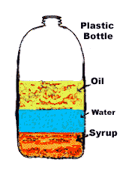
Which liquid is the least dense?
a)
oil
b)
water
c)
syrup
d)
plastic bottle
11.

Which box has a higher density?
a)
Box A
b)
Box B
c)
cannot be determined
d)
they are the same
12.
Energy of motion is which type of energy?
a)
Potential
b)
Kinetic
c)
Sound
d)
Gravitational
13.
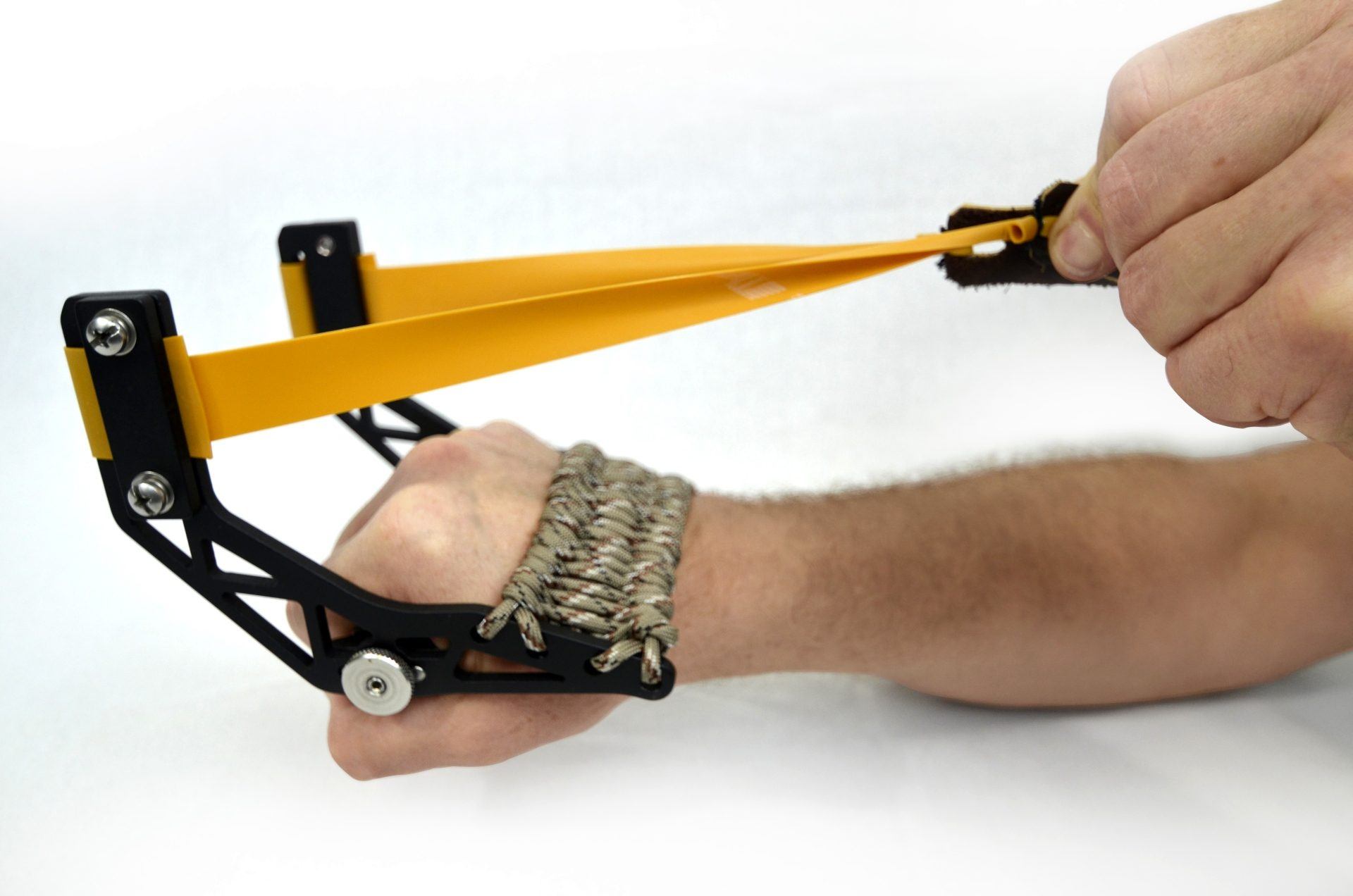
What type of energy is in this picture?
a)
Kinetic
b)
Potential
c)
Chemical
d)
Sound
14.
When plants convert the sun's energy into food, which type of energy is it?
a)
kinetic
b)
chemical
c)
thermal
d)
radiant
15.

A battery converts what type of energy to another?
a)
sound to kinetic
b)
light to heat
c)
mechanical to electrical
d)
chemical to electrical
16.
On a roller coaster, where is maximum potential energy?
a)
At the bottom of a big hill
b)
When going around a corner
c)
When going upside down
d)
At the top of a big hill
17.
On a roller coaster, where is maximum kinetic energy?
a)
At the bottom of a big hill
b)
When going around a corner
c)
When going upside down
d)
At the top of a big hill
18.
Energy caused by the movement in the particles of matter. It is a form of kinetic energy.
a)
Nuclear energy
b)
Sound energy
c)
Light energy
d)
Thermal energy
19.
According to which law of energy, energy can't be created or destroyed?
a)
First law of motion
b)
The law of tacos
c)
Laws of Energy
d)
law of conservation of energy
20.
When a soccer ball is on a field, the energy it has just before being kicked is called
a)
kinetic energy
b)
potential energy
c)
mechanical energy
d)
chemical energy
21.
what is the meaning of conduction
a)
when heat transfers from objects that are not touching
b)
heat rise
c)
cold fall
d)
when heat transfers from objects that are touching
22.
you get sunburned because of _______
a)
conduction
b)
convection
c)
radiation
23.

This is a lava lamp. When the light bulb heats the wax, the wax rises. When the wax cools, it falls. This cycle of rising/falling is an example of:
a)
Conduction.
b)
Convection.
c)
Radiation.
24.

Warm air rises and the cool air sinks demonstrates this type of heat transfer.
a)
conduction
b)
convection
c)
radiation
d)
Insolation
25.
You're holding hands with your best friend. Your friend's hands are REALLY warm and yours are really cold. After a few minutes, this has changed. How might you explain what happened?
a)
The cold energy from your hand transferred to your friend's hand through conduction.
b)
The heat energy from your friend's hand transferred to your hand through conduction.
c)
The cold energy from your hand transferred to your friend's hand through convection.
d)
The heat energy from your friend's hand transferred to your hand through convection.
26.
Which is NOT an insulator.
a)
Wool
b)
Plastic
c)
Copper
d)
Glass
27.
Emma warms her hands by holding a mug of warm milk. How is heat transferred to her hands?
a)
by condensation
b)
by radiation
c)
by convection
d)
by conduction
28.
Which of the following causes Earth's tectonic plates to move?
a)
Energy from the Sun
b)
Magnetic Pole Reversal
c)
Convection currents in the mantle
d)
Faults in Mountain Ranges
29.
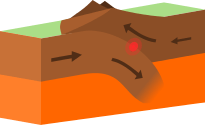
What type of plate boundary is this?
a)
Plate
b)
Divergent
c)
Convergent
d)
Transform
30.

What type of event will occur at this boundary?
a)
Earthquake
b)
Volcano Eruption
c)
Tornado
d)
Mountain Building
31.
A divergent boundary occurs when plates ....
a)
Pull apart
b)
Come together
c)
Slide past each other
d)
subducting
32.
A fault is formed by the movement of a __________ plate boundary
a)
Transform
b)
Convergent
c)
Divergent
33.
Mountains are created when....
a)
Two continental plates collide
b)
Two oceanic plates pull apart
c)
An Oceanic plate subducts under a Continental Plate
d)
Two continental plates pull apart
34.
When an oceanic plate and a continental plate collide, which one will subduct?
a)
oceanic
b)
continental
c)
neither
35.
The area where two tectonic plates meet.
a)
mantle
b)
focus
c)
plate boundary
d)
convection
36.
Which layer has convection currents?
a)
Inner Core
b)
Outer Core
c)
Mantle
d)
Crust
37.
What are the two types of crust
a)
continental and oceanic
b)
ocean and upper
c)
lower and upper
d)
pizza and subway
38.
This layer of Earth is the thickest part
a)
crust
b)
outer core
c)
mantle
d)
inner core
39.
Which layer of Earth is made up of tectonic plates?
a)
outer core
b)
inner core
c)
asthenosphere
d)
lithosphere
40.
The thinnest layer of the Earth is the ___________.
a)
mantle
b)
crust
c)
core
41.
What describes the outer core?
a)
solid
b)
liquid
c)
viscous
d)
gas
42.
Why is the inner core solid?
a)
its unknown
b)
what it's made of
c)
the pressure
d)
it is colder than the outer core
43.
When the Northern Hemisphere is pointing towards the sun, what season is the Southern Hemisphere?
a)
Winter
b)
Spring
c)
Fall
d)
Summer
44.
What are the reasons for the seasons?
a)
Earth's tilt and rotation.
b)
Earth's rotation and revolution.
c)
Earth's tilt and revolution.
d)
Earth's tilt and resolution
45.
How long after a new moon will it take to see another new moon?
a)
12 days
b)
29.5 days
c)
27.3 days
d)
365 days
46.
Tides are caused by ___________
a)
wind
b)
gravitational pull of moon
c)
waves gravitation toward land
d)
rain
47.
Waxing means...
a)
Growing
b)
Dying
c)
Losing light
d)
Moving
48.
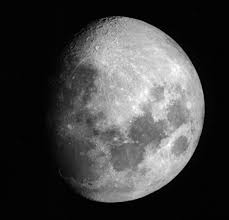
Name the moon phase
a)
waning crescent
b)
waxing crescent
c)
waning gibbous
d)
waxing gibbous
49.
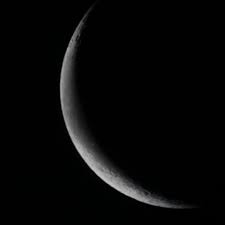
Name the moon phase
a)
waning crescent
b)
waxing crescent
c)
waning gibbous
d)
waxing gibbous
50.
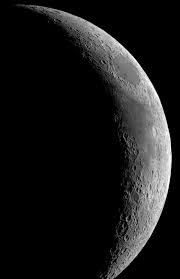
Name the moon phase
a)
waning crescent
b)
waxing crescent
c)
waning gibbous
d)
waxing gibbous
51.
A solar eclipse only happens during a ________ moon.
a)
New
b)
Cresent
c)
Gibbous
d)
Full
52.
A lunar eclipse only happens during a ________ moon.
a)
New
b)
Cresent
c)
Gibbous
d)
Full
53.

a)
A
b)
B
c)
C
d)
D
54.
Most places on Earth experience about how many high and low tides in 24 hours?
a)
2 high and 2 low tides
b)
4 high and 4 low tides
c)
1 high and 1 low tides
55.
What type of tide occurs during a new and full moon?
a)
Neap tides
b)
Spring tides
c)
Normal tides
56.
What type of tide occurs during the first or third quarter moon?
a)
Neap tides
b)
Spring tides
c)
Normal tides
57.
If the Sun, Earth, and Moon are in perfect alignment, the Earth would have a _______ tide.
a)
Spring
b)
Neap
c)
Normal
58.
If the Sun, Earth, and Moon create a 90 degree angle, the Earth would have __________.
a)
Spring tides
b)
Neap tides
c)
Normal tides
59.
Two factors effecting the magnitude of the force of gravity between 2 objects are...
a)
mass and distance
b)
mass and matter
c)
distance and weight
d)
weight and mass
60.
If Earth's mass was cut in half, what would happen to your mass?
a)
increase because gravitational force increases
b)
decrease because gravitational force decreases
c)
decrease because gravitational force increases
d)
nothing, mass is not affected by gravitational force
61.
The force of gravity acting on an object is the object's ______.
a)
mass
b)
matter
c)
weight
d)
friction
62.

A massive explosion of a star is called . . .
a)
supernova
b)
nebula
c)
pulsar
d)
black hole
63.
Main force at play during making of our solar system
a)
strong force
b)
weak force
c)
gravity
d)
electrostatic force
64.
The path a body follows as it travels around another body in space
a)
Revolution
b)
Rotation
c)
Orbit
d)
Corona
65.
A cloud of gas and dust from which bodies in space are formed
a)
photosphere
b)
nebula
c)
solar flare
d)
Sunspot
100 %

