
 Worksheets
8th Grade Science Review Quiz
Total questions: 36
Worksheet time: 1hrs 6mins
Name
Class
Date
1.

What element is represented in this Bohr Model?
a)
Carbon
b)
Hydrogen
c)
Aluminum
d)
Lithium
2.

How many electrons does Si contain? (click to see image)
a)
14
b)
28
c)
2
d)
None of these
3.

What contribution did John Dalton make to atomic theory?
a)
He discovered that every atom was positively charged.
b)
He discovered that every element consisted of one type of atom.
c)
He discovered that atoms had nuclei.
d)
He discovered that atoms could be divided into smaller parts.
4.

What does the nucleus of an atom contain?
a)
Electrons & Neutrons
b)
Protons & Neutrons
c)
Neutrinos & Positrons
5.
What can you conclude from the fact that scientists continue to update the atomic model?
a)
New information about atoms continues to be discovered
b)
Old information about atoms is completely useless
c)
Scientists did not have any information about atoms until a few years ago
d)
Scientists still have no idea what atoms look like
6.

What element is displayed in the atom model?
a)
Helium
b)
Hydrogen
c)
Calcium
d)
Lithium
7.
As you move down the periodic table atoms get bigger. This is because ____________.
a)
The atoms have more mass.
b)
The atoms have more protons.
c)
The atoms have more energy levels
d)
The atoms have more neutrons
8.
Vertical columns of elements (families) on the periodic table with similar properties
a)
groups
b)
periods
c)
quadrants
d)
rows
9.

Which section are the metals in?
a)
dark blue
b)
light blue
c)
purple
d)
pink
10.

Which of these elements has an electron structure most similar to that of element X?
a)
1
b)
2
c)
3
d)
4
11.

This picture represents which of the following?
a)
element
b)
compound
c)
mixture of elements
d)
mixture of compounds
12.

This picture represents which of the following?
a)
element
b)
compound
c)
mixture elements
d)
mixture of compounds
13.

This picture represents which of the following?
a)
element
b)
compound
c)
mixture of elements
d)
mixture of compounds
14.
Which one of these is a chemical property?
a)
melting point
b)
boiling point
c)
color
d)
flammability
15.
Which of the following is not a chemical property?
a)
rusting
b)
boiling
c)
rotting
d)
burning
16.
Which of the following is NOT an example of chemical change?
a)
sour milk
b)
burning wood
c)
breaking a pencil
d)
rust
17.
Which of the following IS a chemical change
a)
using chalk
b)
water freezing
c)
slicing cheese
d)
digestion
18.
How many elements are in C6H12O6?
a)
1
b)
2
c)
3
d)
4
19.
Which is the correct formula for:
three hydrogen (H)
one sulfur (S)
four oxygen (O)
three hydrogen (H)
one sulfur (S)
four oxygen (O)
a)
H3SO4
b)
HSO4
c)
H4S3O
d)
H2O
20.
Which of the following is a compound?
a)
Co
b)
O2
c)
C
d)
CO2
21.
How many atoms are there TOTAL in:
H2SO4
H2SO4
a)
6
b)
5
c)
7
d)
3
22.
Is this balanced?...
Al + O2 --> 2Al2O3
Al + O2 --> 2Al2O3
a)
Yes!
b)
NO!
23.

What type of energy is in this picture?
a)
Kinetic
b)
Potential
c)
Chemical
d)
Sound
24.

A battery converts what type of energy to another?
a)
sound to kinetic
b)
light to heat
c)
mechanical to electrical
d)
chemical to electrical
25.

The roller coaster cart has the most gravitational potential energy at position-
a)
W
b)
X
c)
Y
d)
Z
26.
On a roller coaster, where is maximum kinetic energy?
a)
At the bottom of a big hill
b)
When going around a corner
c)
When going upside down
d)
At the top of a big hill
27.

The picture shows a microwave oven. As a microwave oven is operated, electrical energy is transformed into all of the following types of energy EXCEPT —
a)
solar
b)
light
c)
thermal
d)
mechanical
28.
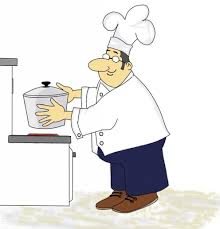
The man goes to take the hot pot off the stove with his bare hands.
a)
conduction
b)
convection
c)
radiation
29.
Heat moves through the atmosphere as air circulates. What causes the circulation of air?
a)
Air in the atmosphere is heated by the sun and sinks to the ground.
b)
The ground is heated by the sun and then heats the air, causing the air to rise.
c)
Air loses heat to the ground and then rises upward to obtain more energy.
d)
The sun heats the clouds which forces the cooler air to move away and sink.
30.
What is speed?
a)
how far you go
b)
how much distance is covered over a period of time
c)
how fast you accelerate
d)
the change in the location of a object
31.
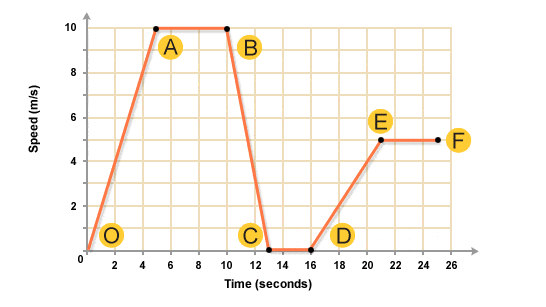
What is happening in this graph from point B to C?
a)
The object is going down a hill.
b)
The object is returning to its starting location.
c)
The object is slowing down.
d)
The object is staying still.
32.

What does this graph represent?
a)
Constant speed
b)
Acceleration
c)
Not moving
33.

Which of the following best describes the movement of the cyclist?
a)
Moving at a constant speed
b)
Accelerating at a constant speed
c)
Slowing down at a constant rate
d)
Moving at a constant distance per second
34.

A magician pulls a tablecloth out from under dishes and glasses on a table without disturbing them.
a)
Newton's 1st Law
b)
Newton's 2nd Law
c)
Newton's 3rd Law
d)
Newton's law gravity
35.

Pushing a child on a swing is easier than pushing an adult on the same swing, because the adult has more inertia.
a)
Newton's 1st Law
b)
Newton's 2nd Law
c)
Newton's 3rd Law
d)
Newton's law of gravity
36.

When you step on a Lego. You push on the Lego and the Lego pushes back on you.
a)
Newton's 1st Law
b)
Newton's 2nd Law
c)
Newton's 3rd Law
d)
Newton's law of gravity
100 %

