
NEW
Font size
S
M
L
XL
 Worksheets
Unit 5 Cycling of Matter and Energy
Total questions: 30
Worksheet time: 21mins
Name
Class
Date
1.
Any type of liquid or solid water that falls to earth's surface
a)
evaporation
b)
condensation
c)
precipitation
d)
runoff
2.
Process of water vapor changing into a liquid
a)
evaporation
b)
condensation
c)
precipitation
d)
transpiration
3.
Process of liquid water changing into a gas
a)
evaporation
b)
condenstaion
c)
precipitation
d)
transpiration
4.
Evaporation of water vapor from plants
a)
infiltration
b)
condenstaion
c)
precipitation
d)
transpiration
5.
Water that is beneath earth's surface
a)
groundwater
b)
infiltration
c)
runoff
d)
transpiration
6.
Liquid precipitation that is not absorbed into the ground
a)
groundwater
b)
condenstaion
c)
infiltration
d)
runoff
7.
The energy source that allows the water cycle to occur
a)
batteries
b)
the sun
c)
solar panels
d)
gasoline
8.
The first step in the water cycle
a)
evaporation
b)
condensation
c)
precipitation
d)
there is no first step
9.
How much new water does the water cycle produce each day?
a)
1 gallon
b)
100 gallons
c)
1,000,000 lagoons
d)
none
10.
When humans burn fossil fuels, most of the carbon quickly enters the as carbon dioxide.
a)
Water
b)
Atmosphere
c)
Sun
d)
Air
11.
Which one of these does not add CO2 to the atmosphere?
a)
cooking with gas
b)
planting trees
c)
burning wood
d)
riding in a bus
12.
Combustion is another word for _______________.
a)
a train
b)
a bus
c)
a dog
d)
burning
13.
What does not produce carbon dioxide?
a)
Photosynthesis
b)
Burning Fossil Fuels
c)
Animal respiration
d)
Plants decaying
14.

In the carbon cycle, producers take in the gas __
a)
carbon dioxide
b)
oxygen
c)
nitrogen
d)
carbon monoxide
15.
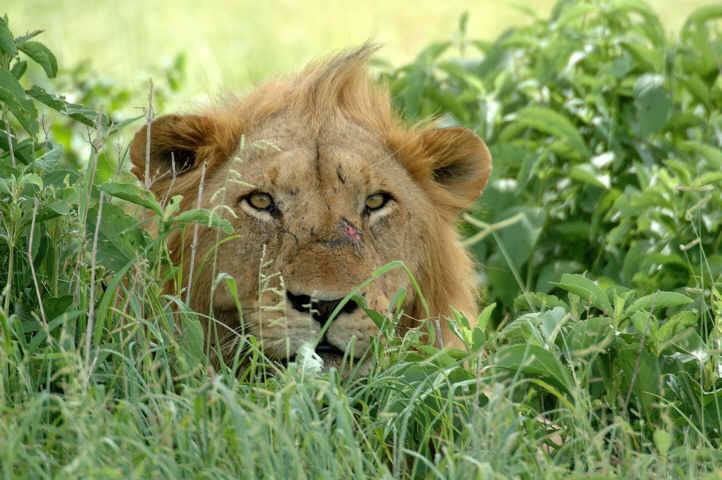
How does the carbon in grass become part of a lion?
a)
The lion eats the grass
b)
Carbon from grass doesn't end up in a lion.
c)
The carbon ends up in the lion's food chain.
d)
The lion breathes in carbon given out by the plant
16.
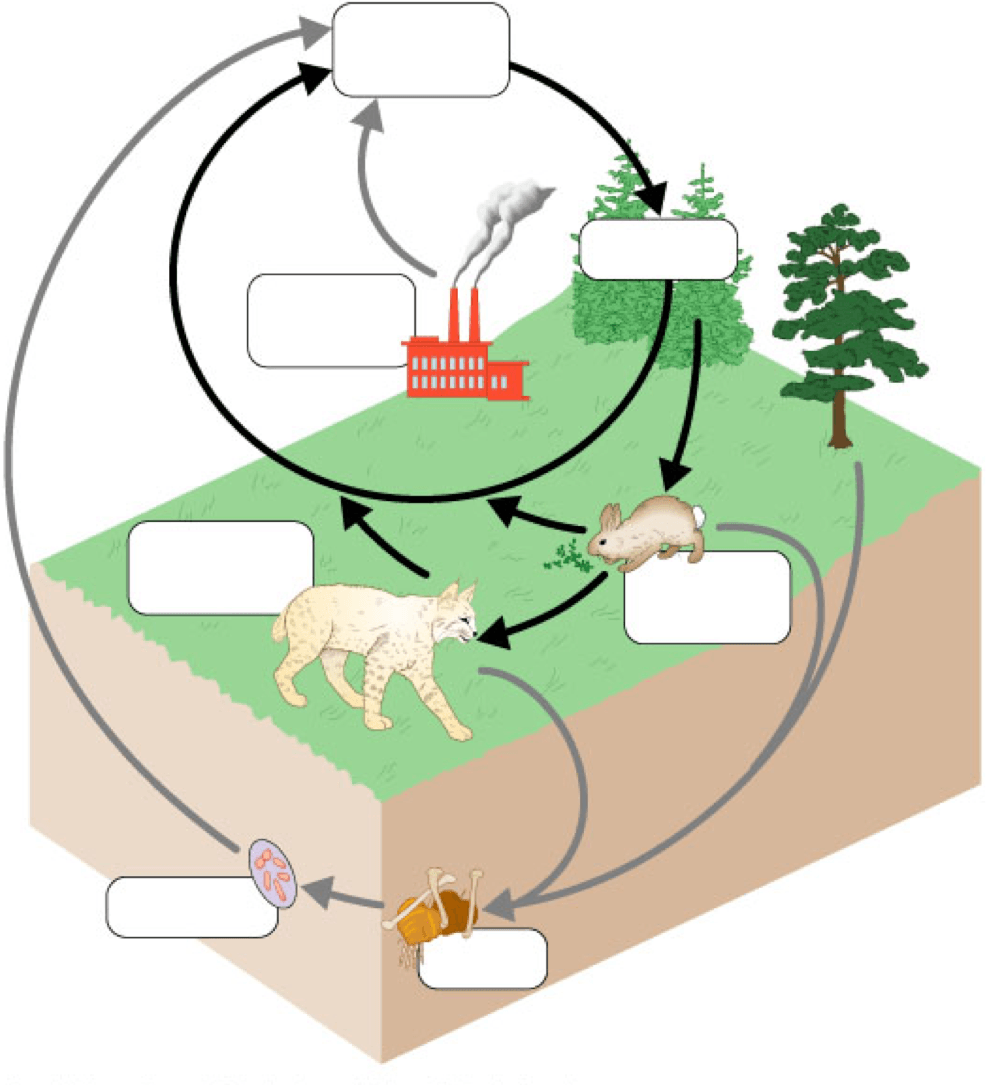
In what process is Carbon transformed into chemical energy?
a)
Photosynthesis
b)
Respiration
c)
Primary Production
d)
Secondary Production
17.
What process occurs when phytoplankton remove the dissolved carbon dioxide from the surrounding seawater in order to make glucose
a)
Diffusion
b)
Decomposition
c)
Photosynthesis
d)
Respiration
18.
Plants are responsible for producing proteins, carbohydrates, fats and other organic carbon-compounds that provide food and fuel to sustain life. They are called
a)
autotrophs
b)
primary producers
c)
organisms that make their own food
d)
all of these
19.
In the process of photosynthesis, plants use the energy of the Sun to form ___ and ___ from ___ and ___.
a)
glucose and oxygen; carbon dioxide and water
b)
carbon dioxide and water; glucose and oxyge
20.
When land animals break down carbon food they can release ___ into the atmosphere.
a)
Carbon dioxide
b)
Methane
c)
Both
21.
Petroleum and natural gas are produced from buried ___.
a)
marine plants, algae and animals
b)
atmospheric carbon dioxide
c)
atmospheric methane
d)
water and oxygen
22.
If global warming increases ocean temperatures, then how will that effect the amount of carbon dioxide in the atmosphere?
a)
The oceans will absorb more CO2 and reduce the amount of atmospheric CO2
b)
The oceans will release more CO2 and increase the amount of atmospheric CO2
c)
The oceans will have no effect on the amount of atmospheric CO2
23.

A carbon reservoir that absorbs more carbon than it releases is known as a carbon _____
a)
source
b)
sequestration
c)
flux
d)
sink
24.
Which of the following is the correct equation for PHOTOSYNTHESIS?
a)
CO2 + light + H2O --> O2 + Sugar
b)
CO2 + sugar + H2O --> O2 + light
c)
O2 + light + H2O --> CO2 + Sugar
d)
CO2 + O2 + H2O --> Light+ Sugar
25.
What is the correct equation for cellular respiration?
a)
6O2 + C6H12O6 -> 6CO2 + 6H2O + Energy
b)
6O2 + C6H12O6 + Energy -> 6CO2 + 6H2O
c)
6CO2 + 6H2O -> 6O2 + C6H12O6 + Energy
d)
6CO2 + 6H2O + Energy -> 6O2 + C6H12O6
26.

Define the process shown here:
a)
Carbon Cycle
b)
Respiration
c)
Photosynthesis
d)
Magic
27.
What form is carbon on the ocean surface?
a)
CO2 gas
b)
Organic compounds (carbohydrates)
c)
Carbon solid (pure carbon)
d)
Dissolved CO2
28.
How do living organisms return carbon to the atmosphere in the carbon cycle?
a)
respiration and photosynthesis
b)
decomposition and respiration
29.
How is the burning of fossil fuels related to global warming?
a)
Magic
b)
Fuels are hot
c)
Greenhouse effect
d)
Photosynthesis
30.
Water is absorbed by the plant through the roots, and transpiration takes place as the water exits the ________.
a)
Leaves
b)
Roots
c)
Stem
Reset

