
 Worksheets
Rocks
Total questions: 55
Worksheet time: 59mins
Name
Class
Date
1.

This rock formed when bits of other rocks became pressed into a solid. What type of rock is it?
a)
Sedimentary Rock
b)
Metamorphic Rock
c)
Igneous Rock
2.

This rock was formed when magma cooled very slowly inside the Earth. What specific type of rock is it?
a)
Intrusive Igneous Rock
b)
Extrusive Igneous Rock
c)
Foliated Metamorphic Rock
d)
Clastic Sedimentary Rock
3.
When you are describing the sizes of the mineral grains in a rock, you are detailing the rock's _____
a)
Texture
b)
Composition
c)
Sedimentation
d)
Igneous-ness
4.
The individual particles that make up a rock are known as _____
a)
Grains
b)
Textures
c)
Metamorphs
d)
Lava
5.
What are the 3 major types of rocks?
a)
Igneous, Metamorphic, Sedimentary
b)
Metamorphic, Igneous, Cementation
c)
Brown, Red, Gray
d)
Streak, Hardness, Breakage
6.
Two ways to describe types of igneous rocks are _____
a)
Extrusive and Intrusive
b)
Foliated and Non-Foliated
c)
Clastic and Biochemical
d)
Black and Gray
7.
What process is used to form sedimentary rocks?
a)
Lava cools and hardens to form a rock.
b)
Weathering, Erosion, Deposition, Compaction, Cementation
c)
Extreme heat and pressure from inside the Earth turn rocks into new rocks.
d)
Magma trapped under the Earth's surface cools and solidifies.
8.
Which of the words below describe broken up rock?
a)
stalactites
b)
magmas
c)
metamorphs
d)
sediments
9.
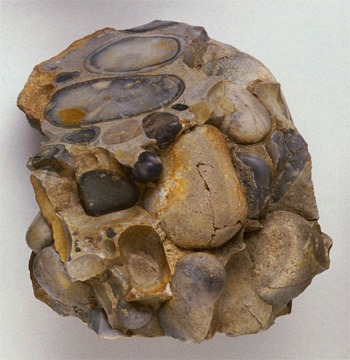
This rock was formed by smaller pieces of rock that settled at the bottom of a lake millions of years ago. What type of rock is this?
a)
Sedimentary
b)
Igneous
c)
Metamorphic
10.
This rock was formed by smaller pieces of rock that settled at the bottom of a lake millions of years ago. What type of rock is this?
a)
Sedimentary
b)
Igneous
c)
Metamorphic
11.

When sediments are pressed together tightly, this is called ____________.
a)
Compaction
b)
Cementation
c)
Weathering
d)
Erosion
13.
The process in which sediment are fused or glued together.
a)
compaction
b)
deposition
c)
organic rock
d)
cementation
13.
The process in which sediment are fused or glued together.
a)
compaction
b)
deposition
c)
organic rock
d)
cementation
14.
What is deposition?
a)
Dropping off sediment
b)
Movement of sediment
c)
Breaking down of sediment
15.

The process when rocks break into smaller pieces due to exposure to natural elements is called
a)
erosion
b)
weathering
c)
sediments
d)
deposition
16.
The movement of weathered material (sediment) is called?
a)
weathering
b)
erosion
c)
deposition
d)
cementation
17.
Sedimentary rock that is made of fragments of rocks cemented together by a mineral are called...
a)
chemical
b)
organic
c)
clastic
19.
Sedimentary rock that is formed from water evaporating and minerals being left behind.
a)
clastic
b)
organic
c)
chemical
19.
Sedimentary rock that is formed from water evaporating and minerals being left behind.
a)
clastic
b)
organic
c)
chemical
20.
This rock was formed when molten rock cooled into a solid. What type of rock is it?
a)
Igneous Rock
b)
Metamorphic Rock
c)
Sedimentary Rock
21.
Which type of rock is formed from INTENSE heat and pressure?
a)
igneous
b)
sedimentary
c)
metamorphic
22.

Is the following metamorphic rock foliated or non-foliated?
a)
Foliated
b)
Non-foliated
c)
Neither
23.

What property of rock is being observed when looking for what color is left after scratching it on a ceramic plate?
a)
hardness
b)
color
c)
cleavage
d)
streak
24.

What property of rock is being observed when looking for whether or not it scratches other minerals?
a)
cleavage
b)
luster
c)
hardness
d)
streak
25.

What property of rock is being observed when looking for how easily it breaks or splits evenly?
a)
cleavage
b)
luster
c)
hardness
d)
streak
26.

What property of rock is being observed when looking at its hue or shade?
a)
streak
b)
hardness
c)
color
d)
luster
27.

The earth is made up of mostly ...
a)
sand
b)
fossils and soil
c)
rocks
d)
grass
28.

The thickest layer of Earth is the ___ where it is so hot that the rock there is soft.
a)
inner core
b)
crust
c)
outer core
d)
mantle
29.
Rocks come in many different characteristics like...
a)
color
b)
shape
c)
texture
d)
all of these
30.

Hot, molten rock inside the earth is called ...
a)
lava
b)
magma
c)
igneous rock
d)
minerals
31.

Large rocks can be broken down into smaller rocks by wind and water. These small rocks can break down into very tiny pieces called _______.
a)
minerals
b)
pebbles
c)
sediments
d)
chalk
32.

Rocks that are found in different layers of earth can be found to be older, oldest, younger, and youngest by observing where it is found in the earth. This is called .....
a)
the rock cycle
b)
relative age
c)
aging
d)
layers of the earth
33.

A person who studies the properties of rocks to tell how the rocks may have been formed are ____________.
a)
mineralists
b)
geologists
c)
rock stars
d)
rockologists
34.

A never ending process by which rocks are changed from one type to another.
a)
weathering and erosion
b)
rock cycle
c)
heat and pressure
d)
pressing and cementing
35.

1. What will happen if an igneous rock is put under an extreme amount of heat and pressure?
a)
it will melt into lava
b)
it will weather and erode
c)
it will become a metamorphic rock
d)
it will become a sedimentary
36.

Each rock type can follow only one pathway of the rock cycle.
a)
True
b)
False
37.
What is deposition?
a)
Dropping off sediment
b)
Movement of sediment
c)
Breaking down of sediment
38.
rock that cools below the Earth's surface
a)
non-foliated
b)
extrusive igneous rock
c)
strata
d)
intrusive igneous rock
39.
How did the humans use rocks in the past?
a)
to play sports
b)
to tell time
c)
to write
d)
to make tools
40.
When temperature and pressure change, what can happen to the minerals in rocks?
a)
they stay the same
b)
they change into coal
c)
they change into minerals that are less stable
d)
they change into minerals that are more stable
41.
rock that cools at the Earth's surface
a)
non-foliated
b)
extrusive igneous rock
c)
strata
d)
intrusive
42.
layers of rock found in sedimentary rock
a)
non-foliated
b)
extrusive igneous rock
c)
strata
d)
intrusive igneous rock
43.
Metamorphic rock in which minerals are NOT arranged in bands
a)
stratification
b)
non-foliated
c)
extrusive igneous rock
d)
strata
44.
naturally occurring solid mixture of one or more minerals and organic matter
a)
deposion
b)
erosion
c)
rock
d)
rock cycle
45.
The process in which rocks change shape is called...
a)
deformation
b)
deposition
c)
composition
d)
foliation
46.
Besides clastic and chemical, what is the other kind of sedimentary rock?
a)
extrusive
b)
foliated
c)
organic
d)
intrusive
47.
What do scientists call the rock that is formed when magma cools below the surface
a)
extrustive igneous rock
b)
intrustive igneous rock
c)
erupitve rock
d)
volcanic
48.
When magma cools quickly, what kind of texture does rock have?
a)
coarse grained
b)
large grained
c)
medium grained
d)
fine grained
49.
What is process in which water, wind, and heat break down rock?
a)
weathering
b)
exfoliation
c)
cementation
d)
composition
50.
which of the following does NOT cause magma to form?
a)
an increase in pressure
b)
a rise in temperature
c)
change in the composition in rock
d)
a decrease in pressure on rock
51.
Which type of rock formation process would be most like stacking crackers and cheese and squishing them together?
a)
Igneous Rock
b)
Metamorphic Rock
c)
Sedimentary Rock
d)
Nonfoliated Metamorphic Rock
52.
What type of rock formation process would be most like a piece of candy that has melted, cooled and re-hardened?
a)
Igneous Rock
b)
Metamorphic Rock
c)
Sedimentary Rock
d)
Clastic Rock
53.
What does it mean for a rock to be extrusive?
a)
Have layers
b)
Form from magma
c)
Form from lava
d)
Form By Sediment
54.
What does it mean for a rock to be intrusive?
a)
Made by lava
b)
Made by magma
c)
Made by erosion
d)
Made by heat and pressure
55.
List the following processes needed to make a sedimentary rock in order from first to last:
a)
weathering, erosion, cementation, deposition, compaction
b)
weathering, erosion, deposition, compaction, cementation
c)
deposition, compaction, weathering, erosion, cementation
d)
cementation, compaction, deposition, weathering, erosion
100 %

