
 Worksheets
Life Science Vocabulary
Total questions: 55
Worksheet time: 30mins
Name
Class
Date
1.
All living things are composed of cells, cells are the basic units of life, cells come from other cells
a)
Cell theory
b)
Cell
c)
Virus
d)
Spontaneous generation
2.

A disease causing agent, not considered living because it cannot reproduce on its own. requires a host cell to reproduce.
a)
cell
b)
virus
c)
sandwich
d)
none of these
3.

A way of organizing living things. In a descending hierarchy of categories: kingdom, phylum, class, order, family, genus, and species.
a)
Linnaean Classification
b)
Binomial nomenclature
c)
Cell
d)
Virus
4.
An organism's scientific name. consists of the genus and species name.
a)
Linnaean Classification
b)
Binomial nomenclature
c)
Cell
d)
Virus
5.

(genetics) A diagram showing the lineage or genealogy of an individual and all the direct ancestors, usually to analyze or follow the inheritance of trait.
a)
pedigree
b)
punnett square
c)
probability
d)
ratio
6.
The chances or likelihood of an event to occur, written as a percentage.
a)
pedigree
b)
punnett square
c)
probability
d)
ratio
7.

Diagram that is used to predict an outcome of a particular genetic cross.
a)
pedigree
b)
punnett square
c)
probability
d)
ratio
8.

Relation between two amounts showing the number of times one value contains or is contained within the other.
a)
pedigree
b)
punnett square
c)
probability
d)
ratio
9.
requires oxygen
a)
aerobic
b)
anaerobic
10.
Does not requires oxygen.
a)
aerobic
b)
anaerobic
11.

An unicellular organism that does not contain a nucleus. Example: bacteria
a)
prokaryote
b)
eukaryote
12.

A cell that does contain a nucleus. Example: animal and plant cell
a)
prokaryote
b)
eukaryote
13.

An organism that is made up of more than one cell.
a)
Multicellular
b)
Unicellular
14.

An organism that is made up of one cell.
a)
Multicellular
b)
Unicellular
15.

An organism that can make its own food.
a)
producer
b)
consumer
c)
decomposer
d)
none of these
16.
An organism that consumes other organisms to obtain energy.
a)
producer
b)
consumer
c)
decomposer
d)
none of these
17.

An organism that breaks down dead or decaying matter to obtain energy.
a)
producer
b)
consumer
c)
decomposer
d)
none of these
18.

The top of the food chain.
a)
producer
b)
primary consumer
c)
secondary consumer
d)
tertiary consumer
19.
Smallest structural and functional unit of an organism. May be prokaryotic or eukaryotic.
a)
cell
b)
virus
c)
tissue
d)
organ
20.

The ability to maintain a stable internal environment.
a)
homeostasis
b)
dominant allele
c)
recessive allele
d)
pedigree
21.

specialized structures within a living cell
a)
organelle
b)
cell
c)
tissue
d)
organ
22.

An organelle, where energy production occurs, where cellular respiration occurs, produces ATP
a)
mitochondria
b)
chloroplast
c)
nucleus
d)
ribosomes
23.

An organelle, performs photosynthesis
a)
mitochondria
b)
chloroplast
c)
nucleus
d)
ribosomes
24.

unicellular, prokaryotic organism
a)
bacteria
b)
virus
c)
animal cell
d)
fossil
25.
the remains or impression of a prehistoric organism preserved in petrified form
a)
bacteria
b)
virus
c)
animal cell
d)
fossil
26.

Cell division that results in two new daughter cells that are genetically identical to the parent cell.
a)
Mitosis
b)
Meiosis
27.

Cell division that results in four new cells with half of the genetic material of the parent cell. Creates sex cells.
a)
Mitosis
b)
Meiosis
28.

Diagram that is used to predict an outcome of a particular genetic cross.
a)
Punnett square
b)
dominant allele
c)
recessive allele
d)
genotype
29.

Represented by an uppercase letter, the genetic trait that overrides the recessive trait, will be phenotypically visible.
a)
Punnett square
b)
dominant allele
c)
recessive allele
d)
genotype
30.

Represented by a lowercase letter, will be phenotypically visible when paired with another recessive trait (two lowercase letters).
a)
Punnett square
b)
dominant allele
c)
recessive allele
d)
genotype
31.

Genetic information of an individual organism. Represented with alleles/letters.
a)
Punnett square
b)
dominant allele
c)
recessive allele
d)
genotype
32.
Relation between two amounts showing the number of times one value contains or is contained within the other.
a)
Punnett square
b)
dominant allele
c)
ratio
d)
probability
33.

Symbiotic relationship between two organisms in which they both benefit.
a)
Mutualism
b)
Parasitism
c)
Commensalism
d)
Competition
34.

Symbiotic relationship between two organisms in which one benefits and the other is harmed.
a)
Mutualism
b)
Parasitism
c)
Commensalism
d)
Competition
35.

Symbiotic relationship between two organisms in which one benefits and the other is unaffected.
a)
Mutualism
b)
Parasitism
c)
Commensalism
d)
Competition
36.
Interaction between organisms in which both need the same resource (such as food, water, and territory).
a)
Mutualism
b)
Parasitism
c)
Commensalism
d)
Competition
37.
Symbiotic relationship between two different organisms in which one of them captures and feeds on the other organism that serves as the prey.
a)
Mutualism
b)
Predation
c)
Commensalism
d)
Competition
38.

A model showing overlapping food chains in an ecosystem.
a)
food web
b)
food chain
c)
energy pyramid
d)
tertiary consumer
39.

A model showing one line of feeding relationships in an ecosystem.
a)
food web
b)
food chain
c)
energy pyramid
d)
tertiary consumer
40.

Model of available energy in a food chain.
a)
food web
b)
food chain
c)
energy pyramid
d)
tertiary consumer
41.

Process by which producers use sunlight energy, water, and carbon dioxide to produce glucose and oxygen. Occurs in the chloroplast.
a)
photosynthesis
b)
cellular respiration
c)
carbon cycle
d)
nitrogen cycle
42.

Process in which cells use oxygen to produce ATP. Occurs in the mitochondria.
a)
photosynthesis
b)
cellular respiration
c)
carbon cycle
d)
nitrogen cycle
43.

The movement of carbon throughout an ecosystem.
a)
photosynthesis
b)
cellular respiration
c)
carbon cycle
d)
nitrogen cycle
44.

The movement of nitrogen through an ecosystem.
a)
photosynthesis
b)
cellular respiration
c)
carbon cycle
d)
nitrogen cycle
45.
Anything that has mass and takes of space.
a)
Matter
b)
Energy
c)
ATP
d)
Glucose
46.
ability to do work
a)
Matter
b)
Energy
c)
ATP
d)
Glucose
47.
sugar, C6H12O6
a)
Matter
b)
Energy
c)
ATP
d)
Glucose
48.
adenosine triphosphate, high-energy molecule found in every cell
a)
Matter
b)
Energy
c)
ATP
d)
Glucose
49.
States that energy is never created or destroyed, just change forms
a)
Law of conservation of energy
b)
Law of Universal graviation
c)
Cell theory
d)
Natural selection
50.
When every organism of a species has died.
a)
Evolution
b)
Natural Selection
c)
Extinction
d)
Artificial Selection
51.
Where the better adapted organisms survive to pass traits along to offspring.
a)
Evolution
b)
Natural Selection
c)
Extinction
d)
Artifical Selection
52.
Why are advantageous traits more likely to be passed onto offspring?
a)
Because they are more likely to survive and reproduce.
b)
Because they come from dominant alleles.
c)
Because they come from recessive alleles.
d)
Because the trait is an acquired phenotype.
53.
What word describes a trait that helps an organism survive in its environment?
a)
natural selection
b)
mutation
c)
camouflage
d)
adaptation
54.
Change over time
a)
Natural Selection
b)
Selective Breeding
c)
Homeostasis
d)
Evolution
55.
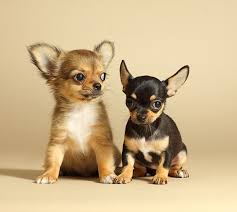
Dogs such as Chihuahuas are examples of....
a)
Artificial Selection
b)
Natural Selection
c)
Mutations
100 %

