
 Worksheets
Cells and Body Systems
Total questions: 53
Worksheet time: 36mins
Name
Class
Date
1.
Which organelle is only found in a plant cell?
a)
nucleus
b)
chloroplast
c)
mitochondria
d)
cell membrane
2.

Directs all cell activities through the DNA located there.
a)
Lysosomes
b)
Nucleus
c)
ribosomes
d)
Mitochondria
3.
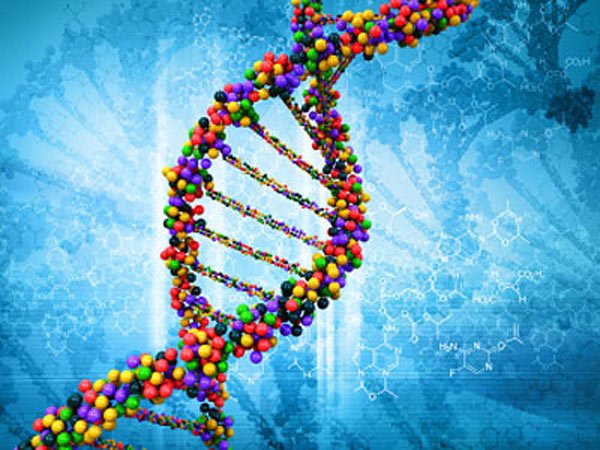
What is the name of the genetic material that is inside the nucleus?
a)
ER
b)
ATP
c)
YOLO
d)
DNA
4.
What is found in both plant and animal cells but is much larger in plant cells?
a)
Nucleus
b)
Mitochondria
c)
Chloroplast
d)
Vacuole
5.
The site of photosynthesis
a)
ribosome
b)
mitochondria
c)
chloroplast
d)
nucleus
6.

I am the outer most layer of an animal cell. What am I?
a)
cell wall
b)
nucleus
c)
cell membrane
d)
cell skin
7.
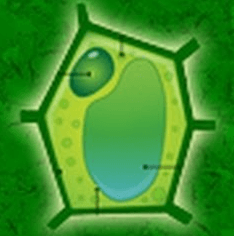
A rigid layer that lies outside the cell's membrane is...
a)
Cytoskeleton
b)
Cilia
c)
Cell Wall
d)
Flagella
8.
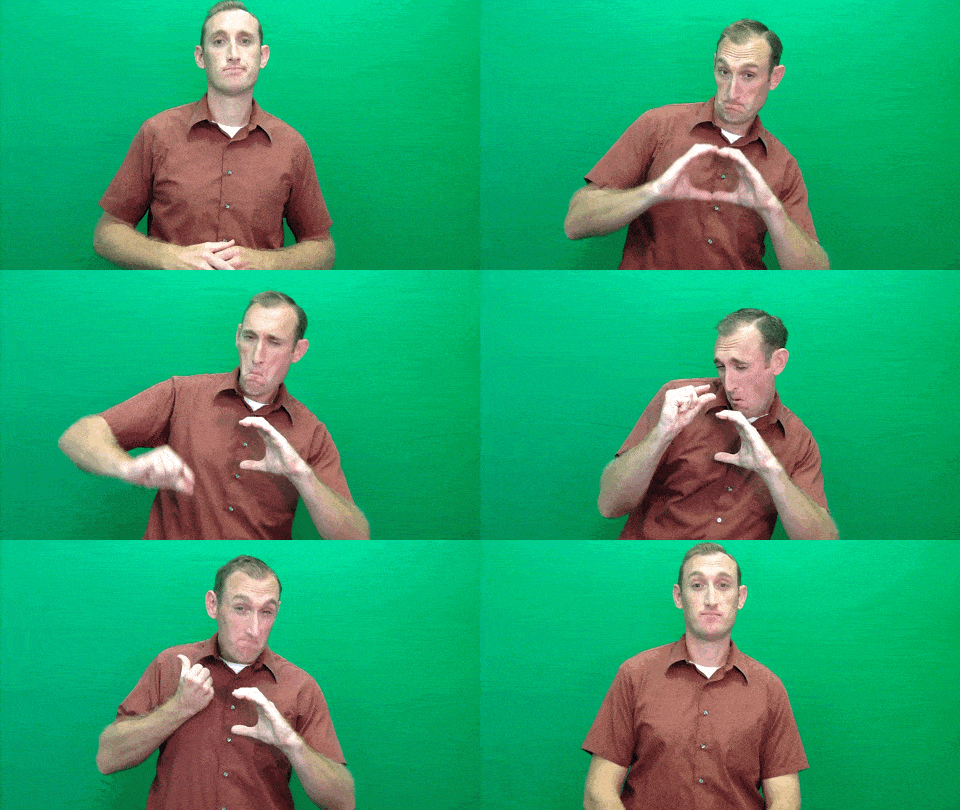
The ___________ is the basic unit of life
a)
organ
b)
cell
c)
atom
d)
tissue
9.
A group of tissues that work together to perform a similar function is called_____. (Examples include the heart, lungs or stomach)
a)
cells
b)
tissues
c)
organs
d)
organ system
10.
Organs that work together to perform a related function is called _____________?
a)
cells
b)
tissues
c)
organ system
d)
organs
11.

This is a example of........
a)
organ system
b)
cells
c)
organ
d)
tissue
12.
The brain is a part of which organ system?
a)
nervous
b)
skeletal
c)
muscular
d)
digestive
13.

Part 9
a)
Body tube
b)
Eyepiece
c)
Objective
d)
Light Source
14.

Part 11
a)
Stage Clips
b)
Stage
c)
Diaphragm
d)
Illuminator
15.
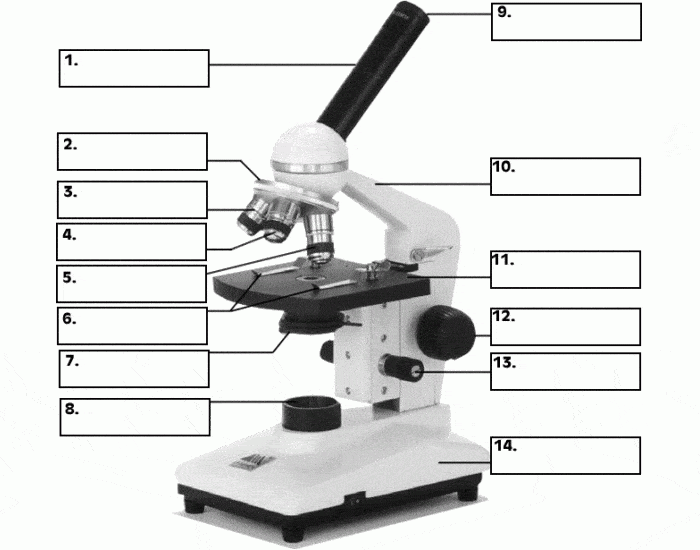
Part 12
a)
Fine Adjustment Knob
b)
Coarse Adjustment Knob
c)
Diaphragm
d)
Objective
16.

Part 13
a)
Fine Adjustment Knob
b)
Course Adjustment Knob
c)
Stage
d)
Diaphragm
17.
Used to hold the slides in place
a)
Stage
b)
Stage Clips
c)
Diaphragm
d)
Arm
18.
A balance that an organism maintains by regulating what goes into and out of the cell.
a)
Hypertonic
b)
Homeostasis
c)
Plasmolysis
d)
Hypotonic
19.
Condition that occurs if too much water leaves the cell and cell collapses.
a)
Plasmolysis
b)
Osmosis
c)
Cytolysis
d)
Exocytosis
20.
What might happen to a freshwater plant that is placed into saltwater?
a)
Cells will swell
b)
Plasmolysis
c)
Cytolysis
d)
There will be no change
21.
A cell with a 5% salt solution is placed into a beaker with a 10% salt solution. What will happen to the cell?
a)
It will shrink
b)
It will swell
c)
No change
d)
Cytolysis
22.
A cell with a 10% salt solution is placed into a beaker with a 40% salt solution. How will water move?
a)
It will leave the cell
b)
It will enter the cell
c)
It will move in and out equally
d)
There will be no movement
23.
A plant cell with a 20% salt solution is placed into a beaker with a 10% salt solution. What will happen to the plant cell?
a)
Cytolysis
b)
Plasmolysis
c)
It will shrink
d)
It will swell
24.

This is a picture of what? (choose the answer that is most complete)
a)
robot
b)
skeleton
c)
ulna
d)
vertebrate
25.
Which of the following is not a function of bones?
a)
Protection
b)
Blood cell formation
c)
Storage
d)
Absorption
26.
The _________________ gives the body its shape and supports and protects the internal organs.
a)
urinary system
b)
skeletal system
c)
lympthatic/immune system
d)
endocrine system
27.
Tissue found in some bones that makes blood cells
a)
red marrow
b)
yellow marrow
c)
canaliculi
d)
lamellae
28.

What do the bones create?
a)
white blood cells
b)
platlets
c)
red blood cells
d)
flying turkeys
29.
What are the 3 types of muscle tissue?
a)
Thigh, Calf, & Shoulder
b)
Traps, Forearm, & Abs
c)
Hamstring, Biceps, & Triceps
d)
Smooth Muscle, Cardiac Muscle, & Skeletal Muscle
30.
Which muscle type is found in your stomach, bladder, and intestines?
a)
Skeletal
b)
Smooth
c)
Cardiac
d)
Straight
31.
Which type of muscle is found in your heart?
a)
Skeletal
b)
Smooth
c)
Cardiac
d)
Straight
32.
Which muscles are involuntary?
a)
skeletal
b)
cardiac
c)
smooth
d)
smooth and cardiac
33.
Which types of muscle tissue are voluntary?
a)
Cardiac
b)
Skeletal
c)
Smooth
d)
Cardiac and Smooth
34.
Sweating to regulate body temperature is an example of
a)
negative feedback
b)
positive feedback
c)
a homeostatic imbalance
d)
aging
35.
The top layer of the skin is called the _________________.
a)
dermis
b)
oil gland
c)
nerve
d)
epidermis
36.
What is the integumentary system made up of?
a)
skin, nails, and hair
b)
ribs, lungs, and heart
c)
veins and arteries
d)
muscles
37.
What is the function of the kidneys in the excretory/urinary system?
a)
store urine before it is eliminated from the body.
b)
break down food into smaller pieces through chemical digestion
c)
filter blood of cellular waste material as a result of cellular respiration
d)
control thoughts, voluntary actions, and other sensations of the five senses.
38.
One major function of the excretory system is to clean the what?
a)
urine
b)
blood
c)
kidneys
d)
bladder
39.

These organs are responsible for what?
a)
storing urine
b)
storing water
c)
filtering blood
d)
they don't have a particular job
40.
Where is urine stored?
a)
kidneys
b)
urinary bladder
c)
urethra
d)
ureters
41.
The small sacs/organs which release hormones into the body
a)
Endocrine glands
b)
Hormones
c)
Target cells
d)
Eccrine glands
42.
What is the name of the cells that are affected by hormones?
a)
Endocrine glands
b)
Target cells
c)
Hormones
d)
Eccrine glands
43.
What gland secretes the hormones corticosteroids and adrenaline?
a)
Adrenals
b)
Parathyroids
c)
Pineal Body
d)
Thyroid
44.
What gland secretes growth, thyrotropin and corticotropin?
a)
Pituitary
b)
Thyroid
c)
Adrenals
d)
Pineal Body
45.

The nervous system is composed of the ___, ___, and ___.
a)
heart, brain, kidneys
b)
lungs, liver, stomach
c)
brain, spinal cord, nerves
d)
eyes, pancreas, veins
46.

Major function of the nervous system
a)
movement
b)
sensation
c)
thought
d)
all of these
47.
If the environment gets cold, we will often shiver in order to:
a)
keep body temperature the same as the external temperature
b)
decrease body temperature
c)
increase body temperature
d)
regulate blood pressure
48.
Homeostasis in the human body is often maintained by a:
a)
neutral feedback loop
b)
solar feedback loop
c)
positive feedback loop
d)
negative feedback loop
49.
The "cause" for something to happen is the
a)
response
b)
effect
c)
stimulus
d)
homeostasis
50.
The "effect" of a given stimulus is the...
a)
response
b)
stimulus
c)
cause
d)
result
51.

Which scientist did NOT contribute to the cell theory?
a)
Theodore Schwann
b)
Robert Hooke
c)
Albert Einstein
d)
Matthias Schleiden
52.
Which scientists built a 3-D model of the DNA double helix?
a)
Hershey and Chase
b)
Watson and Crick
c)
Chargaff and Franklin
d)
Griffith and Avery
53.
Rosalinda Franklin discovered DNA was ________________.
a)
square
b)
spiral
c)
circular
d)
rectangular
100 %

