
 Worksheets
PBS Practice Final 2018
Total questions: 197
Worksheet time: 2hrs 22mins
Name
Class
Date
1.
What is the best method to use when searching a house or building?
a)
link method
b)
grid method
c)
zone method
d)
spiral method
2.
All of the following are pieces of evidence at the crime scene EXCEPT:
a)
hair
b)
footprint
c)
blood
d)
knife
3.
A forensic scientists main job is to
a)
collect evidence at the scene
b)
analyze the evidence that has been collected such as blood, bullets and medicine
c)
interview key witnesses
d)
take pictures
4.
The unknown substance found at the scene was
a)
meth
b)
cocaine
c)
asprin
d)
Acetaminophen
5.
Which of the following are NOT one of the steps to processing a crime scene?
a)
Examine
b)
Interview
c)
Sketch
d)
Blood
6.
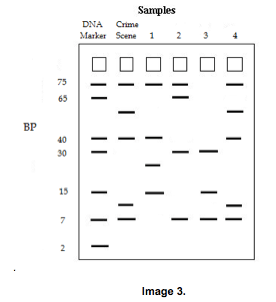
Who should the lawyer request a warrant for?
a)
Suspect 1
b)
Suspect 2
c)
Suspect 3
d)
Suspect 4
7.
A student wants to test the effects of type of exercise on heart rate. What is the dependent variable?
a)
heart rate
b)
type of exercise
c)
amount of exercise
d)
time of day exercise occurs
8.

Mr. Krabbs is trying a new money making scheme. On Tuesdays he is selling his crabby patties on colored buns. He usually averages 25 customers per day. On Tuesdays he now averages 27 customers.
What was the control?
What was the control?
a)
The customers
b)
The crabby patty
c)
The colored buns
d)
The number of customers
9.
DNA is ________ charged and migrates to the ________ end of the gel.
a)
negative, positive
b)
positive, negative
c)
negative, neutral
d)
positive, neutral
10.
Which of the following most likely would contain a good DNA sample?
a)
Shoeprint
b)
Tabletop
c)
Syringe
d)
Blood
11.
What can be determined from the diameter of a blood drop?
a)
Blood type
b)
Weapon
c)
Amount of blood lost
d)
The height from which the blood fell
12.
Body system that includes lymph nodes, spleen, thymus and bone marrow
a)
Endocrine
b)
Integumentary
c)
Immune
d)
Urinary
13.
What can be used to determine time of death?
a)
Blood pressure
b)
Fingerprints
c)
Skin texture
d)
Body Temperature
14.
What causes the DNA to separate and move down the gel?
a)
Magnetism
b)
Electricity
c)
Hydrogen Bonds
d)
Agarose
15.
Which person is a physician (medical doctor) who performs an autopsy and can determine manner and cause of death?
a)
Coroner
b)
Toxicologist
c)
Medical Examiner
d)
Forensic Anthropologist
16.
Which DNA fragment would end up closest to the top of gel (where the DNA is loaded into the wells)?
a)
100 bp
b)
1,000 bp
c)
5,000 bp
d)
10,000 bp
17.
If adenine makes up 20% of DNA, what percent is thymine?
a)
20%
b)
10%
c)
30%
d)
60%
18.
Which body system is responsible for sending signals with hormones?
a)
Immune
b)
Nervous
c)
Endocrine
d)
Digestive
19.
Which body system is responsible for pumping blood and transporting oxygen?
a)
Circulatory system
b)
Respiratory System
c)
Muscular System
d)
Digestive System
20.
Mary's husband come to the doctor with her and demands to know the results of her blood test. He begins yelling at the nurse. The nurse gives him the records- was HIPAA violated?
a)
Yes, he is not entitled to know her information just because he came to the doctor's office.
b)
No, He came with his wife to the doctor and she never told the nurse not to say anything.
c)
Yes, because he should not be yelling at the nurse
d)
No, husbands and wives are exempt from HIPAA
21.
Andy went to the middle east and came back with the measles. He doesn't want anyone to know and asks his nurse to not tell anyone. The nurse notifies public health authorities anyway. Was HIPAA violated?
a)
Yes, the patient specifically asked her to protect his privacy.
b)
No, measles is a public health concern and trumps the patient's entitlement to privacy
c)
It depends on if the nurse has proper clearance from her boss.
22.
Which organelle is DNA usually found in?
a)
cell membrane
b)
vacuole
c)
chloroplast
d)
nucleus
23.
What does DNA stand for?
a)
Deoxyribonucleic acid
b)
Denitrogenous acid
c)
Deribonucleic acid
d)
Diribonucleic acid
24.
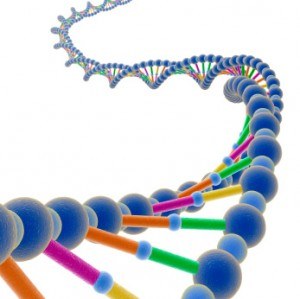
Which of the following best describes a DNA molecule?
a)
double helix
b)
contains ribose
c)
made of amino acids
d)
contains Uracil
25.
Which of the following units are repeatedly joined together to form a strand of DNA?
a)
amino acids
b)
nucleotides
c)
fatty acids
d)
polysaccharides
26.
Adenine bonds with ______________.
a)
Guanine
b)
Thymine
c)
Cytosine
d)
Adenine
27.
Why is DNA important?
a)
it is very small and very complicated
b)
it's in everything
c)
it serves as the blueprint for traits of all living things
d)
because we eat it every day for energy
28.
Which 2 molecules form the sides (backbone) of the DNA ladder?
a)
deoxyribose sugar and adenine
b)
deoxyribose sugar and a hydrogen bond
c)
deoxyribose sugar and the nucleus
d)
deoxyribose sugar and phosphate
29.

Describe the fingerprint pattern for Alex Garcia
a)
Plain arch
b)
Wharl
c)
Tented Arch
d)
Radial loop
30.
Any physical location in which a crime has occurred or is suspected of having occurred.
a)
Crime Scene
b)
Primary Location
c)
Secondary Location
d)
Alibi
31.
What is a procedure?
a)
Step by step instructions
b)
safety rules
c)
What stays the same in the experiment
d)
a prediction
32.
what type of scientist are tasked with the collection, preservation, and analysis of scientific evidence during the course of an investigation?
a)
police officer
b)
Forensic scientist
c)
paramedic
d)
toxicologist
33.
Who can donate to a person with type A blood?
a)
Blood donors with A blood type only
b)
Blood donors with B blood type only
c)
Blood donors with AB blood type only
d)
Blood donors with A or O blood type only
34.
Who can donate to a person with AB blood type
a)
Blood donors with A blood type only
b)
Blood donors with B blood type only
c)
Blood donors with AB blood type only
d)
Anyone can donate to a person with AB blood type
35.
What type of evidence can be processed by looking at the cortex, medulla, growth stage, or diameter
a)
Fingerprint
b)
Blood sample
c)
DNA sample
d)
Hair sample
36.
What type of evidence can be processed by looking at shape, size, number of lines and minutiae?
a)
Blood sample
b)
Hair Sample
c)
DNA sample
d)
Fingerprint Sample
37.
What answer best describes the purpose of the scientific method?
a)
To solve a problem and create experiments
b)
To research new information
c)
To practice safety
d)
To become a scientist
38.
What is a qualitative observation?
a)
Describing qualities and characteristics in words
b)
A guess you make using an observation
c)
Numbers and a label
d)
What is kept the same in an experiment
39.
What is a quantative observation?
a)
Describing qualities and characteristics in words
b)
A guess you make using an observation
c)
Numbers and a label
d)
What is kept the same in an experiment
40.
The application of a broad range of sciences to answer legal questions
a)
Health Science
b)
Law Science
c)
Physical Science
d)
Forensic Science
41.
What is an independent variable?
a)
What is measure in an experiment
b)
What you change in an experiment
c)
A prediction about an experiment
d)
What stays the same in an experiment
42.
What is an dependent variable?
a)
What is measure in an experiment
b)
What you change in an experiment
c)
A prediction about an experiment
d)
What stays the same in an experiment
43.
What type of evidence can be processed by looking at shape, size, number of lines and minutiae?
a)
Blood sample
b)
Hair Sample
c)
DNA sample
d)
Fingerprint Sample
44.
What is the correct order of processing evidence and analysis of a crime scene?
1-collect evidence
2-conduct interviews
3-protect the crime scene
4-photograph the crime scene
1-collect evidence
2-conduct interviews
3-protect the crime scene
4-photograph the crime scene
a)
3, 2, 1, 4
b)
3, 4, 1, 2
c)
4, 3, 1, 2
d)
2, 3, 4, 1
45.
What person is responsible for providing short-term care for people being transported to the hospital?
a)
911 Operator
b)
EMT
c)
Crime Scene Investigator
46.
A person is found dead by a neighbor. What career is involved in notifying the police and calling an ambulance?
a)
911 Operator
b)
EMT
c)
Crime Scene Investigator
d)
Medical Examiner
47.
The part of the experiment where the independent variable being tested in not applied so that it may serve as a standard for comparison.
a)
experimental group
b)
independent variable
c)
control group
d)
dependent variable
48.
A clear prediction of the anticipated results in an experimental design is known as
a)
an experiment
b)
a hypothesis
c)
a conclusion
d)
a control group
49.
In an experiment the variable that is manipulated by the researcher is called the
a)
control group
b)
dependent variable
c)
independent variable
d)
hypothesis
50.
In an experiment the measured effect, outcome, or response in which the research is interested is called the
a)
independent variable
b)
dependent variable
c)
hypothesis
d)
control group
51.
Determine the dependent variable: Researchers select 10 healthy 40 year old men and have them sit calmly in the same relaxing environment for 2 hours. Then, the researchers take their blood pressure using a standard blood pressure cuff. Next, the researchers have the same 10 people do 50 jumping jacks and measure their blood pressure again. What is the dependent variable?
a)
the exercise - 50 jumping jacks
b)
resting prior to the experiment
c)
the blood pressure
d)
10 people
52.
Marc wants to know if his new gas medicine will help reduce gas in his patients. What is the independent variable?
a)
Patients
b)
Gas reduction
c)
Gas medicine
d)
None of the above
53.
Marc wants to know if his new gas medicine will help reduce gas in his patients. What is the dependent variable?
a)
Patients
b)
Gas reduction
c)
Gas medicine
d)
None of the above
54.
What is a procedure?
a)
Step by step instructions
b)
safety rules
c)
What stays the same in the experiment
d)
a prediction
55.
Why is it important to have a detailed procedure?
a)
So scientist make fewer mistakes
b)
So scientists can repeat experiments
c)
so experiments are reliable and accurate
d)
All of the above
56.
What type of scientist are tasked with the collection, preservation, and analysis of scientific evidence during the course of an investigation?
a)
police officer
b)
Forensic scientist
c)
paramedic
d)
toxicologist
57.
This is a specific test that can be determine the exact identify of the substance.
a)
Confirmatory test
b)
Positive determine test
c)
Presumptive test
d)
permission test
58.
This is a specific test that can be determine the exact identify of the substance.
a)
Confirmatory test
b)
Positive determine test
c)
Presumptive test
d)
permission test
59.
Who can donate to a person with type A blood?
a)
Blood donors with A blood type only
b)
Blood donors with B blood type only
c)
Blood donors with AB blood type only
d)
Blood donors with A or O blood type only
60.
Who can donate to a person with AB blood type
a)
Blood donors with A blood type only
b)
Blood donors with B blood type only
c)
Blood donors with AB blood type only
d)
Anyone can donate to a person with AB blood type
61.

Use the Glaister equation to estimate Mrs. Holt's time of death.
Note: The medical examiner measured Mrs. Holt's rectal temperature to be 89.4 F at 9:00am.
What is Mrs.Holt's estimated time of death?
Note: The medical examiner measured Mrs. Holt's rectal temperature to be 89.4 F at 9:00am.
What is Mrs.Holt's estimated time of death?
a)
8:54am
b)
7:00am
c)
3:00am
d)
4:00am
62.
Confirmatory and presumtive tests are used by forensic chemists to identify
a)
blood types
b)
shoe size
c)
unknown substances
d)
fingerprints
63.
Why are the 5 steps of processing a crime scene important?
a)
They link evidence to the investigation
b)
They indicate if the investigation has been tampered with
c)
helps to identify suspects or people of interest.
d)
all of the above
64.
What is the best method to use when searching a house or building?
a)
link method
b)
grid method
c)
zone method
d)
spiral method
65.
Why are concept maps a useful tool for organizing information?
a)
Helps you to build a better understanding of the topic
b)
It looks nice
c)
Helps to catch the suspect
d)
Helps to eliminate wrong answers
66.
What can be determined from the diameter of a blood drop?
a)
Blood type
b)
Weapon
c)
Amount of blood lost
d)
The height from which the blood fell
67.
What can be used to determine time of death?
a)
Blood pressure
b)
Fingerprints
c)
Skin texture
d)
Body Temperature
68.
Which of the following is a reason for documentation of sources?
a)
to demonstrate the reliability of the source
b)
to recognize and give credit to the author
c)
so others can read the source for additional information
d)
All of the above
69.
Which of the following is NOT part of a nucleotide?
a)
deoxyribose
b)
glycerol
c)
phosphate group
d)
nitrogenous base
70.
What type bond holds the nitrogenous bases together?
a)
Covalent Bond
b)
Ionic Bond
c)
Hydrogen Bond
d)
Polar bond
71.
Which of the following pairing is INCORRECT?
a)
A-T
b)
C-G
c)
T-C
d)
G-C
72.
Differences in DNA sequence on homologous chromosomes that can result in different patterns of restriction fragment lengths (DNA segments resulting from treatment with restriction enzymes).
a)
RFLP
b)
Chromosomes
c)
RFPL
d)
Reversed Chromosomes
73.
Shorter DNA fragments the travel _____________ through the gel than longer fragments.
a)
a longer distance
b)
a shorter distance
c)
the same distance
d)
more slowly
74.
DNA is cut into smaller pieces by __________ before running it through a gel.
a)
fatty acids
b)
RFLP's
c)
restriction enzymes
d)
PCR's
75.
If a DNA sample consists of 25% Cytosine, what percentage of Thymine is present?
a)
25%
b)
31%
c)
40%
d)
38%
76.
___________ are the monomers of DNA.
a)
nucleic acids
b)
fatty acids
c)
nucleotides
d)
amino acids
77.
How do scientist produce multiple copies of a DNA sample?
a)
Restriction Enzymes
b)
Polymerase Chain Reaction (PCR)
c)
Short Tandem Repeats
d)
Restriction Length Polymorphisms
78.
Which of the following is a complementary DNA strand to:AATGCA
a)
CCGTAC
b)
GGCATG
c)
TTACGT
d)
UUACGU
79.
Gel electrophoresis sorts DNA based on its
a)
sequence of base pairs
b)
hydrogen bonds
c)
size of the fragments
d)
shape
80.
What does DNA stand for?
a)
Deoxyribonucleic acid
b)
Denitrogenous acid
c)
Deribonucleic acid
d)
Diribonucleic acid
81.
Watson & Crick discovered the structure of DNA. They called it the _____________model:
a)
helical
b)
double-helix
c)
double-stranded
d)
twisted ladder
82.
Who was responsible for creating the base-pairing rules for the nucleotides in DNA?
a)
Mendel
b)
Griffith
c)
Watson & Crick
d)
Chargraff
83.
Is a pyrimidine a single-ring structure or a double-ring structure?
a)
single
b)
double
c)
Triple
d)
Quadruple
84.
Which nucleotides are considered pyrimidines?
a)
Adenine & Thymine
b)
Cytosine & Guanine
c)
Adenine & Guanine
d)
Cytosine & Thymine
85.

In gel electrophoresis, the smallest DNA fragment will appear
a)
closest to the starting wells
b)
farthest from the starting wells
c)
three quarters away from the starting wells
d)
it depends on how many fragments there are
86.
What applications can gel electrophoresis be used for?
a)
Parental Testing
b)
Criminal Investigations
c)
Sequence Endangered Species DNA
d)
All of the above
87.
Which is the primary purpose of using restriction enzymes in gel electrophoresis?
a)
It allows the strands of DNA to be cut into various lengths for testing
b)
It restricts the number of base pairs that can be tested in a sample
c)
It makes the testing simpler by moving the strands into the gel faster
d)
It charges the DNA strands
88.
Why do bacteria have restriction enzymes?
a)
To prevent being infected by viruses
b)
To help DNA get into the cell
c)
To be able to grow in an incubator
d)
They don't - viruses have restriction enzymes
89.
Gel electrophoresis enables scientists to
a)
separate DNA fragments.
b)
combine DNA fragments.
c)
count the genes in DNA.
d)
insert DNA in cells.
90.
Restriction Enzyme A reads AGTC and cuts between G and T. Cut the following DNA:
ACTCAGCTCCTCTAAGCCAGTCCTCAAAATGTC
How many fragments are there?
ACTCAGCTCCTCTAAGCCAGTCCTCAAAATGTC
How many fragments are there?
a)
1
b)
2
c)
3
d)
4
91.
A chemical bond of the kind joining successive sugar molecules in a polynucleotide
a)
Hydrogen Bond
b)
Phosphodiester Bond
c)
Guanine Bonds
d)
Ionic Static Bonds
92.
A threadlike, gene-carrying structure found in the nucleus.
a)
Nucleotide
b)
Ribosomes
c)
Chromosomes
d)
Histones
93.
A discrete unit of hereditary information consisting of a specific nucleotide sequence in DNA.
a)
Chromosome
b)
Cytosine Sequence
c)
RFLP
d)
Gene
94.
A simplified version of something complex.
a)
Model
b)
Gene
c)
Helical Diversion
d)
Cytosine
95.
What two scientist used X-ray diffraction to analyze the structure of DNA?
a)
Watson and Crick
b)
Einstein and Chargaff
c)
Mendel and Darwin
d)
Wilkins and Franklin
96.
Two doctors are having a private lunch together in the physician dining room which is empty. As they eat they talk about the man with the terrible abscesses that they recently treated. They joke about how bad they smelled and about the fact that the juice that squirted out when they punctured one of the abscesses hit the nurse right in the face.
a)
HIPAA was violated
b)
HIPAA was not violated
97.
At the age of 35, Anna Garcia is diagnosed with the H1N1 flu (also known as the swine flu). She is hospitalized with severe symptoms but recovered with no problems. Her doctor reports her illness to the local department of public health.
a)
HIPAA was violated
b)
HIPAA was not violated
98.
A comprehensive set of standards and practices designed to give patients specific rights regarding their personal health information.
a)
Medical Insurance Regulations
b)
HIPA
c)
HIPPA
d)
HIPAA
99.
A physician performs an autopsy when death may be accidental or violent. Which of the following is NOT a valid reason to disclose information about the victim?
a)
For legal proceedings
b)
To identify missing persons
c)
To get reconition from the press
d)
After a natural disaster
100.
A doctor emails a mother of a 6-year-old boy about his history of seizures.
a)
HIPAA was violated
b)
HIPAA was NOT violated
101.
A doctor discloses identifiable information to someone's girlfriend. She was not present during disclosure.
a)
HIPAA was violated
b)
HIPAA was NOT violated
102.
A woman visited her doctor for a routine check-up. The doctor called back a week later to report the lab results. The husband answered the phone, and the doctor shared the results with the husband.
a)
HIPAA was violated
b)
HIPAA was NOT violated
103.
An examination of the body after death usually with dissection that will expose the vital organs for determining the cause of death.
a)
Autopsy
b)
Forensic disscection
c)
Forensics
d)
Forensic surgery
104.
A 14-year-old girl is pregnant and visits her OB/GYN. Her father comes with her and comes into the doctor’s office for the visit. The doctor answers all of the father’s questions relating to the pregnancy.
a)
HIPAA was violated
b)
HIPAA was NOT violated
105.
A woman is diagnosed with the ZIKA virus. She is hospitalized with severe symptoms but recovered with no problems. Her doctor reports her illness to the local department of public health.
a)
HIPAA was violated
b)
HIPAA was NOT violated
106.
A man decides that he needs to attend an in-patient drug rehabilitation program. He tells his employer that he needs time off for medical reasons. The employer requires a FMLA (Family Medical Leave Act) form from the employee’s doctor. The doctor fills it out, including information about the patient’s history with drug use.
a)
HIPAA was violated
b)
HIPAA was NOT violated
107.
A physician who performs an autopsy when death may be accidental or violent. He or she may also serve in some jurisdictions as the coroner.
a)
County Coroner
b)
Pathologist
c)
Medical Examiner
d)
Physicist
108.
A document showing all the sources used to research information.
a)
Documentation
b)
Bibliography
c)
Referrals
d)
References
109.
Secretes hormones that regulate processes such as growth, reproduction, and metabolism by body cells.
a)
Nervous System
b)
Digestive System
c)
Integumentary System
d)
Endocrine System
110.
Breaks down food into its nutrient molecules; absorbs nutrients; rids the body of waste.
a)
Excretory System
b)
Integumentary System
c)
Digestive System
d)
Endocrine System
111.
If a person has LOW blood sugar, they have
a)
hypoglycemia
b)
hyperglycemia
112.
Control of blood sugar levels in the body is an example of a
a)
positive feedback loop
b)
negative feedback loop
c)
neutral feedback loop
d)
cause-effect feedback loop
113.
What organ secretes digestive enzymes and make insulin
a)
Spleen
b)
Pancreas
c)
Liver
d)
Lungs
114.
The risk factors for developing type 2 diabetes include all of the following except:
a)
Advanced age
b)
obesity
c)
poor foot care
d)
physical inactivity
115.
The type of cells that make glucagon.
a)
alpha cells of pancreas
b)
beta cells of pancreas
c)
liver
d)
brain
116.
Lifestyle choices that prevent Type 2 diabetes.
I. Eating a diet high in fat
II. Eating a diet high in protein and low in carbs
III. Drinking diet pop
IV. Exercise
V. Eating foods high in fiber
I. Eating a diet high in fat
II. Eating a diet high in protein and low in carbs
III. Drinking diet pop
IV. Exercise
V. Eating foods high in fiber
a)
II and V
b)
I, II, III, IV, and V
c)
II, IV, and V
d)
I, III
117.
Type of diabetes characterized by insulin resistance
a)
Type I
b)
Type II
118.
In type II diabetes,
I. the person does not produce insulin
II. insulin never bonds to insulin protein receptors
III. some glucose is able to get inside cells
IV. insulin receptors do not respond to insulin like they should
I. the person does not produce insulin
II. insulin never bonds to insulin protein receptors
III. some glucose is able to get inside cells
IV. insulin receptors do not respond to insulin like they should
a)
All of these
b)
III and IV
c)
II and III
d)
IV only
119.
Processes that amplify a response to an external stimulus are known as
a)
positive feedback loops
b)
negative feedback loops
c)
external stimuli
d)
internal stimuli
120.
Which organ belong with this system: endocrine
a)
kidneys
b)
glands
c)
brain
d)
bones
121.
A cell placed in a hypertonic solution will
a)
Stay the same
b)
Shrink- get smaller
c)
Swell- get bigger
122.
Another name for fats and oils
a)
proteins
b)
sugar
c)
lipids
d)
nucleic acids
123.
The part of the food label that tells you how much you should eat is
a)
serving size
b)
calories
c)
total fat
d)
dietary fiber
124.
Hormone that causes blood sugar to be lowered
a)
Glucagon
b)
Glycogen
c)
Insulin
d)
Glucose
125.
A steady or balanced state of the body
a)
Homeostasis
b)
Homeopathy
c)
Negative feedback
d)
Postive feedback
126.
Indicator that tests for the presence of glucose
a)
Biurets reagent
b)
Lugol's Iodine reagent
c)
Sudan 111
d)
Benedict's reagent
127.
Indicator that tests for the presence of proteins
a)
Benedict's
b)
Biurets
c)
Iodine
128.
This substance leaves a translucent stain on paper.
a)
Lipids
b)
Monosaccharides
c)
Proteins
d)
Carbohydrates
129.
The most accurate estimate of your target nutritional intake is
a)
daily value (DV)
b)
percent daily value (%dv)
c)
daily recommended intake (DRI)
d)
gram (g)
130.
The energy in food is
a)
stored in bonds between atoms
b)
released when water is added to the compound
c)
found in the nucleus of its atoms
131.
Out of the following, this is a treatment for Type 1 diabetes.
I. A diet low in carbs
II. Exercise
III. Insulin
IV. Anti-viral drugs
V. Warmer climates
I. A diet low in carbs
II. Exercise
III. Insulin
IV. Anti-viral drugs
V. Warmer climates
a)
All of these
b)
I, II, III, and V
c)
III
d)
III and V
132.

What type of macromolecule is being represented in this image?
a)
carbohydrate
b)
lipid
c)
protein
d)
nucleic acid
133.
Which macromolecule stores energy, insulates us, and makes up the cell membrane?
a)
lipids
b)
proteins
c)
carbohydrates
d)
nucleic acids
134.
What are the four macromolecules?
a)
proteins, nucleic acids, carbohydrates, and lipids
b)
monosaccharides, lipids, polysaccaharides, and proteins
c)
RNA, DNA, proteins, and carbohydrates
d)
proteins, DNA, RNA, and steroids
135.
What is the function of carbohydrates?
a)
store genetic information
b)
store energy (long-term)
c)
store energy (short-term)
d)
build skin, hair, nails, muscles
136.

Which macromolecule is shown?
a)
lipid
b)
protein
c)
nucleic acid
d)
carbohydrate
137.

Which macromolecule is shown?
a)
lipid
b)
protein
c)
nucleic acid
d)
carbohydrate
138.

What type of carbohydrate is this?
a)
polysaccharide
b)
disaccharide
c)
monosaccharide
d)
it isn't a carbohydrate
139.
As part of a teaching plan in preparation for discharge, a patient with type 1 diabetes needs guidelines for exercise. Which guideline should be included?
a)
Plan exercise so that it coincides with the peak action of insulin.
b)
Insulin should be injected into the lower extremity before exercise because that site provides the greatest absorption.
c)
Exercise should be performed daily at the same time of day and at the same intensity.
d)
Keep exercise at a minimum to conserve your energy.
140.
Which statement by a nurse to a patient newly diagnosed with type 2 diabetes is correct?
a)
Insulin is not used to control blood glucose in patients with type 2 diabetes.
b)
Complications of type 2 diabetes are less serious than those of type 1 diabetes.
c)
Changes in diet and exercise may control blood glucose levels in type 2 diabetes.
d)
Type 2 diabetes is usually diagnosed when the patient is admitted with a hyperglycemic coma.
141.
A cell in a hypotonic solution will
a)
swell
b)
shrink
c)
stay the same size
d)
impossible to tell
142.
Osmosis is the diffusion of _____ across a selectively permeable membrane.
a)
food
b)
air
c)
water
d)
oxygen
143.
What does it mean that a cell membrane is semi-permeable?
a)
It allows all substances in
b)
It allows some substances in
c)
It allows nothing in
144.
The energy we get from food is measured in ___________.
a)
grams
b)
meters
c)
Calories
d)
photons
145.
Which hormone is produced when blood sugar is LOW?
a)
glucagon
b)
insulin
c)
glucose
d)
pancreasome
146.
Which component is needed for clotting?
a)
white blood cells
b)
red blood cells
c)
platelets
d)
plasma
147.
Red blood cells are produced by the
a)
liver
b)
heart
c)
bone marrow
d)
pancreas
148.
How many copies of the sickle cell gene are needed for a person to have the disorder?
a)
0
b)
1
c)
2
d)
3
149.
A person with an infection would have a high ______ count.
a)
white blood cell
b)
red blood cell
c)
platelet
d)
plasma
150.
Sickle red blood cells have a decreased ability to carry
a)
nutrients
b)
wastes
c)
oxygen
d)
proteins
151.
If someone has a low hematocrit count, then they have a reduced amount of what?
a)
plasma
b)
red blood cells
c)
white blood cells
d)
platelets
152.
Which is NOT a symptom of sickle cell disease?
a)
shortness of breath
b)
pain and tissue damage
c)
increased infections
d)
enlarged blood vessels
153.

What is the name for the test shown that measures number of red blood cells?
a)
GTT test
b)
Insulin test
c)
Hematocrit test
d)
CBC differential
154.
Which blood component will increase when the body is fighting infection?
a)
red blood cells
b)
white blood cells
c)
platelets
d)
plasma
155.
These cells contain hemoglobin that carries oxygen:
a)
Erythropoietin
b)
Leukocytes
c)
Erythrocytes
d)
Thrombocytes
156.
condition in which the blood is deficient in red blood cells, hemoglobin, or in total volume
a)
anemia
b)
sickle cell
c)
hematocrit
d)
centrifugation
157.
Where are red & white blood cells created?
a)
plasma
b)
spleen
c)
bone marrow
d)
heart
158.
What medication was Anna taking to treat her sickle cell anemia?
a)
adderall
b)
levothyroxine
c)
herceptin
d)
hydroxyurea
159.
What is the hematocrit for the following test results: total volume = 8mm; RBC volume = 1.7mm
a)
25.2%
b)
15.4%
c)
21.25%
d)
18.75
160.
Does the patient with the following hematocrit results have anemia? total volume= 3.3; RBC volume= 1.5
a)
Yes
b)
No
161.
Which was not a treatment for Anna's sickle cell?
a)
IV
b)
exercises
c)
knee brace
d)
ultrasound
162.
Which of the following biomedical science professionals did NOT assisted Anna in her treatment of sickle cell anemia?
a)
hematologist
b)
orthopedist
c)
oncologist
d)
physical therapist
163.
These are responsible for clotting the blood:
a)
Erythrocytes
b)
Thrombocytes
c)
Leukocytes
d)
Erytropoietin
164.
Which component is needed to carry oxygen?
a)
white blood cells
b)
red blood cells
c)
platelets
d)
plasma
165.
Pale yellow fluid portion of whole blood that consists of water & its dissolved constituents
a)
Plasma
b)
Leukocytes
c)
Anemia
d)
Erythropoietin
166.
How many days do healthy red blood cells live
a)
90-150
b)
90-120
c)
75-150
d)
75-120
167.
What is the name of the hormone that is produced in the kidneys that plays a role in making red blood cells?
a)
adenosine
b)
amylase
c)
homophiles
d)
erythropoietin
168.
What is the name of the machine that is used to separates the components of blood according to density?
a)
autoclave
b)
incubator
c)
centrifuge
d)
electroscope
169.
________ is a person trained to draw blood from patients for clinical analysis.
a)
Phlebotomist
b)
Chiropractor
c)
EMT
d)
Physical Therapist
170.
________ is a person trained to draw blood from patients for clinical analysis.
a)
Phlebotomist
b)
Chiropractor
c)
EMT
d)
Physical Therapist
171.
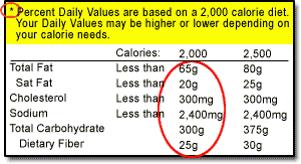
Based on a 2,000 Calorie diet, what is the total amount of dietary fiber is a person supposed to consume in a day?
a)
25g
b)
150g
c)
65g
d)
80g
172.

How Much Protein is in one serving of chips?
a)
0 Miligrams
b)
250 Miligrams
c)
2 Grams
d)
10 Grams
173.
Lifestyle choices that prevent Type 2 diabetes.
I. Eating a diet high in fat
II. Eating a diet high in protein and low in carbs
III. Exercise
IV. Drinking diet pop
V. Eating foods high in fiber
I. Eating a diet high in fat
II. Eating a diet high in protein and low in carbs
III. Exercise
IV. Drinking diet pop
V. Eating foods high in fiber
a)
II, III, and V
b)
I, II, III, IV, and V
c)
II, IV, and V
d)
I, III
174.
Autoimmune disease
a)
Type 1 Diabetes
b)
Type 2 Diabetes
175.
The type of cells that make glucagon.
a)
alpha cells of pancreas
b)
beta cells of pancreas
c)
liver
d)
brain
176.
Type of diabetes characterized by insulin resistance
a)
Type I
b)
Type II
177.
Diabetes Type II
a)
Juvenile diabetes
b)
Adult onset diabetes
178.
Hormone that causes blood sugar to be lowered
a)
Glucagon
b)
Glycogen
c)
Insulin
d)
Glucose
179.
Monosaccharide that is found in blood
a)
Disaccharide
b)
Amino Acid
c)
Nucleotide
d)
Glucose
180.
A steady or balanced state of the body
a)
Homeostasis
b)
Homeopathy
c)
Negative feedback
d)
Postive feedback
181.
This organ stores glycogen
a)
Pancreas
b)
Liver
c)
Small Intestine
d)
Spleen
182.
Positive Feedback mechanism
a)
Body's control of glucose levels
b)
Body's control of temperature
c)
Body's control of childbirth process
d)
Body's control of pH levels
183.
What happens in the liver when the bloodstream has lower than usual glucose levels
a)
Glucose is converted to glycogen
b)
Glycogen is converted to glucose
c)
The liver keeps storing glycogen
184.
Type 1 diabetes accounts for ____ of all cases.
a)
10%
b)
25%
c)
50%
d)
90%
185.

What is the best diagnosis for this patient?
a)
Type 1
b)
Type 2
c)
Normal
d)
Insulin Dependent
186.
What body system is the slow-acting control system using hormones?
a)
Endocrine
b)
Exocrine
c)
Nervous
d)
Integumentary
187.
______ is the fuel for the body that is manufactured from the food we eat.
a)
Insulin
b)
Glucagon
c)
Glucose
d)
Glucosamine
188.
Most common treatment is changes to diet and exercise
a)
Type 1
b)
Type 2
189.
Body does not respond to insulin
a)
Type 1
b)
Type 2
190.
A test that is used to determine if an individual has Type 1 or Type 2 diabetes
a)
Glucose Tolerance Test
b)
Insulin Test
191.

This type of feedback.
a)
circular
b)
negative
c)
positive
d)
oscillating
192.

Which individual(s) has/have Type 1 diabetes?
a)
Anna only
b)
Patient A
c)
Patients A and B
d)
Patient B and Anna
193.

Which individual(s) has/have diabetes?
a)
Anna and Patients A and B
b)
Patient A only
c)
Patient B and Anna
d)
Patient A and Anna
194.
A product of living cells that circulates in blood and produces a specific, often stimulatory, effect on the activity of cells that are often far from the source of the hormone.
a)
Hormone
b)
Receptor
c)
Protein Channel
d)
Cellular Fibers
195.
What acts as a protein channel for glucose?
a)
Insulin
b)
Insulin Receptors
c)
GLUT 4
d)
GLUT 14
196.

What type of carbohydrate is this?
a)
polysaccharide
b)
disaccharide
c)
monosaccharide
d)
it isn't a carbohydrate
197.

The diagram shows a bond forming between two amino acids. What is the name of this reciprocation?
a)
Dehydration Synthesis
b)
Hydrolysis
c)
Pepysis
d)
Oxidation
100 %

