
 Worksheets
SES 4U final exam review
Total questions: 100
Worksheet time: 1hrs 15mins
Name
Class
Date
1.
A naturally occurring solid that can form by inorganic processes, has a crystallized structure, and a definite chemical composition:
a)
mineral
b)
rock
c)
sediment
d)
grain
2.
Minerals MUST have all of the following characteristics EXCEPT:
a)
Crystal Structure
b)
Solid
c)
Dark Color
d)
Definite Chemical Composition
3.
Minerals are identified all of the following ways EXCEPT for:
a)
luster
b)
cleavage
c)
hardness
d)
smell
4.
A type of rock that is formed from the cooling of molten rock above or below the Earth's surface is called:
a)
igneous rock
b)
sedimentary rock
c)
metamorphic rock
5.
A type of rock that is formed when particles from other rocks or dead plants and animals are pressed and cemented together in layers is called:
a)
igneous rock
b)
sedimentary rock
c)
metamorphic rock
6.
A type of rock that can form from an existing rock that is changed y extreme heat and pressure:
a)
igneous rock
b)
sedimentary rock
c)
metamorphic rock
7.
Which of the following is one of the types of igneous rock?
a)
intrusive
b)
clastic
c)
foliated
d)
chemical
8.
Which of the following is one of the types of sedimentary rocks?
a)
extrusive
b)
organic
c)
foliated
d)
intrusive
9.
Which of the following is one type of metamorphic rock?
a)
chemical
b)
non-foliated
c)
organic
d)
extrusive
10.
In the Rock Cycle, sedimentary rock can change into what type of rock by extreme heat and pressure?
a)
igneous rock
b)
metamorphic rock
c)
sedimentary rock
11.
In the Rock Cycle, what can metamorphic rock turn into by melting?
a)
sedimentary rock
b)
magma and lava
c)
sediments
d)
igneous rock
12.
The laying down of sediments that were carried to a new location from another location is called:
a)
erosion
b)
weathering
c)
deposition
13.
Which of the following is NOT a type of weathering?
a)
chemical
b)
organic
c)
mechanical
14.
The layer of rock that forms Earth's outer surface is called the:
a)
crust
b)
mantle
c)
core
15.
The solid, central region of the Earth is called the:
a)
crust
b)
mantle
c)
core
16.
The layer of hot, solid material between Earth's crust and core is called:
a)
crust
b)
mantle
c)
core
17.
The crust and the rigid upper part of the mantle form the:
a)
lithosphere
b)
asthenosphere
c)
mesosphere
d)
mantle
18.

This rock was formed by layers and layers of sediment cemented together over time. What type of rock is this?
a)
igneous rock
b)
sedimentary rock
c)
metamorphic rock
19.

This rock was formed from the cooling of lava from a volcano. What type of rock is this?
a)
igneous rock
b)
sedimentary rock
c)
metamorphic rock
20.

This rock was formed from sedimentary rock that was once limestone. Under extreme heat and pressure it formed this new rock. What type of rock is this?
a)
igneous rock
b)
sedimentary rock
c)
metamorphic rock
21.
The breaking down of rock into smaller pieces that remain next to each other is called:
a)
erosion
b)
weathering
c)
deposition
22.
The moving of rock material from one place to another is called:
a)
erosion
b)
weathering
c)
deposition
23.

What occurs when an oceanic plate meets a continental plate
a)
Subduction
b)
Mountains Form
c)
Seafloor Spreading
d)
Convection Currents
24.
The process by which plate tectonics produces new oceanic lithosphere at ocean ridges ?
a)
Sea Floor Spearding
b)
Continetal Drift
c)
Slab
d)
Sea Floor Sinking
25.

a)
normal fault
b)
reverse fault
c)
strike-slip fault
26.

What type of volcano would this be?
a)
Shield
b)
Cinder Cone
c)
Composite
27.

What type of volcano would this be?
a)
Shield
b)
Cinder Cone
c)
Composite
28.

What type of volcano would this be?
a)
Shield
b)
Cinder Cone
c)
Composite
29.
What is molten rock that has formed deep within the Earth?
a)
Hot Spot
b)
Magma
c)
Lava
d)
Volcano
30.
What are solid rock fragments that are ejected during a volcanic eruption?
a)
Lahar
b)
Magma
c)
Pyroclastic Material
d)
Silica
31.
What do you call a large crater formed by the collapse of a volcano?
a)
Caldera
b)
Cinder Cone
c)
Composite Volcano
d)
Shield Volcano
32.
Where do volcanoes come from?
a)
Places where plates move apart
b)
Places where plates are moving together
c)
Hot Spots
d)
All of these options
33.

The huge pieces of the earth's crust are called ____________________________.
a)
crust
b)
plates
c)
directions
d)
seismos
34.
The epicenter of an earthquake is
a)
The point below the surface where rock begins to break and the first motion occurs
b)
The seismic station closest to the earthquake
c)
The place where the greatest damage occurs
d)
The point on the surface directly above the focus
35.
The Richter scale measures:
a)
the amount of radon gas released
b)
the movement of plates
c)
the strength of an earthquake
d)
the weight of tectonic plates
36.
The Modified Mercalli scale rates the amount of damage from an earthquake
a)
true
b)
false
37.
Which travels fastest, always being the first detected by seismic stations?
a)
P waves
b)
S waves
38.
How much bigger is a magnitude 8 earthquake compared to magnitude 7 one on the Richter Scale?
a)
1 time bigger
b)
10 times bigger
c)
100 times bigger
d)
1000 times bigger
39.

This is an example of a...
a)
transform boundary
b)
divergent boundary
c)
convergent boundary
40.

This is an example of a...
a)
transform boundary
b)
divergent boundary
c)
convergent boundary
41.

This is an example of a...
a)
transform boundary
b)
divergent boundary
c)
convergent boundary
42.
True or false : Deep-Ocean Trenches are underwater canyons?
a)
False
b)
True
43.
What evidence helps scientists show how sea floor spreading occurs?
a)
Ocean Floor Material
b)
Magnetic Stripes
c)
Drilling Samples
d)
All of the Above
44.
The OLDEST seafloor is located?
a)
Closest to the mid-ocean ridge
b)
Farthest from the mid-ocean ridge
45.

What is being shown here?
a)
Glacier
b)
Sand Dune
c)
Earthquake
d)
Volcano
46.
When sand particles rub against the surface of rocks and wear away the surface is called
a)
Abrasion
b)
Ventifacts
c)
Deflation
d)
Saltation
47.
A method of wind transport where large particles move by bouncing motion
a)
Abrasion
b)
Ventifacts
c)
Deflation
d)
Saltation
48.

Thin, knife-like ridges of rock made by glacial erosion are called.
a)
cirques
b)
aretes
c)
horn
d)
hanging valley
49.

Large bowl shaped depressions caused by valley glaciers are called
a)
cirques
b)
aretes
c)
horn
d)
hanging valley
50.
Large bowl shaped depressions caused by valley glaciers are called
a)
cirques
b)
aretes
c)
horn
d)
hanging valley
51.

A mountain steepened on all sides by cirques is called a
a)
cirques
b)
aretes
c)
horn
d)
hanging valley
52.
The Law of Superposition helps scientists to determine what?
a)
The absolute age of rock layers
b)
The age of fossils
c)
The relative age of rock layers
d)
the super powers of rocks
53.
How old do Paleontologists believe the Earth is?
a)
2015 years old
b)
3.6 billion years old
c)
4.6 billion years old
d)
4.6 million years old
54.

According to the law of superposition, the oldest fossils are found
a)
At the top of the rock layers
b)
Near the bottom of the rock layers
c)
In the middle of the rock layers
d)
Somewhat near the surface
55.
The length of time required for half of the radioactive atoms in a sample to decay is its...
a)
era
b)
age
c)
half-life
d)
eon
56.
Which of the following places the geologic time eras in order from oldest to most recent?
a)
Precambrian, Paleozoic, Mesozoic, Cenozoic
b)
Mesozoic, Cenozoic, Paleozoic, Precambrian
c)
Cenozoic, Mesozoic, Paleozoic, Precambrian
d)
Paleozoic, Cenozoic, Precambrian, Mesozoic
57.

Longest part of Earths history
a)
Cambrian
b)
Precambrian
c)
Phaenorozoic
d)
Cenozoic
58.
The mass extinction at the end of the Permian Period led to
a)
fewer resources during the Mesozoic Era.
b)
abundant new life-forms in the Mesozoic and Cenozoic Eras.
c)
delayed evolution of new species in the Cenozoic Era.
d)
little environmental change in the Mesozoic Era.
59.
According to the impact hypothesis, dinosaurs became extinct when
a)
the continents underwent great movement.
b)
a giant meteorite crashed into Earth.
c)
volcanic activity increased.
d)
Earth’s climate became much warmer.
60.
The Cenozoic Era is known as the
a)
Age of Reptiles.
b)
age of fishes
c)
age of evolution
d)
age of mammals
61.
What is an comet?
a)
Large planetary debris, made of ice, and inactive
b)
Small planetary debris, made of rock, and less than 100m in diameter.
c)
Large planetary debris, more than 100m in diamter, made of rock, and inactive
d)
Planetary debris, made of rock, that enters Earth's atmosphere and is vaporized
62.
What is an asteroid?
a)
Large planetary debris, more than 100m in diamter, made of rock, and inactive
b)
Inner planets, made of rock, see notes for other characteristics
c)
Outer planets, made of gas, see notes for other characteristics
d)
Planetary debris, made of rock, that enters Earth's atmosphere and hits the Earth's surface
63.
What is an meteoroid?
a)
Outer planets, made of gas, see notes for other characteristics
b)
Gradual growth of small objects by collision and sticking
c)
Small planetary debris, made of rock, and less than 100m in diameter.
d)
Inner planets, made of rock, see notes for other characteristics
64.
What is a meteorite ?
a)
Planetary debris, made of rock, that enters Earth's atmosphere and is vaporized become a meteor if it enters the earths atmosphere
b)
Small planetary debris, made of rock, and less than 100m in diameter.
c)
Small planetary debris, made of rock, and less than 100m in diameter.
d)
Planetary debris, made of rock, that enters Earth's atmosphere and hits the Earth's surface
65.
What is a definition Terrestrial planets ?
a)
Rocky portion in between Earth and Jupiter.
b)
Outer planets made of gas.
c)
Inner planets made of rock.
d)
The critical distance of which a moon is destroyed.
66.
What is the Great Red Spot?
a)
Hurricane storm system on Jupiter, twice the size of Earth
b)
Hurricane storm system on Jupiter, twice the size of Neptune
c)
Hurricane storm system on Neptune, twice the size of Earth
d)
Gradual growth of small objects by collision and sticking
67.

What is this? (Picture taken on Earth)
a)
Meteor
b)
Asteroid
c)
Meteorite
d)
Meteoroid
68.
What is unusual about the rotation of Uranus?
a)
Uranus spins really quickly
b)
Uranus spins really slowly
c)
Uranus is tipped on its side
d)
Uranus is tipped upright
69.
What is a moon?
a)
An artificial satellite that orbits a planet
b)
A natural satellite that orbits a planet
c)
An artificial satellite that orbits a star
d)
A natural satellite that orbits a star
70.
If Earth rotated slower, we would have...
a)
shorter days.
b)
longer days.
c)
shorter years.
d)
longer years.
71.

This diagram shows the ___ system, first thought by Copernicus & supported by Kepler & Galileo.
a)
Heliocentric
b)
Ptolemaic
c)
Geocentric
d)
Polycentric
72.
Kepler determined that the shape of a planets orbit around the sun is
a)
a circle
b)
an ellipse
c)
an eclipse
d)
a oblate spheroid
73.
The force of attraction between objects that have mass.
a)
Force
b)
Gravity
c)
Weight
d)
Density
74.
How does changing the distance between objects affect the force of gravity?
a)
Decreasing distance increases gravity
b)
increasing distance increases gravity
c)
Distance does not affect gravity
75.
A light year is...
a)
The speed light travels
b)
How long it takes light to get to you from the sun
c)
The distance light can travel in a year
d)
How many years it takes light to be emitted
76.
Proxima Centauri is the closest star to Earth after the Sun and is located 4.3 light years away from Earth. How long does it take light from Proxima Centauri to reach Earth?
a)
4.3 lights
b)
4.3 years
c)
4.3 millions years
d)
4.3 trillion years
77.
A planet's year is created by
a)
the number of seasons it has.
b)
its rotation on its axis.
c)
its revolution around the sun.
d)
the number of moons it has.
78.
The layer of the sun's atmosphere that gives off the visible light we see is the
a)
Corona
b)
Chromosphere
c)
Photosphere
d)
Convection zone
79.

For a solar eclipse to occur,
a)
the sun must be directly between Earth and the moon.
b)
The moon must be directly between Earth and the Sun
c)
the moon must be directly behind Earth
d)
Earth must be directly between the sun and the moon
80.

a)
#7 Prominences
b)
#7 Corona
c)
#7 Sunspots
d)
#7 Photosphere
81.
Where does fusion occur?
a)
corona
b)
photosphere
c)
core
d)
chromosphere
82.
The moon seems to change shape from day to day in a cycle that lasts about a month as it goes through _.
a)
revolutions
b)
phases
c)
rotations
d)
eclipses
83.
As the moon's shape appears to get smaller, we say that the moon is _.
a)
swelling
b)
waxing
c)
waning
d)
disappearing
84.
Which moon phase is when you can't see the moon at all?
a)
Waning crescent
b)
Full moon
c)
Waxing gibbous
d)
New moon
85.
During the phases of the Moon, the Moon appears to change shape. This change in appearance is due to the Moon...
a)
physically changing size and shape.
b)
moving closer and then farther away from Earth.
c)
reflecting a different amount of light due to alignment with Earth and the Sun.
d)
having craters on its surface.
86.
One complete revolution of the Earth around the sun takes about
a)
one rotation
b)
half a year
c)
one year
d)
one season
87.
The Earth takes about __________________ hours to complete one rotation of its axis.
a)
12
b)
24
c)
14
d)
28
88.
At all times the moon is half lit up by the sun.
a)
true
b)
false
89.

What type of telescope is pictured above?
a)
reflective
b)
refracting
c)
Space
d)
radio
90.
The spinning of an object on its axis is called______
a)
orbit
b)
rotation
c)
revolution
d)
tide
91.
Why is the light from distant galaxies red-shifted?
a)
They produce more red light than nearby galaxies
b)
They are moving away from us
c)
The longer wavelengths are filtered out more by
dust
d)
They are moving toward us
92.
The motion where the Earth's axis tilt traces a cone pattern once every 26,000 years is called
a)
rotation
b)
revolution
c)
precession
d)
nutation
93.
What is the brightest star in the sky?
a)
Rigil
b)
Vega
c)
Polaris
d)
Sirius
94.

When a star is travelling away from Earth, its light appears bluer.
a)
True
b)
False
95.
The place where a planet is closest to the Sun as it orbits the Sun is called the
a)
perihelion
b)
aphelion
96.
The place where a planet is farthest away from the Sun in its orbit around the Sun is called the
a)
aphelion
b)
perihelion
97.
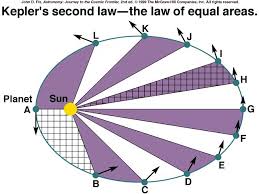
Where is the planet moving faster
a)
Position A to B
b)
Position B to C
c)
Position H to I
d)
Position I to J
98.
What has an eccentricity of zero
a)
a straight line
b)
a large ellipse
c)
a circle
d)
a small ellipse
99.
According to Kepler's 3rd law, the square of the time it takes for an object to orbit, T, is directly related to the cube of the distance, r, between the object and what it is orbiting.
a)
T3 = k*r2
b)
T2 = k*r3
c)
T3 = k/r2
d)
T2 = k/r3
100.
If an ellipse eccentricity is closer to 1, then it’s more eccentric.
a)
True
b)
False
100 %

