
Font size
S
M
L
XL
 Worksheets
Chemistry Review
Total questions: 115
Worksheet time: 2hrs 36mins
Name
Class
Date
1.
Jack has a rock. The rock has a mass of 14g and a volume of 2cm3. What is the density of the rock?
a)
7 mL
b)
7 g/cm3
c)
28 g/cm3
d)
1/7 g/cm3
2.
Which units of measurement are used for volume?
a)
grams
b)
centimeters
c)
grams/milliliter
d)
milliliter
3.
Which lab tool might you use to measure the volume of a liquid?
a)
electric scale
b)
bunsen burner
c)
test tube
d)
graduated cylinder
4.

What is the volume of Object X?
a)
10.0 cm3
b)
15.0 cm3
c)
20.0 cm3
d)
25.0 cm3
5.
Frank has an eraser. It has a mass of 4g, and a volume of 2cm3. What is its density?
a)
8 g/cm3
b)
2 g/cm3
c)
1/2 g/cm3
d)
24 g/cm3
6.
What is the formula for density?
a)
density = mass x volume
b)
density = mass / volume
c)
density = mass + volume
d)
density = mass - volume
7.
Frank has a paper clip. It has a mass of 9g and a volume of 3cm3. What is its density?
a)
3 g/cm3
b)
1/3 g/cm3
c)
27 g/cm3
d)
39 g/cm3
8.
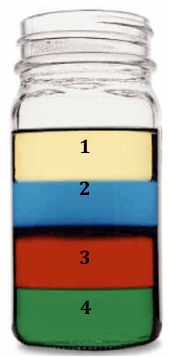
Put the liquids in order from most dense to least dense?
a)
4, 3, 2, 1
b)
1, 2, 3, 4
c)
3, 4, 2, 1,
d)
4, 3, 1, 2
9.

Which box has a higher density?
a)
Box A
b)
Box B
c)
cannot be determined
d)
they are the same
10.
In general what is the most dense form of matter?
a)
solid
b)
liquid
c)
gas
d)
plasmas
11.

Calculate the density of the cube.
a)
2 g/cm3
b)
4 g/cm3
c)
6 g/cm3
d)
8 g/cm3
12.
Why do some substances float on water?
a)
they are warmer than water
b)
they are cooler than water
c)
they are more dense than water
d)
they are less dense than water
13.
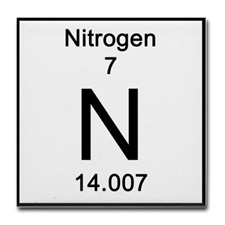
What is the number of protons that the element in this image contain?
a)
14
b)
7
c)
15
d)
18
14.
The first energy level can hold up to how many electrons?
a)
8
b)
4
c)
2
d)
5
15.

What is the atomic mass of "F"
a)
9
b)
18
c)
17
d)
19
16.
The positive particles of an atom are
a)
electrons
b)
positrons
c)
neutrons
d)
protons
17.
the central region of an atom where its neutrons and protons are is its
a)
nucleus
b)
electron cloud
c)
core
d)
center
18.
an atom with atomic number 6 would have how many protons
a)
6
b)
12
c)
3
d)
cannot be determined
19.
Particles in an atom that are neutral and have no charge are
a)
negatrons
b)
electrons
c)
neutrons
d)
protons
20.
Which of the following is a negatively charged subatomic particle?
a)
Electron
b)
Proton
c)
Neutron
d)
Quark
21.
All matter is made of what?
a)
energy
b)
atoms
c)
electrons
d)
compounds
22.
The particles that are found in the nucleus of an atom are
a)
neutrons and electrons
b)
electrons only
c)
protons and neutrons
d)
protons and electrons
23.
Where are electrons of an atom found?
a)
Nucleus
b)
Electron Cloud
c)
Some are in the nucleus and some in the electron cloud.
d)
They are moving everywhere.
24.
"C" is the element symbol for which element?
a)
calcium
b)
carbon
c)
chlorine
d)
cadmium
25.
What is the atomic symbol for sodium?
a)
Na
b)
So
c)
NaCl
d)
S
26.
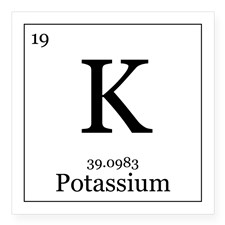
How many neutron are in the atom "K"?
a)
7
b)
2
c)
39
d)
12
27.

What is the number of protons that the element in this image contain?
a)
14
b)
7
c)
15
d)
18
28.

What the number of eletrons that this carbon have?
a)
10
b)
12
c)
6
d)
14
29.
True or False? Neutrons have a negative charge
a)
True
b)
False
30.
In the modern periodic table elements are arranged by:
a)
atomic mass
b)
atomic number
c)
valence electrons
d)
number of isotopes
31.
If an atom has 10 protons, 10 neutrons, and 10 electrons, what is the mass of the atom?
a)
10
b)
20
c)
30
32.
What is the mass number?
a)
the number of protons
b)
the number of protons and neutrons
c)
the number of neutrons
d)
the number of protons and electrons
33.
What element contains 26 protons?
a)
Iron
b)
Sodium
c)
Aluminum
d)
Helium
34.
Atoms are mostly filled with?
a)
electrons
b)
empty space
c)
protons
35.
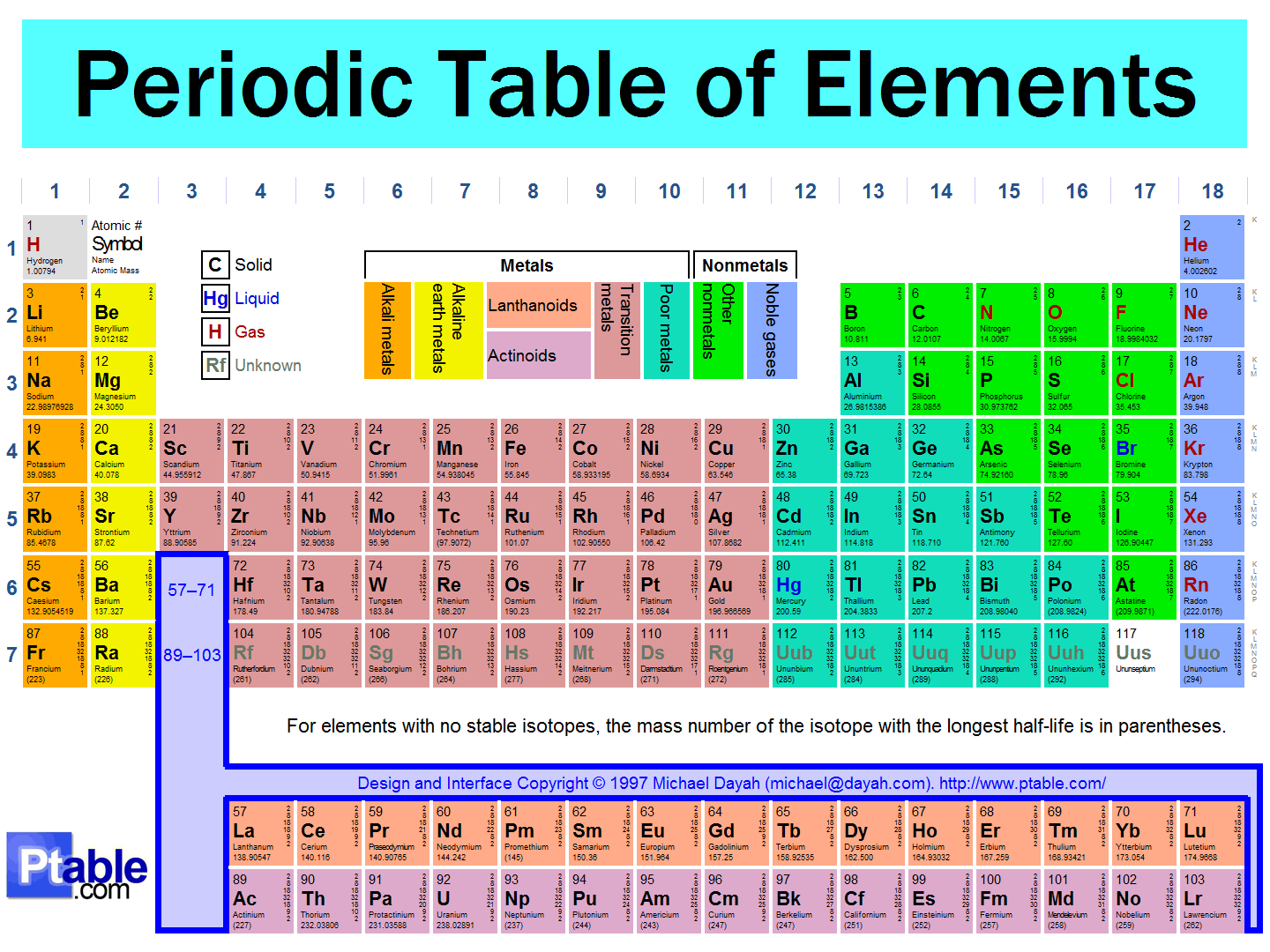
The horizontal row on the periodic table is called a
a)
group
b)
family
c)
period
d)
atomic number
36.
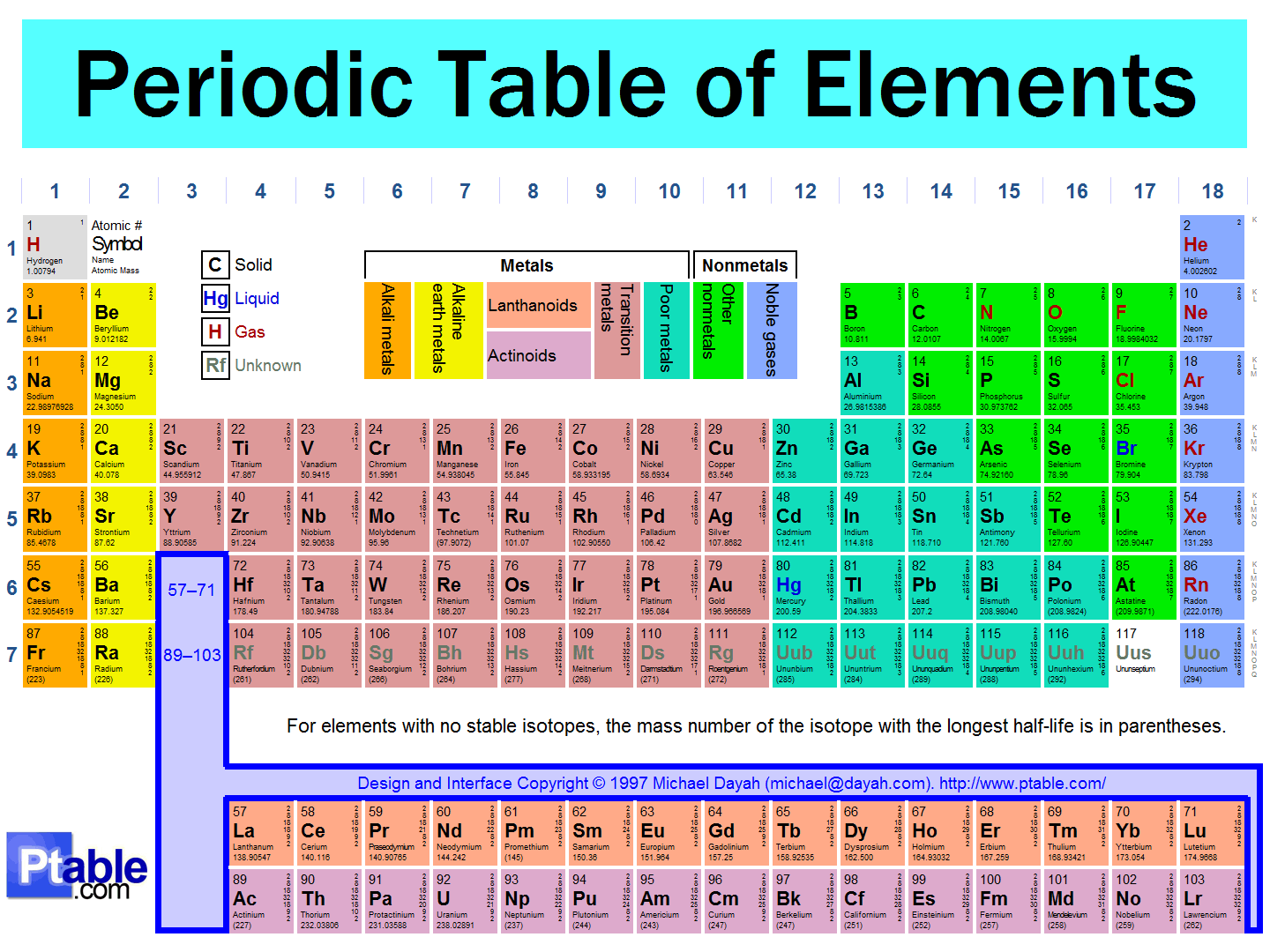
A vertical column is called...
a)
group
b)
tower
c)
period
d)
crew
37.
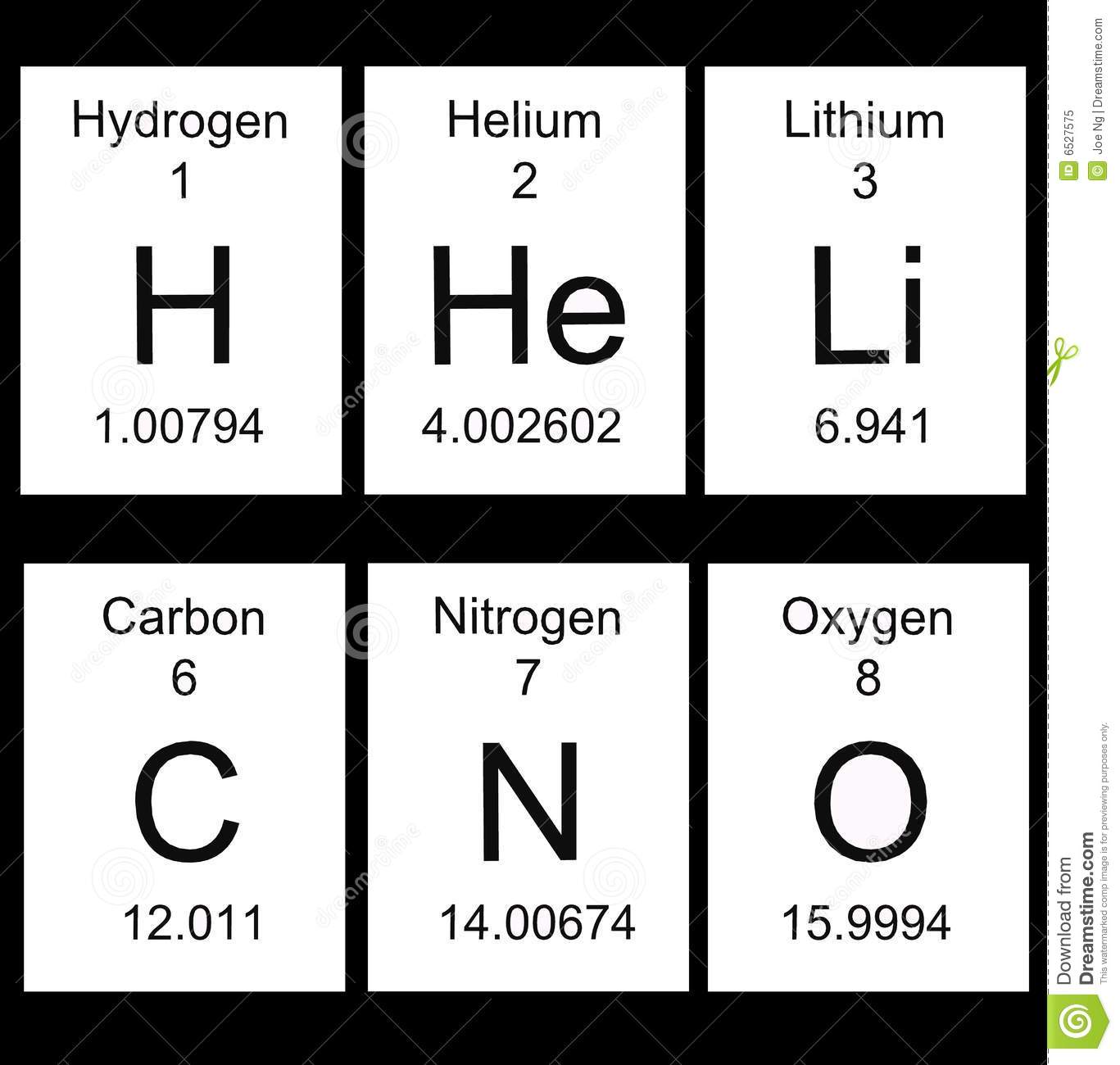
The number at the bottom of each square on the periodic table is the ...
a)
atomic number
b)
atomic mass
c)
chemical symbol
d)
element name
38.
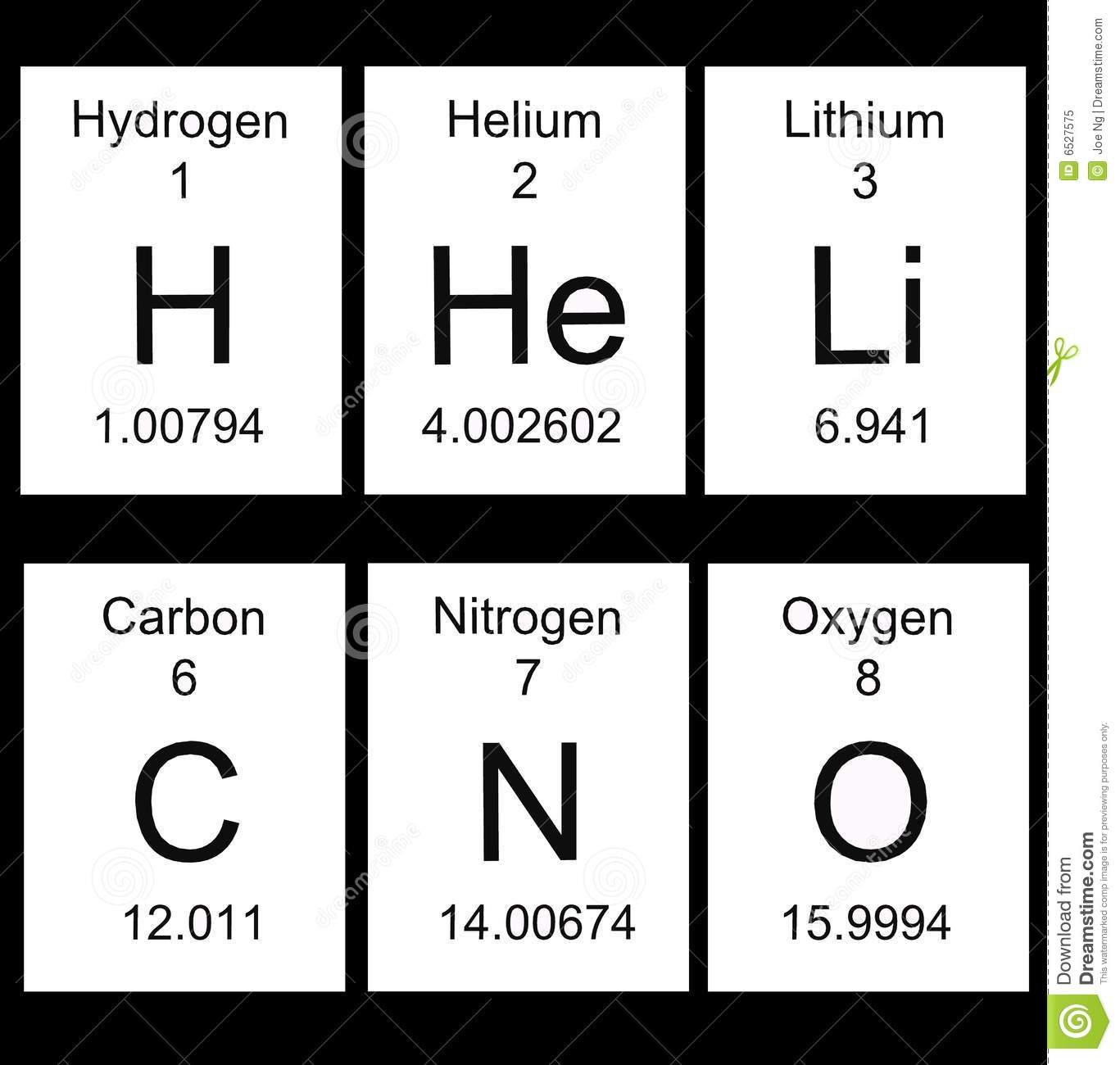
The number at the top of each square on the periodic table is the ...
a)
atomic number
b)
atomic mass
c)
Chemical Symbol
d)
Element Name
39.
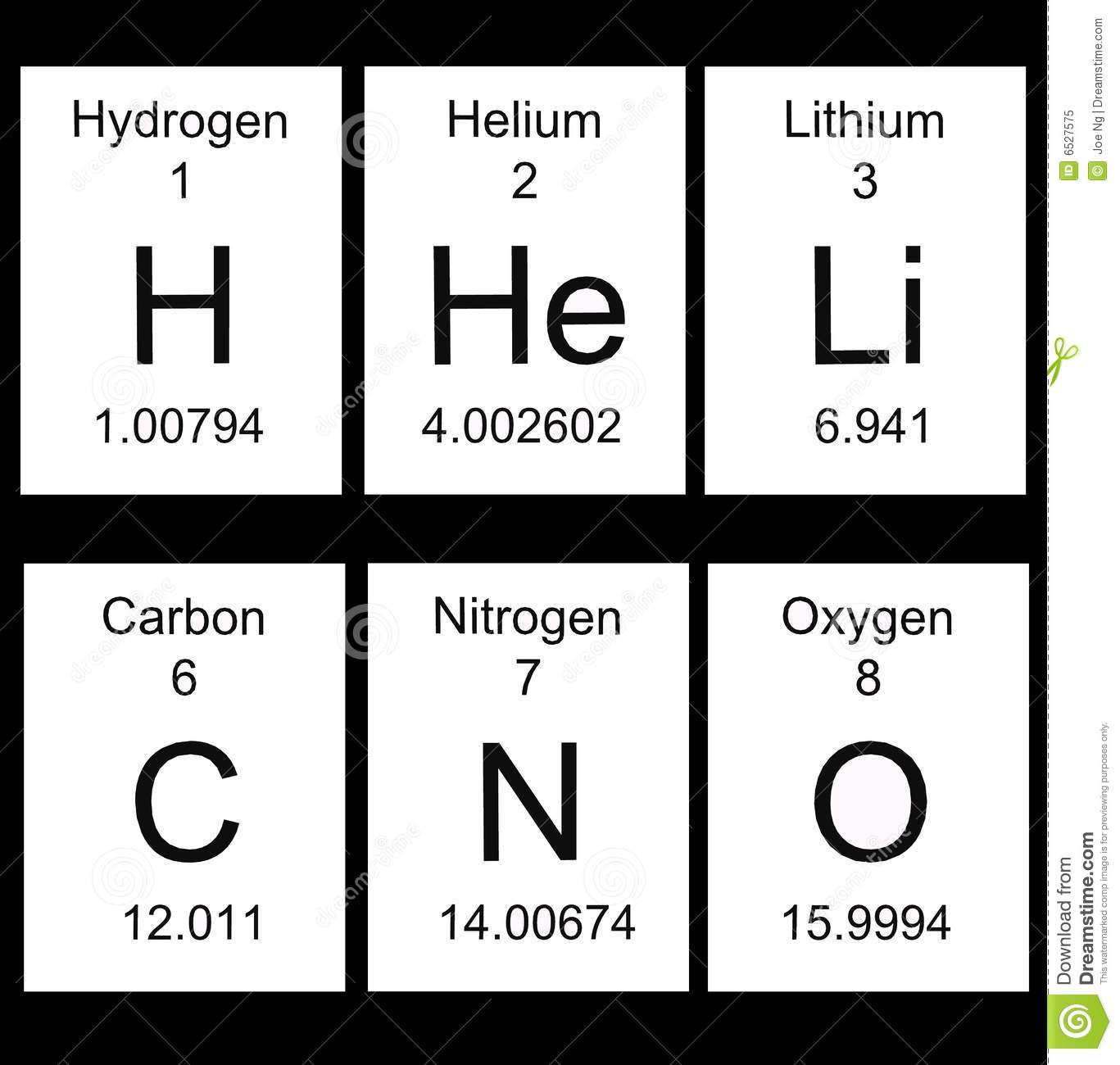
What is the chemical symbol for Lithium?
a)
H
b)
He
c)
Li
d)
N
40.

Pure forms of these elements are stored in oil so they won't react with oxygen and water in the air.
a)
Alkali Metals
b)
Alkaline-earth metals
c)
Halogens
d)
Noble Gases
41.

Most of the elements on the periodic table are classified as _____.
a)
Metals
b)
Nonmetals
c)
Metalloids
d)
Periods
42.
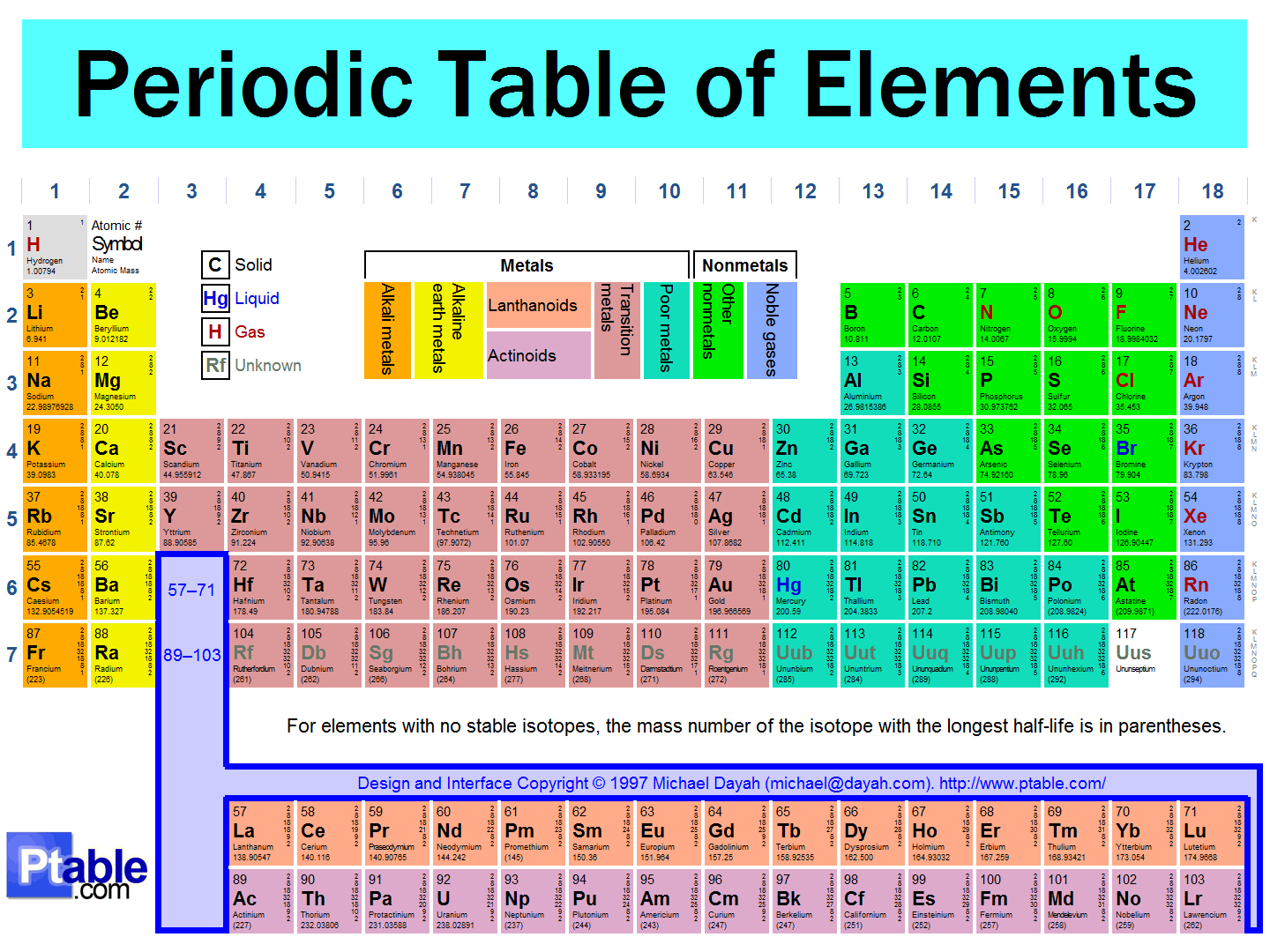
This class of elements are sometimes called "semiconductors."
a)
Metals
b)
Nonmetals
c)
Metalloids
d)
Groups
43.

How did Mendeleev arrange the elements?
a)
alphabetical
b)
density
c)
melting point
d)
atomic mass
44.
Which group of the periodic table is composed of inert (not reactive) gases?
a)
alkali metals
b)
alkaline earth metals
c)
halogens
d)
noble gases
45.
Which element is not a metal?
a)
H
b)
Re
c)
Al
d)
B
46.

The atoms along the staircase are called
a)
metals
b)
nonmetals
c)
metalloids
d)
noble gases
47.
Which is a halogen?
a)
Helium
b)
Chlorine
c)
Oxygen
d)
Neptune
48.
Which is an alkali metal?
a)
Magnesium
b)
Iron
c)
Sodium
d)
Europium
49.
True or False: Elements in a group have the same number of electrons in their outer shell.
a)
true
b)
false
50.
The properties of an element can be predicted from...
a)
color
b)
location on Periodic Table
c)
educated guess
d)
atomic number
51.
Which group of elements occur only as compounds in nature because they are extremely reactive?
a)
1
b)
18
c)
11
d)
16
52.
Valence electrons are:
a)
Electrons farthest away from the nucleus
b)
Electrons closest to the nucleus
c)
Electrons that just come and go - they don't stay with the atom
53.
When an atom loses a valence electron, it becomes a(n) _____________ ion.
a)
positive
b)
negative
c)
neutral
d)
polyatomic
54.
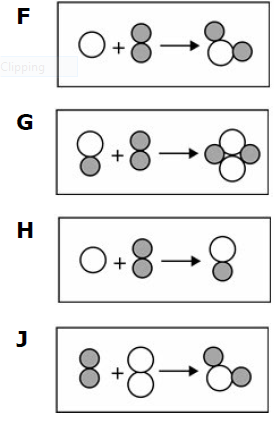
Which of the following models best demonstrates a balanced chemical equation?
a)
F
b)
G
c)
H
d)
J
55.

All of the following reactions are correctly balanced except-
a)
A
b)
B
c)
C
d)
D
56.
What is a coefficient?
a)
The small number on the right of the chemical symbol.
b)
The large number to the left of a formula.
57.
Why must chemical equations be balanced?
a)
So that the equation doesn't explode
b)
The reaction won't happen until it is balanced
c)
Based on the Law of Conservation of Matter, matter cannot be created or destroyed.
d)
Based on the Law of Conservation of Energy, energy cannot be created or destroyed.e
58.
How many atoms of hydrogen (H), sulfur (S), and oxygen (O) are there in sulfuric acid (H2SO4)?
a)
H-6, S-4, O-4
b)
H-1, S-2, O-8
c)
H-2, S-1, O-4
d)
H-2, S-4, O-4
59.

The right side of the equation below is called the
a)
products
b)
reactants
60.

The left side of the equation below is called
a)
Products
b)
Reactants
61.
A white baking soda solution was combined with white calcium chloride. Once combined the temperature increased, the substances bubbled, and were white in color. What indicators of a chemical change were shown?
a)
Temperature increase
b)
Color change
c)
Bubbling/fizzing
d)
Temperature increase and bubbling/fizzing
62.
Which of the following IS a physical change?
a)
Getting a haircut
b)
Rusty metal
c)
sour milk
d)
A compound
63.
What types of reactions absorb and release heat?
a)
acidic and basic
b)
endothermic and exothermic
c)
endothermic and heat transfusion
d)
covalent and ionic
64.
Which of the following is a chemical change?
a)
water freezes to form ice
b)
sugar dissolves in water
c)
gasoline burns in a car engine
d)
a piece of metal expands when it is heated
65.
A change in the shape of an object is an example of _________________.
a)
a chemical change
b)
energy
c)
an endothermic change
d)
a physical change
66.
Which of the following is an example of a chemical change?
a)
rusting of a bicycle
b)
painting a house
c)
washing a dog
d)
tearing up a newspaper
67.
If you combine two substances in a beaker at room temperature and the beaker feels cold to the touch, it means that the substances:
a)
have not reacted with each other
b)
have undergone an endothermic reaction
c)
have undergone a physical change
d)
have undergone an exothermic reaction
68.
The Law of Conservation of Mass states
a)
that matter exists in all states and reacts the same
b)
that matter can only be changed into new substances by introducing a catalyst
c)
that matter exists in the same state throughout any chemical change
d)
that matter cannot be created or destroyed and that the mass of the products must equal the mass of the reactants
69.
How many Al atoms are in this compound? 4Al2O3
a)
2
b)
8
c)
6
d)
4
70.

Is this equation balanced?
a)
yes
b)
no
c)
Not enough information
71.

Is this equation balanced?
a)
yes
b)
no
c)
Not enough information
72.
Balance this equation: ___ Cl2 + ___ KI → ___ KCl + ___ I2
a)
___ Cl2 +
___ KI → ___ KCl + 2 I2
b)
2 Cl2 +
___ KI → ___ KCl2 + ___ I2
c)
___ Cl2 +
2 KI → 2 KCl + ___ I2
73.

Photosynthesis is an example of a
a)
physical change
b)
chemical change
74.
Ammonia has a pH of 12. Ammonia is __________.
a)
an acid
b)
a base
c)
an element
d)
a metal
75.
Explain what happens when a strong acid and a strong base are poured into the same container.
a)
they form separate layers
b)
they mix physically but not chemically
c)
they break apart into separate elements
d)
they react chemically to form a salt
76.
When dissolved in water, bases produce:
a)
acids
b)
salts
c)
hydrogen ions
d)
hydroxide ions
77.
Which of these solutions is an acid?
a)
Dish Soap: pH of 12
b)
Tomato Soup: pH of 4
c)
Baking Soda: pH of 9
d)
Drain Cleaner: pH of 14
78.
What does the pH scale measure?
a)
the concentration of acids and bases
b)
the malleability of a metal
c)
the temperature of the water in a swimming pool
d)
the amount of phosphorus in a compound
79.
The pH of vinegar is 2.5. Vinegar is a _____________.
a)
strong acid
b)
strong base
c)
weak base
d)
weak acid
80.
Which statement is true when acids and bases are mixed together?
a)
acids become stronger
b)
bases become stronger
c)
there is no change
d)
they neutralize each other
81.
What is the pH of water?
a)
0
b)
4
c)
7
d)
14
82.
Williams collected a rain sample and measured its pH to be 5.6. What does this mean?
a)
the rain water is a weak base
b)
the rain water is neutral
c)
the rain water is a strong acid
d)
the rain water is a weak acid
83.
Litmus paper can tell you if a solution is acidic, neutral or basic by changing color when placed in a solution. If you test a base with litmus paper, it will turn ____________.
a)
purple
b)
red
c)
blue
d)
pink
84.
When dissolved in water, acids produce:
a)
bases
b)
salts
c)
hydrogen ions
d)
hydroxide ions
85.

Which food is the most acidic?
a)
bananas
b)
lemon juice
c)
orange juice
86.
The pH scale measures ____ and ____
a)
acidity and basic
b)
the temperature
c)
how fun a chemistry quiz is
d)
none of the above
87.
A ( ) is a substance that either contains hydroxide ions (OH-) or reacts with water to form hydroxide ions.
a)
acid
b)
base
c)
hydronium ion
d)
water
88.
HCl is...
a)
An acid
b)
A base
c)
Neutral
89.
Ionic Bonding involves...
a)
The transfer of protons
b)
The transfer of nuetrons
c)
The transfer of electrons
d)
None Of the above
90.
What do atoms that form positive ions tend to do?
a)
Tend to lose electrons
b)
Tend to lose protons
c)
Tend to gain electrons
d)
Tend to gain protons
91.
What happens when the sodium atom loses an electron?
a)
It become negatively charged
b)
It become positively charged
c)
none
92.
Covalent compounds
a)
Share electrons
b)
transfer electrons
c)
contain a sea of electrons
d)
conduct electricity
93.
What two types of atoms make a covalent bond?
a)
2 Nonmetals
b)
1 Nonmetal and 1 Metal
c)
2 Metals
d)
2 Noble Gases
94.

What elements generally make an ionic bond?
a)
metal and nonmetal
b)
2 or more nonmetals
c)
metal
d)
none of the above
95.
Predict the bond that will form between Be and F.
a)
Ionic
b)
Covalent
96.
Predict the bond that will form between Se and Cl.
a)
Ionic
b)
Covalent
97.
Predict the bond that will form between Sr and S.
a)
Ionic
b)
Covalent
98.
What is the number of valence electrons for Oxygen?
a)
8
b)
6
c)
2
d)
1
99.
What is the number of valence electrons for Beryillum?
a)
1
b)
4
c)
2
d)
7
100.
What is the number of valence electrons for Silicon?
a)
1
b)
2
c)
6
d)
4
101.
What is the number of valence electrons for Neon?
a)
6
b)
7
c)
8
d)
9
102.

A model of an atom that shows all of the electrons in their energy levels (shells) is called
a)
electron dot diagram
b)
valence electrons
c)
Bohr Model
103.

Which of these is covalent?
a)
NaCl
b)
Pb(NO3)2
c)
CO2
d)
AlCl3
104.
__________ are made up of solutes and solvents.
a)
Solutions
b)
Suspensions
c)
Heterogeneous Mixtures
d)
Pure Substances
105.
When a solvent contains as much of the solute as it can hold, the solution is said to be
a)
supersaturated
b)
diluted
c)
saturated
d)
unsaturated
106.

The substance with the least change in solubility is
a)
sodium chloride
b)
potassium chloride
c)
lead nitrate
d)
calcium chloride
107.

At approximately what temperature does the solubility of sodium chloride, NaCl, match the solubility of potassium dichromate, K2Cr2O7?
a)
60 ºC
b)
30 ºC
c)
50 ºC
d)
83 ºC
108.

How many grams of K2Cr2O7, are soluble in 100 g of water at 95 ºC?
a)
83 grams
b)
75 grams
c)
40 grams
d)
12 grams
109.

Which solute is the least soluble at 90 ⁰C?
a)
SO2
b)
KClO3
c)
KI
d)
HCl
110.

Which substance is MOST soluble at 0 ºC?
a)
KI
b)
NaNO3
c)
NaCl
d)
Ce2(SO4)3
111.
The substance doing the dissolving is the
a)
solvent
b)
solute
112.
The substance being dissolved is the
a)
solvent
b)
solute
113.
When a solution can hold more solute, it is
a)
unsaturated
b)
saturated
c)
supersaturated
114.
When a solution holds more solute than it ordinarily can, it is
a)
unsaturated
b)
saturated
c)
supersaturated
115.

Is this an example of an organic or inorganic compound?
a)
Organic
b)
Inorganic
Reset

