wayground logo

Free Printable Worksheets

Font size

S
M
L
XL
Worksheets

IIT-JEE & NEET LEVEL-8 (9-O)

Total questions: 110

Worksheet time: 2hrs 50mins
Name
Class
Date
1.
What is a magnitude?
a)
A numeric value.
b)
A direction.
2.
A scalar is a magnitude _____.
a)
With direction.
b)
Without direction.
3.
Wind blowing at 20 mph.Vector or scalar?
a)
Scalar
b)
Vector
4.
30 m/sec, East. Scalar or Vector
a)
Scalar
b)
Vector
c)
Neither
5.
A deer running 15 meters per second due west.Vector or scalar?
a)
Scalar
b)
Vector
6.
Distance and direction of an object's change in position from a starting point
a)
displacement
b)
distance
c)
motion
d)
reference point
7.
 Amy runs 2 miles south, then turns around and runs 3 miles north. What is displacement?
a)
5 miles
b)
1 mile 
c)
2 miles south
d)
1 mile north 
8.
Which of the following is always positive?
a)
vector
b)
scalar
c)
direction
d)
magnitude
9.
Which of the following may you do to a vector without changing it?
a)
Add a nonzero vector to a vector.
b)
Multiply a vector by a scalar other than 1.
c)
Rotate a vector through any angle other than 360 degrees.
d)
Move the vector without changing its orientation.
10.
The _______ of two or more vectors is the sum of the vectors.
a)
components
b)
scalar
c)
resultant
d)
magnitude
11.
Distance
a)
Vector
b)
Scalar
12.
A car travels 90 meters due north in 15 seconds. Then the car turns around and travels 40 meters due south.  What is the magnitude and direction  of the car's resultant displacement?  
a)
40 metres, South
b)
50 metres, South
c)
50 metres, North
d)
40 metres, North 
13.
Which statement describes a vector?
a)
It has magnitude but no direction
b)
It has direction but no magnitude
c)
It has both direction and magnitude
d)
It has constant magnitude but no
 direction
14.
Is this a scalar quantity or a vector quantity?
Wind blowing at 20 knots
a)
Scalar
b)
Vector
15.
Is this a scalar quantity or a vector quantity?
A deer running 15 meters per second due west

a)
Scalar
b)
Vector
16.
If a boomerang is thrown 20 m in a straight line and returns exactly to the spot it was thrown what is its displacement?
a)
20m
b)
40m
c)
0m
d)
-20m
17.
Which of these is not a vector quantity? 
a)
displacement 
b)
time
c)
velocity 
d)
acceleration
18.
What is the net force?
100 N        230 N
<------        --------->
a)
30 N to the right
b)
230 N to the right
c)
130 N to the right
d)
This is a balanced force
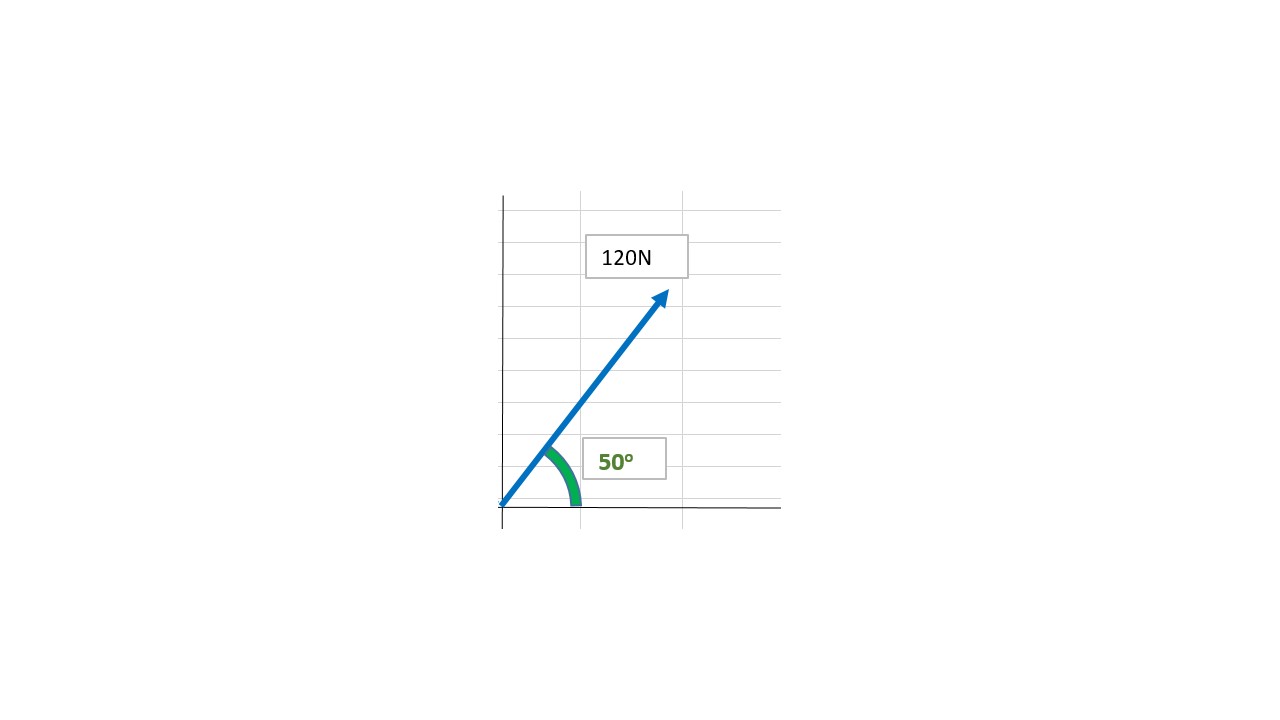
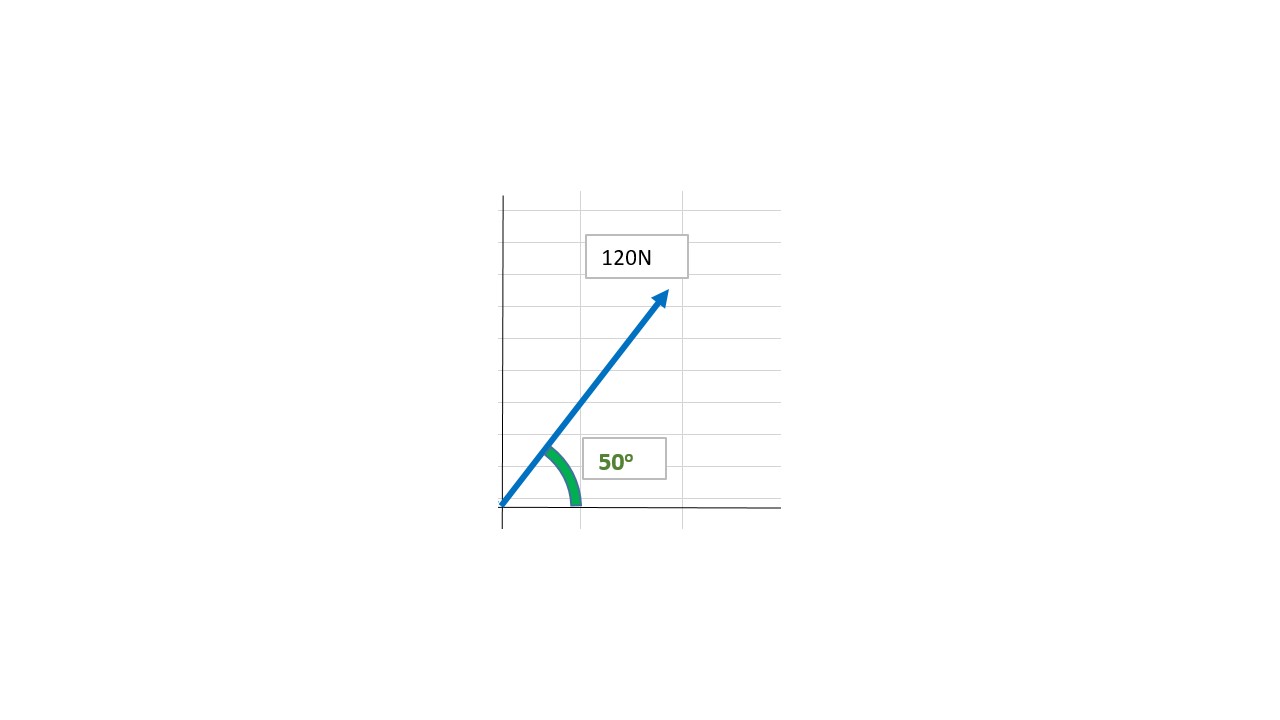
19.
What is the x component of the vector given in the diagram?
a)
77N
b)
92N
c)
120N
d)
60N
20.
What is the y component of the vector given in the diagram?
a)
77N
b)
92N
c)
120N
d)
60N
21.

How many type of disease?

a)

1

b)

2

c)

3

d)

4

22.

Antibiotics affect ...

a)

viruses

b)

bacteria

c)

fungi

d)

All of the above

23.

Pathogen enters our body through

a)

Skin

b)

Respiratory system

c)

Digestive system

d)

All above

24.

Our first line of body defence is

a)

Antibodies

b)

White blood cells

c)

Skin

25.
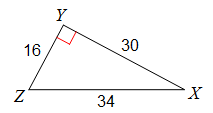
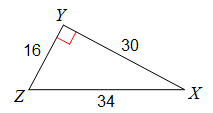
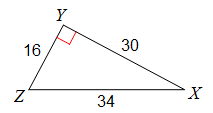
What is the length of the hypotenuse?
a)
16
b)
30
c)
34
26.
What is the length of the side opposite ∠X?
a)
16
b)
30
c)
34
27.
What is the length of the side adjacent to ∠Z?
a)
16
b)
30
c)
34
28.
What is the ratio for Sine?
a)
Hyp/Opp
b)
Opp/Hyp
c)
Opp/Adj
d)
Adj/Opp
29.

What is the ratio for Tangent

a)

Opp/Adj

b)

Adj/Opp

c)

Opp/Hyp

d)

Hyp/Opp

30.
What is the ratio for Cosine?
a)
Opp/Hyp
b)
Opp/Adj
c)
Adj/Opp
d)
Adj/Hyp
31.
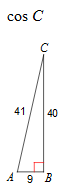
What is the correct ratio?
a)
9/41
b)
40/41
c)
9/40
d)
40/9
32.
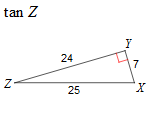
What is the correct ratio?
a)
7/24
b)
24/7
c)
7/25
d)
24/25
33.
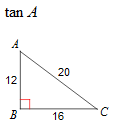
What is the correct ratio?
a)
20/12
b)
12/20
c)
12/16
d)
16/12
34.
What is the correct ratio?
a)
6/10
b)
6/8
c)
8/10
d)
8/6
35.
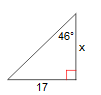
What is the correct equation to solve for x ?
a)
tan( 46 ) = 17/x
b)
sin ( 46 ) = x/17
c)
tan (46 ) = x/17
d)
cos (46) = x/17
36.
What is the correct equation to solve for x?
a)
tan (45) = x/13
b)
cos (45) = x/13
c)
sin (45) = 13/x
d)
sin (45) = x/13
37.
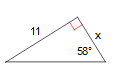
What is the correct equation to solve for x ?
a)
tan (58) = x/11
b)
tan (58) = 11/x
c)
cos (58) = x/11
d)
sin (58) = x/11
38.
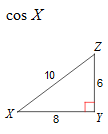
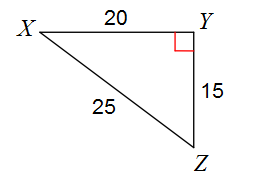
Find the value of tan X.
a)
3/4
b)
4/3
c)
5/3
d)
3/5
39.

Which trigonometric ratio should you use?

a)

Tangent Ratio

b)

Sine Ratio

c)

Cosine Ratio

d)

Any ratio

40.

Which trigonometric ratio should you use?

a)

Tangent Ratio

b)

Sine Ratio

c)

Cosine Ratio

d)

Any ratio

41.

Which trigonometric ratio should you use?

a)

Tangent Ratio

b)

Sine Ratio

c)

Cosine Ratio

d)

Any ratio

42.

Which trigonometric ratio should you use?

a)

Tangent Ratio

b)

Sine Ratio

c)

Cosine Ratio

d)

Any ratio

43.

Which trigonometric ratio should you use?

a)

Tangent Ratio

b)

Sine Ratio

c)

Cosine Ratio

d)

Any ratio

44.

Which trigonometric ratio should you use?

a)

Tangent Ratio

b)

Sine Ratio

c)

Cosine Ratio

d)

Any ratio

45.

The ratio in a right triangle of adjacent to hypotenuse is _____

a)

sine

b)

cosine

c)

tangent

d)

hypotenuse

46.
HAS HE GOT A COLD?
a)
YES, HE HAS.
b)
NO, HE HASN'T.
c)
YES, HE HAVE.
d)
NO, HE HAVEN'T.
47.
a)
SORE THROAT
b)
COUGH
c)
CUT
d)
COLD
48.

________ provide us energy to do work, help in repairing old cells, etc .

a)

Nutrients

b)

protein

c)

fats

d)

minerals

49.

DEFINE DEFICIENCY DISEASES

a)

diseases caused by shortage of nutrients in our body

b)

helps in building immunity

c)

diseases that are caused by the spreading of germs from one person to another

50.
Cancer, Emphysema, and Allergies are all types of 
a)
Communicable Diseases
b)
Viruses
c)
Bacteria
d)
Non-Communicable Diseases
51.
A disease that is caused by germs and can spread from person to person is called a 
a)
Non Communicable Disease
b)
Communicable Disease
c)
Allergy
d)
Virus
52.
An agent that causes disease, or a germ is called a 
a)
Parasite
b)
Bacteria
c)
Pathogen
d)
Fungii
53.
A dose of weakened or killed germs of one kind that helps the body make antibodies to protect itself is called a
a)
Vaccine
b)
Antibiotic
c)
Antibody
d)
Pathogen
54.
The body's resistance to a disease through the presence of anitbodies is known as
a)
Virus
b)
Antibody
c)
Vaccine
d)
Immunity
55.
An allergy that affects the respiratory system; may result in difficulty breathing and wheezing
a)
Asthma
b)
Allergic reaction
c)
Cancer
d)
Bacteria
56.

How can transmission of HIV be prevented?

a)

Wearing a mask

b)

Condom

c)

Washing your hands

d)

Disinfectant

57.

How is influenza different from the common cold?

a)

High fever

b)

Coughing

c)

Sneezing

d)

Blocked nose

58.

Lack of exposure to sunlight may lead to deficiency of this ______________.

a)

Vitamin D

b)

Vitamin K

c)

Vitamin E

59.
Which of these causes lung cancer?
a)
smoking
b)
drinking alcohol
c)
exercise
d)
obesity
60.
Which of these causes liver disease
a)
exercise
b)
smoking
c)
drinking alcohol
d)
obesity
61.
A person is told they are at risk of a heart attack what would make their health better?
a)
Drinking alcohol
b)
Start smoking
c)
exercise
d)
eat lots of burgers
62.
Alcohol increase accidents because alcohol affects your....
a)
brain
b)
heart
c)
liver
d)
kidneys
63.

These are very tiny living things that are found almost everywhere.

a)

Parasites

b)

Fungi

c)

Viruses

d)

Bacteria

e)

Communicable Diseases

64.

These are diseases that can be spread directly or indirectly from one person to another.

a)

Parasites

b)

Fungi

c)

Viruses

d)

Bacteria

e)

Communicable Diseases

65.

These are very tiny creatures that are smaller than bacteria. They cannot grow or breed if they are not inside a living cell.

a)

Parasites

b)

Fungi

c)

Viruses

d)

Bacteria

e)

Communicable Diseases

66.

Which set of triads DOES NOT fit Dobereiner's Law of Triads?

a)

lithium, sodium, potassium

b)

calcium, strontium, barium

c)

phosphorus, arsenic, antimony

d)

chlorine, bromine, iodine

67.

In which order do we need to put sodium, potassium, lithium, for Dobereiner's Law of Triads ?

a)

lithium, sodium, potassium

b)

sodium, lithium, potassium

c)

potassium ,lithium, sodium

d)

sodium, potassium, lithium

68.

The 'law of octaves' was enunciated by:

a)

Lother Mayer

b)

Mendeleev

c)

Dobereiner

d)

Newlands

69.

On what basis were the elements arranged in Dobereiner's triads ?

a)

atomic number

b)

atomic mass

c)

electron number

d)

number of electrons

70.

If two members of a Dobereiner traid are calcium and stroncium, the third member of the triad is:

a)

cesium

b)

magnesium

c)

barium

d)

sodium

71.

The Newlands' law of octaves for the classification of elements was found to be applicable only up to the _______ element

a)

potassium

b)

calcium

c)

cobalt

d)

phosphorus

72.
Simplify fully: 
2√45 - 5√45 + 9√16
a)
-9√5 + 36
b)
-3√45 + 144
c)
6√16
d)
6√106
73.

  3×4\sqrt{3}\times\sqrt{4}  =

a)

 3×4\sqrt{3\times4}  

b)

 3+4\sqrt{3+4}  

c)

 3×43\times4  

d)

 7\sqrt{7}  

74.

 57=\frac{\sqrt{5}}{\sqrt{7}}=  

a)

 57\frac{5}{7}  

b)

 57\sqrt{\frac{5}{7}}  

c)

 57\sqrt{5}-\sqrt{7}  

d)

 (57)2\left(\frac{5}{7}\right)^2  

75.

 (54)(5+4)=\left(\sqrt{5}-\sqrt{4}\right)\left(\sqrt{5}+\sqrt{4}\right)=  

a)

 545-4  

b)

 5+45+4  

c)

 52425^2-4^2  

d)

 52+425^2+4^2  

76.

Simplify (y2)3\left(y^2\right)^3 

a)

 y5y^5  

b)

 yy  

c)

 y23y^{23}  

d)

 y6y^6  

77.

Simplify 5d4×3d85d^4\times3d^8  

a)

 8d328d^{32}  

b)

 15d415d^4  

c)

 15d1215d^{12}  

d)

 8d128d^{12} 

78.

Simplify (a3)3×a\left(a^3\right)^3\times a  

a)

 a9a^9  

b)

 a7a^7  

c)

 a10a^{10}  

d)

 a12a^{12}  

79.

Evaluate (2)3\left(-2\right)^3  

a)

-8

b)

-6

c)

6

d)

8

80.

Simplify (x4)3\left(x^4\right)^{-3}  

a)

 x7x^{-7}  

b)

 1x12\frac{1}{x^{12}}  

c)

 x1x^1  

d)

 x1x^{-1}  

81.

Identify another way of writing 1x9\frac{1}{x^9}  

a)

 (x3)3\left(x^3\right)^{-3}  

b)

 x12×x3x^{12}\times x^{-3}  

c)

 x4×x5x^4\times x^5  

d)

 (x3)3\left(x^3\right)^3 

82.

Simplify a0 + a0a^0\ +\ a^0  

a)

 a0a^0  

b)

 2a02a^0  

c)

 11  

d)

 22  

83.

The conjugate surd of  (32)\left(3-\sqrt{2}\right)  is

a)

 23\sqrt{2}-3  

b)

 32\sqrt{3}-\sqrt{2}  

c)

 3+23+\sqrt{2}  

d)

 32\sqrt{3}-2  

84.

Which of the following is considered as rationalising the denominator of  311\frac{3}{\sqrt{11}}  ?

a)

 311×113\frac{3}{\sqrt{11}}\times\frac{\sqrt{11}}{3}  

b)

 311×113\frac{3}{\sqrt{11}}\times\frac{11}{\sqrt{3}}  

c)

 311×33\frac{3}{\sqrt{11}}\times\frac{3}{3}  

d)

 311×1111\frac{3}{\sqrt{11}}\times\frac{\sqrt{11}}{\sqrt{11}}  

85.

Which of the following is considered as rationalising the denominator of   325+4\frac{3-\sqrt{2}}{\sqrt{5}+4}  ?

a)

 325+4×3254\frac{3-\sqrt{2}}{\sqrt{5}+4}\times\frac{3-\sqrt{2}}{\sqrt{5}-4}  

b)

 325+4×5+45+4\frac{3-\sqrt{2}}{\sqrt{5}+4}\times\frac{\sqrt{5}+4}{\sqrt{5}+4}  

c)

 325+4×4545\frac{3-\sqrt{2}}{\sqrt{5}+4}\times\frac{4-\sqrt{5}}{4-\sqrt{5}}  

d)

 325+4×5454\frac{3-\sqrt{2}}{\sqrt{5}+4}\times\frac{\sqrt{5}-4}{\sqrt{5}-4}  

86.

 (2+3)(23)=\left(2+\sqrt{3}\right)\left(2-\sqrt{3}\right)=  

a)

 232-3  

b)

 2+32+3  

c)

 2232^2-3  

d)

 22+32^2+3  

87.

Simplify  2+3×4\sqrt{2}+\sqrt{3}\times\sqrt{4}  

a)

 2+23\sqrt{2}+2\sqrt{3}  

b)

 2+12\sqrt{2}+\sqrt{12}  

c)

 20\sqrt{20}  

d)

 14\sqrt{14}  

88.

 64=\sqrt{-64}=  

a)

 8-8  

b)

 88  

c)

 8i8i  

d)

 8i-8i  

89.

The following are rational numbers except

a)

2.30

b)

2\sqrt{2}

c)

25\sqrt{25}

d)

25\frac{2}{5}

90.
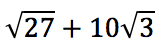
Simplify
a)
13√3
b)
10√30
c)
13√6
d)
11√3
91.
Simplify: 
√5 x √6
a)
2√15
b)
√11
c)
√30
d)
3√10
92.

Upto which element, the Law of Octaves was found applicable?

a)

CALCIUM

b)

MAGNESIUM

c)

ALUMINIUM

d)

POTASSIUM

93.

Carbon

a)

CA

b)

C

c)

Ca

d)

Cn

94.

Sn

a)

tin

b)

sulfur

c)

iron

d)

sodium

95.

Zinc

a)

Z

b)

Zi

c)

ZN

d)

Zn

96.

Sulfur

a)

Sf

b)

Su

c)

Sr

d)

S

97.

Neon

a)

N

b)

No

c)

Ne

d)

Nn

98.

Calcium

a)

Cl

b)

Ca

c)

C

d)

Cm

99.

Calcium

a)

Cl

b)

Ca

c)

C

d)

Cm

100.

Copper

a)

CU

b)

Cp

c)

Cu

d)

Cr

101.

Helium

a)

He

b)

Hl

c)

HE

d)

Hm

102.

Hydrogen

a)

Hy

b)

H

c)

Hr

d)

Hn

103.

N

a)

Sodium

b)

Nitrogon

c)

Nonium

d)

Nitrogen

104.

Gold

a)

Go

b)

Gl

c)

AU

d)

Au

105.

Iron

a)

Ir

b)

In

c)

Fe

d)

FE

106.

Nickel

a)

Ni

b)

N

c)

Nl

d)

Nc

107.

Mercury

a)

Me

b)

Hg

c)

HG

d)

ME

108.

Iodine

a)

Ie

b)

I

c)

Id

d)

Io

109.

Potassium

a)

P

b)

K

c)

Pt

d)

k

110.

Potassium

a)

P

b)

K

c)

Pt

d)

k