wayground logo

Free Printable Worksheets

Font size

S
M
L
XL
Worksheets

Spring 2023 Physics FULL FINAL REVIEW

Total questions: 114

Worksheet time: 2hrs 56mins

Name
Class
Date
1.
You serve a volleyball with a mass of 2 kg. The ball leaves your hand with a speed of 30 m/s. What is the KE of the ball?
a)
900 J
b)
1800 J
c)
60 J
d)
30 J
2.
There is a bell at the top of a tower that is 45 m high. The bell weighs 100 kg. What is the potential energy of the bell?
a)
980 J
b)
441 J
c)
4,500 J
d)
44,100 J
3.
A car is traveling with a velocity of 40 m/s and has a mass of 1120 kg. What is the KE of the car?
a)
22,400 J
b)
44,800 J
c)
896,000 J
d)
1,792,000 J
4.
An 2 kg apple is hanging in a tree, 10 ft off the ground. What is the gravitational potential energy of the apple?
a)
19.6 J
b)
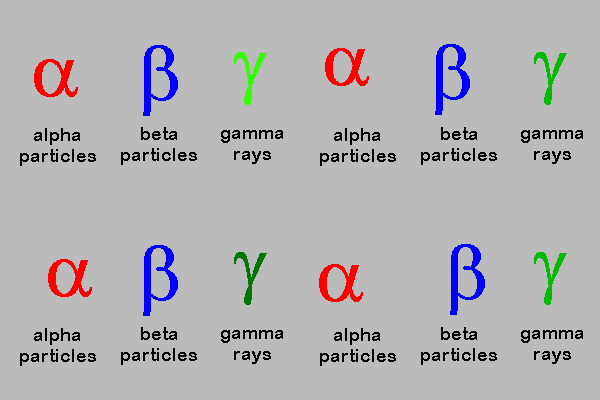
20 J
c)
98 J
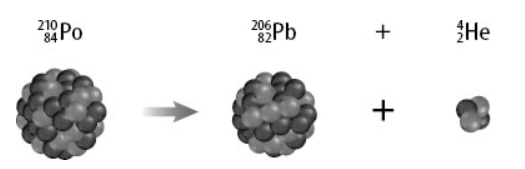
d)
196 J 
5.
Which of the following has the GREATEST IMPACT on the kinetic energy of an object?
a)
Mass 
b)
Velocity
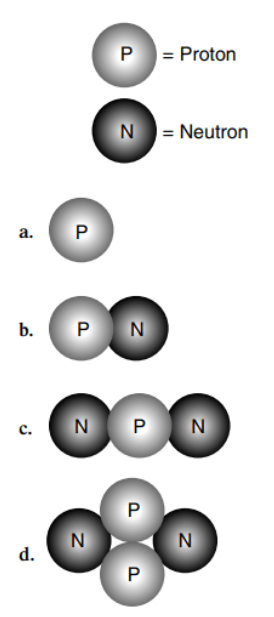
c)
Height
d)
The acceleration due to gravity
6.
The acceleration of an object due to gravity on Earth is...
a)
8.9 m/s2
b)
9.8 m/s2
c)
It depends on the mass of an object
d)
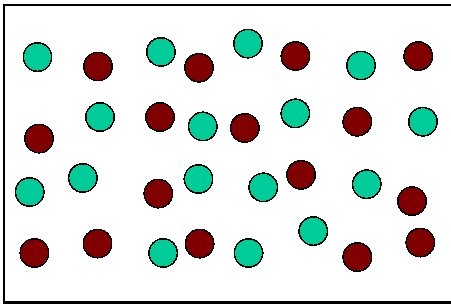
Equal to its kinetic energy
7.
A skydiver jumps from a plane and is halfway through her descent. At this point in time she has...
a)
Kinetic Energy
b)
Gravitational Potential Energy
c)
Both Kinetic and Gravitational Potential Energy
d)
She has no energy
8.
Which of the following has the greatest amount of gravitational potential energy?
a)
A 20 kg projector suspended 10 m in the air
b)
A 100 kg wrecking ball suspended 10 m in the air
c)
A 5 kg basketball suspended 10 m in the air
d)
They all have the same GPE because they are all 10 m in the air
9.
Which of the following affects the gravitational potential energy of an object?
a)
The mass of the object
b)
The height of the object
c)
The velocity of the object
d)
Both the mass and height of the object
10.

Alice kicks a soccer ball with a mass of 2.1 kg. The ball leaves the ground moving 30 meters per second. What is the kinetic energy of the soccer ball?

a)

567 J

b)

900 J

c)

945 J

d)

30 J

11.

If the 0.3 kg marble was moving at 6 m/s at the bottom of the ramp, how much kinetic energy did the marble have?

a)

5.4 J

b)

1.8 J

c)

3 J

d)

6 J

12.

Ty lifts a set of 1250kg weights a vertical distance of 2m in a weight lifting contest. What Potential Energy do the weights now possess?

a)

12,789 Joules

b)

24,500 Joules

c)

4,500 Joules

13.

Energy due to motion= ____________ energy.

a)

Potential

b)

Elastic

c)

Kinetic

d)

Friction

14.
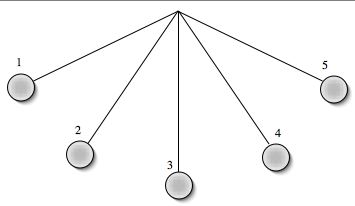
When a pendulum swings, at which point is kinetic energy highest?
a)
1
b)
2
c)
3
d)
4
15.

Energy can be transformed from one type of energy to another.

a)

True

b)

False

16.
A basketball is being held in the hands of a player.
a)
Potential
b)
Kinetic
17.
At which position would the roller coaster be converting kinetic energy to gravitational energy?
a)
A to B
b)
B to C
c)
C to D
d)
No such transformation.
18.
Gravitational potential energy depends on the ________ and ________ of the object. 
a)
Height and mass
b)
Friction and movement
c)
Mass and Movement
d)
Height and Friction 
19.
__________ is stored energy. 
a)
Potential
b)
Kinetic
c)
None of the above 
d)
All of the above 
20.
The faster an object moves, the ________ kinetic energy it has. 
a)
more
b)
less
c)
none of the above
d)
all of the above 
21.
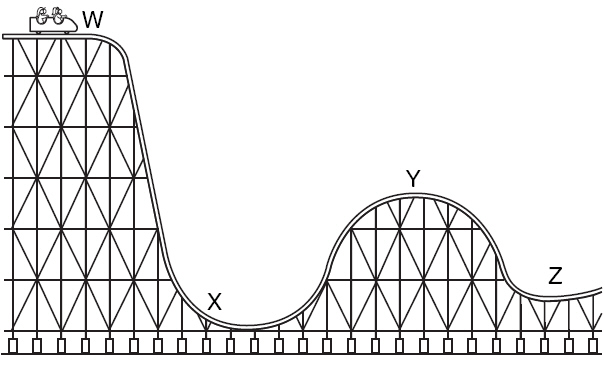
At which point is potential energy greatest?
a)
W
b)
X
c)
Y
d)
Z
22.
At which point is kinetic energy greatest? 
a)
W
b)
X
c)
Y
d)
Z
23.
In order to INCREASE the potential energy of an object, you need to:
a)
put the object lower to the ground
b)
raise the object higher
24.
Energy is measured using which unit?
a)
Grams
b)
Meters
c)
Watts
d)
Joules
25.
____________ is the ability to cause change. 
a)
Energy 
b)
Force 
c)
Friction
d)
Motion
26.
When a pendulum swings, at which point is potential energy at its greatest
a)
1
b)
2
c)
3
d)
4
27.
The equation for potential energy. 
a)
PE = m + h
b)
PE = mh
c)
PE = mgh
d)
PE = gh
28.
The equation for kinetic energy. 
a)
KE = mv2
b)
KE = 1/2 mv2
c)
KE = mv
d)
KE = 1/2 mv
29.
Energy can not be created or destroyed, only converted from one form to another.
a)
true
b)
false
30.

At which position does the child on the swing have the most gravitational potential energy?

a)

W

b)

X

c)

Y

d)

Z

31.

Units of force are...

a)

Newtons

b)

Grams

c)

Joules

d)

Meters

32.

Fossil fuels are found

a)

in desert army bases

b)

near river banks

c)

deep within the earth

d)

at mountain tops

33.

Which of the following is NOT a fossil fuel?

a)

coal

b)

oil

c)

wood

d)

natural gas

34.

Coal is often burned to produce

a)

pollution

b)

water power

c)

better roads

d)

electricity

35.

Nonrenewable means

a)

if it's used up, it's gone

b)

we can always make more

36.

The major con of using fossil fuels is

a)

air pollution

b)

water pollution

c)

burning trees

d)

garbage produced

37.

Hydroelectric power is electricity created by

a)

water

b)

the sun

c)

burning coal

d)

burning wood

38.

Global warming is an effect of

a)

wearing too many coats in winter

b)

too much carbon dioxide from burning fuels

c)

melting glaciers at the poles

39.

Solar energy comes from

a)

the sun

b)

the moon

c)

water

d)

coal

40.

Nuclear energy involves

a)

cutting down trees

b)

building dams

c)

breaking apart an atom

d)

mining for coal

41.

One pro of nuclear energy

a)

it doesn't create pollution

b)

it creates carbon dioxide

c)

it increases global warming

42.

One danger of nuclear power plants is that

a)

atomic bombs are not dangerous

b)

the waste material is radioactive

c)

water creates pollution

d)

atoms are difficult to find

43.

Wind power involves structures with

a)

long pipes that extend deep into mines

b)

panels to absorb sunlight

c)

turbines that spin with the air

d)

dams to block water

44.
What is emitted during Beta Radiation?
a)
A high-energy Electron.
b)
Protons.
c)
Neutrons.
d)
Nuclei
45.
What is emitted during Gamma Radiation?
a)
Particles.
b)
Protons
c)
Beta Rays.
d)
Gamma Rays.
46.
TRUE or FALSE: gamma changes the atomic number.
a)
True
b)
False
47.
What is emitted during Alpha Radiation?
a)
A helium nuclei.
b)
A helium atom
c)
Gamma Rays.
d)
Positrons
48.
Which is not true of radioactive decay?
a)
It is a result of instability in atoms
b)
It happens only in nuclear power plants
c)
Radioactivity can be useful
d)
It is hazardous to human health
49.
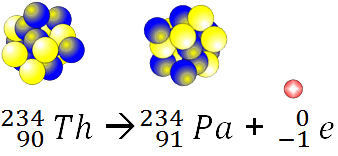
Which type of nuclear radiation is being emitted here?
a)
Alpha
b)
beta
c)
gamma 
d)
none
50.
Isotopes of the same element have different ____________. 
a)
 numbers of protons  
b)
numbers of electrons
c)
 symbols 
d)
numbers of neutrons
51.
When does radioactive decay occur?
a)
When the nucleus of an isotope is unstable
b)
When the nucleus of an isotope is stable
c)
When the electrons of an isotope are spinning
d)
When the electrons of an isotope are shared with another isotope
52.
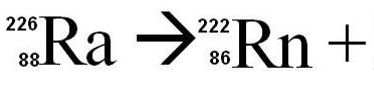
Complete the nuclear equation and determine the type of decay that is occurring in this reaction. 
a)
alpha
b)
beta
c)
gamma
d)
none
53.
In order of most to least penetrating radiation we have
a)
Alpha , Beta,  Gamma
b)
Beta , Gamma , Alpha
c)
Gamma, Beta, Alpha
d)
Gamma, Alpha, Beta
54.
After the nucleus of a radioactive element undergoes changes, the element can transform into ...
a)
  (a)  a different isotope of the same element.
b)
(b) an entirely different element.
c)
Both (a) and (b)
d)
Neither (a) nor (b)
55.
Alpha particles.....
a)
a) are positively charged.
b)
b) consist of two protons and four neutrons.
c)
c) can penetrate any thickness of matter
d)
d) All of the above 
56.
The process of nuclear change in an atom of radioactive material is called... 
a)
nuclear decay
b)
nuclear mass
c)
isotopes
d)
radon
57.
During beta decay, a nucleus .... 
a)
gives up two protons and two neutrons.
b)
  maintains the same number of protons and neutrons.
c)
  loses a proton and gains a neutron.
d)
gains a proton and loses a neutron. 
58.
When a nucleus undergoes nuclear decay by gamma rays, the atomic number of the element....
a)
remains the same
b)
  decreases by one.
c)
increases by one.
d)
increases by two.
59.
The most penetrating type of radiation is the ____.  
a)
alpha particle
b)
gamma ray
c)
beta particle
d)
uranium
60.

Which of these is an alpha particle?

a)

A

b)

B

c)

C

d)

D

61.

Which happens in a nucleus during gamma decay?

a)

The number of protons increases.

b)

The number of neutrons increases.

c)

The number of protons remains the same.

d)

The total number of neutrons plus neutrons decreases.

62.

When a neutron turns into a proton in a nucleus, what sort of particle is emitted?

a)

alpha

b)

beta

c)

gamma

d)

photon

63.

Gamma rays _________.

a)

have no mass and no charge

b)

have mass but no charge

c)

have no mass but have charge

d)

have mass and charge

64.

Which of these is a true statement about the products of the decay compared to polonium-210?

a)

The charges are equal but the mass numbers are not equal.

b)

The mass numbers are equal but the charges are not equal.

c)

The mass numbers and charges are equal.

d)

Neither the mass numbers nor the charges are equal.

65.

A hydrogen nucleus has only one proton. How many neutrons are in a hydrogen-3 nucleus?

a)

0

b)

1

c)

2

d)

3

66.

What percentage of rubidium-87 atoms will be left after four half lives?

a)

25.0%

b)

12.5%

c)

6.25%

d)

3.125%

67.

The solid black sections of the bars on the graph represent the percentages of

a)

carbon-14 from the original sample that has not decayed
b)

lead-206 decay product resulting from the radioactive decay

c)

nitrogen-14 decay product resulting from the radioactive decay

d)

uranium-238 from the original sample that has not decayed

68.

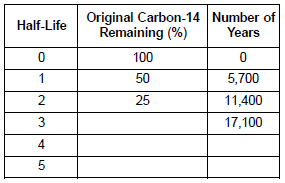
After 22,800 years, approximately what percentage of the original carbon-14 remains?

a)

15%

b)

12.5%

c)

6.25%

d)

3.125%

69.

Which diagram best represents the percentage of this radioactive isotope sample that will remain after 2 half-lives?

a)
b)
c)
d)
70.
After the third half-life, how much of the sample is left?
a)
1/2
b)
1/3
c)
1/16
d)
1/8
71.
The half-life of strontium-90 is 25 years. How much strontium-90 will remain after 100 years if the initial amount is 4.0 g?
a)
3.0g
b)
0.25mg
c)
0.3g
d)
0.25g
72.
If the half-life of uranium-232 is 70 years, how many half-lives will it take for 10 g of it to be reduced to 1.25 g?
a)
1 half-life
b)
2 half-lives
c)
3 half-lives
d)
4 half-lives
73.

The diagram shows 32 atoms.

16 of the Red are parent isotopes

16 of the Green are daughter isotopes

How many half-lives have occurred?

a)

0

b)

1

c)

2

d)

3

74.
What type of decay is being illustrated in following picture? 
a)
beta decay
b)
alpha decay 
75.

The distance in between two waves.

a)

wave speed

b)

frequency

c)

wavelength

76.

_____ waves NEED a medium to travel.

a)

Seismic

b)

Light

c)

Mechanical

77.

Frequency is always measured in _________

a)

kilometers

b)

Hertz

c)

centimeters

78.

You're in your room blasting music with the door shut, your mom opens your door. Now your music is heard throughout your home. This is an example of _______

a)

interference

b)

diffraction

c)

reflection

79.

When two waves overlap each other, this behavior is known as _______.

a)

interference

b)

refraction

c)

frequency

80.

If the amplitude increases during interference, this is __________

a)

destructive interference

b)

constructive interference

81.

This is a high frequency wave. Which part of the wave is "B"

a)

crest/peak

b)

wavelength

c)

trough

82.

Look at this wave. "A" is which part of a wave?

a)

Crest/Peak

b)

Wave Speed

c)

Resting Point

83.
the maximum distance that the particles of the medium carrying the wave  move away from their rest position
a)
frequency
b)
wavelength
c)
hertz
d)
amplitude
84.
Wave __________ is the number of complete waves that pass a given point in a certain amount of time.
a)
Frequency
b)
Wavelength
c)
Amplitude
d)
Compression
85.
a)
A is compression
b)
A is the trough
c)
A is the rarefraction
86.
Waves that move the medium at right angels to the direction in which the wave travel
a)
Longitudinal Waves
b)
Compressional Waves
c)
Transverse Waves
87.
Speed = wavelength x frequency
The speed of a wave on a rope is 50 cm/s and its wavelength is 10 cm. What is the wave's frequency?
a)
50 cm/s
b)
5 Hz
c)
10 cm
88.
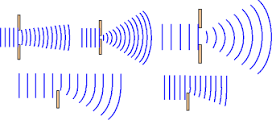
a)
Diffraction
b)
Interference
89.
a)
Constructive Interference
b)
Destructive Interference
90.

Photoelectric effect provides the evidence for the ______ nature of radiation.

a)

dual

b)

wave

c)

particle

d)

electromagnetic

91.

Light of a given wavelength is used to illuminate the surface of a metal. However, no photoelectrons are emitted. In order to cause electrons to be ejected, light of __________ should be used.

a)

lower energy

b)

higher intensity

c)

shorter frequency

d)

higher frequency

92.

The energy of a photon is directly proportional to its _____ and inversely proportional to its ______.

a)

intensity - speed

b)

wavelength - frequency

c)

frequency - wavelength

d)

intensity - wavelength

93.

A metal with a work function of 3.5 eV is exposed to photons with an energy of 3.7 eV. What is the maximum kinetic energy of the emitted photoelectrons?

a)

0.2 eV

b)

0.9 eV

c)

1.1 eV

d)

7.7 eV

94.

What is the energy of a photon with a frequency of 5x10¹⁴ Hz? (you need to do calculation. You have enough time)

a)

2.5x10⁻¹⁹ J

b)

3.0x10⁻¹⁹ J

c)

3.3x10⁻¹⁹ J

d)

4.5x10⁻¹⁹ J

95.
This image is an illustration of
a)
photoelectric effect
b)
Dalton's atomic theory
c)
Bohr model
d)
Quantum mechanical model
96.

What is the energy of a photon with a frequency of 5x10¹⁴ Hz? (you need to do calculation. You have enough time) h=6.6x10⁻³⁴ J/Hz

a)

2.5x10⁻¹⁹ J

b)

3.0x10⁻¹⁹ J

c)

3.3x10⁻¹⁹ J

d)

4.5x10⁻¹⁹ J

97.

The SI unit of frequency is the __________.

a)

meter

b)

second

c)

hertz

d)

meter per second

98.

When light of specific frequencies is shined on a surface, electrons are ejected from the surface. This is the idea behind...

a)

Quantization of Energy

b)

Photoelectric Effect

c)

Compton Effect

d)

deBroglie Waves

e)

Uncertainty Principle

99.

Energy of a photon is ___ proportional to frequency.

a)

directly

b)

inversely

100.

The portion of the electromagnetic spectrum that humans can see is called:

a)

radio waves

b)

visible light

c)

gamma rays

d)

x-rays

101.

When wavelength increases...

a)

energy decreases

b)

energy increases

102.

As wavelength decreases...

a)

energy increases

b)

energy decreases

103.

Which type of electromagnetic energy carries the least energy?

a)

X-Rays

b)

Visible Light

c)

Ultraviolet

d)

Microwaves

104.

The speed of electromagnetic radiation:

a)

depends on the form of radiation

b)

is always 3 x 10⁸ m/s, regardless of the type

c)

decreases as distance increases

d)

is 6.626 x 10⁻³⁴ J x s

105.

Joseph studied whether different materials can block certain electromagnetic waves by testing television reception in different parts of a house. At each part of the house,Joseph used a different antenna. The experiment could have been improved by_________.

a)

testing reception of a different channel during each trial

b)

using the same antenna during each trial

c)

measuring the antenna length in centimeters

d)

measuring the distance to the television station

106.

As the frequency of an electromagnetic wave increases, its wavelength

a)

becomes larger

b)

becomes smaller

c)

stays the same

d)

does not change

107.

Sunscreen is designed to protect your skin from exposure to too much ___________.

a)

ultraviolet radiation

b)

gamma radiation

c)

infrared radiation

d)

visible light

108.

Which of the following electromagnetic waves can travel through matter and cause damage to cells?

a)

radio waves

b)

microwaves

c)

infrared waves

d)

gamma rays

109.

All waves carry ________ as they travel from one place to another.

a)

matter

b)

space

c)

energy

d)

water

110.

How are Electromagnetic waves different from Mechanical waves?

a)

EM waves have very short wavelengths

b)

EM waves transmit energy instead of matter

c)

EM waves can travel through the vacuum of space (without particles)

d)

EM waves can change direction by reflection
111.

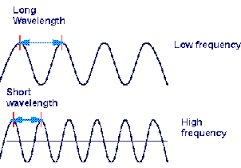
Wavelength and Frequency are related in that...

a)

they are always the same

b)

when one increases, the other decreases (inversely proportional)

c)

there is no correlation

d)

they both vary in an irregular pattern

112.

In what direction does a wave propegate from its source?

a)

To the north

b)

In all directions

c)

Only downwards

d)

To the right

113.

A wave with a large wavelength will have a ______ frequency and _____ energy

a)

high, low

b)

high, high

c)

low, high

d)

low, low

114.

Considering frequency of 109 Hz and frequency of 1011 Hz, which type of radiation has the LONGER wavelength?

a)

109 Hz

b)

1011 Hz