
 Worksheets
Unit 2 Test Review
Total questions: 63
Worksheet time: 1hrs 2mins
Name
Class
Date
1.
What important role do bacteria called decomposers play?
a)
They return basic chemicals to the environment.
b)
They produce vitamins
c)
They slow down food spoilage.
d)
They kill harmful bacteria.
2.
Unlike the cells of eukaryotes, the cells of bacteria do not have
a)
a nucleus
b)
cell walls
c)
flagellum
d)
cells
3.
Some bacteria move by using a long, whip-like structure called a(n) ____________________
a)
tail
b)
cillia
c)
organs
d)
flagellum
4.
Some bacteria are called ____________________ because they break down large chemicals in dead organisms into small chemicals.
a)
cillia
b)
decomposers
c)
friendly
d)
eukaryotes
5.
What is found in the cytoplasm of bacteria cells?
a)
The DNA
b)
The Nucleus
c)
the protein coat
d)
the flagellum
6.
What is prokaryotic?
a)
An organism that lacks a nucleus
b)
An organism that is harmful to bacteria
c)
An organism that has a nucleus
d)
the organ that helps bacteria move
7.
Viruses can only reproduce
a)
Sexually
b)
Asexually
c)
When attached to a host
d)
Never
8.
Which structure controls the cells activities?
a)
DNA
b)
Ribosomes
c)
Flagella
d)
Cytoplasm
9.
Which structure controls the cells activities?
a)
DNA
b)
Ribosomes
c)
Flagella
d)
Cytoplasm
10.
What is the watery environment that the DNA and ribosomes float within?
a)
Cytoplasm
b)
Milk
c)
Pilus
d)
Plasmid
11.
What type of cell is bacteria?
a)
Eukaryotic
b)
Prokaryotic
c)
Multicellular
d)
Virus
12.
Bacteria is both helpful and harmful
a)
True
b)
False
13.

Name this protist?
a)
Paramecium
b)
Amoeba
c)
Volvox
d)
Euglena
14.

Name this protist?
a)
Amoeba
b)
Euglena
c)
Paramecium
d)
Volvox
15.

How does this protist move?
a)
Pseudopods
b)
Cilia
c)
Flagellum
16.

How does this protist move?
a)
Flagellum
b)
Cilia
c)
Pseudopods
17.

How does this protist move?
a)
Cilia
b)
Pseudopods
c)
Flagellum
18.

A protist that can not make its own food is called what?
a)
Autotroph
b)
Heterotroph
19.
Which protist has an eyespot?
a)
Amoeba
b)
Volvox
c)
Euglena
d)
Paramecium
20.

Fine hairs that allow protist to move is called what?
a)
Pseudopods
b)
Euglena
c)
Flagella
d)
Cilia
21.

What are the finger like projections called?
a)
Flagella
b)
Cilia
c)
Pseudopods
d)
Veela
22.
Which protists are heterotrophic?
a)
Amoeba and Volvox
b)
Euglena and Paramecium
c)
Paramecium and Ameoba
d)
Euglena and Volvox
23.

Which of the following is the best model for cilia?
a)
A
b)
B
c)
C
d)
D
24.
A pseudopod literally means...
a)
small hair
b)
long tail
c)
no nucleus
d)
false foot
25.

What is the name of the structure shown in the model?
a)
cilia
b)
flagella
c)
amoeba
d)
pseudopod
26.
How are protists different than bacteria?
a)
Protists are eukaryotic and bacteria are prokaryotic
b)
Protists are prokaryotic and bacteria are eukaryotic
c)
There is no difference; protists and bacteria are the same thing
d)
Protists are always unicellular and bacteria are always multicellular
27.
Which of the following is true ALL organisms in the protist kingdom?
a)
They are multicellular
b)
They live in moist environments
c)
They move using cilia
d)
They move using flagella
28.
Protists obtain food by
a)
Autotrophs
b)
Heterotrophs
c)
Autotroph & Heterotroph
d)
Sigotrophs
29.
A vacuole in unicellular organisms that collects water and wastes and expels them in order to maintain the organism's proper water content.
a)
protoplasm
b)
contractile vacuole
c)
fission
d)
nucleus
30.
What disease is caused by the amoeba?
a)
athlete's foot
b)
amoebic dysentery
c)
botulism
d)
strept throat
31.
What do fungi use to reproduce?
a)
Hyphae
b)
Branches
c)
Spores
d)
They split apart
32.

What part of a fungus is described as long, thread-like structures that absorb nutrients?
a)
roots
b)
fruit body
c)
hyphae
d)
spores
33.
What vocabulary word describes the breaking off of dead things and recycling it's nutrients through the food chain?
a)
Symbiosis
b)
Decomposing
c)
Budding
d)
Mycelium
34.
A collective mass of hyphae are referred to as ____________
a)
parasitic
b)
fruiting
c)
mycelium
d)
spores
35.

What term is used for fungi that feed on living organisms but cause harm to the organism?
a)
Saprophytic
b)
Parasitic
c)
Cilia
d)
ymbiotic
36.
__________ are fungi that that produce the gas that makes bread rise.
a)
Mushrooms
b)
Athletes' foot
c)
Blue Cheese
d)
Yeast
37.
Fungi cells walls are made of a material called ____.
a)
cellulose
b)
fibers
c)
hyphae
d)
chitin
38.

The stalk connecting the ovaries and stigmas.
a)
filament
b)
pistil
c)
style
d)
anther
39.
Brightly colored parts of flowers that attract insects.
a)
petals
b)
pistils
c)
stamen
d)
filaments
40.
The stalks in a flower that produce the male reproductive cells
a)
pistil
b)
stamen
c)
filament
d)
stigma
41.

Small leaf-like structures forming an outer circle at the base of a flower.
a)
petals
b)
sepal
c)
anthers
d)
dicots
42.
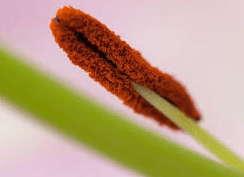
The part of a flower that produces the male reproductive cells.
a)
anther
b)
style
c)
stigma
d)
filament
43.
Which sends water from the roots to the rest of the plant?
a)
xylem
b)
phloem
44.
Which are small and grow close to the ground?
a)
Vascular
b)
Nonvascular
45.
All of the following are vascular plants EXCEPT:
a)
ferns
b)
oak tree
c)
moss
d)
tulips
46.
Which types of plants usually grow close to the ground?
a)
vascular
b)
non-vascular
47.

leaves contain many chloroplast which are the site of.....
a)
cellular respiration
b)
photosynthesis
c)
water storage
d)
protein synthesis
48.

function of phloem
a)
transports water
b)
stores water
c)
transports sugar
d)
stores sugar
49.
transports glucose (sugar) through out the plant
a)
xylem
b)
phloem
c)
mitochondria
d)
ribosome
50.
What is the female reproductive part of a flower called?
a)
anther
b)
carpel
c)
sepal
51.
The behavior of some animals to attract other animals
a)
Courtship
b)
Dating
c)
Showing off
d)
Hibernation
52.
Some male birds perform elaborate dances in order to attract females. This is an example of _______.
a)
camouflage
b)
insight
c)
courtship
d)
mimicry
53.
Which of the following is a behavioral response for the defense of the animal? (Agression)
a)
Robins fly south during the winterRobins fly south during the winter
b)
Wasps use a stinger when threatened
c)
Worms move out of the light into the dark
d)
Turtles become dormant in the mud in a pond
54.
24 hour cycle of behavior
a)
allelomimetic behavior
b)
circadian cycle/rhythm
c)
shrink
d)
flight zone
55.
Getting use to something after being exposed to it for a long period of time is an example of which type of learned behavior?
a)
insight learning
b)
playing
c)
habituation
d)
observational learning
56.

Cattle egrets forage (feed) in fields among cattle. The egret gets easy access to flying insects stirred up by the cattle, and the cattle don't care if they are there or not.
a)
mutualism
b)
commensalism
c)
competition
d)
parasitism
57.
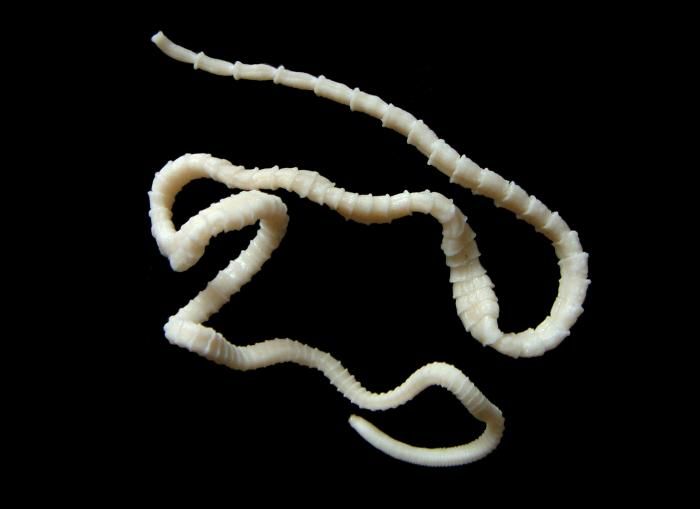
A tapeworm and a cat have this type of relationship.
a)
mutualism
b)
parasitism
c)
commensalism
d)
competition
58.

Which is an herbivore?
a)
Grass
b)
Shrew
c)
Sun
d)
Grasshopper
59.

What organism consumes both rabbits and birds?
a)
The Hawk
b)
The Wolf
c)
The Plant
d)
The Mushroom
60.

In the energy pyramid here, which organisms have the most energy available?
a)
Producers
b)
Carnivores
c)
Herbivores
d)
Top Predator
61.

In the energy pyramid here, how much of the energy in each level gets lost as heat or used by the organism for survival?
a)
80%
b)
90%
c)
10%
d)
20%
62.

If there is 1000 Kcal available in the producers in trophic level 1, how much energy is available in the herbivores in trophic level 2?
a)
10 Kcal
b)
1 Kcal
c)
100 Kcal
d)
1000 Kcal
63.
The arrows in a food chain or web represents what?
a)
They point to the organism that is being eaten.
b)
It shows how sunlight flows within an ecosystem.
c)
They show what direction the energy is flowing between organisms.
d)
They represent how water is transferred within a habitat.
100 %

