
 Worksheets
Bio Test: Cell Organelles & Transport
Total questions: 45
Worksheet time: 41mins


Which type of molecule movement is being represented in this picture?
Endocytosis
Diffusion
Active transport
Facilitated Diffusion

The movement of water across a selectively permeable membrane is called...
Endocytosis
Simple Diffusion
Active Transport
Osmosis


This picture represents what type of cell transport?
Endocytosis
Exocytosis
Active transport
Passive transport
Equilibrium
A cell containing a 10% sugar solution is placed in a solution that is 50% sugar. What will eventually happen to the cell?
Cytolysis
Plasmolysis
Neither
Both


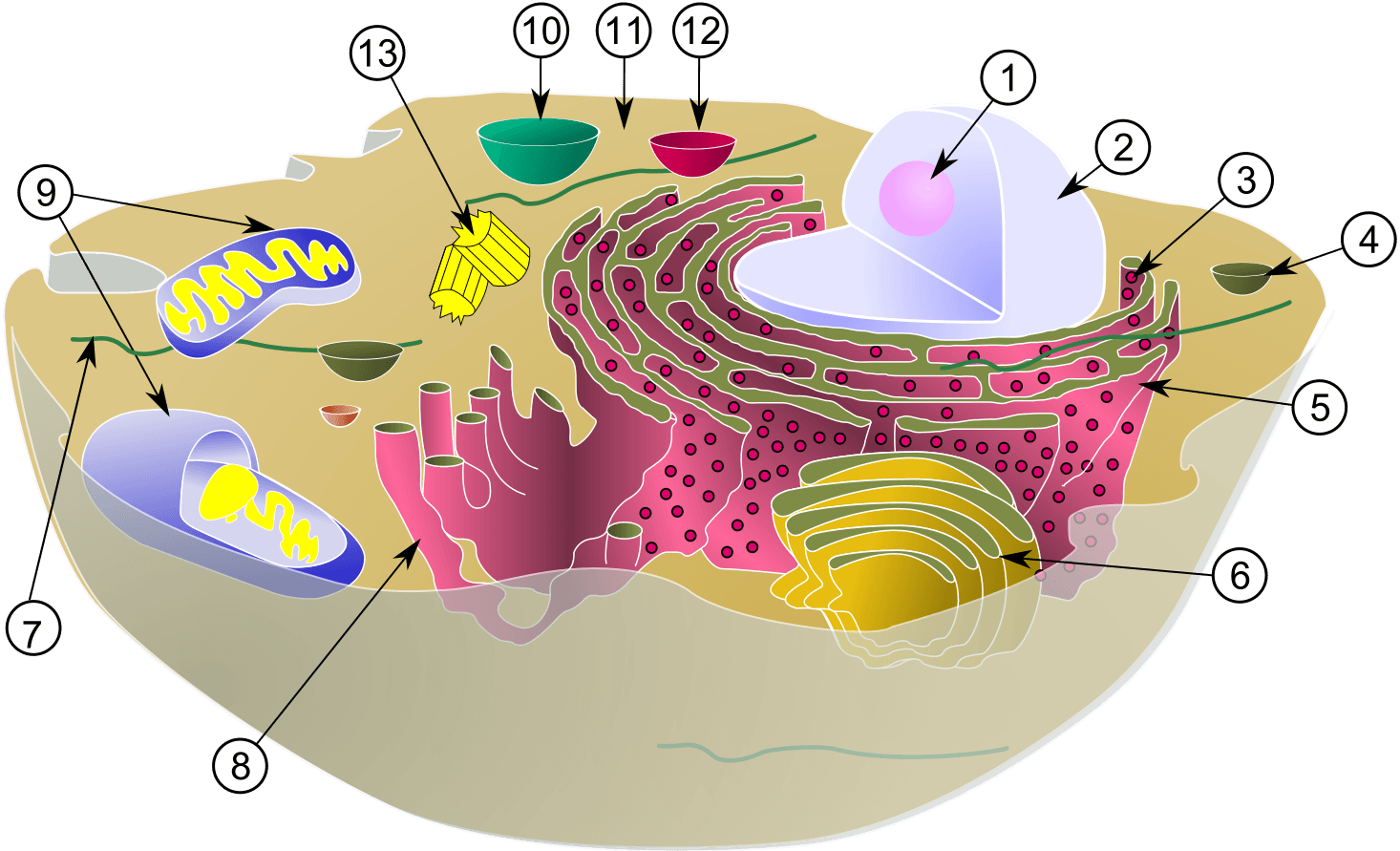

What is this organelle?
mitochondria
smooth ER
Golgi apparatus
rough ER

Which of these is true about this organelle?
control center of the cell
captures energy from sunlight
found in plant and animal cells
allows certain substances to enter the cell while keeping others out
This organelle makes and transports lipids.
Rough ER
Smooth ER
Golgi apparatus
Ribosome
This organelle breaks down and recycles cellular debris and is considered the 'clean up' organelle.
Chloroplast
Lysosome
Golgi
Mitochondria
Smaller, simpler cells with genetic material not contained within a nucleus are ____.
multicelluar
prokaryotic
colonial
eukaryotic

Most active transport proteins use energy from the breakdown of ___.
nucleus
cell membrane
ATP
mitochondria
This brings food and other solid substances into a cell using active transport.
pinocytosis
phagocytosis
exocytosis
facilitated diffusion
___ is the process that involves moving materials from one place inside the cell to another where it is needed.
Biosynthesis
Egestion
Cyclosis
Secretions

What is the control center of an animal cell?
nucleus
cytoplasm
cell membrane
cell wall
What is the function of the nucleolus?
organizes motion of chromosomes in cell division
directs cell activities
manufactures ribosomes
synthesis of proteins
Which organelle is often called the highway system of the cell because it transports molecules, mainly proteins, around the cell?
mitochondria
endoplasmic reticulum
cell membrane
cytoskeleton
What type of cells have ribosomes?
plant cells
prokaryotic cells
animal cells
eukaryotic cells

Which of the following organelles are found only in plant cells?
Cytoskeleton
Cell wall
Chloroplasts
mitochondria
Which of the following are fundamental ideas of cell theory?
All cells are identical in size and shape.
All living organisms are composed of one or more cells.
Cells are the basic unit of structure and function of all living organisms.
All cells have genetic information contained in a nucleus.
All cells come from preexisting cells.
When a cell is placed into a salty solution, it causes the cell to ___.
move water in and out at equal rates
shrink
swell
Which scientist first used a microscope to discover the world of microorganisms?
von Leeuwenhoek
Virchow
Hooke
Schleiden
The size of a cell is limited because its surface area grows at a much faster rate than its volume.
True
False
A concentration gradient is used to move materials across a membrane using active transport.
True
False
The selective permeability of the cell membrane is critical to a cell's ability to maintain homeostasis.
True
False
Once a cell reaches equilibrium all molecules will stop moving across the membrane to help the cell maintain homeostasis.
True
False
Which types of molecules can easily pass through the cell membrane?
charged ions, such as sodium
gases, such as oxygen
water
small, nonpolar lipids
large glucose molecules
Water always moves from an area of ___ concentration to an area of ___ concentration or, in other words, from ____ side to the ___ side.
high; low; hypotonic; hypertonic
high; low; hypertonic; hypotonic
low; high; hypotonic; hypertonic
low; high; hypertonic, hypotonic
Which of the following are needed to move materials across the membrane using active transport?
carbohydrates
protein pumps
ATP
cholesterol

