
 Worksheets
Hydrosphere Unit
Total questions: 122
Worksheet time: 1hrs 26mins
Name
Class
Date
1.
What percent of the Earth's surface is covered in water?
a)
71
b)
82
c)
50
d)
63
2.
What is the steep slope at the edge of the continental shelf?
a)
seamount
b)
mid-ocean ridge
c)
continental slope
d)
rift zone
3.
What are underwater mountain ranges called?
a)
continental shelf
b)
mid-ocean ridges
c)
abyssal plains
d)
continental slopes
4.
Where is the shallowest part of the ocean floor?
a)
continental slope
b)
continental shelf
c)
abyssal plains
d)
rift zones
5.
What is the flat land located on either side of the mid-ocean ridge?
a)
continental slope
b)
continental shelf
c)
abyssal plain
d)
ocean basin
6.
What is the deepest part of the ocean basin?
a)
abyssal plains
b)
trenches
c)
rift zones
d)
mid-ocean ridge
7.
What is an opening in the surface where lava may flow?
a)
trench
b)
seamount
c)
rift zone
d)
valley
8.
a gently sloping, shallow area of the ocean floor that extends outward form the edge of the continent
a)
continental shelf
b)
continental slope
c)
abyssal plain
d)
mid-ocean ridge
9.
sediment settles in this area.continental...
a)
rise
b)
slope
c)
shelf
10.
Scientists use ______ to determine the oceans depth.
a)
Submarine
b)
Sonar
c)
Helicopter
d)
Light
11.
A __________ is the area in an ocean basin where new ocean floor is formed
a)
sea mount
b)
continental shelf
c)
mid ocean ridge
d)
continental slope
12.

Label A
a)
continental slope
b)
continental shelf
c)
abyssal plain
d)
sea mount
13.

Label B
a)
continental slope
b)
continental shelf
c)
abyssal plain
d)
sea mount
14.

Label C
a)
continental slope
b)
continental shelf
c)
abyssal plain
d)
sea mount
15.

Label D
a)
continental slope
b)
continental shelf
c)
abyssal plain
d)
mid ocean ridge
16.

Label E
a)
continental slope
b)
volcanic island
c)
abyssal plain
d)
sea mount
17.
What is sonar
a)
Cellphones measuring distance
b)
Sound navigating and ranging
18.
This zone includes any area beyond the continental shelf where water is deepest.
a)
Open-Ocean Zone
b)
Neretic Zone
c)
Intertidal Zone
d)
Auto Zone
19.
The part of the ocean that extends from the low-tide line to the edge of the continental shelf is the
a)
Nertic Zone
b)
Open Ocean Zone
c)
Intertidal Zone
d)
Deep Zone
20.
This is the zone between high-tide and low-tide (literally means between tides)
a)
Twilight Zone
b)
Neretic Zone
c)
Open-ocean Zone
d)
Intertidal Zone
21.
This is the zone where the water is constantly changing.
a)
Neritic
b)
Intertidal
c)
Oceanic
d)
Abyssal
22.

What is label G
a)
Trench
b)
Mid ocean ridge
c)
abyssal plain
d)
sea mount
23.

Label F
a)
continental slope
b)
continental shelf
c)
abyssal plain
d)
sea mount
24.
What is a trough?
a)
highest point on a wave
b)
lowest point on a wave
c)
longest point on a wave
d)
shortest point on a wave
25.
What is a crest?
a)
lowest point of a wave
b)
longest part of a wave
c)
shortest part of a wave
d)
highest point of a wave
26.
How much salt is in something is called_____________
a)
Salinity
b)
Evaporation
c)
Seamount
27.
How can you increase the salinity of water?
a)
precipitation
b)
evaporation
28.
How can you decrease the salinity of the water?
a)
precipitation
b)
evaporation
29.
phytoplankton gives energy to krill which gives energy to small fish which gives energy to sea turtles
What population would decrease if the small fish disappeared?
What population would decrease if the small fish disappeared?
a)
phytoplankton
b)
krill
c)
sea turtles
d)
sharks
30.
phytoplankton gives energy to krill which gives energy to small fish which gives energy to sea turtles
What population would immediately increase if the small fish disappeared?
What population would immediately increase if the small fish disappeared?
a)
Phytoplankton
b)
krill
c)
sea turtles
d)
clams
31.
What is label G
a)
Trench
b)
Mid ocean ridge
c)
abyssal plain
d)
sea mount
32.

Where are most deep-sea trenches located?
a)
Atlantic Ocean
b)
Pacific Ocean
c)
Indian Ocean
d)
Arctic Ocean
33.
The rise and fall of the water level of the oceans is called ___
a)
Wave
b)
Tide
c)
Deep ocean current
d)
Surface current
34.
The up and down movement of the surface water is called ___
a)
Wave
b)
Tide
c)
Deep ocean current
d)
Surface current
35.
Which of the following causes tides?
a)
The gravity of the sun only.
b)
The gravity of the moon only.
c)
The gravity of both the sun and moon.
d)
The gravity of the earth.
36.
Which of the following is the reason why the moon affects the tides more than the sun?
a)
The moon is bigger than the sun.
b)
The moon is closer to earth than the sun.
c)
The moon has more gravity than the sun.
37.
How often does a high tide and a low tide occur in a day?
a)
Once
b)
Twice
c)
Three times
d)
Four times
38.
Which tide happens on a full moon?
a)
Spring tide
b)
Neap tide
39.
Which tide happens during third quarter phase of the moon?
a)
Spring tide
b)
Neap tide
40.
During which tide does the water level becomes extremely high and low?
a)
Spring tide
b)
Neap tide
41.
Which tide occurs when the sun, moon and earth aligns?
a)
Spring tide
b)
Neap tide
42.
Which tide occurs when the sun, moon and earth form a right angle?
a)
Spring tide
b)
Neap tide
43.

Which tide is shown in the image?
a)
Spring tide
b)
Neap tide
44.

Which tide is shown in the image?
a)
Spring tide
b)
Neap tide
45.
Which of the following causes most waves?
a)
Tides
b)
Wind
c)
Earthquake
d)
Sea animals
46.
Which type of water will sink?
a)
Warm, less salty
b)
Warm, more salty
c)
Cold, less salty
d)
Cold, more salty
47.
Which type of water will go up to the surface?
a)
Warm, less salty
b)
Warm, more salty
c)
Cold, less salty
d)
Cold, more salty
48.
Which of the following is the largest and deepest ocean?
a)
Arctic
b)
Antartic
c)
Indian
d)
Pacific
49.
Which of the following is the smallest and shallowest ocean?
a)
Arctic
b)
Antartic
c)
Indian
d)
Pacific
50.
These are the main source of food for most ocean creatures
a)
Plant
b)
Seaweeds
c)
Plankton
d)
Soil
51.
Surface currents are formed by ____
a)
Wind
b)
Clouds
c)
Ocean creatures
d)
Temperature
52.
Large bodies of water do not quickly fluctuate in temperature. Why?
a)
Water is a solvent.
b)
Water has a high heat capacity.
c)
Water acts as a buffer.
d)
Water is non-polar.
53.
Water striders can walk across the surface of calm water. Their feet push the surface of the water down slightly, but they do not break the surface. Why?
a)
The insects are light enough so they do not break the hydrogen bonds holding the water molecules together
b)
The insects actually use their wings to hover slightly above the water’s surface and they only skim it with their feet.
c)
The insect’s feet are non-polar, so they are repelled by the polar water molecules and are pushed away from the water’s surface.
d)
The insects are small enough to see the individual water molecules, so they are able to step carefully from one molecule to the next
54.
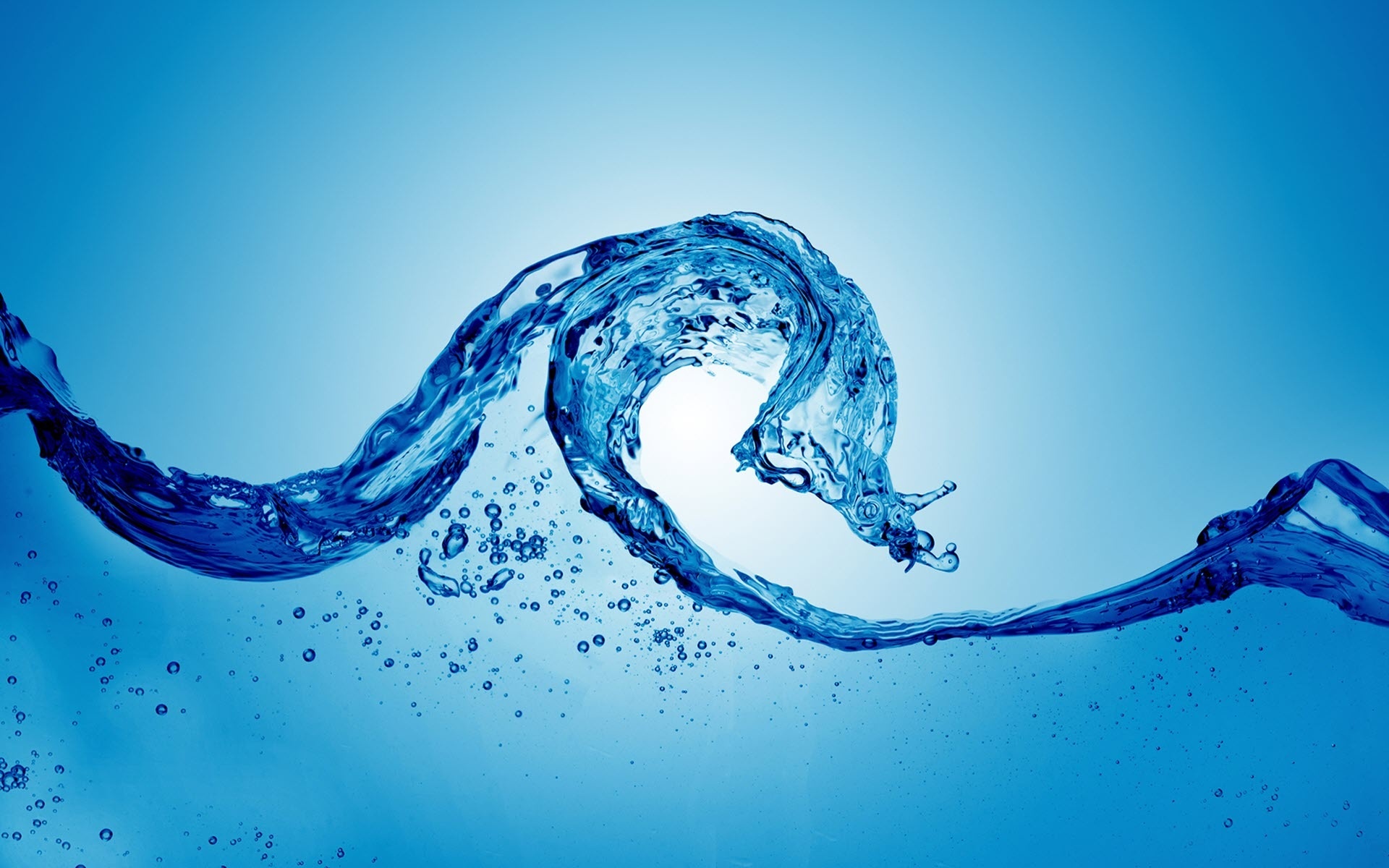
What two elements make up water?
a)
Helium and oxygen
b)
Hydrogen and oxygen
c)
helium and carbon
d)
oxygen and carbon
55.

What word describes when water is attracted to other substances?
a)
cohesion
b)
adhesion
c)
capillary action
d)
surface tension
56.
Why can water have no net charge but have slight charges in different parts of the molecule?
a)
The oxygen end is slightly negative and the hydrogen end is slightly positive
b)
The hydrogen end is slightly negative and the oxygen end is slightly positive
c)
The hydrogen and oxygen ends change in polarity
d)
Because it is hydrophobic
57.

Why does water move from the roots to the leaves of plants?
a)
Water is pushed by solutes
b)
Capillary action pulls the water molecules like a chain
c)
Water is pulled by gravity
d)
Water’s cohesion causes it to “pull” towards the leaves
58.
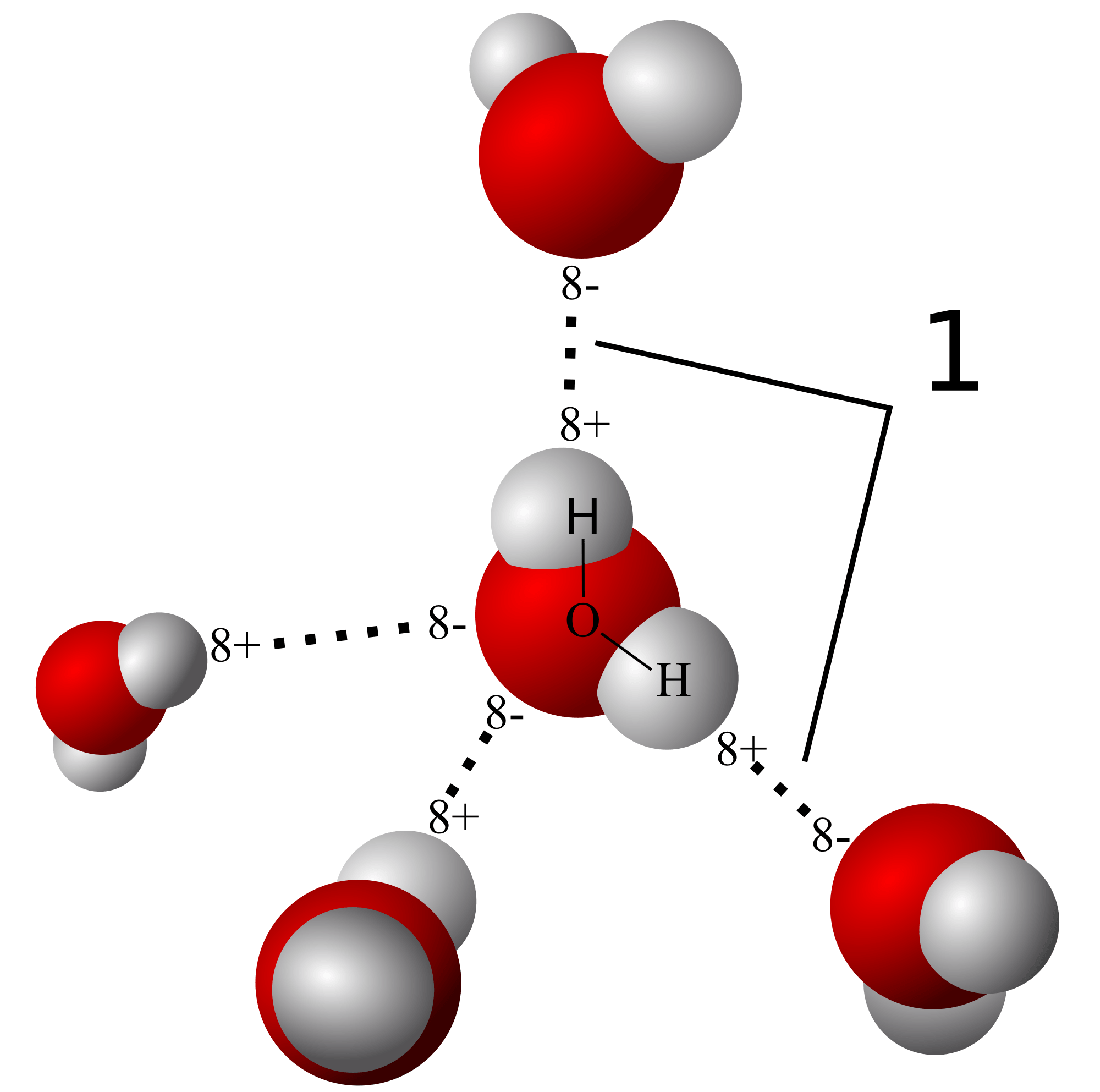
Attractions between water molecules are called
a)
Covalent bonds
b)
Ionic bonds
c)
Polar bonds
d)
Hydrogen bonds
59.

The attraction that causes water and other liquids to form drops on thin films is called ________________. This is also water’s ability to be attraction to other water molecules.
a)
adhesion
b)
capillary action
c)
cohesion
d)
surface tension
60.

What property of water helps to moderate earth's temperature?
a)
adhesion
b)
chohesion
c)
Specific heat capacity
d)
Latent heat of vaporization
61.
Why does ice float?
a)
As water freezes, it expands and its density decreases.
b)
As water freezes, it takes up more hydrogen from the atmosphere, causing it to have a greater buoyancy.
c)
As water freezes, air becomes trapped between the hydrogen bonds of water molecules.
d)
As water freezes, it takes up more oxygen from the atmosphere, causing it to have a greater buoyancy.
62.
Water is polar because...
a)
The unequal sharing of electrons gives the water molecule a slight negative charge near its oxygen atom and a slight positive charge near its hydrogen atoms.
b)
The molecule has two poles, at which the it is colder than other regions of the molecule.
c)
The unequal sharing of electrons gives the water molecule a slight negative charge near its hydrogen atoms and a slight positive charge near its oxygen atom.
d)
The water molecule is neutral.
63.

tendency of molecules of the same kind to stick to one another
a)
cohesion
b)
adhesion
c)
solution
d)
polar molecule
64.

molecule in which opposite ends have opposite electric charges
a)
cohesion
b)
polar molecule
c)
hydrogen bond
d)
solution
65.

A molecule with electrically charged areas is called a _______________.
a)
magnet
b)
polar molecule
c)
solution
d)
electrical molecule
66.
Which end of the water molecule has a slightly positive charge?
a)
the oxygen end
b)
the hydrogen end
c)
both ends are slightly positive
d)
neither end is positive
67.

Water droplets take a spherical shape (as pictured) because of ____________
a)
adhesion
b)
cohesion
c)
capillary action
d)
solubility
68.
Water is a universal solvent because it...
a)
It can be found anywhere
b)
It freezes when it gets cold
c)
floats when frozen
d)
Dissolves most substances
69.
Most of water's properties occur because it is...
a)
A polar covalent
b)
Made with oxygen
c)
A polar ionic
d)
Makes up 75% of the Earth
70.
The fact that ice floats on liquid water is due to the fact that water's solid is ___________ than it's liquid form
a)
less polar
b)
more polar
c)
less dense
d)
more dense
71.

Water molecules require a lot of energy to separate one from the others. This gives water a high
a)
density
b)
polarity
c)
solvency
d)
specific heat
72.

This is a picture of a __________ margin
a)
passive
b)
active
73.
Which is not a factor used to divide the ocean?
a)
water depth
b)
availability of sunlight
c)
distance from shore
d)
animals that live there
74.
The most common minerals in sewater are
a)
sodium chloride
b)
magnesium
c)
calcium chloride
d)
calcium carbonate
75.
Energy moving through water is a
a)
wave
b)
tide
c)
deep ocean current
d)
surface current
76.
The layer where sunlight reaches and temperature is warm
a)
deep zone
b)
thermocline
c)
surface zone
77.
The layer where there is a rapid change in temperature
a)
deep zone
b)
thermocline
c)
surface zone
78.
The layer where the water is just above freezing and sunlight does not reach
a)
deep zone
b)
thermocline
c)
surface zone
79.
What are the 2 main energy products from the ocean floor
a)
oil and natural gas
b)
oil and coal
c)
natural gas and nuclear
80.
What causes surface ocean currents
a)
wind
b)
the Coriolis effect
c)
salinity
d)
density
81.
Warm ocean currents generally come from
a)
The North Pole
b)
The South Pole
c)
The Equator
d)
Both A and B
82.
Cold ocean currents generally come from
a)
The North Pole
b)
The South Pole
c)
The Equator
d)
Both the north and south pole
83.
Two types of water currents are
a)
local and global
b)
sea and land
c)
surface and deep
d)
warm and cold
84.
A horizontal movement of ocean water that is caused by wind and that occurs at or near the ocean's surface.
a)
Gulf Stream
b)
Global Conveyor Belt
c)
Surface Current
d)
Gyre
85.
What process brings the deep cold ocean currents up to the surface?
a)
Conduction
b)
Global Wind Patterns
c)
Upwelling
d)
Temperature and salinity
86.
Deep-ocean currents are driven by
a)
differences in soil
b)
differences in the water’s density,
c)
differences in nutrients
d)
None of the Above
87.
Which statement is true about density currents?
a)
They move cold water faster than surface currents
b)
they occur only in the Pacific Ocean
c)
they circulate cold water very slowly
d)
They are only formed in Antarctica
88.
What is the best description of a density current
a)
surface winds cause cold, dense water to sink beneath less dense water
b)
upwelling causes cold, dense water to sink beneath less dense water
c)
gravity causes cold, dense water to sink beneath less dense water
d)
gravity causes cold, dense water to rise above less dense water
89.
Cold ocean currents are most likely to be located at deeper ocean depths than warm water currents because
a)
A.Winds push the cold water down.
b)
Ocean tides force cold water downward
c)
A.Cold water is more dense and sinks
d)
A.Cold water has less salt to help it freeze and sink.
90.
The Coriolis Effect is caused by
a)
Earth rotating around the sun
b)
Earth rotating on its axis
c)
The tides
d)
Gravity
91.
Due to the Coriolis Effect, water in the northern hemisphere moves
a)
clockwise
b)
counter clockwise
c)
both
d)
neither
92.
Due to the Coriolis Effect, water in the southern hemisphere moves
a)
clockwise
b)
counter-clockwise
c)
both
d)
neither
93.
The large, circular surface-current pattern found in each ocean.
a)
California Current
b)
Surface Current
c)
Gyre
d)
Global Conveyor Belt
94.
Water becomes denser when…
a)
Temperature goes down and salinity goes up
b)
Temperature goes up and salinity goes up
c)
Temperature goes up and salinity goes down
95.
Acids typically taste
a)
sour
b)
sweet
c)
both
96.
bases are slippery
a)
true
b)
false
97.
If you have a substance with a pH of 8 it is a(n).....
a)
Acid
b)
base
98.

Is this substance acidic, basic, or neutral?
a)
Acidic
b)
Basic
c)
Neutral
99.

Is this substance acidic, basic, or neutral?
a)
Acidic
b)
Basic
c)
Neutral
100.
A(n) ______ is a substance with a pH less than 7
a)
Acid
b)
Alkaline
c)
Base
d)
Buffer
101.
A(n) _______ is a substance with a pH greater than 7.
a)
Base
b)
Acid
c)
Buffer
d)
Water
102.
A solution with a pH of 3.6 would be...
a)
Acid
b)
Base
c)
Neutral
d)
Acid and Base
103.
A solution with a pH of 3.6 would be...
a)
Acid
b)
Base
c)
Neutral
d)
Acid and Base
104.
This substance releases OH- into solution
a)
Acid
b)
Base
c)
Neutral
105.
This substance releases H+ into solution
a)
Acid
b)
Base
c)
Neutral
106.
As carbon dioxide increases, pH
a)
decreases
b)
increases
c)
stays the same
107.
As carbon dioxide increases, acidity
a)
decreases
b)
increases
c)
stays the same
108.
What is a benthic organism?
a)
Benthic organisms live in the Neritic zone near the shore.
b)
Benthic organisms live in the Oceanic zone of open ocean.
c)
Benthic organisms called Benthos, live on or near the bottom of the ocean floor (the Benthic zone)
d)
A benthic organism is part of a tropical forest.
109.
What is a nekton organism?
a)
It is an active swimmer that would dive in many zones of the ocean.
b)
It lives on the floor or bottom of the ocean.
c)
It is passive and is carried away by the current and wind.
d)
It is part of the Hadalpelagic zone in the trenches on the Ocean floor
110.

The plankton that is animal-like is called
a)
bacteria
b)
phytoplankton
c)
zooplankton
111.

______ are all organisms that swim freely, independent of currents.
a)
Benthic
b)
Zooplankton
c)
Nekton
112.

The plankton that are microscopic and plant-like are called
a)
zooplankton
b)
phytoplankton
c)
minnows
113.

The zone that contains the majority of marine life and ranges from the intertidal zone to the continental shelf is known as the _______.
a)
Neritic Zone
b)
Oceanic Zone
c)
I don't know
d)
I know all
114.
the area between the high tide and the low tide mark
a)
benthic zone
b)
intertidal zone
c)
pelagic zone
d)
abyssal zone
115.
the entire water portion of the ocean
a)
pelagic zone
b)
neritic zone
c)
oceanic zone
d)
benthic zon
116.
A result of upwelling is a/an _________ in nutrients in the water.
a)
Decrease
b)
Increase
c)
No Change
117.
Plants and animals that live on the ocean floor are...
a)
benthos
b)
nekton
c)
plankton
d)
diatoms
118.
Which of the following organisms is an example of nekton?
a)
Lobster
b)
Dolphin
c)
Clam
d)
Seastar
119.
The part of the ocean that extends from the low-tide line to the edge of the continental shelf is the
a)
Nertic Zone
b)
Open Ocean Zone
c)
Intertidal Zone
d)
Deep Zone
120.
The part of the ocean that extends from the low-tide line to the edge of the continental shelf is the
a)
Nertic Zone
b)
Open Ocean Zone
c)
Intertidal Zone
d)
Deep Zone
121.
The part of the open ocean that receives sunlight
a)
Intertidal Zone
b)
Around Hot Vents
c)
Deep Zone
d)
photic zone
122.
When does a wave change as it approaches the shore?
a)
when water depth is 1/2 wavelength
b)
when water depth is 1/4 wavelength
c)
when water depth is 1x wavelength
100 %

