
NEW
Font size
S
M
L
XL
 Worksheets
Earth's Place in the Universe Benchmark Review
Total questions: 75
Worksheet time: 1hrs 9mins
Name
Class
Date
1.
Galaxies are composed of (best answer)
a)
stars
b)
stars and gas
c)
stars, dust, and gas
d)
stars, dust, and gas held together by gravity
2.
The Milky Way Galaxy is a
a)
spiral
b)
lenticular
c)
elliptical
d)
irregular
3.
How far is the sun from the earth?
a)
4.3 light-minutes
b)
680 light-years
c)
8.4 light-minutes
d)
9 light years
4.
Distance measurement used by astronomers for distant objects.
a)
Kilometers
b)
Light Years
c)
Miles
d)
Light Seconds
5.
Place these objects in order from smallest to largest.
a)
Planets, solar system, universe, galaxy
b)
Solar system, planets, galaxy, universe
c)
Planets, solar system, galaxy, universe
d)
Galaxy, solar system, planets, universe
6.
Light Years are a measure of:
a)
time
b)
speed
c)
distance
d)
light
7.
Proxima Centauri is the closest star to Earth after the Sun and is located 4.3 light years away from Earth. How long does it take light from Proxima Centauri to reach Earth?
a)
1 year
b)
4.3 years
c)
43 years
d)
10 trillion years
8.

Where is the best place to put a telescope to get the clearest images of deep space?
a)
Near a city
b)
In space
c)
Top of a mountain
d)
In a desert
9.

Where is our Solar System located in the Milky Way galaxy?
a)
Near the center
b)
Near the outside on one of the arms
10.
Which way is NOT a way to estimate the age of the Universe?
a)
Look for the oldest stars
b)
Calculate the expansion rate of Universe
c)
Count the galaxies
11.
Red Shift means
a)
galaxies are moving towards each other
b)
galaxies are moving away from each other
12.
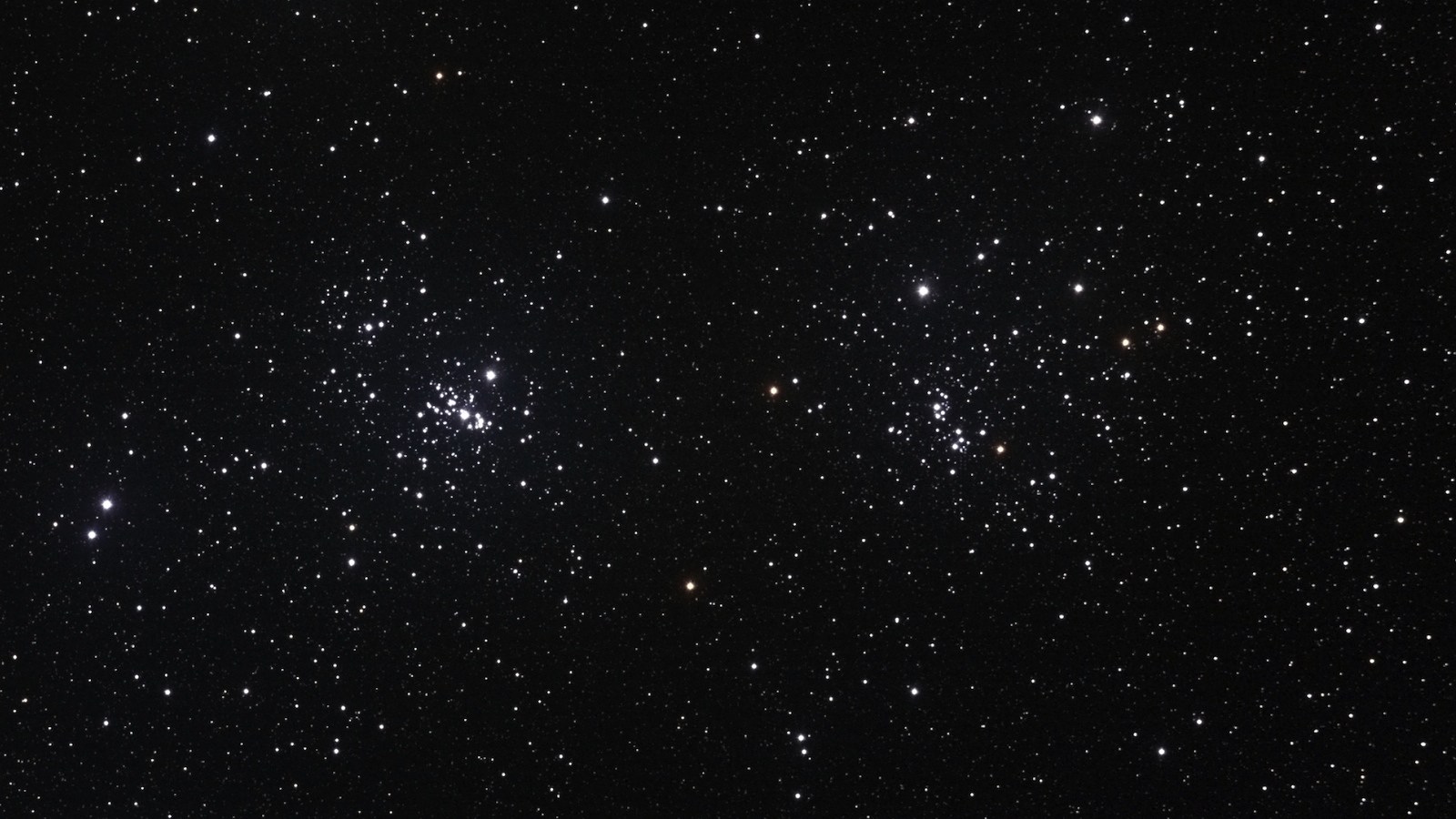
Why do other stars appear so much smaller than the sun?
a)
They are much smaller
b)
They are so far away
c)
They are not as bright
d)
They are dwarf stars
13.

What color of star is the hottest?
a)
Blue
b)
Red
c)
Yellow
d)
Orange
14.
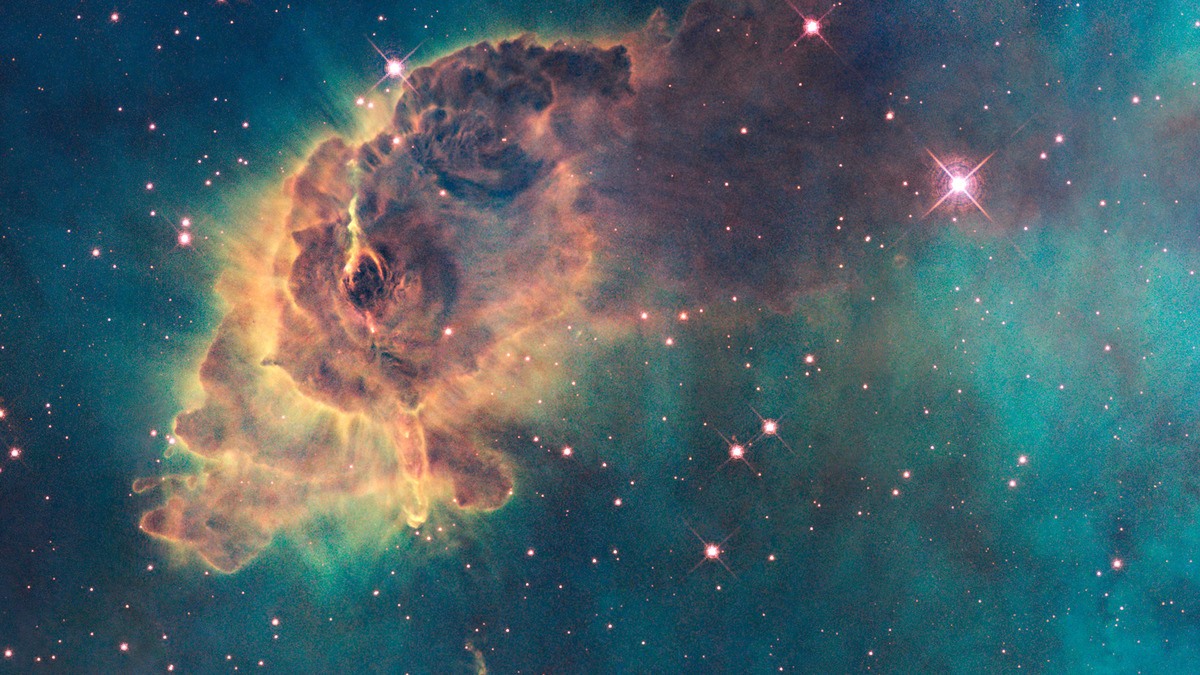
What is the name of the gas/dust clouds that form stars?
a)
Nebulas
b)
Protostars
c)
Supernova
d)
Neutron Star
15.

Which star has the lowest temperature?
a)
A
b)
B
c)
C
d)
D
16.
Process in which lighter elements (hydrogen) combine to form heavier elements (helium).
a)
Luminosity
b)
Nuclear Fusion
c)
Supernova
d)
Star
17.
What happens if you reverse the galaxy motion and go back in time?
a)
Everything must have been condensed into one extremely dense point
b)
Everything would still be where it is today
c)
Some things would remain, some would have moved back
d)
Nobody has a clue
18.
CMBR is supporting evidence for Big Bang because in this theory:
a)
The universe should have different temperatures in different places
b)
Microwave Radiation would have a short wavelength to prove red shifting
c)
There should be energy left from Big Bang and it should be everywhere
d)
They can see microwaves so it proves radiation exists
19.
What is a small body of ice, rock & cosmic dust loosely packed together?
a)
meteor
b)
meteoroid
c)
asteroid
d)
comet
20.
Which direction does a comet's tail always point?
a)
toward the sun
b)
away from the sun
21.
Where is the asteroid belt located?
a)
past the orbit of Neptune
b)
between Mars & Jupiter
c)
surrounding our solar system
d)
between Earth & Mars
22.

What is the red arrow pointing to?
a)
meteoroid
b)
meteor
c)
meteorite
23.
I am a round, rocky or gaseous body that orbits a a star. What am I?
a)
moon
b)
comet
c)
planet
d)
asteroid
24.
I am a rocky body that orbits a planet. What am I?
a)
asteroid
b)
comet
c)
meteor
d)
moon
25.
Two factors effecting the strength of the force of gravity between 2 objects are...
a)
mass and distance
b)
mass and matter
c)
distance and weight
d)
weight and mass
26.
As distance between two objects increase the pull of gravity
a)
Increases
b)
Decreases
c)
Stays the same
27.
The closer two objects are to each other
a)
the harder they will land
b)
they will have no gravitational force
c)
the stronger the gravitational force between them
d)
the weaker the gravitational force between them
28.
A[n] ______________ tide occurs when the sun is at right angles to the line between Earth and the moon.
a)
high
b)
neap
c)
low
d)
spring
29.
A[n] ___________ tide occurs when the sun, Earth, and the moon are nearly in a line.
a)
spring
b)
high
c)
low
d)
neap
30.
The bulge of water on the side of the Earth closest to the moon produces ___________.
a)
high tide
b)
low tide
c)
neap tide
d)
spring tide
31.
A neap tide is a tide with the greatest difference between low and high tides
a)
true
b)
false
32.
Neap tides occur once a month.
a)
True
b)
False
33.

Why do globes lean sideways?
a)
To allow them to spin easier.
b)
To demonstrate the tilt of Earth's axis.
c)
To demonstrate the effects of gravity.
d)
To demonstrate day and night.
34.

What happens when the area in which you live tilts away from the sun?
a)
It is summer.
b)
It is spring.
c)
It is winter.
d)
It is fall.
35.

What season is it in the Southern Hemisphere when it is fall in the Northern Hemisphere?
a)
winter
b)
spring
c)
summer
d)
fall
36.

Why does the area around the equator stay the same temperature all year?
a)
The equator rotates slower than the poles.
b)
The equator remains the same distance from the sun.
c)
The equator always receives direct sunlight.
d)
The equator has 18 hour days.
37.

Which season is taking place in the Northern Hemisphere in Position 2?
a)
Winter
b)
Spring
c)
Summer
d)
Fall
38.
What is Earth's annual motion around the sun called?
a)
Rotation
b)
Revolution
39.
One rotation of Earth is equal to
a)
a day.
b)
a year.
40.
Objects appear to move from east to west because Earth turns from _______ to ________.
a)
East to West.
b)
West to East.
c)
North to South.
d)
South to North.
41.
What would seasons be like if Earth's axis were straight up and down?
a)
Seasons would be the same.
b)
Seasons would be more extreme.
c)
There would be no seasons.
42.
The Northern Hemisphere gets __________ sunlight in the winter, which leads to _________ temperatures.
a)
less direct, hotter
b)
less direct, colder
c)
more direct, hotter
d)
more direct, colder
43.
What is the Earth's tilt in degrees?
a)
25.3 degrees
b)
32.5 degrees
c)
28.5 degrees
d)
23.5 degrees
44.
What are the reasons for the seasons?
a)
Earth's tilt and rotation.
b)
Earth's rotation and revolution.
c)
Earth's tilt and revolution.
d)
Earth's tilt and resolution
45.
About how many days does it take to moon to go through a complete cycle?
a)
7 days
b)
365 days
c)
29 days
d)
20 days
46.

When the Earth is between the moon and sun, it is most likely a:
a)
new moon
b)
full moon
c)
waxing crescent
d)
waxing gibbous
47.

Approximately how much time passes between the new moon and full moon?
a)
one month
b)
two weeks
c)
3 days
d)
24 hours
48.
What causes the moon's phases?
a)
Where you are standing on Earth
b)
the amt of sunlight reflected onto the moon from the sun
c)
The tilt of Earth
d)
how fast the moon is moving
49.

Name the moon phase that would come AFTER this moon.
a)
waning crescent
b)
waxing crescent
c)
waning gibbous
d)
waxing gibbous
50.

What phase is this?
a)
First Quarter Moon
b)
Last Quarter Moon
c)
Waxing Gibbous Moon
d)
Waning Gibbous Moon
51.

What phase comes AFTER this one?
a)
Waning Crescent
b)
Waning Gibbous
c)
Waxing Crescent
d)
Third Quarter
52.

What phase comes BEFORE this one?
a)
Waxing Gibbous
b)
Waxing Crescent
c)
Waning Gibbous
d)
Waning Crescent
53.

What phase comes BEFORE this one?
a)
Full Moon
b)
Third Quarter
c)
New Moon
d)
First Quarter
54.

What phase comes BEFORE this one?
a)
New Moon
b)
Third Quarter
c)
Waxing Crescent
d)
Full Moon
55.
What type of eclipse occurs when the moon blocks the sun's light and cast a shadow on earth?
a)
solar
b)
lunar
56.
What type of eclipse occurs when the earth's shadow is cast on a full moon?
a)
solar
b)
lunar
57.

What type of eclipse is this?
a)
Solar eclipse
b)
Lunar eclipse
58.

What type of eclipse is this?
a)
Solar Eclipse
b)
Lunar Eclipse
59.
Both reflecting and refracting telescopes are designed to
a)
break visible light into colors of the spectrum.
b)
separate visible light from ultraviolet and radio waves.
c)
gather and focus visible light.
d)
work better with short-wavelength radiation.
60.
A device that detects radio waves from objects in space is called a(n)
a)
radio telescope.
b)
reflecting telescope.
c)
refracting telescope.
d)
electromagnetic telescope.
61.

The best thing about radio telescopes is:
a)
They can receive data any time of day and in any weather
b)
They can receive very high frequency signals
c)
They receive gamma rays
d)
They can intercept signals between planets
62.

Spectroscopes collect light and then:
a)
Combine them into white light
b)
Combine them into black light
c)
Separate them into bands of colors
d)
Seperate them into white light
63.

An object that orbits another object in space is a:
a)
Space probe
b)
Space lander
c)
Space invader
d)
Satellite
64.

Unmanned space probes are used to explore outer space because:
a)
They are inexpensive
b)
They are extremely large
c)
It's too dangerous for humans
d)
It's too hard to see things far away
65.
I orbit above Earth sending back detailed pictures of objects in the solar system. My images are more detailed than all others.
a)
optical telescope
b)
space probes
c)
Hubble telescope
d)
space shuttle
66.
The energy from the sun is created by a process called:
a)
nuclear fission
b)
nuclear fusion
c)
nuclear reaction
d)
nuclear core
67.
When we look at the sun, what layer are we viewing?
a)
photosphere
b)
chromosphere
c)
corona
d)
convection zone
68.
What layer of the sun's atmosphere gives the sun its "white halo" during a solar eclipse?
a)
chromosphere
b)
photosphere
c)
corona
d)
atmosphere
69.
The particles of the corona extends into space for millions of kilometers and spreads into streams of electrically charged particles called:
a)
coronal discharge
b)
solar flares
c)
coronal ejection
d)
solar winds
70.
Areas of gas on the sun's surface that are cooler than gases around them are called:
a)
corona
b)
prominences
c)
sunspots
d)
solarspots
71.
Huge loops of reddish gas that connect sunspots are called:
a)
prominences
b)
solar flares
c)
coronal loops
d)
solar wind
72.
When experimenting with the growth of a plant, a scientist uses three (of the same type of) plants, two different fertilizers, equal light, and equal water. What type of variable is the fertilizer?
a)
Dependent
b)
Independent
c)
Control
d)
Compound
73.
Sarah is participating in a walkathon to raise money for local literacy programs. The amount of money Sarah will raise depends on the distance she walks.
m = the amount of money Sarah will raise
d = the distance Sarah walks
Which of the variables is dependent?
m = the amount of money Sarah will raise
d = the distance Sarah walks
Which of the variables is dependent?
a)
m
b)
d
74.

a)
The dependent variable is total cost
b)
The dependent variable is weight
c)
The independent variable is total cost
d)
The independent variable is cost of a package
75.
When a star has less hydrogen, the star must be
a)
older
b)
younger
Reset

