wayground logo

Free Printable Worksheets

Font size

S
M
L
XL
Worksheets

End of Year

Total questions: 78

Worksheet time: 3hrs 8mins

Name
Class
Date
1.

Water drops stay together on wax paper and they don’t break apart easily. This is mainly because:

a)

Water molecules are wet

b)

Water molecules are attracted to each other

c)

Water molecules are in motion

d)

Water molecules are small

2.

Food coloring spreads out faster in hot water than in cold water. This is mainly because:

a)

The food coloring molecules are small

b)

The molecules in hot water are large

c)

The water molecules in hot water move more quickly

d)

Hot water is less dense

3.

When you heat a sample of a solid, the particles that make up the solid:

a)

get bigger

b)

lose mass

c)

move faster

d)

slow down

4.

Choose all that apply: To describe a solid, you could say:

a)

The particles of a solid are attracted to each other

b)

The particles of a solid can move past one another

c)

The particles of a solid vibrate but do not move past one another

d)

A solid has mass and takes up space

5.

_____________is often defined as anything that has mass and takes up space.

a)

matter

b)

mass

c)

chemistry

d)

weight

6.

Choose all that apply: To describe a gas, you could say:

a)

The particles are very attracted to each other

b)

The particles are not very attracted to each other

c)

The particles are close together like a liquid

d)

The particles of a gas are further apart than the particles in a liquid or solid

7.

My particles are able to slide past one another, but are still close together

a)

Gas

b)

Plasma

c)

Liquid

d)

Solid

8.
Which type of organic molecule is found primarily in a cell's nucleus? 
a)
lipids
b)
carbohydrates
c)
nucleic acids
d)
proteins
9.
Which of the following is an example of an element?
a)
cell
b)
water
c)
hydrogen
d)
starch
10.
The cell membrane is made mostly of a double layer of molecules called
a)
lipids
b)
proteins
c)
nucleic acids
d)
carbohydrates
11.
which of the following types of cells have cell walls?
a)
plant cells
b)
muscle cells
c)
brain cells
d)
animal cells
12.
__________ are proteins that speed up chemical reactions in living things.
a)
lipids
b)
elements
c)
enzymes
d)
carbohydrates
13.
____________ helps cells keep their shape.
a)
oxygen
b)
food
c)
water
d)
proteins
14.
True or False: Without water, life as we know it would not exist.
a)
True
b)
False
15.

About how much of the human body is water?

a)

1/3

b)

2/3

c)

1/2

d)

3/5

16.
A cell is...
a)
the basic unit of structure and function in living organism
b)
an organism
c)
a basic part of everything that we see
d)
found only in animals, not plants
17.
The nucleus is like the ____________ of the cell.
a)
foot
b)
hand
c)
stomach
d)
brain
18.

This sac within the cytoplasm stores water, food, waste, products and other materials.

a)
vacoule
b)
organelle
c)
cytoplasm
d)
cell membrane
19.
All cells need energy to function.  Which cell organelle is responsible for producing energy in the cell?
a)
chloroplasts
b)
mitochondria
c)
nucleus
d)
vacuoles
20.
Chloroplasts in plant cells allow the plant to perform a function that animal cells cannot do.  What is the main function of the chloroplasts found in plant cells?
a)
to absorb light energy and manufacture food
b)
to remove waste materials by active transport
c)
to manufacture chemical energy from food
d)
to control the shape of the cell
21.
These organelles capture energy from sunlight and use it to produce food for the cell.
a)
cell membrane
b)
chloroplasts
c)
cell wall
d)
ribosomes
22.
Which planet in our solar system is closest to the Sun?
a)
Earth
b)
Jupiter
c)
Mercury
d)
Saturn
23.
The moon is a natural  ______ of Earth.
a)
comet
b)
axis
c)
satellite
d)
space probe
24.
Why does Earth have different seasons? 
a)
because of the distance between Earth and the sun 
b)
because of the speed of Earth as it rotates on its axis 
c)
because of the amount of light blocked by the moon on its axis 
d)
because of the tilt of Earth on its axis as it moves around the sun 
25.
Which is the largest object in our solar system?
a)
Sun
b)
Jupiter
c)
Earth
d)
Pluto
26.

The sun produces energy by

a)

nuclear fission.

b)

nuclear fusion.

c)

attracting it with the force of gravity.

d)

burning fuels such as oil.

27.

What do the four outer planets have in common?

a)

They are much larger than Earth and they do not have solid surfaces

b)

They are about the same size as Earth and are made mainly of

hydrogen and helium

c)

They are much larger than Earth and are made mainly of iron

d)

They are about the same size as Earth and are made mainly of iron

28.

What do all of the inner planets have in common?

a)

They all have abundant liquid water

b)

They all are relatively small and have rocky surfaces

c)

They all have many moons

d)

They all have rings

29.

Venus and Earth are much alike in terms of

a)

their direction of rotation

b)

their atmospheres

c)

their rates of rotation

d)

their size and density

30.

Uranus is different from most other planets because it

a)

has the most moons.

b)

rotates on its side.

c)

is mostly nitrogen and helium

d)

is the farthest from the sun

31.
Which planet is the hottest?
a)
Mercury
b)
Venus
c)
Earth 
d)
Mars
32.
When heat is trapped by the gases in the planet's atmosphere it is called the _______ _______.
a)
water cycle
b)
centrifugal force
c)
greenhouse effect
d)
global warming
33.

Day and night are caused by the _____________ of a planet on its axis.

a)

revolution

b)

orbit

c)

rotation

34.

What is the name for the model of our solar system?

a)

egocentric

b)

geocentric

c)

heliocentric

d)

exocentric

35.

What unit of measurement do we use to measure distance in the solar system?

a)

International Unit

b)

Astronomical Unit

c)

Space inches

d)

solar centimeters

36.

Which planet has the most visible rings?

a)

Jupiter

b)

Saturn

c)

Uranus

d)

Neptune

37.

What charge do protons have?

a)

Positive

b)

Negative

c)

Neutral

38.
Plants need ________ for photosynthesis
a)
oxygen
b)
soil
c)
carbon dioxide
d)
sugar
39.
What are the products of photosynthesis?
a)
water and carbon dioxide
b)
oxygen and glucose
c)
oxygen and carbon dioxide
d)
oxygen and water
40.
The raw materials or reactants of photosynthesis are
a)
sugar and water.
b)
sugar and oxygen.
c)
carbon dioxide and water.
d)
carbon dioxide and oxygen.
41.
Where does cellular respiration take place in the cell?
a)
Cell Membrane
b)
Nucleus
c)
Mitochondria
d)
Vacuole
42.
What is the purpose of cellular respiration?
a)
to break down food
b)
to create energy in the body
c)
to release energy from food
d)
there is none; it's a waste of time
43.
The purpose of photosynthesis is ...
a)
to make glucose
b)
to break glucose
c)
to capture energy from the sun
d)
to change carbon dioxide
44.
What gas is released into the air during photosynthesis?
a)
carbon dioxide
b)
oxygen
c)
water 
d)
glucose
45.
What does the picture show?  
a)
carbon dioxide molecule
b)
oxygen molecule
c)
water molecule
d)
glucose molecule
46.
What does the picture show?  
a)
carbon dioxide molecule
b)
glucose
c)
water molecule
d)
oxygen molecule
47.
All living things do which of the following?
a)
Chemosynthesis
b)
Respiration
c)
photosynthesis
d)
all of the answers
48.
Aerobic respiration is different from anaerobic respiration in that aerobic respiration needs...
a)
chlorophyll
b)
carbon dioxide
c)
glucose
d)
oxygen
49.
In which way are photosynthesis and cellular respiration different?
a)
Cellular respiration stores ATP, while photosynthesis releases ATP.
b)
Cellular respiration produces oxygen, while photosynthesis uses oxygen.
c)
Photosynthesis releases energy, while cellular respiration stores energy.
d)
Photosynthesis used carbon dioxide, while cellular respiration produces carbon dioxide.
50.
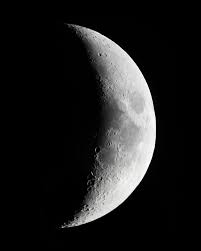
Name the moon phase
a)
full moon
b)
waxing crescent
c)
waning gibbous
d)
waxing gibbous
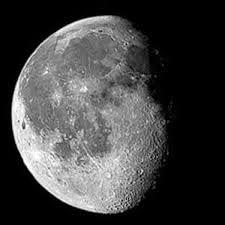
51.
Name the moon phase
a)
waning crescent
b)
waxing crescent
c)
waning gibbous
d)
full moon
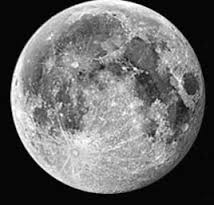
52.
Name the moon phase
a)
First Quarter
b)
Last Quarter
c)
New Moon
d)
Full Moon
53.
Name the moon phase
a)
First Quarter
b)
Last Quarter
c)
New Moon
d)
Full Moon
54.

Food coloring spreads out faster in hot water than in cold water. This is mainly because:

a)

The food coloring molecules are small

b)

The molecules in hot water are large

c)

The water molecules in hot water move more quickly

d)

Hot water is less dense

55.

The density of an object is


Correct Answer 

a)

The same as its weight

b)

The volume divided by the mass

D = v/m

c)

The mass divided by the volume

D = m/v

56.

If you cut a wooden block in half, each half would have


a)

Half the density of the original piece

b)

The same density as the original piece

c)

No density at all

57.

An object should float in a liquid if it is

a)

More dense than the liquid

b)

Less dense than the liquid

58.

A tiny piece of sand is very light but sinks in water. This is because

Correct Answer   

a)

Sand is less dense than water

b)

Sand is more dense than water

59.

To find density you need which 2 measurements?

a)

volume and speed

b)

altitude and volume

c)

mass and length

d)

mass and volume

60.

What is the density of water?

a)

34 g/mL

b)

1 g/mL

c)

29 g/mL

d)

6 g/mL

61.

When the moon is lined up exactly between the sun and Earth, it is called a ______ ______.

a)

Solar Eclipse

b)

Lunar Eclipse

62.
A solar eclipse only happens during a ________ moon.
a)
New
b)
Cresent
c)
Gibbous
d)
Full
63.
A lunar eclipse only happens during a ________ moon.
a)
New
b)
Cresent
c)
Gibbous
d)
Full
64.

A solar eclipse occurs when the moon

a)

passes into the penumbra of Earth

b)

passes into the umbra of Earth

c)

passes at a slight tilt between Earth and

the sun

d)

passes directly between Earth and the sun
65.

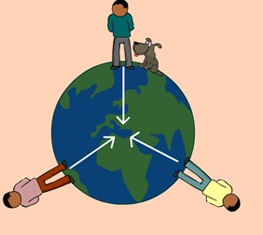
Define: gravity

a)

A force that attracts all objects toward each other

b)

Energy

c)

the amount of matter in an object

d)

the tendency of an object to stay in motion
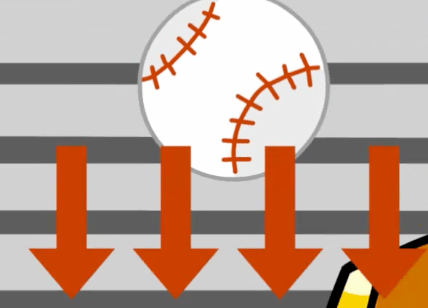
66.

Why does a ball fall to the ground?

a)

Earth's force of gravity is GREATER than the ball's, so the ball gets attracted to the ground.

b)

Earth's force of gravity is LESS than the ball's, so the ball gets attracted to the ground.

67.

As the distance between two objects increases the force of gravity

a)

Increases

b)

Decreases

c)

Stays the same

68.
Gravity attracts all objects towards one another.
a)
False
b)
True
c)
It depends
69.

Which of the following does NOT change based on its location in the universe?

a)

weight

b)

force

c)

mass

d)

pounds

70.

Two factors effecting the strength of the force of gravity between 2 objects are...

a)

mass and distance

b)

mass and matter

c)

distance and weight

d)

inertia and mass

71.
Tides are caused mainly by what?
a)
Moon’s gravitational pull
b)
Sun’s gravitational pull
c)
Earth’s gravitational pull
72.
Most places on Earth experience about how many high and low tides in 24 hours?
a)
2 high and 2 low tides
b)
4 high and 4 low tides
c)
1 high and 1 low tides
73.
What type of tide occurs during a new and full moon?
a)
Neap tides
b)
Spring tides
c)
Normal tides
74.
What type of tide occurs during the first or third quarter moon?
a)
Neap tides
b)
Spring tides
c)
Normal tides
75.
If the Sun, Earth, and Moon are in perfect alignment, the Earth would have a _______ tide.
a)
Spring
b)
Neap
c)
Normal
76.
If the Sun, Earth, and Moon create a 90 degree angle, the Earth would have __________.
a)
Spring tides
b)
Neap tides
c)
Normal tides
77.

The correct order for the parts of

mitosis are

a)

prophase, interphase, metaphase, anaphase

b)

telophase, anaphase, metaphase, prophase

c)

interphase, prophase, metaphase, telophase

d)

prophase, metaphase, anaphase, telophase

78.

During which stage of the cell cycle does DNA replication occur?

a)

telophase

b)

interphase

c)

metophase

d)

photosynthesis