
 Worksheets
5th grade end of the year review
Total questions: 83
Worksheet time: 54mins
Name
Class
Date
1.
Features on the surface of the Earth such as mountains, hills, dunes, oceans, and rivers:
a)
delta
b)
erosion
c)
landform
2.
The movement of weathered material on the Earth's surface by wind, water, and ice:
a)
erosion
b)
deposition
c)
landslides
3.
A sudden release of energy under the Earth's surface that makes the ground shake or crack:
a)
weathering
b)
earthquake
c)
landform
4.
The breakdown of rock into smaller particles from the effects of wind, water, and ice:
a)
deposition
b)
delta
c)
weathering
5.
The buildup of land by depositing sediment and soil in a new location:
a)
earthquake
b)
weather
c)
deposition
6.
A triangle-shaped (deposit) landform at the mouth of a river as it empties into a body of water:
a)
weather
b)
delta
c)
landform
7.
When a river flows over the Earth and carves out a hole in the surface it makes a:
a)
hill
b)
mountain
c)
canyon
8.
A delta forms when the river meets the ocean because:
a)
the river is colder than the ocean.
b)
the river slows down and drops sediments.
c)
the Earth builds up pressure in the river.
9.
What natural force formed the Grand Canyon millions of years ago?
a)
a landslide
b)
an earthquake
c)
a river
10.
What is necessary for sand dunes to form?
a)
a loose sand and strong wind
b)
pressure in the Earth
c)
ice glaciers
11.
What is weathering?
a)
seasons changing
b)
breaking down rock into smaller pieces
c)
pressure building up inside the Earth
12.
Which process takes the longest to change the Earth's surface?
a)
volcanic eruptions
b)
earthquake shaking the Earth
c)
weather of rock by wind
13.
What comes up out of the Earth from inside a volcano?
a)
dry sediments
b)
magma
c)
rushing water
14.
What causes an earthquake?
a)
the deposition of sediments
b)
pressure built up inside the Earth
c)
loose sand and strong winds
15.
When a rock gets water inside it and the water freezes, the rock most likely might:
a)
become bigger by adding more sediments
b)
crack from the expanding frozen water
c)
stay the same
16.
Which is not a way mountains are formed?
a)
shifting plate
b)
volcanic action
c)
extinctions
d)
magma movement deep in the earth
17.
An extinct volcano is
a)
not likely to erupt
b)
likely to erupt
c)
flat
d)
steep
18.
Two mountain ranges located in North America are
a)
the Himalayan and the Ural Mountains
b)
the Sierra Nevada and the Atlas Mountains
c)
the Rocky and the Appalachian Mountains
d)
the Alps and the Caucasus Mountains
19.
Which is one form of adaptation that allows animals to live on mountains?
a)
longer legs on one side of the body
b)
large antlers
c)
hooves with sharp edges
d)
thin, light hair
20.
Why are mountains important to people?
a)
They contain minerals.
b)
They provide places for recreation.
c)
The are sources of rivers that provide hydroelectric power.
d)
all of the above
21.
A dam is
a)
a passage through or under a natural feature.
b)
a wall used to stop the flow of water.
c)
level surface built into the side of a mountain.
d)
a colorless or lightly colored hard mineral.
22.

Is burning wood a chemical or physical change?
a)
chemical
b)
physical
23.
Is hammering wood together to build a house a chemical or physical change?
a)
chemical
b)
physical
24.
Everything around us is made of __________.
a)
mass
b)
matter
c)
nuetrons
d)
solids
25.
The three states of matter are:
a)
solids, liquids, gases
b)
protons, neutrons, electrons
c)
water, ice, condensation
d)
red, round, juicy
26.
A physical change is a change in a __________ ___________ of matter.
a)
matter and mass
b)
breaking things
c)
physical property
d)
chemical property
27.
When you combine, or add together, two or more different types of matter, you make a ____________.
a)
physical change
b)
mixture
c)
chemical change
d)
mass
28.
Mixtures are combinations of __________________.
a)
water and ice
b)
solids
c)
solids, liquids, and gases
d)
liquids
29.
Which of the following is NOT an example of a physical change?
a)
crumpled paper
b)
pencil sharpening
c)
shrunken clothing
d)
sour milk
30.
Which of the following IS a chemical change
a)
using chalk
b)
water freezing
c)
slicing cheese
d)
digestion
31.
A change in the size, shape, or state of matter.
a)
chemical change
b)
physical change
c)
chemical reaction
d)
electron change
32.
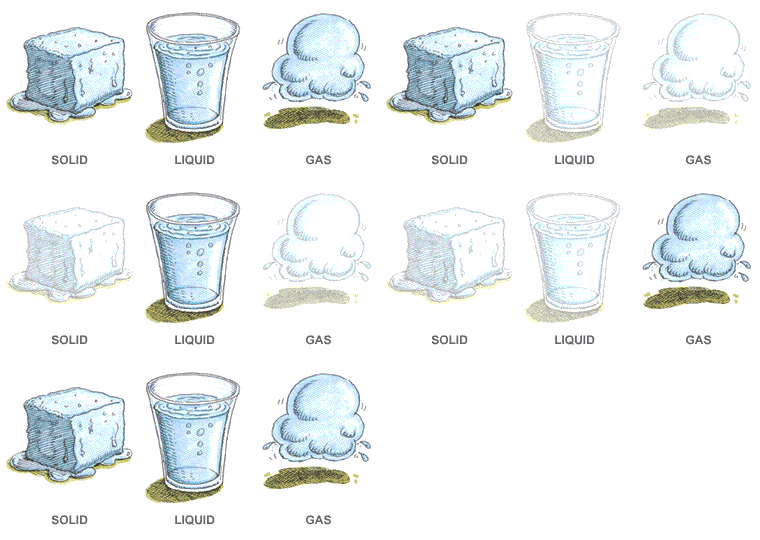
In which of these do particles move slowest?
a)
matter
b)
gas
c)
liquid
d)
solid
33.
Which of the following is a method of separating solutions?
a)
hand seperation
b)
filtering
c)
screening
d)
evaporation
34.
If you spilled nails in a sandbox, what separation tool/method could you use to clean out the sandbox so it would be safe for children to play in?
a)
Filter
b)
Screen
c)
Magnet
d)
Evaporation
35.
Which statement describes a mixture?
a)
2 or more substances that CANNOT be easily separated
b)
2 or more substances that CAN be easily separated
c)
An example of a mixture is lemonade
d)
An example of a mixture is a Kool-Aid
36.
A substance that undergoes a(n) _____ change becomes a new kind of substance.
a)
Chemical
b)
Physical
37.
Which is a Chemical property?
a)
Thermal Conductivity
b)
Density
c)
Malleability
d)
Flammability
38.
Which of the following is a sign that a chemical reaction has occurred?
a)
change in shape
b)
melting
c)
formation of a gas
d)
dissolving
39.
Changing the Shape, State, or Size of an object is a...
a)
Physical Change
b)
Chemical Change
c)
Chemical Property
40.
What does the principle of conservation of mass mean?
a)
The total mass of the reactants is more than the products
b)
Matter is not created or destroyed
c)
The total mass of the reactants is less than the products
41.
What is static electricity?
a)
electricity produced by like electric charges attracting
b)
electricity used for powering radios and televisions
c)
a buildup of balanced electric charges
d)
a buildup of excess electric charge
42.
Elements that are shiny and good conductors of electricity are _____.
a)
colloids
b)
metalloids
c)
metals
d)
nonmetals
43.
The negatively charged particles in an atom are called _____.
a)
electrons
b)
neutrons
c)
negatrons
d)
protons
44.
An object becomes postiively charged when which of the following occurs?
a)
loses electrons
b)
gains electrons
c)
loses protons
d)
gains neutrons
45.
How do two negative charges interact when they are brought close together?
a)
repel
b)
no interaction
c)
attract
d)
ground
46.
Which of the following an insulator?
a)
copper
b)
wood
c)
silver
d)
salt water
47.
Lightning is _____.
a)
a buildup of neutrons
b)
harmless
c)
a high-voltage electric current
d)
a large discharge of static electricity
48.

In a series circuit with 4 bulbs:
a)
a switch is never used
b)
all of the bulbs become dimmer if another bulb is added
c)
There are many paths for electricity to take
d)
the remaining 3 bulbs stay lit if one burns out
49.

All wires used in electric circuits should be covered with:
a)
a colored material.
b)
a conducting material.
c)
an insulating material.
d)
none of these.
50.
What is the difference between a conductor and an insulator?
a)
An insulator allows electricity to flow through it easily and a conductor does not
b)
A conductor allows electricity to flow through it easily and an insulator does not.
c)
An insulator is magnetic and a conductor is not
d)
A conductor is magnetic and an insulator is not
51.
What happens to the brightness of the light bulbs in a series circuit when you add more lights.
a)
Each bulb gets dimmer
b)
Each bulb remains the same
c)
Half of the bulbs get dimmer
d)
Each bulb gets brighter
52.

What part of a circuit is this object?
a)
power source
b)
load
c)
pathway
d)
switch
53.
A __________opens and closes a circuit?
a)
key
key
key
b)
magnet
c)
switch
d)
electromagnet
54.
What are the components of a simple circuit?
a)
wires, switch, outlet
b)
battery, switch, motor
c)
wires, light bulb, motor
d)
wires, battery, light bulb
55.
Why are humans conductors?
a)
Humans are made of mostly water.
b)
Humans have a ton of metal in their bodies.
c)
Humans conduct the railroad.
d)
Humans are great at the electric slide.
56.

Is this circuit open or closed?
a)
Closed
b)
Open
57.
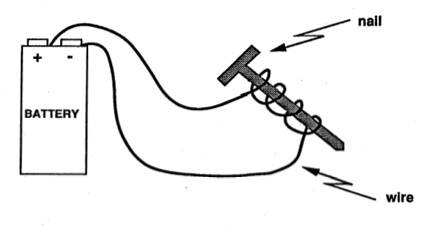
This is a picture of a simple electromagnet. How can the electromagnet be made stronger?
a)
Add more coils of wire to the nail.
b)
Use a smaller battery.
c)
Reverse the poles of the magnet.
d)
Remove all the coils and the nail.
58.
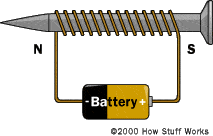
What kind of magnet can be turned on and off?
a)
refridgerator magnet
b)
electromagnet
c)
magnetite
d)
iron
59.
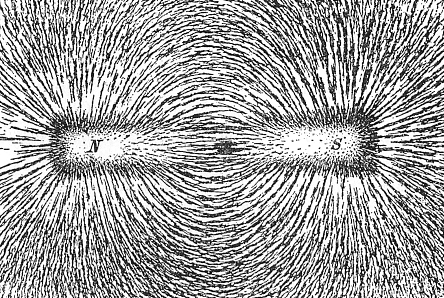
Surrounding every magnet is a __________ __________.
a)
magnetic field
b)
electrical current
c)
another magnet
d)
an enemy
60.
What are the ends of a magnet called?
a)
East and west poles
b)
Left and Right ends
c)
North and South ends
d)
North and South poles
61.

How do electromagnets differ from regular magnets?
a)
A. They can be turned off and on
b)
B. Their polarity can be reversed
c)
C. Their strength can be changed
d)
D. All of the above
62.
Which of the following is NOT part of an electromagnet?
a)
Wire
b)
Iron
c)
Toothpick
d)
Power source
63.
Which of the following is not cold blooded?
a)
amphibian
b)
mammal
c)
reptile
d)
fish
64.
Which of the following spend part of their life on land and part in the water?
a)
reptiles
b)
fish
c)
amphibians
d)
mammals
65.
Which of the following is NOT an invertebrate animal group?
a)
arthropod
b)
chordate
c)
sponge
d)
cnidarian
66.
What kind of invertebrate is a crab?
a)
mollusk
b)
arthropod
c)
sponge
d)
echinoderm
67.
Which of the following is in the same group as a crab?
a)
squid
b)
leech
c)
spider
d)
sponge
68.
Lungs and moist skin are characteristics of which of the following vertebrates?
a)
amphibians
b)
fish
c)
reptiles
d)
lizards
69.
How do scientists classify animals into two large groups?
a)
By what they eat
b)
How they move about
c)
Whether they have a backbone
70.
How are all insects alike?
a)
They have three body parts
b)
They can fly
c)
They have 4 pairs of legs
71.
How are a fish and an amphibian alike?
a)
They grow legs when they get older
b)
Their body temperature changes with the surroundings
c)
They have fins to keep them upright in the water
72.
Which of these animals is a reptile?
a)
Salamander
b)
Carp
c)
Alligator
73.
How are a dolphin and a horse alike?
a)
They feed milk to their young
b)
Their skin is dry and scaly
c)
They are cold blooded
74.
The main bone that runs along the middle of the back is called
a)
backbone
b)
skeleton
c)
elbow
75.
Fish breathe through organs called
a)
Fins
b)
Scales
c)
Gills
76.
Animals that feed milk to their young are called
a)
reptiles
b)
mammals
c)
birds
77.
What does it mean if an animal is cold blooded?
a)
They like cold weather.
b)
Their body temperature changes with environment
c)
They have to live in a cold climate
78.
Nonvascular plants usually grow in:
a)
damp, swampy areas
b)
deserts
c)
arctic regions
d)
sunny fields
79.

Which of these is not a plant?
a)
evergreen
b)
flower
c)
wheat
d)
mushroom
80.

All plants...
a)
make seeds
b)
have roots
c)
need soil
d)
make food through photosynthesis
81.

Why can vascular plants grow to be tall?
a)
they can live in the desert
b)
they make fruit and flowers
c)
The tubes help send nutrients through the roots and stems
d)
they don't have to live near water
82.

Classify the plant shown in the picture.
a)
animals
b)
nonvascular
c)
mushrooms
d)
vascular
83.
The two main groups of plants are
a)
Living and Non-Living
b)
Vascular and Non Vascular
c)
Trees and Moss
d)
Ferns and Flowers
100 %

