
NEW
Font size
 Worksheets
Cardiovascular System
Total questions: 50
Worksheet time: 31mins

Blood that flows between the heart and lungs is known as the _____.
pulmonary circuit
systemic circuit

What chamber is the big arrow pointing to?
Left atrium
Right atrium
Left ventricle
Right ventricle
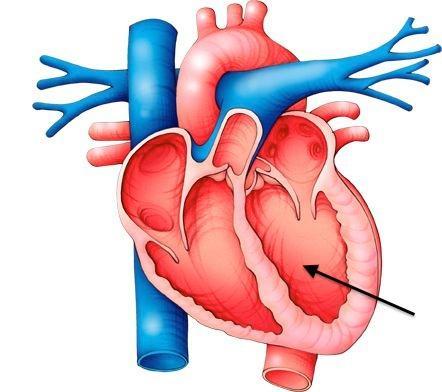
What chamber is the arrow pointing to?
Left atrium
Right atrium
Left ventricle
Right ventricle
What is the thick muscular layer of the heart called?
pericardium
endocardium
myocardium
epicardium
The valve in the left side of the heart is known as the _____.
bicuspid
pulmonary semilunar
tricuspid
aortic semilunar
Where does the blood go after it leaves the right ventricle?
pulmonary artery
pulmonary vein
aorta
vena cava
Where does the left ventricle push blood to?
aorta and body
pulmonary arteries and lungs
pulmonary arteries and body
aorta and lungs

Where is the highest pressure within the types of blood vessels?
arteries
veins
capillaries
arterioles
What is the aorta?
largest vein leading back to the heart
largest artery leading away from the heart
a chamber of the heart
artery leading from the heart to the lungs
Which of the following are the blood vessels that have the thickest walls?
veins
arteries
capillaries
arterioles
What is high blood pressure called?
atherosclerosis
hypertension
myocardial infarction
aneurism

Which blood vessel is the arrow pointing to?
aorta
pulmonary vein
pulmonary artery
superior vena cava

Which blood vessel is the arrow pointing to?
pulmonary vein
pulmonary artery
aorta
superior vena cava

During the cardiac cycle, the diastole phase is when?
the heart is fully contracted
the heart is fully relaxed
the atria are relaxed and ventricles contracted
the atria are contracted and ventricles relaxed

The amount of blood pumped each minute is called the _____.
heart rate
stroke volume
cardiac output
blood pressure
Blood returning to the heart from the lungs enters the _____.
right atrium
right ventricle
left atrium
left ventricle
The right ventricle pumps blood to the _____.
lungs
body
right atrium
aorta
The bicuspid or mitral valve is located _____.
in the opening of the aorta
in the opening of the pulmonary trunk
between the right atrium and right ventricle
between the left atrium and left ventricle
What prevents blood from flowing back into the atria when the ventricles contract?
semilunar valves
sinoatrial node
atrioventricular node
tricuspid and bicuspid valves
What transports blood from the body below the diaphragm to the heart?
superior vena cava
inferior vena cava
subclavian veins
pulmonary veins
Why is coronary circulation necessary?
because blood needs to be pushed throughout the entire body
because the heart itself needs oxygenated blood
because the head requires nourishment
because the brain needs oxygenated blood
What keeps the left and right sides of the heart separate?
tricuspid valve
septum
bicuspid valve
sinoatrial node

Which type of blood vessels have valves to prevent backflow?
arteries
veins
capillaries
arterioles
What layer of an artery or vein is primarily composed of smooth muscle?
tunica externa
tunica media
tunica interna
For an adult, what is "normal" blood pressure?
120/100 mmHg
120/80 mmHg
100/80 mmHg
140/80 mmHg
The right atrium receives blood from the _____.
capillaries
pulmonary arteries
superior and inferior venae cavae
pulmonary veins
The following are the components to the conducting system of the heart:
1. Purkinje fibers
2. AV bundle
3. AV node
4. SA node
5. bundle branches
Sequence the order in which electrical impulses would flow through -
3 - 5 - 4 - 2 - 1
4 - 2 - 3 - 5 - 1
4 - 3 - 2 - 5 - 1
3 - 2 - 4 - 5 - 1
The second heart sound "dupp" is caused by the _____.
aortic and pulmonary semilunar valves closing
tricuspid and bicuspid valves closing
right and left ventricles contracting
tricuspid and bicuspid valves opening
The only blood vessels whose walls permit exchange between the blood and cells are the _____.
arteries
veins
capillaries
venules
Factors that affect blood flow through the blood vessels are _____.
blood pressure
peripheral resistance
viscosity of blood
all of the choices
Which blood vessel drains blood from the head, neck, shoulders, and arms?
aorta
coronary vein
inferior vena cava
superior vena cava
The carotid arteries carry blood to the _____.
liver
heart
brain
arms
Blood flow is controlled by the following factors EXCEPT one. Choose the EXCEPTION.
glucose concentration levels
autoregulation
central nervous system control
hormone control
Which artery is used to take your blood pressure?
brachial
femoral
radial
carotid
Which veins drain the head region?
jugular
carotid
renal
subclavian
Which arteries become blocked during a myocardial infarction?
coronary
pulmonary
carotid
axillary
Which part of the brain performs basic control of the heart?
medulla oblongata
amygdala
cerebellum
diencephalon
During capillary exchange, what substances are distributed to the cells?
nutrients
hormones
oxygen
all of the choices
During fetal circulation, the foramen ovale is used to _____.
deliver nutrients into the umbilical cord
allow blood to travel from the right atrium to the left atrium
deliver oxygen to the lungs
allow blood to enter the brain
Older, elderly individuals may experience the following EXCEPT one. Identify the EXCEPTION.
hypertension
varicose veins
increased hematocrit
reduced cardiac output
The volume of blood pumped in a single heartbeat is called _____?
heart rate
stroke volume
cardiac output
systolic volume
What creates the "lubb - dupp" heart sounds?
flow of blood
closing of valves
opening of valves
ventricles contracting
What information does an electrocardiogram give?
where the blood flows in the heart
electrical activity of the heart
what chamber of the heart is contracting
what valves of the heart are closing
Valves that are not shutting properly in the legs causes _____.
myocardial infarction
atherosclerosis
varicose veins
hypertension

Which blood vessel is the arrow pointing to?
Posterior Tibial Artery
Femoral Artery
Common Iliac Artery
Brachial Artery

Which blood vessel is the arrow pointing to?
Pulmonary Artery
Superior Vena Cava
Descending Aorta
Ascending Aorta

Which blood vessel is the arrow pointing to?
Renal Vein
Inferior Vena Cava
Axillary Vein
Pulmonary Vein

Which blood vessel is the arrow pointing to?
Left Common Carotid Artery
Right Common Carotid Artery
Left Subclavian Artery
Axillary Artery

Which blood vessel is the arrow pointing to?
Radial Artery
Ulnar Artery
Brachial Artery
Axillary Artery

Which blood vessel is the arrow pointing to?
Superior Vena Cava
Subclavian Vein
External Jugular Vein
Brachial Vein

