wayground logo

Free Printable Worksheets

NEW

Font size

S
M
L
XL
Worksheets

Ch. 6 Review - Biomes

Total questions: 45

Worksheet time: 38mins
Name
Class
Date
1.
Which biome is characterized by low temperatures and low amounts of rainfall?
a)
tundra
b)
desert
c)
temperate deciduous forest
d)
tropical rain forest
2.
Which biome covers most of the land mass near the Earth's equator?
a)
tundra
b)
desert
c)
grassland
d)
tropical rainforest
3.
Which biome, because of its climate, has the largest number of species of plants and animals?
a)
tundra
b)
desert
c)
tropical rainforest
d)
pine forest
4.
One characteristic feature of tundra is that only the surface thaws in the summer and refreezes in the winter, leaving a layer of permanently frozen subsoil.  This characteristic is known as
a)
glaciation
b)
permafrost
c)
crystallization
d)
soilfrost
5.
Which type of trees is found in a temperate forest?
a)
deciduous
b)
evergreen
c)
ginko
d)
palm
6.
Which major biome is home to cacti, mesquite, white thorn, pack rats, small reptiles, and coyotes?
a)
desert
b)
taiga
c)
tundra
d)
grassland
7.
In which biome is Georgia located?
a)
tropical rainforest
b)
temperate rainforest
c)
temperate deciduous forest
d)
alpine forest
8.
This biome contains mostly spruce trees and Douglas firs, which are both evergreen.  The winters are long and cold and the summers are short and rainy.  The soil is very rich.  Moose and elk live here.  This biome is classified as a
a)
taiga
b)
tundra
c)
deciduous forest
d)
temperate forest
9.
The most important abiotic factors when studying biomes are...
a)
Food and Water
b)
Water and Sunlight
c)
Temperature and Oxygen
d)
Water and Temperature 
10.
Which biome is MOST LIKE the "desert" in terms of precipitation?
a)
tropical rainforest
b)
temperate deciduous forest
c)
tundra
d)
coniferous forest
11.
Biotic factors of an ecosystem are:
a)
non-living
b)
plants
c)
living thing
d)
soil
12.
Temperature, light, air, water, and soil are all  _____  parts of the environment
a)
alive
b)
biotic 
c)
abiotic
d)
living
13.
Biomes with densely packed trees sometimes form a continuous green "roof" layer called a: 
a)
canopy
b)
ceiling
c)
green layer
d)
forest top
14.
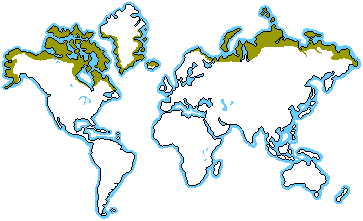
The area of the map shaded in green represents which of the following terrestrial biome
a)
Coniferous Forrest
b)
Deciduous Forrest 
c)
Desert
d)
Tundra
15.
Which of the following BEST MATCHES the meaning of the word TEMPERATE.
a)
temperatures within moderate limits
b)
an area with trees and bushes
c)
a forest with plants growing together
d)
an area with all the same temperature
16.
What is the ocean floor called?
a)
Photic Zone
b)
Aphotic Zone
c)
Benthic Zone
17.
What are some problems associated with low tide?
a)
Waves crashing on shore may affect an organism's ability to hold on.
b)
Organisms may dry out due to lack of water.
c)
Organisms are exposed to direct sunlight.
d)
All of the above.
18.
Which of the following is the best definition for estuary?
a)
Narrow band of coastline that exists between high and low tide.
b)
Areas along the coast where fresh water from rivers mixes with salt water from the ocean.
c)
Flowing fresh water containing rapids.
d)
Freshwater aquatic areas that are saturated by water for at least part of the year.
19.
List the zones of ocean areas from shallow to deep.
a)
Neritic, intertidal, oceanic.
b)
Oceanic, neritic, intertidal
c)
Intertidal, neritic, oceanic.
d)
Intertidal, oceanic, neritic
20.
Despite having plenty of sun and rain, the tropical rainforest has very poor _____.
a)
biodiversity
b)
soil
c)
animal life
d)
air quality
21.
What is a close interaction between two unlike species where at least one species benefits?
a)
Predation
b)
Symbiosis
c)
Adaptation
d)
Prey
22.
The "Rainforests of the ocean". These areas are very rich in biodiversity.
a)
Photic Zone
b)
Abyss
c)
Intertidal Zone
d)
Coral Reef
23.
The plankton that are microscopic and plant like are called 
a)
zooplankton 
b)
phytoplankton 
c)
minnows
24.
Which organism can be found in coral reefs?
a)
Clownfish
b)
Dragonfish
c)
Whales
d)
Dogs
25.
An area where land is periodically underwater.
a)
Wetland
b)
Forest
c)
Desert
d)
Woodland
26.
Nutrient rich area near the shore of lakes and ponds
a)
Littoral zone
b)
Transition zone
c)
Mangrove
d)
Swamp
27.
Two factors that determine where an organism lives in aquatic ecosystem are 
a)
Temperature and sunlight
b)
Neighbors and housing prices
c)
Fish and wildlife
d)
Darkness and tree height
28.
Wetlands are important to fisheries in the united states because many of the fish caught each year use the wetlands for _______ and ________
a)
Dying and decaying
b)
Feeding and spawning
c)
Living and working
d)
Escaping and evading
29.
Why do wetlands have a rich supply of nutrients? 
a)
Dead leaves & other plant and animal materials serve as natural fertilizers. They add nitrogen, phosphates, and other nutrients to the water and soil.
b)
The area round the swamp leads to the land and  area developments such as new houses.  
c)
The larger citites in the area produce many large amounts of trees and grasses that give nutrients to the swamp 
30.
Why are wetlands important to people?
a)
Wetlands are a critical part of our natural environment.
b)
They provide habitat for animals and plants and many contain a wide diversity of life, supporting plants and animals that are found nowhere else.
c)
Why are wetlands important to people?Wetlands act as natural water filters. They also help control floods by absorbing excess water after heavy rains. Wetlands are like giant sponges!
31.
a wide variety of organisms
a)
biodiversity
b)
aquatic
c)
terrestrial
d)
population
32.
an ecosystem with its own climate, soil, plants, and animals
a)
biome
b)
niche
c)
terrarium
d)
community
33.

An adaptation used to help animals survive unusually dry times.

a)

perspiratioon

b)

hibernation

c)

estivation

d)

conservation

34.

Which of these is not a type of aquatic ecosystem

a)

salt water

b)

fresh water

c)

benthic water

d)

brackish water

35.

In which area do you find the most sea life?

a)

benthic zone

b)

aphotic zone

c)

neritic zone

d)

littoral zone

36.

What percentage of the world's water is frozen?

a)

20%

b)

97%

c)

2%

d)

3%

37.

What is the Net Primary Production in each level of the energy pyramid?

a)

10%

b)

2%

c)

90%

d)

0%

38.

Why do different biomes have different organisms?

a)

biomes have the same environmental conditions

b)

biomes have different and specific environmental conditions

c)

because there are so many organisms that need good homes

39.

These two habitats share low nutrient levels

a)

deserts and tropical rain forests

b)

coral reefs and deserts

c)

coral reefs and tropical rain forests

d)

coral reefs and temperate rain forests

40.

Ocean water receives fresh nutrients from

a)

currents and tides

b)

detritus

c)

upwelling

d)

tidal inversion

41.

Dead and decaying organic matter is called

a)

mulch

b)

compost

c)

detritus

d)

leaf litter

42.

One organism that lives on the surface of another is called

a)

a parasite

b)

an epiphyte

c)

an epithelial

d)

a moss

43.

Fresh water has 0 ppt, brackish water has from 1 - 31 ppt and salt water has 32 ppt. What are you measuring?

a)

density

b)

visibility

c)

salinity

d)

porocity

44.

What type of trees do you not find in a temperate forest?

a)

coniferous

b)

mangrove

c)

deciduous

d)

evergreen

45.

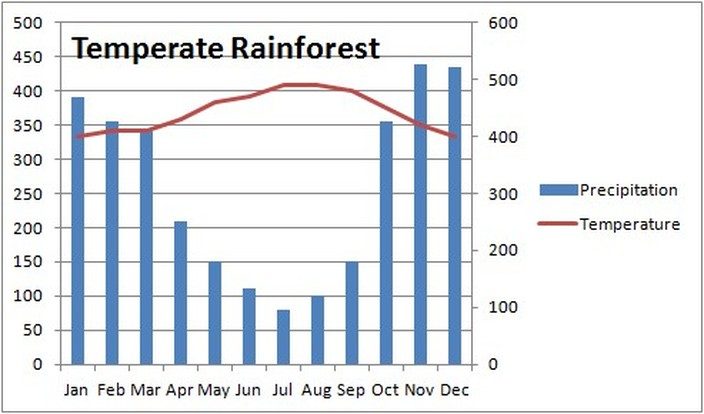
Climatographs are useful tools that show patterns in annual

a)

precipitation and humidity

b)

rainfall and snowfall

c)

temperature and sunlight

d)

precipitation and temperature