
 Worksheets
Circ/Resp/Digestive Unit Review
Total questions: 57
Worksheet time: 1hrs 2mins
Name
Class
Date
1.

The chewing and grinding of food into smaller pieces is an example of...
a)
Mechanical Digestion
b)
Chemical Digestion
2.

Bile is made by which digestive organ?
a)
Gallbladder
b)
Stomach
c)
Rectum
d)
Liver
3.

Which digestive organ makes digestive juices to help the small intestine absorb nutrients?
a)
Liver
b)
Gallbladder
c)
Pancreas
d)
Esophagus
4.

Nutrients from digested food are absorbed in which digestive organ?
a)
Small Intestine
b)
Stomach
c)
Large Intestine
d)
Gallbladder
5.
Which of the following is NOT part of the digestive tract? (Hint: Identify the secondary organ.)
a)
Mouth
b)
Esophagus
c)
Small Intestine
d)
Liver
6.

Number 5 is pointing to the...
a)
Liver
b)
Gallbladder
c)
Pancreas
d)
Stomach
7.

Number 3 is pointing to the...
a)
Small intestine
b)
Rectum
c)
Large intestine
d)
Stomach
8.

Number 2 is pointing to the...
a)
Esophagus
b)
Stomach
c)
Small intestine
d)
Anus
9.

As waste moves through the digestive system, the ______ absorbs water before storing waste in the rectum.
a)
Small intestine
b)
Stomach
c)
Esophagus
d)
Large intestine
10.

Bile is stored in which secondary digestive organ?
a)
Stomach
b)
Liver
c)
Gallbladder
d)
Pancreas
11.

The opening at the end of the digestive system where solid waste comes out is the...
a)
rectum
b)
anus
c)
mouth
d)
large intestine
12.

Which secondary organ makes digestive juices like insulin to help absorb food in the small intestine?
a)
Large intestine
b)
Pancreas
c)
Liver
d)
Gallbladder
13.
Enzymes (chemicals) in your saliva help break down food while chewing. This is...
a)
Mechanical digestion
b)
Chemical digestion
14.
Most chemical digestion takes place in which organ?
a)
Stomach
b)
Small intestine
c)
Rectum
d)
Esophagus
15.

Number 7 is pointing to...
a)
Mouth
b)
Esophagus
c)
Small intestine
d)
rectum
16.
The body system that breaks down food into tiny pieces so that the body's cells can use it for energy.
a)
Digestive system
b)
Nervous system
c)
Skeletal system
d)
Circulatory system
17.
A muscular tube that helps move food from the mouth to the stomach.
a)
liver
b)
intestine
c)
esophagus
d)
stomach
18.
What is the path of the digestive system
a)
mouth, esophagus, stomach, small intestine, large intestine
b)
mouth, stomach, small intestine, large intestine, esophagus
c)
esophagus, large intestine, stomach, small intestine, mouth
19.

Separates the chambers of the heart.
a)
mitral valve
b)
septum
c)
aortic valve
20.

Major artery at the top of the heart sends oxygenated blood from the left ventricle to the rest of the body.
a)
aorta
b)
pulmonary artery
c)
inferior vena cava
21.

Build up of plaque causing the narrowing of the walls of the arteries of the heart.
a)
Atherosclerosis
b)
Arrhythmia
c)
Stroke
22.

When the heart rate is less than 60 beats per minute.
a)
Bradycardia
b)
Tachycardia
c)
Leukemia
23.

When the heart rate is more than 100 beats per minute.
a)
Tachycardia
b)
Bradycardia
c)
Hyperventilation
24.

2?
a)
Right Atrium
b)
Right Ventricle
c)
Left Atrium
d)
Left Ventricle
25.

4?
a)
Superior Vena Cava
b)
Right Pulmonary Artery
c)
Right Pulmonary Vein
d)
Inferior Vena Cava
26.

7?
a)
Left Atrum
b)
Left Ventricle
c)
Mitrial Valve
d)
Aortic Valve
27.

9?
a)
Left Ventricle
b)
Left Atrium
c)
Left Pulmonary Vein
d)
Left Pulmonary Artery
28.

Pumps oxygen-poor blood to the lungs
a)
Right Ventricle
b)
Right Atrium
c)
Left Ventricle
d)
Left Atrium
29.

Receives oxygen-rich blood from the lungs
a)
Right Ventricle
b)
Left Ventricle
c)
Right Atrium
d)
Left Atrium
30.

A flap of tissue that prevents blood from flowing backward
a)
Aorta
b)
Atrium
c)
Septum
d)
Valve
31.
How many chambers does the heart have ?
a)
4
b)
6
c)
3
d)
1
32.
A blood vessel that carries blood TO the heart is called ...
a)
vein
b)
capillary
c)
blood vessel
d)
artery
33.
White blood cells (WBC’s), red blood cells (RBC’s), plasma, & platelets are the 4 parts of what?
a)
blood vessels
b)
organs
c)
heart disease
d)
blood
34.
The bottom chambers of the heart are called
a)
ventricles
b)
atria
c)
vena cava
d)
valves
35.
What is a pulmonary vein?
a)
a aorta
b)
a main blood vessel
c)
the blood vessel that carries newly oxygenated blood from the lungs
d)
it is a heart valve
36.
How many types of blood vessels are in our body?
a)
1
b)
2
c)
3
d)
4
37.
The circulatory system works with the ___________ system to provide our body with oxygen.
a)
respiratory
b)
digestive
c)
muscular
d)
skeletal
38.
The circulatory system works with the __________ system to obtain energy from nutrients that we eat.
a)
respiratory
b)
digestive
c)
skeletal
d)
nervous
39.
Where does the deoxygenated blood from the body go ?
a)
Stomach
b)
Colon
c)
Toes
d)
Lungs
40.
What does the Larynx hold ?
a)
The larynx holds the whole respitory system.
b)
The larynx holds the trachea.
c)
The larynx holds the vocal chords.
d)
The larynx hold the wind pipe.
41.
a flap of tissue that closes when we eat so food doesn't not go down the trachea
a)
larynx
b)
pharynx
c)
trachea
d)
epiglottis
42.
A chamber behind the nose and mouth that leads to the trachea
a)
pharynx
b)
trachea
c)
epiglottis
d)
larynx
43.

Letter B is pointing to which organ of the Respiratory System?
a)
Nose
b)
Trachea
c)
Lungs
d)
Diaphragm
44.
What does a spasm of the diaphragm cause?
a)
cough
b)
sneeze
c)
hiccup
d)
yawn
45.
During exhalation the diaphragm moves up and the volume of air decreases in the lungs.
a)
True
b)
False
46.
The tubes that go from the trachea into the lungs
a)
alveoli
b)
diaphragm
c)
epiglottis
d)
bronchial tubes
47.
cleans, moistens, and warms the air
a)
trachea
b)
larynx
c)
nasal passage
d)
windpipe
48.
Given the following structures:
1. larynx
2. nasal cavity
3. pharynx
4. trachea
Which of the following is the correct order that air would flow during inhalation.
1. larynx
2. nasal cavity
3. pharynx
4. trachea
Which of the following is the correct order that air would flow during inhalation.
a)
1,2,3,4
b)
2,3,1,4
c)
2,1,3,4
d)
4,2,3,1
49.
Tiny tubes that branch off of bronchi
a)
capillaries
b)
alveoli
c)
bronchioles
d)
pluera
50.

When you exercise, your heart beats faster to...
a)
spread oxygen throughout your body more quickly.
b)
make you feel excited.
c)
let you know you're working hard.
d)
inflate your lungs
51.
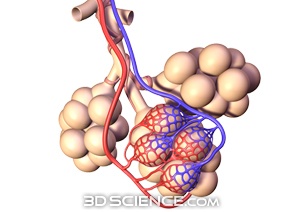
When you breathe, your lungs take in ___ and remove ___.
a)
air/oxygen
b)
oxygen/carbon dioxide
c)
carbon dioxide/waste
d)
waste/air
52.
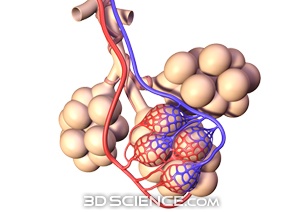
The air sacs that are covered with capillaries where gas exchange takes place
a)
bronchi
b)
lungs
c)
oxygen
d)
alveoli
53.

Within the lungs, the exchange of oxygen and carbon dioxide occurs between the ___ and the capillaries.
a)
trachea
b)
bronchi
c)
alveoli
d)
diaphragm
54.
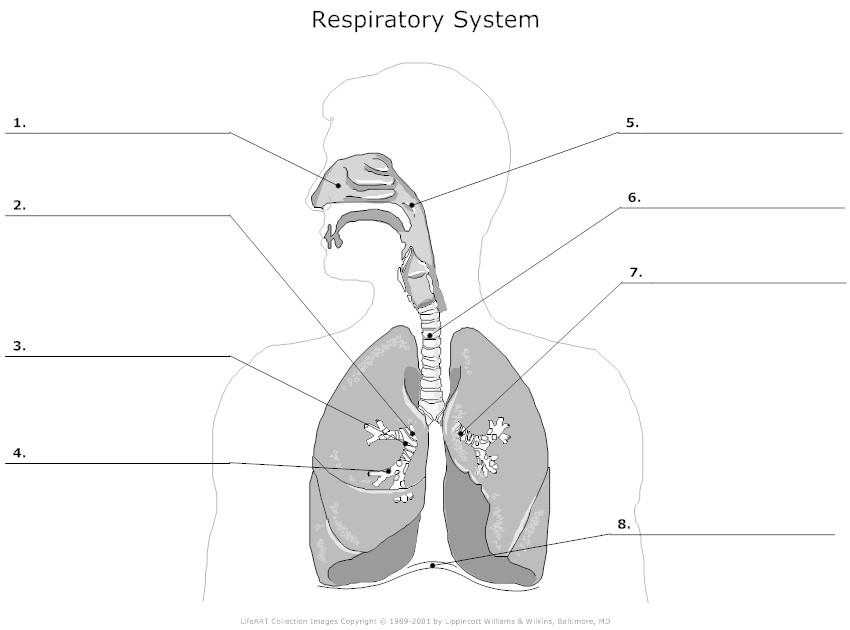
Name the structure labeled 8
a)
lungs
b)
trachea
c)
diaphragm
d)
alveoli
55.
What is the main organ in the respiratory system?
a)
Kidney
b)
Heart
c)
Lungs
d)
Diaphragm
56.
Tiny, hair-like projections that move together in sweeping motion
a)
ribcage
b)
trachea
c)
pharynx
d)
cilia
57.
A tube held open by ring of cartilage; also called the windpipe
a)
cilia
b)
trachea
c)
nose
d)
bronchi
100 %

