wayground logo

Free Printable Worksheets

Font size

S
M
L
XL
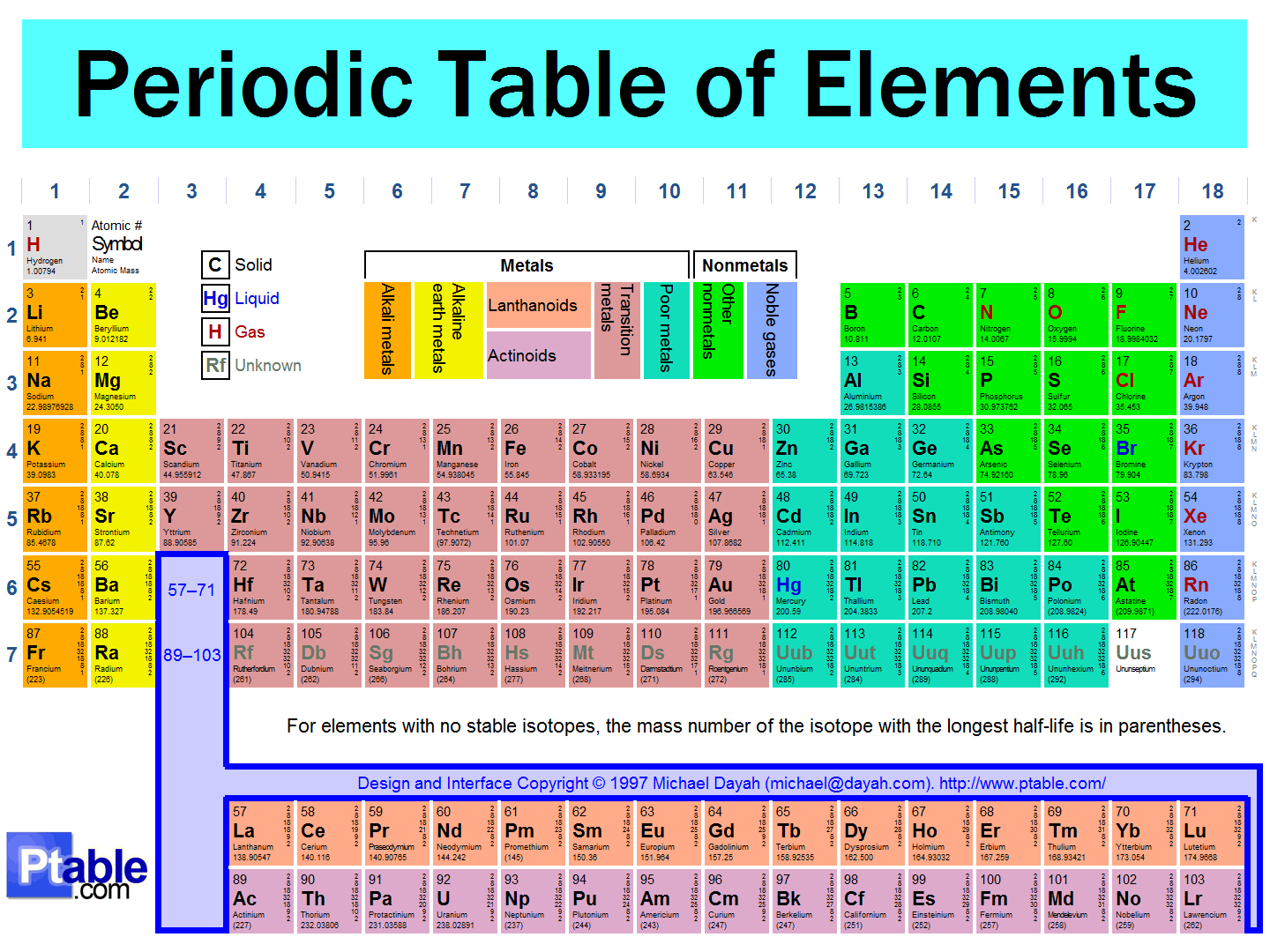
Worksheets

Unit 2 Atoms and Periodic Table

Total questions: 88

Worksheet time: 1hrs 12mins

Name
Class
Date
1.
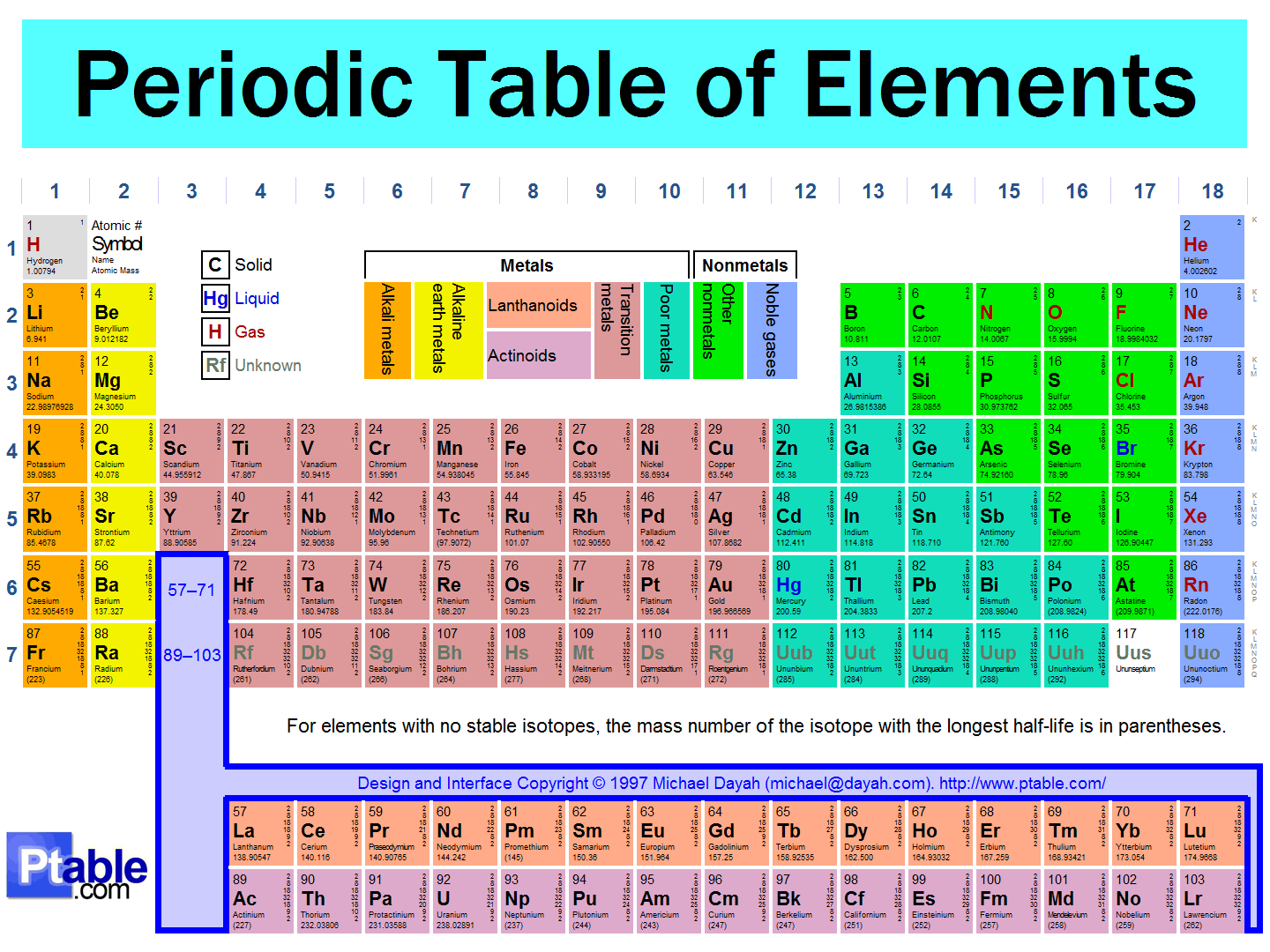
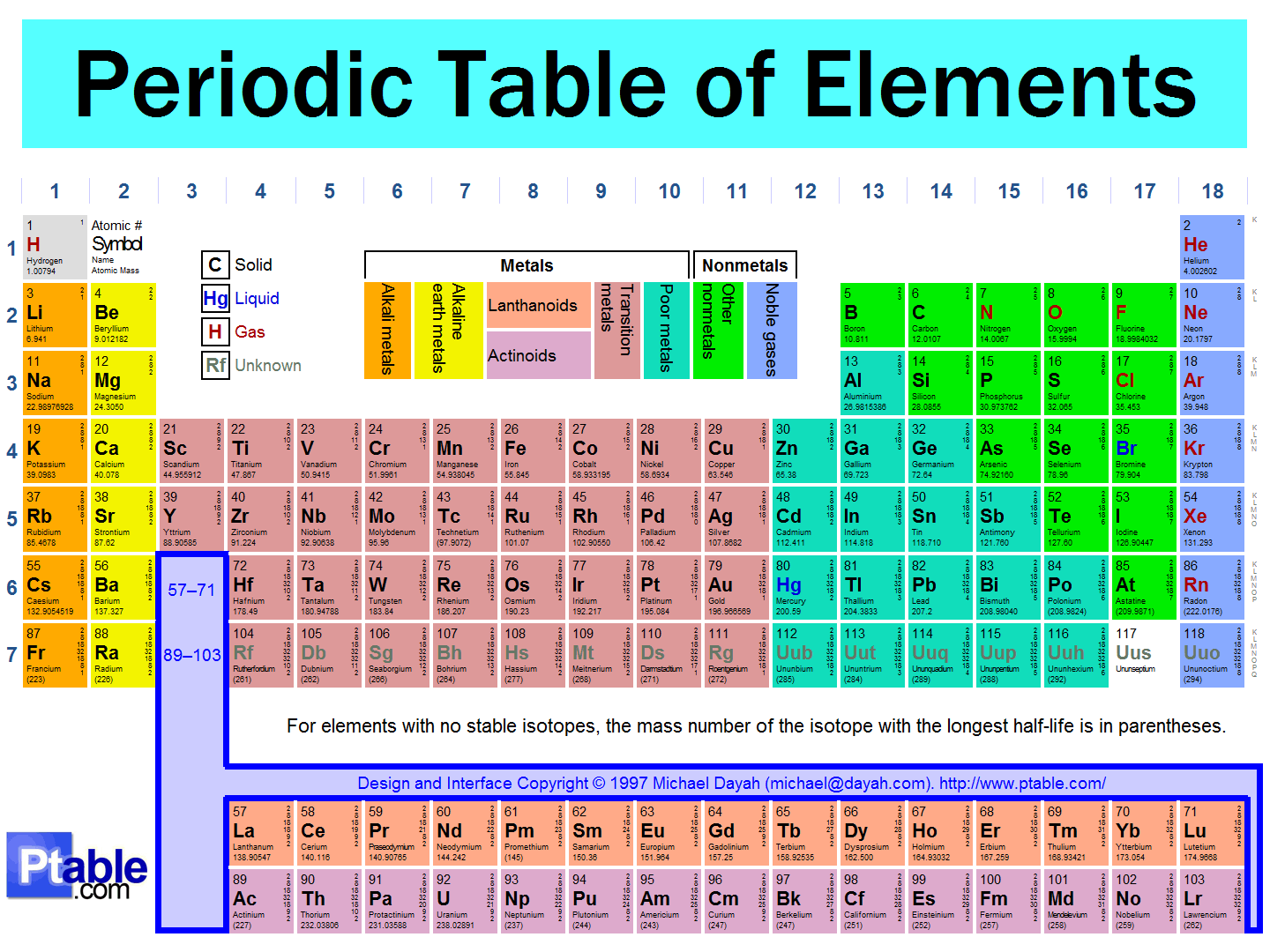
How did Mendeleev arrange the elements?
a)
alphabetical 
b)
density
c)
melting point
d)
atomic mass
2.
The horizontal row on the periodic table is called a
a)
group
b)
family
c)
period
d)
atomic number
3.
Dimitri found that there was a pattern of properties that repeated every ____ elements.
a)
2
b)
4
c)
5
d)
7
4.
A vertical column is called...
a)
group
b)
tower
c)
period
d)
crew
5.
Which of the following is the most metallic element in period 3?
a)
Boron (B)
b)
Sodium (Na)
c)
Argon (Ar)
d)
Silicon (Si)
6.
Which of these element is the least metallic?
a)
Potassium (K)
b)
Carbon (C)
c)
Sulfur (S)
d)
Neon (Ne)
7.

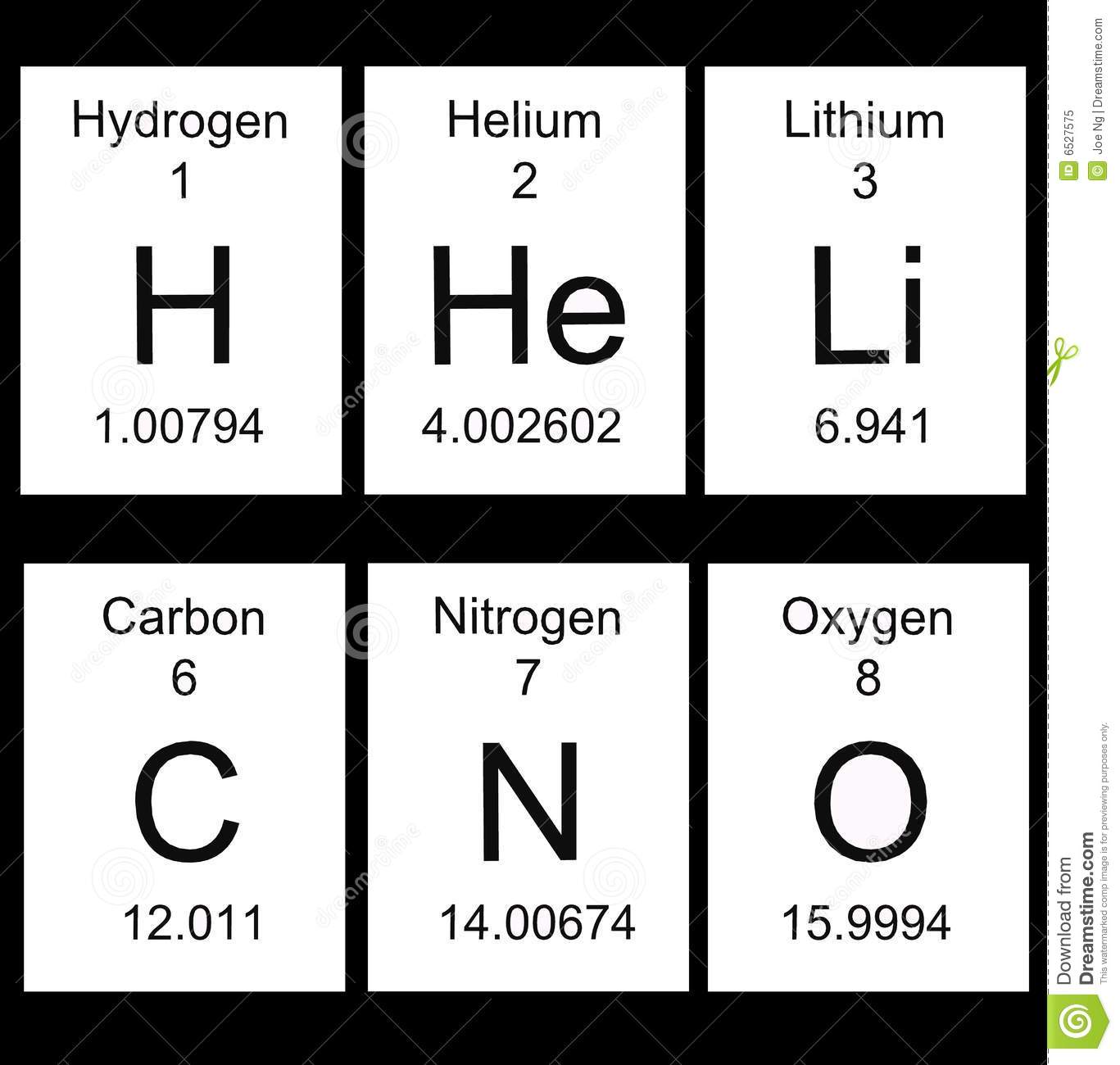
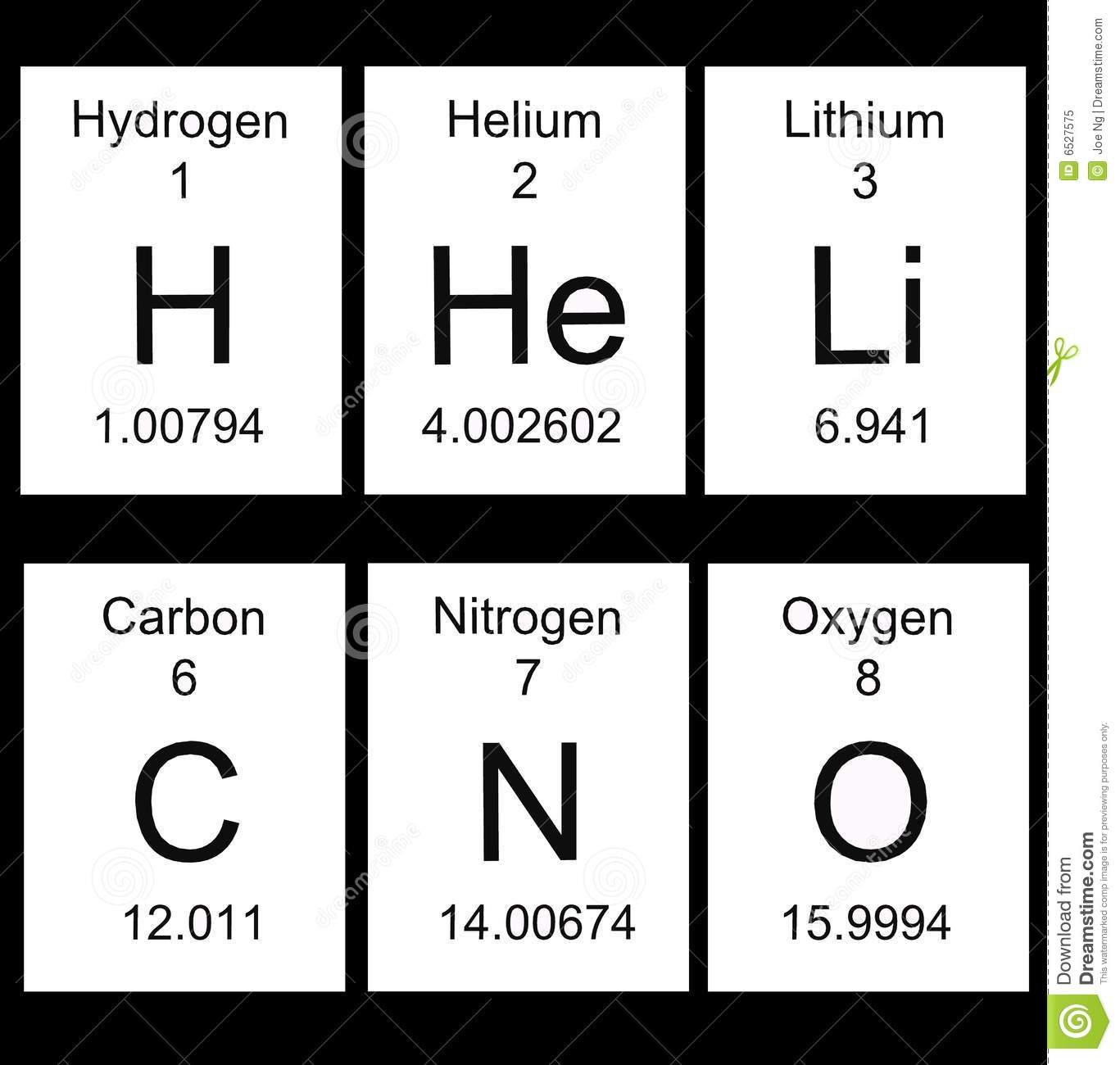
The number at the bottom of each square on the periodic table is the ...

a)

atomic number

b)

average atomic mass

c)

chemical symbol

d)

element name

8.
The number at the top of each square on the periodic table is the ...
a)
atomic number
b)
atomic mass
c)
Chemical Symbol
d)
Element Name
9.
What is the chemical symbol for Lithium?
a)
H
b)
He
c)
Li
d)
N
10.
How many elements follow the periodic law?
a)
7
b)
98
c)
110
d)
All of them
11.
Pure forms of these elements are stored in oil so they won't react with oxygen and water in the air.
a)
Alkali Metals
b)
Alkaline-earth metals
c)
Halogens
d)
Noble Gases
12.

What elements don't have individual group names?

a)

Alkaline-earth Metals

b)

Transition Metals

c)

Alkali Metals

d)

Halogens

13.
All of the actinides are ___________.
a)
stable
b)
radioactive
c)
shiny
d)
named after scientists
14.
Most of the elements on the periodic table are classified as _____.
a)
Metals
b)
Nonmetals
c)
Metalloids
d)
Periods
15.
This class of elements are sometimes called "semiconductors."
a)
Metals
b)
Nonmetals
c)
Metalloids
d)
Groups
16.
In the modern periodic table elements are arranged by:
a)
atomic mass
b)
atomic number
c)
valence electrons
d)
number of isotopes
17.

The atomic number tells you what?

a)

number of electrons

b)

number of protons

c)

number of neutrons

d)

both electrons and protons in a neutral non-ion atom.

18.

What does the 1.00794 stand for?

a)

Hydrogen

b)

atomic number

c)

average atomic mass

d)

atomic explosion

19.
How many protons are in Beryllium?
a)
4
b)
9
c)
5
d)
2
20.
Why is water NOT on the periodic table?
a)
It is naturally occuring
b)
It is a compound, not an element
c)
It exists as a solid, a liquid, and a gas
d)
Its chemical formula doesn't fit
21.
_______ are the ROWS on the periodic table.
a)
Families
b)
Groups
c)
Periods
d)
Elements
22.
What does the atomic mass tell you?
a)
Basically,the number of electrons and protons
b)
The number of neutrons
c)
Basically, the number of protons and neutrons
d)
The number of protons.
23.
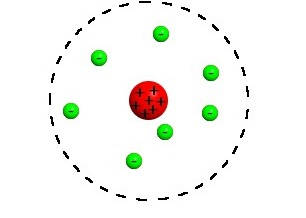
What element is represented in this Bohr Model? 
a)
Carbon
b)
Hydrogen
c)
Aluminum
d)
Lithium
24.
How many electrons should Magnesium have around its Lewis dot model?
a)
1
b)
2
c)
3
d)
4
25.
Which subatomic particle has no electric charge?
a)
the proton
b)
the neutron
c)
the electron
d)
the photon
26.
How many electrons should Neon have around its Lewis dot model?
a)
5
b)
6
c)
7
d)
8
27.
How many electrons can the second electron shell hold?
a)
2
b)
8
c)
16
d)
18
28.
Where are valence electrons found in an atom?
a)
first electron shell
b)
second electron shell
c)
third electron shell
d)
outermost electron shell for most atoms
29.
How many valence electrons does this atom have?
a)
2
b)
4
c)
d)
8
30.
Which subatomic particles are found in nucleus?
a)
Proton and electron
b)
Proton and neutron
c)
neutron and electron
d)
neutron, electron and proton
31.
Which subatomic particles are found in shells?
a)
Proton 
b)
 neutron
c)
electron
32.
Which is an electron?
a)
A
b)
B
c)
C
33.
1st shell of an atom can hold maximum of 
a)
2
b)
4
c)
6
d)
8
34.
The yellow atoms are called 
a)
metals
b)
nonmetals
c)
metalloids
d)
noble gases
35.
The period for Bromine is ___________.
a)
3
b)
2
c)
4
36.
Beryllium is in group number______.
a)
Group 2
b)
Group 3
c)
Group 4
d)
Group 7
37.
The periodic table has __ periods.
a)
18
b)
8
c)
2
d)
7
38.
An element's identity is determined by the number of
a)
electrons.
b)
protons.
c)
neutrons.
d)
valence.
39.
Group 18 elements are known as the _____ _____ and have full valence shells.
a)
royal gases.
b)
supreme solids.
c)
noble gases.
d)
legit liquids.
40.
Elements in the same ________ are more chemically similar.
a)
group
b)
period
c)
club
d)
table
41.
Which elements have the most similar chemical properties?
a)
K and Na
b)
K and Ca
c)
K and Cl
d)
K and S
42.
What period and group is Silver (Ag)? 
a)
Period 2, Group 1
b)
Period 3, Group 16
c)
Period 5, Group 11
d)
Period 2, 14
43.
The periodic table has __ groups.
a)
8
b)
7
c)
18
d)
2
44.
Which element is not a metal?
a)
Ni
b)
B
c)
Hg
d)
Al
45.
Which is a halogen?
a)
Helium
b)
Chlorine
c)
Oxygen
d)
Neptune
46.
Which is an alkali metal?
a)
Magnesium
b)
Iron
c)
Sodium
d)
Europium
47.
In what section would Transition Metals be found?
a)
purple
b)
light blue
c)
yellow
d)
red
48.
Which section are the metals in? 
a)
dark blue
b)
light blue
c)
purple
d)
pink
49.
The atomic number of this pictured element is
a)
28
b)
58.6934
c)
Ni
d)
Nickel
50.

Which part is known as the average atomic mass?

a)

Cu

b)

29

c)

63.546

d)

copper

51.
Elements running along the zigzag line on the periodic table are normally?
a)
non metals
b)
metals
c)
metalloids
d)
rare earth metals
52.
What scientist is known as the "Father of the Modern Periodic Table"?
a)
Johann Dobereiner
b)
John Newlands
c)
Demitri Mendeleev
d)
Henry Mosely
53.
all matter is made of what 
a)
energy 
b)
atoms 
c)
electrons 
d)
compounds 
54.
The positive particles of an atom are 
a)
electrons 
b)
positrons 
c)
neutrons 
d)
protons 
55.
the central region of an atom where its neutrons and protons are is its 
a)
nucleus 
b)
electron cloud
c)
core 
d)
center 
56.
Particles in an atom that are neutral and have no charge are 
a)
negatrons 
b)
electrons 
c)
neutrons 
d)
protons 
57.
An atoms overall charge is 
a)
positive 
b)
depends on its mood 
c)
neutral 
d)
negative 
58.
Which of the following is a negatively charged subatomic particle?
a)
Electron
b)
Proton
c)
Neutron
d)
Quark
59.
The particles that are found in the nucleus of an atom are
a)
neutrons and electrons
b)
electrons only
c)
protons and neutrons
d)
protons and electrons
60.
Where are electrons of an atom found?
a)
Nucleus
b)
Electron Cloud
c)
Some are in the nucleus and some in the electron cloud.
d)
They are moving everywhere.
61.
electrons have this type of charge?
a)
negative
b)
positive
c)
neutral
62.

The word atom comes from a Greek word "atomos" that means

a)

Invisible

b)

Indivisible

c)

Undivided

d)

Indestructable

63.
The first person to propose a theory about an atom was
a)
Democritus
b)
Rutherford
c)
Dalton
d)
Aristotle
64.
Rutherford's gold foil experiment provided evidence that...
a)
Negative and positive charges are spread evenly throughout the atom.
b)
Alpha particles have a positive charge.
c)
Gold is not a dense as previously thought.
d)
There is a dense positively charged nucleus at the center of an atom.
65.
J.J. Thomson provided evidence that an atom...
a)
is the smallest particle of matter
b)
contains negatively and positively charged particles
c)
has an overall negative charge
d)
has an overall positive charge
66.
What contribution did John Dalton make to atomic theory? 
a)
He discovered that every atom was positively charged. 
b)
He discovered that every element consisted of one type of atom.  
c)
He discovered that atoms had nuclei. 
d)
He discovered that atoms could be divided into smaller parts. 
67.
What scientist is best known for his "Plum Pudding" model of the atom?
a)
J.J. Tomson
b)
Ernest Rutherford
c)
John Dalton
d)
Democritus
68.
Who stated that all atoms of the same element are exactly alike?
a)
Democritus
b)
Dalton
c)
Thomson
d)
Borh
69.
How did Rutherford discover the proton?
a)
Cathode tube ray experiment
b)
Gold Foil Experiment
c)
Planetary Model
d)
Plum Pudding Model
70.
Who came up with this model of an atom?
a)
J.J. Thompson
b)
Ernest Rutherford
c)
Neils Bohr
d)
James Chadwick
71.
According to Chadwick, what does the nucleus of an atom contain?
a)
Electrons and neutrons
b)
Protons and neutrons
c)
Neutrinos and positrons
d)
DNA and RN
72.
Which is the correct sequence of the scientists who made major changes in the model of the atom?
1-JJ Thomson
2-Erwin Schrodinger
3-John Dalton
4-Niels Bohr
5-Ernest Rutherford
a)
2, 1, 4, 3, 5
b)
3, 1, 5, 4, 2
c)
5, 3, 2, 1, 4
d)
4, 3, 2, 1, 5
73.
Which of the following is proposed by Erwin Schrodinger?
a)
Solar system model of the atom
b)
Plum pudding model of the atom
c)
Billiard ball model of the atom
d)
Electron cloud model of the atom
74.
This model this model was the first to show a nucleus, consisting of protons and neutron.  Electrons surround the nucleus but are not shown in distinct energy levels. 
a)
The "Rutherford Model" of the atom
b)
The "Plum Pudding Model" of the atom
c)
The "Quantum Mechanical Modell" of the atom
d)
Democritus's model of the atom
75.
This was the first model of the atom ever proposed. It was simple and described atoms as tiny spheres that could not be broken down into smaller pieces.
a)
Democritus's model of the atom
b)
The "Plum Pudding Model" of the atom
c)
The "Rutherford Model" of the atom
d)
The "Quantum Mechanical Model" of the atom
76.
This is the most complete and current model of the atom. It consists of 61 elementary particles. Electrons are located in complex orbitals.
a)
The "Quantum Mechanical Model" of the atom
b)
The "Rutherford Model" of the atom
c)
The "Plum Pudding Model" of the atom
d)
The "Bohr Model" of the atom
77.
This model added on to previous models by showing electrons existed at certain "energy levels". However it does not accurately show what those levels look like.
a)
The "Bohr Model" of the atom
b)
The "Rutherford Model" of the atom
c)
The "Plumb Pudding Model" of the atom
d)
The "Quantum Mechanical Model" of the atom
78.
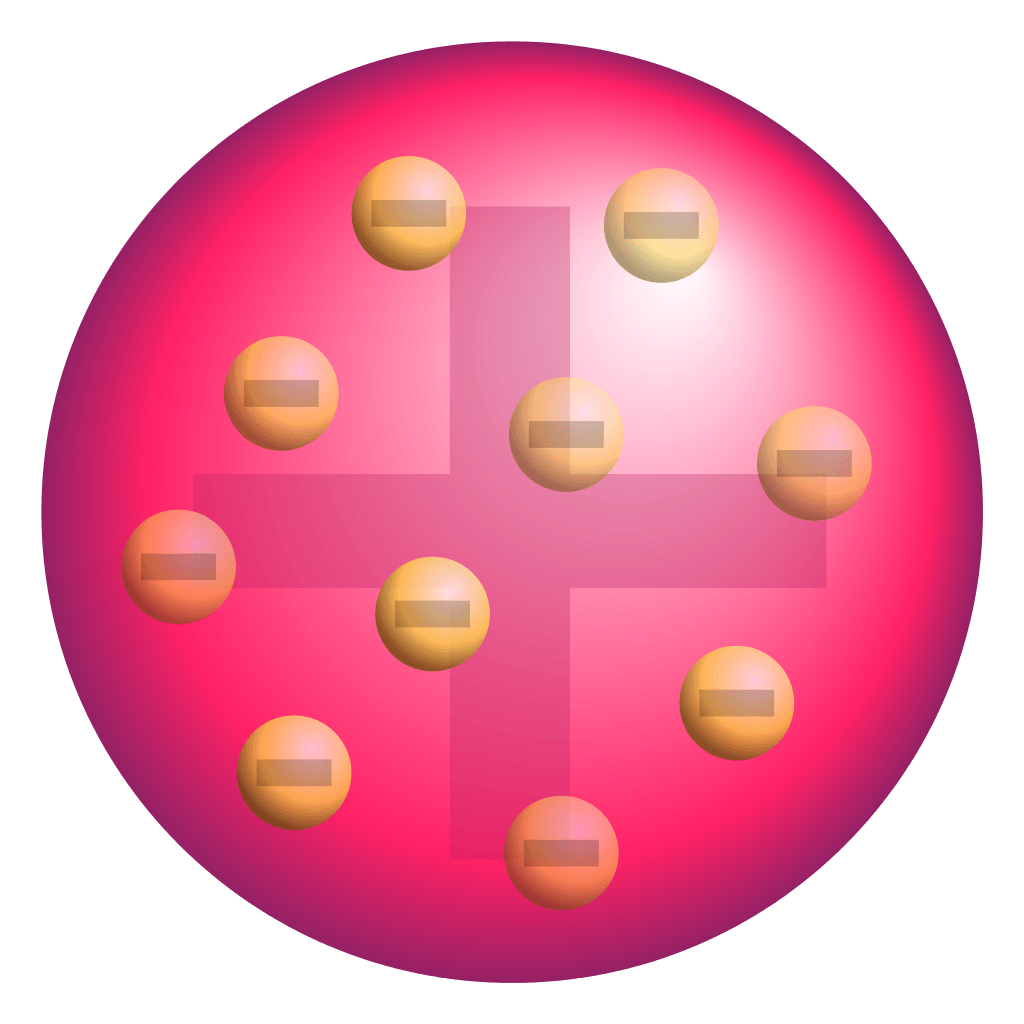
This model was developed after J.J. Thompson discovered electrons, a particle smaller than an atom. Is shows electrons floating freely in a positive space.
a)
The "Plum Pudding Model" of the atom
b)
The "Rutherford Model" of the atom
c)
Democritus's model of the atom
d)
The "Quantum Mechanical Model" of the atom
79.
Ernest Rutherford discovered that atoms were mostly _________________. 
a)
negatively charged
b)
positively charged
c)
electrons
d)
empty space. 
80.
What does the nucleus of an atom contain?
a)
Electrons & Neutrons
b)
Protons & Neutrons
c)
Neutrinos & Positrons
81.
In the gold foil experiment, most of the positively charged alpha particles passed through the gold foil, but some were deflected or bounced back.  What did we conclude because of this?  
a)
Atoms are small indivisible spheres
b)
Atoms are mostly empty space with a small, dense, positive center
c)
Atoms have negatively charged particles which orbit the nucleus
d)
Light is a wave, not a particle
82.
Discovered the electron using cathode ray tube
a)
Joseph Thomson
b)
John Dalton
c)
Ernest Rutherford
d)
Robert Millikan
83.
Idea was of an indivisible particle of matter he called "atomos"
a)
John Dalton
b)
Aristotle
c)
Democritus
d)
Plato
84.
In the Bohr Model, how many electrons fit in the first energy level?
a)
2
b)
4
c)
8
d)
18
85.

Which elements would be most chemically similar?

a)

Al, Si, P

b)

Li, K, Na

c)

B, C, N

d)

S, Cl, Ar

86.

Which elements belong to the same group?

a)

Be, Mg, Ca

b)

Li, Be, B

c)

N, O, F

d)

Ni, Cu, Zn

87.

Which elements belong to the same period?

a)

Al, Si, P

b)

He, Ne, Ar

c)

K, Rb, Cs

d)

H, N, O

88.

Which elements have the same number of energy levels?

a)

H, Li, Na

b)

K, Ca, Br

c)

Cu, Ag, Au

d)

B, Si, Ge