wayground logo

Free Printable Worksheets

Font size

S
M
L
XL
Worksheets

1st QTR EQT 2018-19

Total questions: 100

Worksheet time: 1hrs 24mins

Name
Class
Date
1.
What are the building blocks of matter?
a)
Matter
b)
Atom
c)
Molecule
d)
Element
2.
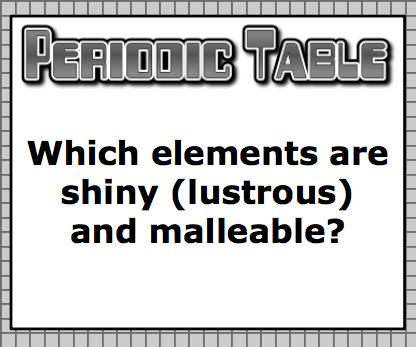
What do the following properties describe? : shiny, ductile, good conductor, high melting point
a)
metal
b)
nonmetal
c)
metalloid
3.
 Which of the following statements are FALSE?
a)
metals are located to the LEFT of the zig-zag line
b)
metals are less reactive than nonmetals
c)
nonmetals are located to the RIGHT of the zig-zag line
d)
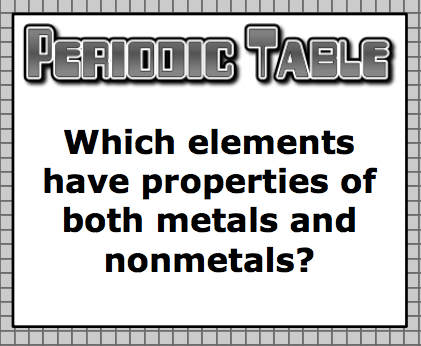
metalloids have properties of both metals and nonmetals
4.
Which is an example of a metal?
a)
Radon
b)
Oxygen
c)
Aluminium
d)
Carbon
5.
Which is an example of a nonmetal?
a)
Platinum
b)
Carbon
c)
Silver
d)
Lead
6.
Which is an example of a metalloid?
a)
Boron
b)
Lead
c)
Radon
d)
Gold
7.
Elements in the periodic table are arranged in order by their ...
a)
atomic number
b)
atomic mass (mass number)
c)
metal, nonmetal, or metalloid properties
8.
Periods run VERTICALLY on the periodic table, from top to bottom.
a)
True
b)
False
9.
ATOMIC NUMBER is the number of protons AND electrons.
a)
True
b)
False
10.
What is a particle made of 2 or more atoms?
a)
molecule
b)
matter
c)
atom
d)
element
11.
How many proton are in this element?
a)
238
b)
92
c)
146
12.
How many electrons are in this element?
a)
238
b)
92
c)
146
13.
How many neutrons are in this element?
a)
238
b)
92
c)
146
14.
Which of the following are located in the nucleus and have a positive charge?
a)
Electron
b)
Proton
c)
Neutron
15.
Which of the following are located in the nucleus and have a neutral charge?
a)
Electron
b)
Proton
c)
Neutron
16.
Which of the following are located outside the nucleus and have a negative charge?
a)
Electron
b)
Proton
c)
Neutron
17.

Where are the valence electrons located?

a)

In the nucleus

b)

On the first energy level

c)

outside the atom

d)

on the outermost (last) energy level

18.

As you move from left to right on the periodic table the elements become

a)

more reactive

b)

less reactive

19.

Elements in the same group have

a)

the same number of valence electrons

b)

the number increases as you move from top to bottom

c)

the number decreases as you move from top to bottom
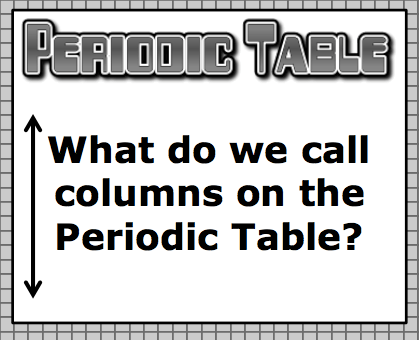
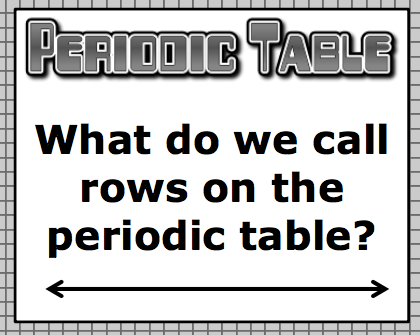
20.
a)
Periods
b)
Groups
21.
a)
Periods
b)
Groups
22.
a)
energy levels
b)
valence electrons
c)
protons
d)
neutrons
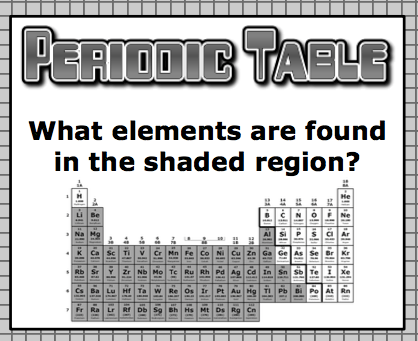
23.
a)
Metals
b)
Nonmetals
c)
Metalloids
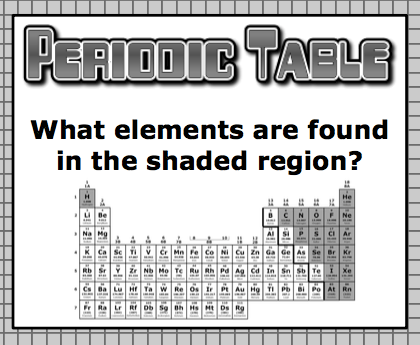
24.
a)
Metals
b)
Nonmetals
c)
Metalloids
25.
a)
Metals
b)
Nonmetals
c)
Metalloids
26.
a)
Metals
b)
Nonmetals
c)
Metalloids
27.

According to this box from the periodic table, How many protons does Beryllium have?

a)

4

b)

5

c)

9

d)

13

28.

What is the average mass of Beryllium?

a)

4

b)

5

c)

9

d)

13

29.
NaBr + H3PO4 --> Na3PO4 + HBr
a)
synthesis
b)
decomposition
c)
single replacement
d)
double replacement
30.

C2H4 + O2 --> CO2 + H2O

a)

synthesis

b)

combustion

c)

decomposition

d)

double displacement

31.
PbSO4 --> PbSO3 + O2
a)
synthesis
b)
decomposition
c)
double replacement
d)
single replacement
32.
NH3 + I2 --> N2I6 + H2
a)
decomposition
b)
combustion
c)
single replacement
d)
double replacement
33.
H2O + SO3 --> H2SO4
a)
synthesis
b)
combustion
c)
double replacement
d)
decomposition
34.
H2SO4 + NH4OH --> H2O + (NH4)2SO4
a)
synthesis
b)
comubstion
c)
single replacement 
d)
double replacement
35.
Which of the following is an example of a synthesis reaction:
a)
2 H2O → 2 H2 + O
b)
2 Na + Cl2 → 2 NaCl
c)
CH4 + 2 O2 → 2 H2O + CO2
d)
2 HCl + Zn → ZnCl+ H2
36.
What is decomposition?
a)
putting substances together
b)
breaking substances apart
c)
element replacing another element in a compoud
d)
burning of a subtance
37.

Balance this equation:

Li + Cl2 → LiCl

a)

2Li + Cl2 → 4LiCl2

b)

2Li + Cl2 → LiCl2

c)

2Li + Cl2 → 2LiCl

d)

2Li + 2Cl2 → 2 LiCl2

38.

__ Al + __ FeO → __Al2O3 + __ Fe

a)

1, 1, 2, 1

b)

2,1,2, 3

c)

2, 3, 1, 3

d)

2, 3, 1, 2

39.
Is this equation balanced?
a)
yes
b)
no
c)
Not enough information
40.
Which problem is balanced?
a)
PbO2 + 2H2
b)
SO2 + H20 --> H2SO4
c)
2Na + 2H2O --> 2NaOH + H2
41.
What is a coefficient?
a)
The small number on the right of the chemical symbol.
b)
The large number to the left of a formula.
42.
Decomposition occurs when...
a)
Two formulas combine.
b)
A formula breaks apart.
c)
An atom is replaced during a reaction.
43.

A synthesis chemical reaction/equation occurs when...

a)

Two formulas combine.

b)

A formula breaks apart.

c)

An atom is replaced during a reaction.

44.
How would this equation be classified?
O2 + 2H2 --> 2H2
a)
Synthesis
b)
Decomposition
c)
Combustion
d)
Single Displacement
45.
In the equation,          2Mg + O2 ---> 2MgO, which are the reactants?
a)
Mg and O
b)
MgO
c)
Mg and MgO
d)
O and MgO
46.
Why is the following chemical equation not balanced?
H2 + O2 --> H2O
a)
each side of the equation has a different number of oxygen atoms
b)
each side of the equation has a different number of hydrogen atoms
c)
each side has the same mass
d)
the arrow is pointing in the wrong direction
47.
How many O's are in Al₂(SO₄)₃
a)
4
b)
12
c)
7
d)
24
48.
How many HCl molecules do you need to balance this equation? 
Mg +  __HCl --->  MgCl2 + H2
a)
1
b)
2
c)
3
d)
4
49.
How many elements are in C6H12O6?
a)
1
b)
3
c)
12
d)
24
50.
CaCO3 represents a chemical…
a)
symbol
b)
formula
c)
subscript
d)
reaction
51.
In chemical reactions, what does the principle of conservation of mass mean?
a)
The total mass of the reactants is greater than the total mass of the products. 
b)
Matter is not changed. 
c)
Matter is not created or destroyed. 
d)
The total mass of the reactants is less than the total mass of the products. 
52.
Which of the following is a balanced chemical equation?
a)
2Mg + HCl --> MgCl+ H2
b)
H2O2 --> H2O + O2
c)
SO+ O+ 2H2O --> 4H2SO4
d)
2Fe2O3 + 3C --> 4Fe + 3CO2
53.
Which is the correct balanced chemical equation for the following statement? Sodium reacts with Oxygen to produce Sodium oxide. 
a)
Na2O + O2 --> 2Na 
b)
Na2 + O2 --> 2NaO 
c)
Na2O --> 2Na + O2 
d)
4Na + O2 --> 2Na2O
54.
This appears on the left side of a chemical formula, and represents how many molecules there are.
a)
an atom
b)
the subscript
c)
a molecule
d)
the coefficient
55.
How many hydrogen atoms are in this chemical formula?
a)
4 hydrogen atoms
b)
1 hydrogen atom
c)
2 hydrogen atoms
d)
3 hydrogen atoms
56.
Which is the correct formula for 3 hydrogen atoms, one sulfur atom, and four oxygen atoms?
a)
H3SO4
b)
HSO4
c)
H4S3O
d)
H2O
57.
How many atoms of aluminum are on each side of the following equation:
4Al + 3O2 → 2Al2O3
a)
2
b)
6
c)
1
d)
4
58.
What do atoms that form positive ions tend to do?
a)
Tend to lose electrons 
b)
Tend to lose protons
c)
Tend to gain electrons
d)
Tend to gain protons
59.
What two types of atoms make a covalent bond?
a)
2 Nonmetals
b)
1 Nonmetal and 1 Metal
c)
2 Metals
d)
2 Noble Gases
60.
How many valence electrons in this structure?
a)
6
b)
5
c)
4
d)
7
61.
What group would Ca like to join with
a)
5
b)
6
c)
7
d)
8
62.
What does the Law of Conservation of Mass state?
a)
Matter cannot be gained or lost in a chemical reaction.
b)
Matter can only be lost in a chemical reaction.
c)
Matter can only be gained in a chemical reaction.
d)
Matter can be gained and lost in a chemical reaction. 
63.
What is the left part of a chemical equation called?
2H2 + O2 --> 2H2O
a)
Reactants
b)
Products 
c)
Yields 
d)
Chemical Equation 
64.
What is the right part of a chemical equation called...
2H2 + O2 --> 2H2O
a)
Reactants
b)
Products 
c)
Yields 
d)
Chemical Equation 
65.
What is the total number of atoms present in 5Na3PO4
a)
5
b)
40
c)
55
d)
8
66.
How many Mn atoms are found in the following compound?
3Cr(MnO4)6
a)
3
b)
4
c)
6
d)
18
67.
What is the little number after an element in a chemical equation called.
Example: H2
a)
Coefficient 
b)
Subscript
c)
Atom
d)
Equation
68.
Is the following equation balanced?...
Al + O2 --> 2Al2O3
a)
Yes!
b)
No!
69.
How many elements are in C6H12O6?
a)
1
b)
2
c)
3
d)
4
70.
Element or compound?
H2O
a)
Element
b)
Compound
71.
Element or compound?
O2
a)
Element
b)
Compound
72.
How many aluminum atoms are in Al2(SO4)3?
a)
1
b)
2
c)
3
d)
4
73.
In which of these compounds are there twice as many oxygen atoms as hydrogen atoms?
a)
H3PO4
b)
H2SO4
c)
HClO3
d)
H2O
74.
Which of the following equations are correctly balanced?
a)
12CO2 +H2O --> C6H12O6 + O2
b)
CO2 + 9H2O --> C6H12O6 + O2
c)
CO2 + H2O --> 3C6H12O6 + O2
d)
6CO2 + 6H2O --> C6H12O6 + 6O2
75.
Water is heated and changed to steam.
a)
Chemical Change
b)
Physical Change
76.
Iron rusts.
a)
Chemical change
b)
Physical Change
77.
Evaporation
a)
Chemical Change
b)
Physical Change
78.
Ice Melting
a)
Chemical Change
b)
Physical Change
79.
Milk Sours
a)
Chemical Change
b)
Physical Change
80.
Sugar dissolves in water
a)
Chemical Change
b)
Physical Change
81.
Pancakes cooking on a griddle
a)
Chemical Change
b)
Physical Change
82.
Grass growing in a lawn
a)
Chemical Change
b)
Physical Change
83.
A tire is inflated with air.
a)
Chemical Change
b)
Physical Change
84.
Food is digested in the stomach
a)
Chemical Change
b)
Physical Change
85.
Is burning wood a chemical or physical change?
a)
chemical
b)
physical
86.
Is glass breaking a chemical or phyiscal change?
a)
chemical
b)
physical
87.
Is hammering wood together to build a house a chemical or physical change?
a)
chemical
b)
physical
88.
Is a a rusting bicycle a chemical or physical change?
a)
chemcial
b)
physical
89.
Is melting butter for popcorn a chemical or physical change?
a)
chemical
b)
physical
90.
Is mixing lemonade powder with water a physical or chemical change?
a)
physical
b)
chemical
91.
Baking a cake by mixing flour, sugar, chocolate powder, eggs, and milk, and then heating them in the oven.
a)
Chemical Change
b)
Physical Change
92.
Which of the following is NOT an example of a physical change?
a)
crumpled paper
b)
pencil sharpening
c)
shrunken clothing
d)
sour milk
93.
Which of the following IS a chemical change
a)
using chalk
b)
water freezing
c)
slicing cheese
d)
digestion
94.
Using dye to change the color of a shirt green.
a)
Chemical Change
b)
Physical Change
95.
A change in the size, shape, or state of matter.
a)
chemical change
b)
physical change
c)
chemical reaction
d)
electron change
96.
A physical changed is a change in:
a)
the appearance of a substance. 
b)
the chemical composition of a substance. 
c)
the way a substance is created. 
d)
a chemical reaction between two substances.
97.
One cup of water is left outside for two days when it was checked there was only half a cup left. What happened?
a)
evaporation; chemical change
b)
condensation; physical change 
c)
evaporation; physical change
d)
condensation; chemical change
98.
Stanley left an ice cube on his kitchen counter. An hour later, Stanley observed that the ice cube melted. Which statement best describes this change?
a)
Ice melting is a physical change because a new substance is created.
b)
Ice melting is a chemical change because a new substance is created.
c)
Ice melting is a chemical change because it may be reversed.
d)
Ice melting is a physical change because it may be reversed.
99.
Which statement best describes why baking a cake is an example of a chemical change?
a)
The process takes place in an oven.
b)
The process requires heat energy.
c)
The process cannot be reversed.
d)
The process can be repeated.
100.
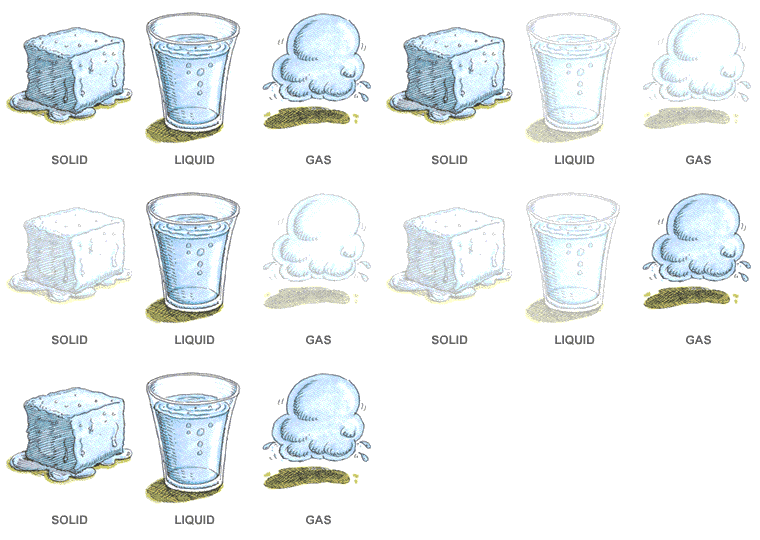
In which of these do particles move slowest?
a)
matter
b)
gas
c)
liquid
d)
solid