wayground logo

Free Printable Worksheets

Font size

S
M
L
XL
Worksheets

IIT-JEE & NEET LEVEL - 4 (8-T)

Total questions: 100

Worksheet time: 2hrs 40mins

Name
Class
Date
1.
What is 3/10 as a decimal?
a)
0.3
b)
0.5
c)
0.25
d)
0.125
2.
What is 25% as a fraction?
a)
1/2
b)
1/8
c)
1/10
d)
1/4
3.
What is .20 as a percent?
a)
2%
b)
10%
c)
20%
d)
12.5%
4.
What is the fraction equivalent of 40%?
a)
4/100
b)
2/5
c)
2/50
d)
40/1000
5.
What is a possible integer that could be between -6 and 2 on a number line?
a)
4
b)
-8
c)
3
d)
-3
6.
Which of these terms is NOT an example of a negative number?
a)
credit
b)
below zero
c)
withdraw
d)
owe
7.
Finish this statement: "The opposite of 7 is......
a)
7 units to the right of zero
b)
7
c)
7 units to the left of zero
d)
14 units to the left of zero
8.
What is the decimal equivalent of 4/25?
a)
16%
b)
0.16
c)
1.6
d)
0.08
9.
Which of these rational numbers is farthest to the left of a number line?
a)
-8/3
b)
-3
c)
-2.3
d)
-10/7
10.
Which inequality relates to the following situation: a loss of $35 is worse than a gain of  $15.
a)
-35 < 15
b)
-35 > 15
c)
35 < -15
d)
35 > -15
11.

(-7) (6) (-3)

a)

-126

b)

-84

c)

84

d)

126

12.
Multiply. Write your answer in simplest form.
a)
27/40
b)
-27/40
c)
5/6
d)
-5/6
13.
Numbers like -3, -2, -1, 0, 1, 2, 3 are called
a)
whole numbers
b)
integers
c)
rational numbers
d)
natural numbers
14.
A rational number can be written as a fraction.
a)
True
b)
False
15.
0.8 is a rational number
a)
True
b)
False
16.
0 is a whole number
a)
True
b)
False
17.
-9 is an integer
a)
True
b)
False
18.
6 is a rational number
a)
True
b)
False
19.
Classify the Number: -23
a)
Rational
b)
rational, integer
c)
integer
d)
rational, whole
20.
How would 5/9 be classified?
a)
rational 
b)
whole and integer
c)
only integer
d)
only whole
21.

Which of the following statements is incorrect ?

a)

A rectangle has all angles and all sides equal to each other.

b)

A hexagon as 6 sides.

c)

A regular octagon has 8 sides of equal length.

d)

A rhombus and a rectangle are irregular polygons.

22.

What is the sum of exterior angles of a quadrilateral?

a)

180

b)

90

c)

360

d)

540

23.

The diagonals do not necessarily intersect at right angles in a ?

a)

paralellogram

b)

square

c)

rhombus

d)

kite

24.

The measure of each interior angle of a rectangular polygon of 12 sides is ?

a)

90

b)

120

c)

140

d)

150

25.

How many pairs of adjacent sides does a hexagon have ?

a)

4

b)

6

c)

8

d)

5

26.

The quadrilateral whose diagonals bisect at right angles is ?

a)

rectangle, trapezium

b)

parallelogram, rectangle

c)

square, rhombus

d)

parallelogram, trapezium

27.

if PQRS is a parallelogram then <P-<R is how much degree?

a)

90

b)

0

c)

180

d)

360

28.

If a quadrilateral ABCD is such that AB=AD, BC=CD then it is called a ?

a)

parallelogram

b)

square

c)

rectangle

d)

kite

29.

Two adjacent angles of a parallelogram are (2y+10) and (3y-40), the measures of all the angles are ?

a)

84°,96°,84°,96° 84\degree,96\degree,84\degree,96\degree\ \ \ \ \ \ \

b)

100°,80°,100°,80°100\degree,80\degree,100\degree,80\degree

c)

82°,98°,82,98°82\degree,98\degree,82,98\degree

d)

86°,94°,86°,94°86\degree,94\degree,86\degree,94\degree

30.

a parallelogram is a simple quadrilateral with _____ pairs of parallel sides.

a)

2

b)

7

c)

0

d)

9

31.

Consecutive Angles are _______

a)

Complementary

b)

Linear pair

c)

Corresponding

d)

Supplementary

32.

_________ is a special type quadrilateral with exactly two pairs of equal consecutive sides.

a)

Trapezium

b)

Kite

c)

Rhombus

d)

Isosceles Trapezium

33.

The diagonals of a rectangle are Of _______

a)

Equal sides

b)

Equal length

c)

Equal Angle

d)

Equal Breadth

34.

The diagonals of a rhombus are _______ bisectors of one another.

a)

Perpendicular

b)

Equal

c)

Consecutive

d)

Congruent

35.

If the ___________ sides of a trapezium are of equal length, we call it an isosceles trapezium

a)

parallel

b)

Perpendicular

c)

Non- Parallel

d)

Equal

36.

rectangle is a parallelogram in which every angle is a __ Angle

a)

Acute

b)

Obtuse

c)

Right

d)

All of the above

37.

___________ has all the properties of a parallelogram.

a)

Square

b)

Rectangle

c)

Kite

d)

Rhombus

38.

A square is a

a)

Parallelogram

b)

Trapezium

c)

Kite

d)

None of these

39.

In a parallelogram opposite angles are

a)

Equal

b)

Not equal

c)

Can't say

d)

None of these

40.

Adjacent angles of a parallelogram are

a)

Equal

b)

Complementary

c)

Supplementary

d)

None of these

41.
What is the Law of Conservation of mass?
a)
Mass is created in a chemical reaction
b)
Mass is created in a physical change
c)
New chemicals formed from a chemical reaction have a larger overall mass than the original reactants
d)
Mass is never created or destroyed
42.
In a reaction A + B ----> C,  reactant A has 5g and product  C has 9g. How many grams does reactant B should have? 
a)
4g
b)
5g
c)
9g
d)
14g
43.
The number in front of a compound or element is a 
a)
Subscript
b)
Coefficient
c)
Superscript
d)
Charge
44.
The number to the lower side of an element is a 
a)
Subscript
b)
Superscript
c)
Coefficient
d)
Charge
45.

Which of the following are Subscripts in this Chemical Formula: 3Fe2O4

a)

3,4

b)

3,2

c)

2,4

d)

6

46.
The coefficient in  3H2O is
a)
6
b)
2
c)
3
d)
5
47.

The Coefficient (3) in the Chemical Formula, 3H2O, tells you how many _____________ there are.

a)

Atoms of Hydrogen

b)

Atoms of Oxygen

c)

Atoms of Water

d)

Molecules of Water

48.

The Subscript (2) in the Chemical Formula, 3H2O, tells you how many _____________ there are.

a)

Atoms of Hydrogen

b)

Atoms of Oxygen

c)

Atoms of Water

d)

Molecules of Water

49.
How many nitrogen atoms does NH3 have?
a)
1
b)
2
c)
3
d)
4
50.

Which Chemical Equation is Balanced?

a)

CH₄+O₂------CO₂+2H₂O

b)

H₂+O₂-----2H₂O₄

c)

4Al+3O₂-----2Al₂O₃

51.

How many oxygen atoms are in this chemical formula?

a)

6 oxygen atoms

b)

2 oxygen atoms

c)

3 oxygen atoms

d)

4 oxygen atoms

52.
Bob puts 200 grams of ice into a pitcher with 900 grams of water. He gets distracted and comes back later to find that the ice has melted in the water. How many grams of water does Bob now have in the pitcher?
a)
200 g
b)
700 g
c)
1,100 g
53.
When CaCO3 is heated, it forms CaO and CO2. Which of these statements best describes the mass of the products if 100 g of CaCO3 is heated?
a)
The difference in the products’ masses is equal to the mass of the CaCO3
b)
The sum of the products’ masses is less than the mass of the CaCO3
c)
The mass of each product is equal to the mass of the CaCO3
d)
The sum of the products’ masses equals the mass of the CaCO3
54.
24 g of magnesium reacts with 38 g of fluorine to produce _____ g magnesium fluoride
a)
62 
b)
38
c)
24
d)
14
55.

Which Chemical Equation is Balanced?

a)

Fe4+O2------4FeO2+O2

b)

2H2+O2-----2H2O

c)

3Cr+4O₂-----2Cr₂O₃

56.

How many Sulfur atoms are present in the reactants of the following equation: 2SO2 + 2H2O2 ----> 2H2SO4

a)

2

b)

3

c)

4

d)

8

57.

How many Oxygen atoms are present in the product of the following equation: 2SO2 + 2H2O2 ----> 2H2SO4

a)

2

b)

3

c)

4

d)

8

58.
The number of atoms of  N (nitrogen) in 3N2O5 is
a)
2
b)
5
c)
6
d)
15
59.

32 g of Oxygen completely reacts with 8 g of Hydrogen to produce _____ g Water

a)

8

b)

12

c)

24

d)

40

60.

How many Hydrogen atoms are present in the product of the following equation: 2SO2 + 2H2O2 ----> 2H2SO4

a)

2

b)

3

c)

4

d)

8

61.
What is the law of conservation of mass?
a)
The amount of matter changes when reacted or changed.
b)
The mass of all reactants are changed during a physical or chemical change
c)
The mass of the reactants equals the mass of the products
d)
The mass of the products is different than the mass of the reactants.
62.
The number of atoms of  N (nitrogen) in 3N2O5 is
a)
2
b)
5
c)
6
d)
15
63.
The number of atoms of  N (nitrogen) in 3N2O5 is
a)
2
b)
5
c)
6
d)
15
64.

What phloem and xylem grow from

a)

stem

b)

cambium

c)

root

d)

bark

65.

which part of the root has root hairs

a)

zone of elongation

b)

zone of differentiation

c)

vascular cylinder

d)

endodermis

66.

cambium is responsible for

a)

growth in diameter

b)

growth in length

c)

water transport

d)

food transport

67.

The phloem is composed of two types of cells called.......

a)

sieve tube

b)

tracheids

c)

companion cells

d)

vessels

68.

Functions of root

a)

supports the plant

b)

stores food

c)

absorbs water and minerals

d)

make food

69.

How can we determine the age of the tree

a)

by cork

b)

by bark

c)

by pith

d)

by rings

70.

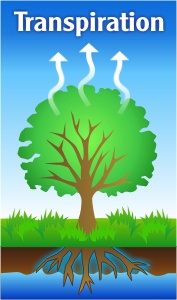
Why plants become wilt?

a)

Less water evaporate from the plants

b)

The plant loss excessive amount of water through transpiration

c)

The stomata of the plants are closed

d)

The weather are cool.

71.

The function of transpiration is to transport _______ and ____________ from the roots to the leaves

a)

water, mineral salts

b)

food, nutrients

c)

water, food

72.

Which of the following indicates the pathway of water through a plant?

a)

root hair cell --> xylem --> stomata

b)

stomata --> root hair cell --> xylem

c)

xylem --> stomata --> root hair cell

73.
How do plants get their energy?
a)
through a reaction called chlorophyll 
b)
by a process called photosynthesis 
c)
by absorbing mineral nutrients from soil 
d)
by eating other organisms 
74.
_______ are tubes that carry nutrients to other parts of the plant. 
a)
stomata 
b)
roots 
c)
xylem 
d)
xylophone 
75.
The plant tissue that carries food materials DOWNWARD from the leaves to the rest of the pant is the ______.
a)
Phloem
b)
Stomata
c)
Chlorophyll
d)
Xylem
76.
Vascular tissue that transports water and minerals UPWARDS from a plant's roots is know as ______.
a)
Chlorophyll
b)
Phloem
c)
Stomata
d)
Xylem
77.
Plant absorbs water through the _________. 
a)
stem
b)
roots 
c)
leaves 
d)
all of the above
78.
Transpiration is
a)
the movement of water through a plant from the roots up the stem
b)
the loss of water from the leaves of a plant by the process of evaporation
c)
the flow of water into plant roots by osmosis from the soil
d)
the process of minerals and sugars moving through plant veins
79.

Root hairs help in absorption of water by

a)

increasing the surface area

b)

decreasing the surface area

c)

holding the plant in the soil

d)

none of the above

80.

Which of the following does not have valves

a)

Heart

b)

Arteries

c)

capillaries

d)

veins

81.
What two types of measurements make up DENSITY
a)
Mass and Volume
b)
Temperature and Mass
c)
Grams and Centimeters
d)
Volume and Weight
82.
Jack has a rock. The rock has a mass of 14g and a volume of 2cm3. What is the density of the rock?
a)
7 mL
b)
7 g/cm3
c)
28 g/cm3
d)
1/7 g/cm3
83.
Frank has an eraser. It has a mass of 4g, and a volume of 2cm3. What is its density?
a)
8 g/cm3
b)
2 g/cm3
c)
1/2 g/cm3
d)
24 g/cm3
84.
Frank has a paper clip. It has a mass of 9g and a volume of 3cm3. What is its density?
a)
3 g/cm3
b)
1/3 g/cm3
c)
27 g/cm3
d)
39 g/cm3
85.
What units are used to measure mass?
a)
g
b)
cm3
c)
g/cm3
d)
cm3/g
86.
An object should float in a liquid if it is 
a)
Denser than the liquid 
b)
Less dense than the liquid
c)
Lighter than metal
d)
 Shaped like a ball 
87.
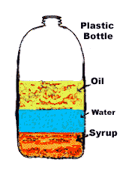
Which liquid is the least dense?
a)
oil
b)
water
c)
syrup 
d)
plastic bottle
88.
What is the formula for density?
a)
density = mass x volume
b)
density = mass / volume
c)
density = mass + volume
d)
density = mass - volume
89.
Helium balloons rise on earth because
a)
helium is less dense than air
b)
helium is more dense than air
c)
helium is cooler than air
d)
helium is warmer than air
90.

What is the formula for Mass?

a)

Mass/Volume

b)

Density x Volume

c)

Mass/Density

91.

The force of attraction between particles of a solid can be described as:

a)

Strong

b)

Weak

c)

Vibrant

d)

Moderate

92.
As particles are exposed to warmer temperatures they __________
a)
speed up
b)
slow down
c)
stay the same
d)
vibrate
93.

How do particles move if in a solid?

a)

Not at all.

b)

Quickly

c)

Slow

d)

They don't move they vibrate

94.

Fluids include...(select all that apply)

a)

Liquids

b)

Solids

c)

Gases

d)

Ice Cubes

95.

Which of the following has No Definite Shape?

a)

Gas

b)

Solids

c)

Liquids

d)

Fluids

96.

What is sublimation?

a)

Solid to Liquid

b)

Liquid to gas

c)

Gas to Solid

d)

Solid to gas

97.
The state of matter having no definite shape or volume.
a)
solid
b)
liquid
c)
gas
98.

the atmosphere is a mixture of gases

a)

true

b)

true and false

c)

false

d)

neither true nor false

99.
When the temperature of matter decreases the particles ...
a)
speed up and move farther apart
b)
speed up and move closer together
c)
slow down and move farther apart
d)
slow down and move closer together
100.
What type of phase change occurs when a liquid turns into a gas (at the surface)?
a)
Melting
b)
Freezing
c)
Boiling
d)
Evaporation