
 Worksheets
Chapter 10 Viruses & Immune System
Total questions: 82
Worksheet time: 54mins
Name
Class
Date
1.
What do viruses need to reproduce?
a)
they need genetic material
b)
They need a host cell
c)
They need bacteria
d)
They need insulin
2.
How does a virus cause a person to develop the common cold?
a)
invades the host cell to reproduce
b)
removes energy from the host cell
c)
produces toxins in the host cell
d)
protects the host cell from bacteria
3.
When a virus invades a living cell, its _______
takes over the cell's functions.
takes over the cell's functions.
a)
outer coat
b)
genetic material
c)
core
d)
cytoplasm
4.
True or False
The flu is caused by a virus.
The flu is caused by a virus.
a)
true
b)
false
5.
Antibiotics kill viruses
a)
True
b)
False
6.
What helps prevent viral diseases?
a)
Vaccines
b)
Antibiotics
c)
Herbal tea
d)
Gene Therapy
7.
A pathogen.........
a)
makes proteins
b)
causes infection or disease
c)
is made of cells
d)
is a living thing
8.
What is the 1st step of virus infection?
a)
Entry
b)
Attachment
c)
Replication
d)
Assembly
9.
Reasons that viruses are considered to be nonliving is because
a)
They are not cellular
b)
They cannot reproduce on their own
c)
They cannot make proteins
d)
all of the above
10.
What do viruses have in common with living cells? They both...
a)
store genetic information
b)
have chloroplasts
c)
use glucose for cellular respiration
d)
have endoplasmic reticulum
11.
What provides direct energy for the virus?
a)
food
b)
its host
c)
the sun
d)
a parasite
12.
Which of the following occurs after a virus attaches to a host cell in the viral reproduction process?
a)
The host cell dies
b)
The virus dies
c)
The virus inserts its genetic information into the host cell
d)
copies of the virus are immediately released from the host
13.
How could you describe the size of a virus?
a)
Smaller than bacteria
b)
Larger than a parasite
c)
About the size of a dime
d)
Smaller than a proton
14.
How do viruses reproduce?
a)
They copy their own genetic material inside a protein coat.
b)
They kill a cell and reproduce inside it
c)
They invade a living cell and use the cell's functions to replicate their genetic material
d)
They do not reproduce because they are not technically living things
15.
What does a vaccine do?
a)
Gives you immunity
b)
Gives you a disease
c)
Cures you from a disease
16.
Vaccines
a)
Prevent people from coming in contact with viruses
b)
give the immune system a preview of the virus
c)
Prevent all viral infections
d)
Only work on small children
17.
Viruses trick host cells into making copies of the virus
a)
True
b)
False
18.

Organisms that cause disease are called
a)
pathogens.
b)
antigens.
c)
toxins.
d)
B-cells.
19.

A disease that can pass from one organism to another is a(n)
a)
pathogen.
b)
infectious disease.
c)
toxin.
d)
bacteria.
20.

Which is NOT a way infected diseases are spread?
a)
Infected people
b)
Contaminated object
c)
Infected Animal
d)
Wood
21.

What is a pathogen?
a)
organisms that cause nutritional deficiencies
b)
organisms that cause genetic disorders
c)
organisms that cause disease
22.
One way to prevent the spread of an infectious disease:
a)
sharing tissues
b)
drinking from your friend's water bottle
c)
washing your hands
d)
eating rotten food
23.

Infectious diseases can be spread...
a)
by infected animals and people
b)
by contaminated objects
c)
by contaminated water and food
d)
all of these choices are correct
24.
What is one way a pathogen can enter the body?
a)
Nose
b)
Mouth
c)
Broken Skin
d)
All of the Aove
25.
The most common infectious disease in the U.S.A. is
a)
flu
b)
whooping cough
c)
common cold
d)
strep throat
26.
What is the immune system’s main purpose?
a)
Let’s germs into the body.
b)
Helps your body fight off illness and disease.
c)
The immune system produces illness and bacteria.
d)
The immune system trap germs in an organ so they do not spread.
27.
Infectious diseases are
a)
contagious
b)
always deadly
c)
both answers
d)
none of the above
28.
What is the most common way contagious infections are spread?
a)
through the air
b)
Through food
c)
touching
d)
through water
29.
Which of the following is NOT one of the four major types of human pathogens
a)
Bacteria
b)
Viruses
c)
fungi
d)
plants
30.
A disease that is caused by a pathogen.
a)
Inflammatory Disease
b)
Infectious Disease
c)
Immunity Disease
d)
Immune Response
31.
Which of the pathogens is non-living?
a)
bacteria
b)
virus
c)
protist
32.
What pathogen causes Athlete's Foot?
a)
bacteria
b)
virus
c)
protist
d)
fungi
33.
What pathogen causes strep throat?
a)
bacteria
b)
virus
c)
protist
d)
fungi
34.
You can catch a noninfectious disease from a classmate.
a)
True
b)
False
35.
When your immune system overreacts to a stimulus, and you get runny nose, red eyes, a skin rash, or coughing... what disease are you suffering from?
a)
cold
b)
asthma
c)
allergies
36.
_______________ is when the bronchial tubes swell up. This is usually cause by some sort of allergy, but exercise and stress can also cause the attack.
a)
influenza
b)
pneumonia
c)
asthma
d)
Parkinson's
37.
What disease is a pancreas disorder that leads to high blood sugar?
a)
diabetes
b)
pneumonia
c)
skin cancer
d)
Athlete's Foot
38.
What disease kills more Americans yearly than any other disorder?
a)
cancer
b)
AIDS
c)
pneumonia
d)
heart disease
39.
What causes skin cancer?
a)
ultraviolet rays
b)
vitamin D
c)
too much glucose, no insulin
d)
HIV
40.
Which of the following systems protects the body from disease?
a)
Digestive System
b)
Nervous System
c)
Immune System
d)
Skeletal System
41.
Any substance that causes an allergy is a(n):
a)
Allergen
b)
Irritant
c)
Virus
d)
Carcinogen
42.
An example of a noninfectious disease is:
a)
Influenza
b)
Small Pox
c)
Diabetes
d)
Typhoid
43.
An example of an infectious disease is:
a)
Diabetes
b)
Cancer
c)
Cardiovascular Disease
d)
Measles
44.
T cells help make
a)
a. antibiotics
b)
b. bacteria
c)
c. antibodies
d)
d. Virus
45.
The causes of most noninfectious diseases include all but
a)
a. lifestyle
b)
b. genetics
c)
c. hyperlipidemia
d)
d. environment
46.
Factors that can improve one’s immune system include ALL BUT which of the following?
a)
a.vaccinations
b)
b. exercise
c)
c. sharing utensils
d)
d. sufficient sleep
47.
Bacterial infections are best treated with
a)
a. antibodies
b)
b. parasites
c)
c. plaque
d)
d. antibiotics
48.
Your personal greatest defense against infections is
a)
a. your skin
b)
b. washing hands
c)
3. vaccines
d)
4. covering your mouth when you cough
49.
Influenza can best be prevented by
a)
a. not sharing utensils
a. not sharing utensils
a. not sharing utensils
b)
b. wearing a mask over your mouth/nose
c)
c. vaccine
d)
d there is no prevention
50.
Vaccines cause the manufacture of
a)
a. antibiotics
b)
b. microorganisms
c)
c. insulin
d)
d. antibodies
51.
This is one sign your body might be fighting infection.
a)
a. thirst
b)
b. rash
c)
c. fever
d)
d. sneezing
52.
Most Americans don't die of infectious diseases
a)
a. because of our standard of living
b)
b. because we have immunities to infections
c)
c. everyone gets vaccines
d)
d. Actually, most Americans do die from infectious diseases
53.

Which of the following illness is caused by pathogens?
a)
Bruise
b)
Blood Clot
c)
Diabetes
d)
Influenza
54.

Vaccinations are used for
a)
Curing the illness
b)
Preventing the Illness
c)
Getting the illness
55.

What are the 4 types of pathogens that could cause illness?
a)
animals, bacteria, fungi and plants
b)
bacteria, fungi, nucleus, protist
c)
bacteria, fungi, viruses, protist
d)
bacteria, plants, fungi, protist
56.

What is the main purpose of the immune system?
a)
support the body through bones and muscles
b)
get rid of waste from the body
c)
protect the body from pathogens
d)
move blood through the body
57.

What do antibodies attach to on the pathogen?
a)
Anti inflammatory
b)
Antigens
c)
Antiseptic
d)
Antibodies
58.

Vaccines stimulate the body to produce...
a)
autoimmune diseases
b)
helper t-cells
c)
fever
d)
antibodies
59.

Which would most likely prevent a cold virus from spreading in a classroom?
a)
tissue at a teacher's desk
b)
students wash hands regularly with soap
c)
students shake hands regularly with each other
d)
students wipe desks with dry paper towels
60.

Which one is a way the body defends against a pathogen?
a)
Fever
b)
Stomach Acid digesting
c)
White Blood Cells fighing
d)
All of these are correct
61.

A disease that is harmful to the body and is contagious is called....
a)
Non-Infectious
b)
Infectious
62.
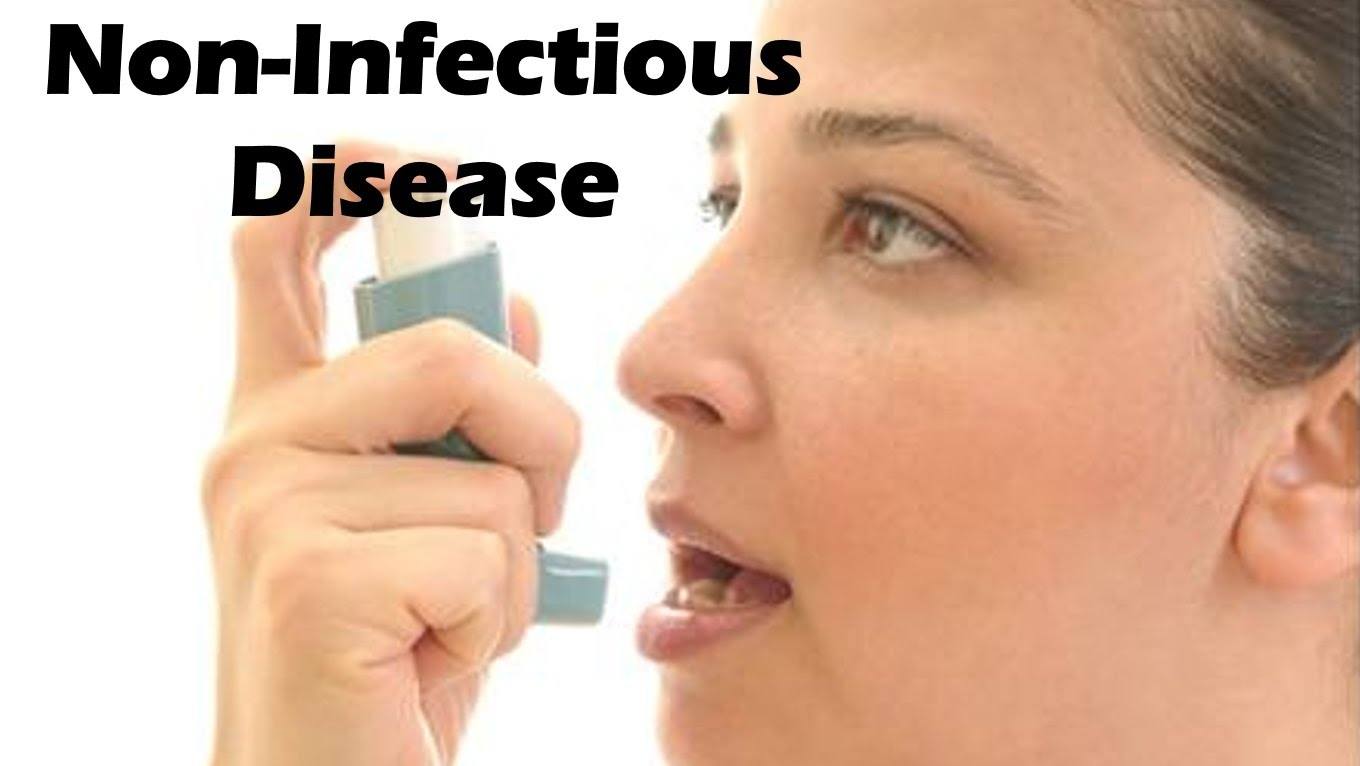
Which disease is a non-infectious disease?
a)
Diabetes
b)
Influenza
c)
AIDS
d)
Chickenpox
63.

Pathogens are recognized by their...
a)
antigens
b)
antibodies
c)
killer t-cells
d)
B-cells
64.

The picture below illustrates one internal part of the body’s immune system. What process is illustrated in the picture?
a)
a skin cell destroying germs.
b)
inflammation near an opened wound
c)
a white blood cell destroying pathogens
d)
mucus in the lungs destroying pathogens
65.
Liz notices that shortly after cutting her arm accidentally the area around the cut is turning red and feeling hot. Which immune system defense is Liz experiencing?
a)
inflammation
b)
white blood cell clotting
c)
skin
d)
fever
66.
Which answer best describes how infectious diseases get transmitted (passed on)?
a)
people can sneeze or cough and pass disease on through the air
b)
drinking water can be contaminated with diseases
c)
objects such as doorknobs and towels can be contaminated by disease
d)
all of the above answers are ways that diseases are transmitted
67.

How do breathing passages help keep pathogens out of the body?
a)
Mucus and cilia trap pathogens.
b)
They produce antibodies that kill pathogens.
c)
Chemicals kill some pathogens.
d)
Phagocytes in the breathing passages destroy pathogens.
68.

A cut in the skin can lead to an infection because
a)
the cut destroys the cilia that remove bacteria.
b)
the cut kills phagocytes.
c)
it allows pathogens to get into the body.
d)
it interferes with the immune system’s ability to fight disease.
69.

Which cells in the immune system identify pathogens and distinguish one pathogen from another?
a)
Red blood cells
b)
B cells
c)
Phagocytes
d)
T cells
70.

Antibodies destroy pathogens by
a)
infecting T cells.
b)
breaking the cell membranes of pathogens.
c)
destroying phagocytes.
d)
binding to antigens on the pathogens.
71.
Immunity is the body’s ability to
a)
destroy pathogens before they can cause disease.
b)
distinguish pathogens from one another.
c)
produce antigens.
d)
fight disease with the inflammation response.
72.
How does the body acquire active immunity to a disease without getting the disease?
a)
by means of the inflammatory response
b)
through an allergic reaction
c)
by means of passive immunity
d)
through vaccination
73.
Passive immunity is different from active immunity because passive immunity
a)
lasts a long time.
b)
involves antibodies that have not been produced by the body of the immunized person.
c)
protects a person from many different diseases.
d)
does not protect a person from disease.
74.

What is another name for a shot or immunizations?
a)
wound
b)
vaccination
c)
ouch!
d)
flu
75.
These help our body to treat/cure a bacterial disease.
a)
antibiotic
b)
vaccination
c)
spleen
d)
help me please
76.

What are the white blood cells called?
a)
phagocytes
b)
ouchy cells
c)
lymphocytes
d)
spleen
77.
a protein produced by a b cell of the immune system that destroys a pathogen
a)
T Cell
b)
B Cell
c)
Antibody
d)
Vaccination
78.
immunity that occurs when a person's own immune system produces antibodies in response to the presence of a pathogen
a)
Inflammatory Response
b)
Immune Response
c)
Immunity
d)
Active Immunity
79.
immunity in which antibodies are given to a person rather than produced within the person's own body
a)
Vaccine
b)
Passive Immunity
c)
Vaccination
d)
Noninfectious disease
80.
What is the role of histamines?
a)
Causes fever
b)
Causes inflammation
c)
Produces antibodies
d)
It is a pathogen
81.
Antigens are part of...
a)
Your own immune system.
b)
The pathogen.
82.
Antibodies are made by...
a)
Your own cells.
b)
The pathogen.
100 %

