Wayground logo

Free Printable Worksheets

Font size

S
M
L
XL
Worksheets

2018 Bio Midterm Review

Total questions: 95

Worksheet time: 48mins

Name
Class
Date
1.
Covalent bonds are formed by _____________ electrons and ionic are formed by ______________ electrons
a)
sharing, transferring
b)
transferring, sharing
c)
sharing only
d)
transferring only
2.

Look at the image. What makes this water molecule polar?

a)

Oxygen is positive and hydrogen is negative

b)

Oxygen is negative and hydrogen is positive

c)

Oxygen and Hydrogen are positive

d)

Oxygen and hydrogen are negative

3.
Which organelle is used for cellular storage?
a)
nucleus
b)
vacuole
c)
lysosome
d)
chloroplast
4.
Which organelle digests worn out cell parts and waste material?
a)
lysosome
b)
chloroplast
c)
vacuole
d)
cytoplasm
5.
Which organelle creates energy in the form of ATP for the cell?
a)
Chloroplast
b)
Mitochondria
c)
Cytoplasm
d)
Cell wall
6.
Which structure in the cell controls what comes in and out of it?
a)
cell membrane
b)
cell wall
c)
cytoplasm
d)
nucleus
7.
List the levels of organization from least to most complex:
a)
Cell, tissue, organ system, organ
b)
Organ system, organ, tissue, cell
c)
Tissue, organ, organ system, cell
d)
Cell, tissue, organ, organ system
8.
Cellular respiration takes place in the _______________
a)
chloroplast 
b)
mitochondria
c)
vacuole
d)
nucleus
9.
plants develop a ______________ where as animals develop a cleavage furrow during cytokinesis
a)
cell plate
b)
cell line
c)
plant furrow
d)
plant plate
10.
What is the complementary DNA strand to the following: TAAGC
a)
ATTCG
b)
UAACG
c)
TAAGC
d)
AUUGC
11.
Substances with more OH- than H+ ions are
a)
acids
b)
bases
12.
Which of the following is an example of a prokaryote?
a)
Bacteria
b)
Fungi
c)
Bread mold
d)
Yeast
13.
If an egg has 20 chromosomes, how many chromosomes will it have once it becomes fertilized?
a)
20
b)
40
c)
80
d)
10
14.
What does the equation represent?
a)
Cellular respiration
b)
Photosynthesis
c)
Alcoholic fermentation
d)
Lactic acid fermentation
15.
What is the purpose of photosynthesis?
a)
To make energy for use in other processes
b)
To make food in the form of glucose
c)
To make ribosomes
d)
To make proteins
16.
How does ATP access energy?
a)
It breaks off an adenine molecule
b)
It breaks off a ribose sugar
c)
It breaks off the 1st phosphate
d)
It breaks off the 3rd phosphate
17.
Why do cells go through cellular respiration?
a)
To make food in the form of glucose
b)
To make energy for use in other life processes
c)
To make ribosomes
d)
To make proteins
18.
How is ATP different than ADP?
a)
ATP has the sugar ribose and ADP has the sugar glucose
b)
ATP has 2 phosphates and ADP has 3 phosphates
c)
ADP has 2 phosphates and ATP has 3 phosphates
d)
ATP has the base Adenine and ADP has the base Thymine
19.
What does the following equation represent?
a)
Photosynthesis
b)
Cellular respiration
c)
Lactic acid fermentation
d)
Alcoholic fermentation
20.

Describe lactic acid fermentation?

a)

It is an anaerobic process yeast in the absence of oxygen

b)

It is an aerobic process that occurs in plants

c)

It is an anaerobic process that occurs in muscle cells and some bacteria in the absence of oxygen

d)

It is an aerobic process that occurs in mitochondria

21.
What is the correct order of mitosis
a)
a, b, c, d
b)
b, a, d, c
c)
c, d, a, b
d)
d, c, b, a
22.
Skin cells reproduce by which type of reproduction?
a)
Asexual
b)
Sexual 
23.
If a cell reproduces by budding, and starts out with 20 chromosomes, how many will the cell end up with?
a)
20
b)
40
c)
80
d)
10
24.
What is the purpose of meiosis?
a)
To create somatic cells
b)
To create gametes
c)
To create body cells
d)
To have asexual reproduction
25.
A cell starts out with 40 chromosomes and then goes through meiosis how many chromosomes will the new cell have?
a)
40 chromosomes
b)
20 chromosomes
c)
80 chromosomes
d)
10 chromosomes
26.
If the pollen of a grass blade has 12 chromosomes, how many will the leaf of the same plant have?
a)
12 chromosomes
b)
24 chromoosmes
c)
48 chromosomes
d)
100000000000 chromosomes 
27.
How many times do cells divide during meiosis?
a)
1 time
b)
2 times
c)
3 times
d)
4 times
28.
What is the purpose of flowers?
a)
To be pretty
b)
To help plants reproduce
c)
To smell nice
d)
To decrease genetic variation of plants
29.
Which biological molecule is DNA considered?
a)
Carbohydrate
b)
Lipid
c)
Protein
d)
Nucleic Acid
30.
What are lipids made of?
a)
Monosaccharides
b)
Nucleotides
c)
Amino Acids
d)
Fatty Acid and Glycerol
31.
What is the monomer of a carbohydrate?
a)
Monosaccharide
b)
Nucleotide
c)
Amino Acid
d)
Fatty acid and Glycerol
32.
Which monomer is made up of a sugar, a phosphate and a nitrogen base?
a)
Monosaccharide
b)
Nucleotide
c)
Amino Acid
d)
Fatty acid and Glycerol
33.
Nucleic acids are composed of: 
a)
Monosaccharides
b)
Amino Acids
c)
Nucleotides
d)
Fatty acid and glycerol
34.
What type of bond shares electrons?
a)
Ionic
b)
Covalent
c)
Hydrogen
35.
Cohesion is when water attaches to water, and adhesion is when water attaches to other things. Which of the following demonstrates these properties?
a)
Capillary action of plants
b)
Water taking a long time to heat up
c)
Water floating as ice
d)
Water dissolving ions in blood
36.
Which is a strong acid?
a)
Lemon juice with a pH of 2
b)
Milk with a pH of 6
c)
Lye with a pH of 14
d)
Soap with a pH of 8
37.
An example of surface tension is insects walking on water. What property of water causes this?
a)
Cohesion
b)
Adhesion
c)
High specific heat
d)
Universal solvent
38.

What are each of the individual units in this picture called?

a)

Amino acids

b)

Monosaccharides

c)

Fatty acids and glycerol

d)

Nucleotides

39.
If we did NOT have enzymes in our bodies what would happen?
a)
We would die because reactions would take place too slow for us to survive
b)
We would digest food faster
c)
Nothing would happen
40.
Why is RNA important?
a)
Helps make DNA
b)
Genetic information
c)
Makes proteins
41.
Which organic molecule are chromosomes made of?
a)
Proteins
b)
Lipids
c)
Nucleic Acids
d)
Carbohydrates
42.
What biological molecule provides short term energy?
a)
Carbohydrates
b)
Lipids
c)
Proteins
d)
Nucleic Acids
43.
What type of bond is this?
a)
ionic
b)
covalent
c)
hydrogen
d)
metallic
44.
Solutions that prevent changes in pH are known as _____________
a)
Buffers
b)
Biomolecules
c)
pH stabilizers 
d)
Organic molecules
45.

What is the purpose of proteins?

a)

Short term energy

b)

long term energy

c)

to make bones and muscles

d)

genetic information

46.

What type of cell is this?

a)

Animal

b)

Plant

c)

Fungi

d)

Bacteria

47.

What helps this cell move?

a)

Cell wall

b)

Flagella

c)

Chromosomes

d)

Ribosomes

48.

What is the advantage of asexual reproduction?

a)

To reproduce quickly and in large numbers

b)

To increase genetic variation

c)

To decrease genetic variation

d)

To move to mars and create a new colony.

49.

A group of cells is called a(n)

a)

Organ

b)

Tissue

c)

Cell

d)

Organ system

50.

Prokaryotes lack a nucleus and ___________________

a)

Ribosomes

b)

Cytoplasm

c)

Membrane bound organelles

d)

DNA

51.

What is the purpose of a cell wall?

a)

Support and protection

b)

To let things in and out of the cell

c)

To control the cell

d)

To move organelles

52.

Golgi bodies are used to

a)

Package and modify proteins

b)

Transport proteins to the ER

c)

Control the cell

d)

Digest worn out organelles

53.

Which organelle takes in sunlight to makes food for plants?

a)

Mitochondria

b)

Chloroplast

c)

Golgi apparatus

d)

Lysosome

54.

The cell membrane is mostly made up of:

a)

Phospholipids

b)

Cellulose

c)

Chitin

d)

Proteins

55.
What gas does A represent?
a)
Carbon dioxide
b)
Oxygen
56.
What gas does B represent?
a)
Carbon dioxide
b)
Oxygen
57.

How many cells are formed at the end of meiosis?

a)

2 diploid cells

b)

4 diploid cells

c)

2 haploid cells

d)

4 haploid cells

58.
What is the volume of the liquid in this graduated cylinder?
a)
19 mL 
b)
35 mL 
c)
24 mL 
d)
1.9 mL
59.
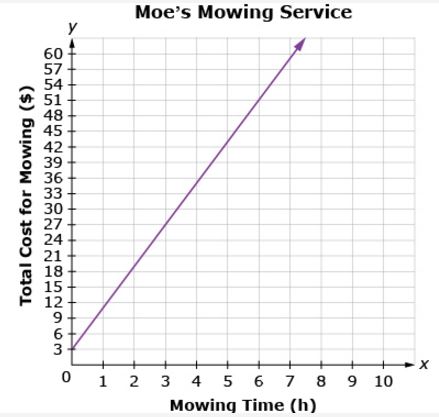
What is the general trend of this line graph?
a)
The more you mow, the less money you make.
b)
You make the same amount of money regardless of how long you mow.
c)
The more you mow, the more money you make.
d)
Mowing is dangerous.
60.
When using high power on a microscope what is the only adjustment knob you can use?
a)
The diaphragm
b)
The fine adjustment knob
c)
The coarse adjustment knob
d)
The eyepiece
61.
When testing the ability of a liquid soap solution to minimize aphid infestations on tomato plants, the control group should include which of the following?
a)
Tomato plants of a different variety than the ones used in the experimental group
b)
Tomato plants that do no receive treatment with soap solution
c)
Tomato plants that are treated with a liquid soap solution
d)
tomato plants that are treated with a commercial insecticide
62.

If you ware working with corrosive chemicals what should you wear?

a)

Wear heat resistant gloves only, goggles, an apron and have a biohazard container

b)

Goggles and latex gloves/nitrile gloves, and goggles

c)

Goggles and heat resistant gloves only

d)

No protection is needed!

63.
Number 11
a)
Course Adjustment
b)
Fine Adjustment
c)
Small Adjuster
d)
Large Adjuster
64.
If you break something in the lab what is the first thing you do?
a)
Scream
b)
Tell the teacher
c)
Pick it up
d)
Run around the room
65.
Which of these increases the validity of an experiment?
a)
re-testing it
b)
using a control group
c)
having a large sample size
d)
all of these
66.
What is the shape of DNA?
a)
Twisted ladder
b)
Double ladder
c)
Double helix
d)
Spiral helix
67.
The sequence of nucleotides determines the _____________ 
a)
Nucleotide strand
b)
DNA strand
c)
RNA strand
d)
Protein structure and function
68.
How are RNA and DNA similar?
a)
They both are double stranded
b)
They both have ribose sugar
c)
They both have deoxyribose sugar
d)
They both contain the nucleotides A, C, and G
69.

Which scientist(s) were credited with the discovery of DNA's shape?

a)

Rosalind Franklin

b)

Heath and Avery

c)

Watson and Crick

d)

Gregor Mendel

70.

What is the result of DNA replication?

a)

4 identical daughter cells

b)

2 identical daughter cells

c)

2 different strands of DNA

d)

2 identical strands of DNA

71.

What type of bond holds DNA together?

a)

Hydrogen bond

b)

Ionic bond

c)

Covalent bond

d)

Hydroponic bond

72.

What does it mean to have the "narrowest" field of vision when looking under a microscope

a)

To be magnified the most

b)

To be zoomed out the most

73.
What are the hair like structures found in cells used for movement called?
a)
Cilia
b)
Flagella
c)
Pseudopodia
d)
Legs
74.
Which of the following is found in animal cells but not plant cells?
a)
Mitochondria
b)
Cell membrane
c)
Lysosome
d)
Ribosomes
75.
Which of the following structures contain DNA?
a)
Ribosomes
b)
Cytoplasm
c)
Cell wall
d)
Chromosomes
76.
The movement of water from an area of high concentration to low concentration is called ___________
a)
Diffusion
b)
Osmosis
c)
Facilitated diffusion
d)
Active transport
77.
In order to get oxygen in your blood, oxygen has to be transported from your blood cells (high concentration) to your organs (low concentration). What is this an example of?
a)
Diffusion
b)
Osmosis
c)
Active transport
d)
Endocytosis
78.
A solution outside of a cell is 80% salt, and inside the cell is 10% salt. What will happen to the cell?
a)
It will swell
b)
It will shrink
c)
It will stay the same
79.
What type of transport is this?
a)
Facilitated diffusion
b)
Active transport
c)
Endocytosis
d)
Exocytosis
80.
If you put a saltwater fish in a freshwater aquarium what will happen to the cells?
a)
They would swell
b)
They would shrink
c)
They would stay the same
d)
Nothing
81.
If you take a freshwater plant and put it into salt water what will happen to the cells?
a)
They will swell
b)
They will shrink
c)
They will stay the same
d)
Nothing
82.

If you put an enzyme that is used to being at a pH of 7, and is put into a pH of 8.5 what will happen?

a)

It will stay the same

b)

It will explode

c)

It will change shape and no longer function

d)

Nothing

83.
A pH of 8 is considered a _________________
a)
Strong acid
b)
Weak base
c)
Strong base
d)
Weak acid
84.
Which is an example of cohesion?
a)
Insects walking on water
b)
Icebergs floating
c)
Water taking a long time to heat up
d)
Birds singing
85.
The part of the plant that water travels through.
a)
xylem
b)
phloem
c)
seed
d)
stigma
86.
Transporting sugar from the leaf down to the roots is done by the __________
a)
xylem
b)
phloem
c)
cotyledon
d)
pallisade cells
87.

Which organelle is the control center?

a)

Nucleus

b)

Cytoplasm

c)

Cell membrane

d)

Cell wall

88.

Which organelles do plants have that animals do not?

a)

Nucleus and Cell membrane

b)

Chloroplast and cell wall

c)

Lysosome and centrioles

d)

Cytoplasm and DNA

89.

Sex cells are _____________________ and body cells are _______________

a)

haploid, diploid

b)

diploid, haploid

c)

hypotonic, ditonic

d)

ditonic, hypotonic

90.
a)
Danger of Death
b)
Biohazard
c)
Slippery Floor
d)
Forklift
91.
a)
Biohazard
b)
Radiation
c)
Forklift
d)
Laser Radiation
92.
Site of ribosome production
a)
Nucleus
b)
Nucleolus
c)
Ribosomes
d)
Mitochondria
93.

Where are electrons transferred during an ionic bond?

a)

The nucleus

b)

The outermost energy level

c)

The intermost energy level

d)

Outside the atom

94.

When would you use a placebo?

a)

When conducting an experiment on the effects of medicine. You would give the placebo to the control group

b)

When conducting an experiment on the effects of medicine. You'd give the placebo to the experimental group

c)

You shouldn't use a placebo ever

d)

There is no such thing as a placebo

95.

substances with more hydrogen ions (H+) than hydroxide ions (OH-) are considered

a)

acids

b)

bases