wayground logo

Free Printable Worksheets

Font size

S
M
L
XL
Worksheets

Biology 20 Unit B Review

Total questions: 100

Worksheet time: 3hrs 20mins

Name
Class
Date
1.
Occurs when two or more organisms seek the same resource at the same time.
a)
Competition
b)
Symbiosis
c)
Predation
2.
The place in which an organism lives  
a)
habitat
b)
population
c)
ecosystem
d)
niche
3.
A relationship between two species where one benefits while the other is harmed.
a)
Mutualism
b)
Commensalism
c)
Parasitism
d)
Naturalism
4.
A snake is eaten by a hawk. The hawk is the _______.
a)
prey
b)
parasite
c)
predator
d)
all of these
5.
The unique ways an organism survives, obtains food and shelter, and avoids danger is known as _________.
a)
habitat
b)
carrying capacity
c)
biotic potential
d)
niche
6.
"A deer lives in the forest" is an example of
a)
habitat
b)
niche
7.
"Raccoons eat both berries and meat" is an example of
a)
habitat
b)
niche
8.
"Wolves hunt in pack for a more successful hunt" is an example of
a)
Habitat
b)
Niche
9.
"Orchids are exotic flowering plant found in the rainforest" is an example of
a)
habitat
b)
niche
10.
A group of interbreeding organisms (species) living in the same area
a)
Population
b)
Organism
c)
Species
d)
Ecosystem
11.
All the populations in an ecosystem Ex:  All the frogs, insects, reptiles, birds, plants, mushrooms, bacteria, mammals & fish living in the pond behind your neighborhood
a)
Community
b)
Population
c)
Ecosystem
d)
Biome
12.
Every place on Earth that can support life
a)
Biosphere
b)
Ecosystem
c)
Population
d)
Community
13.
Which level of organization is the most complex?
a)
organism
b)
population
c)
community
d)
ecosystem
14.
All of the living AND non-living things in an particular area is called a(n):
a)
ecosystem
b)
house
c)
community
d)
biosphere
15.
Organisms that make up the living part of an ecosystem.
a)
abiotic
b)
biotic factors
c)
ecology
d)
ecosystems
16.
Nonliving things found in an ecosystem.
a)
factories
b)
factor trees
c)
biotic factors
d)
abiotic factors
17.
A group of the same type of organisms living in the same place at the same time.
a)
threatened species
b)
populations
c)
community
d)
limiting factor
18.

All of the populations that live in one area together

a)

limiting factors

b)

populations

c)

community

d)

speed limit

19.
Which is a biotic factor?
a)
sunlight
b)
air 
c)
bacteria
d)
all of the above
20.
Which statement is correct?
a)
A population is the same as a community
b)
A community is a group of populations
c)
A community is a part of a population
d)
A population is a group of communities
21.

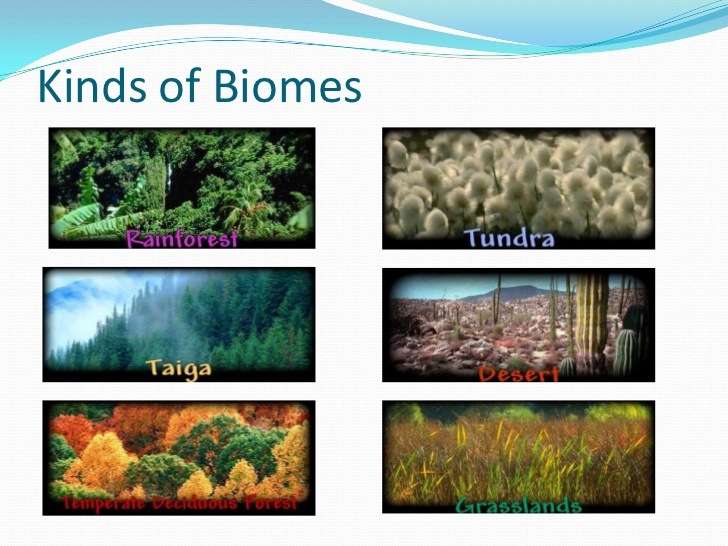
When ecosystems have similar climates and are home to similar organisms, they are classified as —

a)

niches

b)

habitats

c)

biomes

d)

communites

22.
What are the ecological levels of organization from smallest to the largest?
a)
organism, population, community, ecosystem, biome, biosphere
b)
organism, community, population, ecosystem, biome, biosphere
c)
organism, population, community, biome, ecosystem, ecosphere.
d)
organism, community, population, biome, ecosystem, ecosphere
23.
The place where an organism lives in order to obtain its food, water, and shelter.
a)
species
b)
habitat
c)
niche
d)
community
24.
Which of the following organisms are LEAST closely related?
a)
organisms that share a domain
b)
organisms that share a family 
c)
organisms that share a genus 
d)
organisms that share a species 
25.
The scientific name for an organism is made from the:
a)
class and family name
b)
genus and species name
c)
domain and kingdom name
d)
kingdom and phylum name
26.
The 8 levels of classification, most broad to most specific.
a)
Domain, Genus, Family, Order, Class, Phylum, Kingdom, Species
b)
Domain, Species, Kingdom, Genus, Phylum, Family, Class, Order
c)
Domain, Kingdom, Phylum, Class, Order, Family, Genus, Species
d)
Order, Kingdom, Species, Domain, Phylum, Family, Class, Genus
27.
Term given to describe the 2 name naming system is:
a)
dichotmous key
b)
binomial nomenclature
c)
2 scientific names
d)
binomial key
28.
Cells that do not have a true nucleus are called....
a)
eukaryote
b)
prokaryote
c)
unicellular
d)
multicellular
29.
Cells that have a true nucleus are called....
a)
eukaryotes
b)
prokaryotes
c)
unicellular
d)
multicellular
30.
Which organisms are closely related? 
a)
American badger and leopard
b)
coyote and gray wolf
c)
european otter and leopard
d)
coyote and american badger
31.
The names in our classification system are written mostly in...
a)
French
b)
English
c)
Latin
d)
Spanish
32.
A tool used by a taxonomist to identify an unknown organism is known as a __________.
a)
dichotomous key
b)
binomial nomenclature
c)
scientific name
d)
binomial key
33.
An illustration and a dichotomous key are given. What is the correct classification for this organism?
a)
Class Insecta
b)
Order Amblygygi
c)
Order Araneae
d)
Order Scorpiones
34.
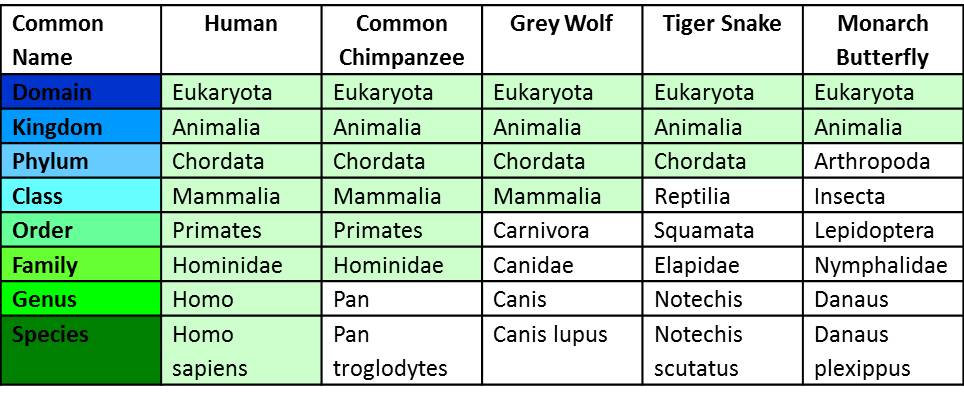
Which organism in the table shown is most closely related to the common dolphin?
a)
human
b)
killer whale
c)
giant kelp
d)
bat star
35.
Which organism in the table is least closely related to the chimpanzee?
a)
human
b)
grey wolf
c)
tiger snake
d)
monarch butterfly
36.
What kingdom do unicellular, prokaryotic organisms that live in extreme environments?
a)
Animal
b)
Archaebacteria
c)
Eubacteria
d)
Plant
37.
A dichotomous key for trees is provided. Hikers found a tree that has large brown cones and single sharp needles. What species of tree have the hikers found?
a)
Juniper
b)
Pine
c)
Spruce
d)
Fir
38.
A student discovers an arachnid with a segmented abdomen, long legs, and a tail with no stinger. The student uses the dichotomous key below to identify it. Which arachnid has the student found?
a)
Whip Scorpion
b)
Wind Scorpion
c)
Daddy long legs
d)
Scorpion
39.
Mushrooms are a type of fungus. What characteristic of fungi makes them different from plants?
a)
Fungal cells are eukaryotic.
b)
Fungi are multicellular.
c)
Fungi are heterotrophic.
d)
Fungi have cell walls.
40.
The science of describing, classifying, and naming living things is called:
a)
Geology
b)
Biology
c)
Taxonomy
d)
Chemistry
41.
What is the main factor that separates the biomes?
a)
Land
b)
Water
c)
Climate
d)
Longitude
42.

Any factor that restricts the numbers, reproduction, or distribution of a population is (a)

a)

pollutant

b)

limiting factor

c)

primary succession

d)

secondary succession

43.
Where the better adapted organisms survive to pass traits along to offspring.
a)
Evolution
b)
Natural Selection
c)
Extinction
d)
Artifical Selection
44.
The theory of evolution by natural selection means that what is changing over time?
a)
The inherited traits of a population.
b)
The acquired traits of a population.
c)
Hair color and eye color
d)
Attractive features.
45.
Why are advantageous traits more likely to be passed onto offspring?
a)
Because they are more likely to survive and reproduce.
b)
Because they come from dominant alleles.
c)
Because they come from recessive alleles.
d)
Because the trait is an acquired phenotype.
46.

What word describes a trait that helps an organism survive in its environment?

a)

natural selection

b)

mutation

c)

camouflage

d)

adaptation

47.
Which organisms are most likely to survive?
a)
the best adapted
b)
the fastest
c)
the strongest
d)
the most domesticated (tamed)
48.
The differences among a species, like different bird beaks, are called
a)
genes.
b)
variations.
c)
traits.
d)
theories.
49.
Mutations are a change in what?
a)
DNA
b)
tRNA
c)
genotype
d)
phenotype
50.
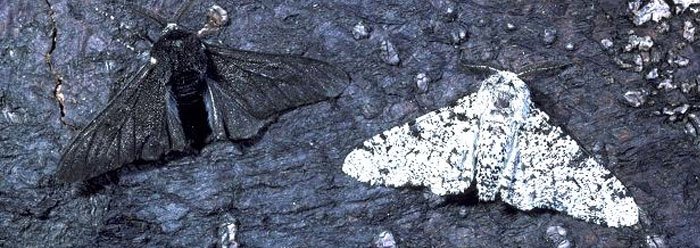
The trees these moths used to live on were white, but have been covered in soot from coal factories. Which moth will be more successful in this environment?
a)
Dark moth
b)
Light moth
c)
Both will be equally successful
d)
Neither will be successful
51.
Since the 1800s humans have stopped burning coal, and the trees have returned to their original color. Which moth will be more successful in this environment?
a)
Dark moth
b)
Light moth
c)
Both will be equally successful
d)
Neither will be successful
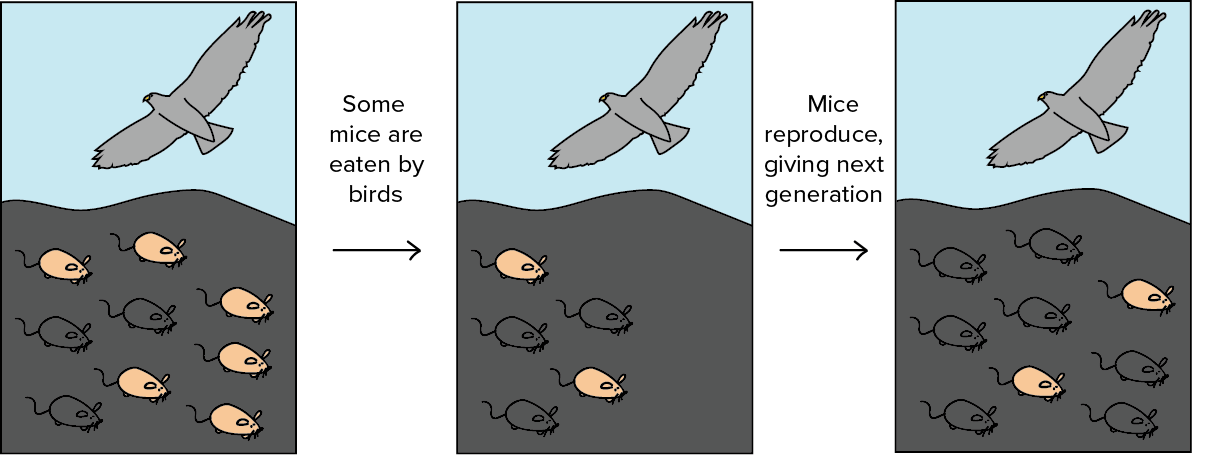
52.
What process is being shown in this image?
a)
Variation
b)
Natural Selection
c)
Selective Breeding
d)
Homeostasis
53.
Why is the mouse population changing over time?
a)
The light mice can reproduce more successfully than the dark mice
b)
The hawks eat more dark mice than light mice because the dark mice taste better
c)
The hawks eat more light mice than dark mice because they can see the light mice more easily
d)
The hawks eat more dark mice than light mice because they can see the dark mice more easily
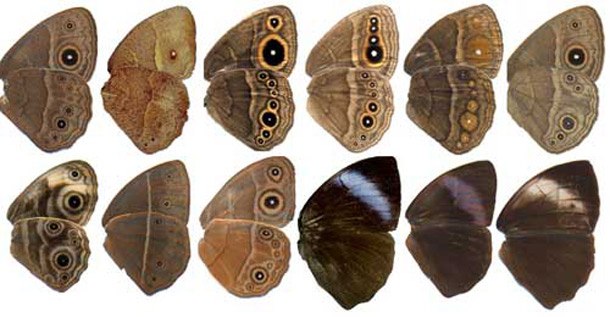
54.
These moths are all the same species. The differences between their wings is an example of ________________
a)
Natural Selection
b)
Variation
c)
Homeostasis
d)
Extinction
55.

Selective breeding is where ___________ decides which traits should be passed on

a)

Nature

b)

A human

c)

Ms. Ross

d)

The Illuminati

56.

Natural selection is where ___________ decides which traits should be passed on

a)

Nature

b)

A human

c)

Ms. Ross

d)

The Illuminati

57.

The more genetic variation a population has,

the more likely it is for some individuals to

a)

evolve

b)

migrate

c)

survive

d)

mutate

58.
Which of the following is a term for a group of similar organisms that can reproduce fertile offspring?
a)
individual
b)
population
c)
species
d)
fossil
59.
In natural selection, the selective agent is the
a)
humans
b)
mutations
c)
breeders
d)
environment
60.

Which of the following describes natural selection?

a)

it acts on genetic material directly

b)

it acts on existing physical traits

c)

it forms new traits

d)

it forms new genetic material

61.

What is suggested by the anatomical similarity of different species of vertebrates?

a)

no evolutionary relationships between the groups

b)

recent common ancestry

c)

similar environments in the past

d)

evolution from a distant common ancestor

62.
Some organisms that share a common ancestor have features that have different functions, but similar structures.  These are known as
a)
vestigial structures
b)
analogous structures
c)
homologous structures
d)
fossil structures
63.
Two organisms that are closely related would have
a)
very similar DNA sequence
b)
exactly the same DNA sequences
c)
no proteins in common
d)
completely different DNA sequence
64.
protein sequences in one organism that resemble those of another suggest a 
a)
coincidence
b)
lack of evolutionary relationship
c)
great number of mutations
d)
shared ancestry
65.

Which of the following is an example of speciation?

a)

when two species can interbreed and create infertile offspring

b)

isolation that affects mating behaviors

c)

timing of mating that prevents normal sexual selection

d)

divergence of two or more species from an existing one

66.
asexual reproduction produces offspring with
a)
half of a single parent's genes
b)
the same genes as the parent
c)
a mix of genes from two parents
d)
lots of genetic variation
67.
Natural selection results in change over time by acting on traits that are
a)
heritable
b)
new
c)
mutated 
d)
better than the best
68.
The white feathers of a snowy owl allow it to blend in with its environment during the winter months (snow). This is an example of ________________
a)
Species
b)
Environmental Change
c)
Adaptation
d)
Variation
69.
Which of the following statements best explains why some mosquitoes survived after the first spraying?
a)
Some mosquitoes had a genetic mutation that made them resistant to the insecticide
b)
A.  All mosquitoes had a genetic mutation that made them resistant to the insecticide
c)
A.  None of the mosquitoes had a genetic mutation that made them resistant to the pesticide
70.
The similarities of the bones in the diagram provide evidence that---
a)
The organisms shown lived in the same natural envionrment
b)
The organisms shown may have developed from a common ancestor
c)
The organisms shown have the same genetic diseases
d)
All vertebrate species have identical forelimbs
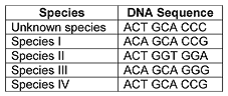
71.
According to this data, the unknown bacterial species is most closely related to: 
a)
Species I
b)
Species II
c)
Species III
d)
Species IV
72.

A structure in an organism that has lost all or most of its original function in the course of evolution, such as human appendixes.

a)

homologous structures

b)

analogous structures

c)

vestigial structures

73.

Structures that have similar features such as bone types and locations are called due to common ancestry are called

a)

homologous structures

b)

analogous structures

c)

vestigial structures

74.
The diagram shows fossils in different rock layers. Which of these statements about the age of these fossils is most likely correct?
a)
Fossil A and C are the same age
b)
Fossil B is older than fossil C
c)
Fossils A is older than fossil B
d)
Fossil D is older than fossil C
75.
How do fossils provide evidence that evolution has happened on Earth?
a)
Fossils show how the sizes of certain animals has changed drastically over millions of years
b)
Fossils show that some species have gone extinct
c)
Fossils show how life forms present today are different than those from the past
d)
Different sedimentary rock layers provide evidence for how the environment has changed over time
76.
According to the diagram, which organism is older: the ammonite or the coral?
a)
ammonite
b)
coral
77.
Study of embryos of various organisms to show a common ancestor because of similarities in development
a)
natural selection
b)
embryology
c)
speciation
d)
evolution
78.
What does Darwin's theory of evolution suggest?
a)
species change over time
b)
extinct species are not related to living species
c)
different species can interbreed
d)
animals that look alike are most closely related
79.
Which best describes these fossils?
a)
The oldest fossils can be found on the lower layers
b)
The oldest fossils can be found at the top layers
c)
The youngest fossils are always found on the bottom layers
d)
You can not tell the age of any of these fossils
80.

the formation of new and distinct species in the course of evolution.

a)

speciation

b)

special

c)

adaptation

81.

Darwin proposed organisms descended from

a)

apes

b)

bacteria

c)

common ancestors

d)

other organisms

82.

What is the main cause of speciation?

a)

adaptation

b)

natural selection

c)

isolation

83.
What is a species? 
a)
A group of organisms that can mate with each other and produce fertile offspring. 
b)
A group of organisms that can mate and produce offspring even if those offspring are infertile.
c)
A group of organisms that genetically are very different from each other. 
d)
Indivual organisms that live in the same environment. 
84.
When has speciation occurred?
a)
When populations no longer look the same
b)
When populations no longer have the same frequency of alleles
c)
When populations are living in different environments
d)
When populations can no longer interbreed
85.
When a population becomes divided by an event such as a new river forming, ____________ has occurred.
a)
Differentiation 
b)
Isolation
c)
Adaptation
d)
Separation
86.

How are species constantly changing and evolving? Choose all that apply

a)

sexual reproduction

b)

mutations

c)

environmental pressures

d)

resource limitations

87.
The separation of a group of individuals from the rest of the population is referred to as 
a)
genetic drift
b)
natural selection
c)
geographic isolation
d)
survival of the fittest
88.

Which of the following is required for a population to diverge into two separate species?

a)

The two populations must have evolved different physical appearances.

b)

The two populations must have mutated at least 10 times.

c)

The two populations must have become reproductively isolated.

d)

The two populations must have evolved analogous structures.

89.

Which best describes punctuated equilibrium?

a)

Speciation occurs due to natural selection

b)

Speciation occurs due to isolation

c)

Speciation occurs slowly in geologic time, followed by long periods with very fast evolutionary change.

d)

Speciation occurs suddenly and rapidly in geologic time, followed by long periods with little evolutionary change.

90.

The process by which one species or small group of species evolves into several different forms that live in different ways is called...

a)

adaptive radiation

b)

co-evolution

c)

convergent evolution

d)

phyletic speciation

91.

Slow and steady change of biological species.

a)

Stasis

b)

Co-evolution

c)

Punctuated equilibrium

d)

Convergent evolution

e)

Gradualism

92.

Biological species stay the same for long periods of time.

a)

Stasis

b)

Co-evolution

c)

Punctuated equilibrium

d)

Convergent evolution

e)

Gradualism

93.

Rapid change of biological species following a long period of staying the same.

a)

Stasis

b)

Co-evolution

c)

Punctuated equilibrium

d)

Convergent evolution

e)

Gradualism

94.

What is a square called that we use to sample populations?

a)

grid

b)

quadrat

c)

cube

d)

tricep

e)

quarter

95.

What type of population would you measure using a quadrat?

a)
b)
c)
d)
96.

Which organism can be measured with a quadrat?

a)

lion

b)

flies

c)

rat

d)

dandelion plants

e)

fish

97.

The deciduous forest ecosystem can sustain a whitetail deer population

of only 100 animals because the only source of fresh water in the area is

a small stream fed by rainwater. Which of the following describes the

water supply in this scenario?

a)

unlimited resource

b)

biotic limiting factor

c)

abiotic limiting factor

d)

exponential resource

98.

How can a representative sample of the plant species growing in a field be obtained?

a)

By randomly placing a quadrat at many different locations around the field

b)

By randomly placing many quadrats in one corner of the field

c)

By placing one quadrat at a random location in the field

99.
A rabbit and a grasshopper both eat the same kind of grass for food.
a)
Parasitism
b)
Predation
c)
Interspecific competition
d)
Intraspecific competition
100.
Two crows fight for living space in the same tree.
a)
Intraspecific competition
b)
Interspecific competition
c)
Predation
d)
Mutualism