
NEW
Font size
S
M
L
XL
 Worksheets
Plant Life
Total questions: 70
Worksheet time: 52mins
Name
Class
Date
1.
Plants need the following:
a)
air, water, space, sunlight
b)
air, water, oxygen, space
2.
Which part of the plant makes the food?
a)
roots
b)
stem
c)
leaf
d)
flower
3.
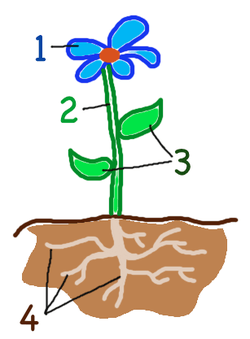
What part of the plant is #1?
a)
flower
b)
stem
c)
root
d)
leaf
4.
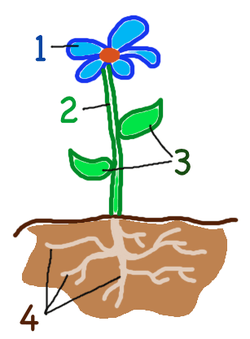
What part of the plant is #2?
a)
leaf
b)
flower
c)
stem
d)
root
5.
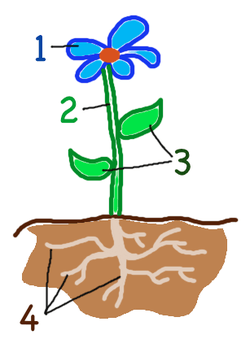
What part of the plant is #3?
a)
leaf
b)
root
c)
flower
d)
stem
6.
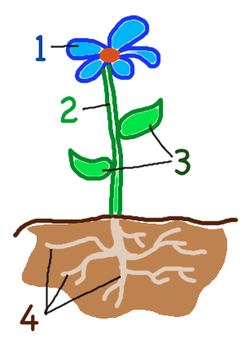
What part of the plant is #4?
a)
leaf
b)
flower
c)
stem
d)
root
7.
The part of the plant that holds the plant in place and absorbs water and minerals from the soil.
a)
stem
b)
roots
c)
leaves
8.
This part of the plant acts like an "elevator" carrying nutrients to the plant.
a)
roots
b)
stem
c)
leaves
d)
flower
9.
Synonym for not active.
a)
dormant
b)
sterile
c)
spry
d)
mobile
10.
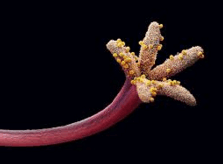
The part of the flower on which the pollen grains land.
a)
pistil
b)
stamen
c)
style
d)
stigma
11.
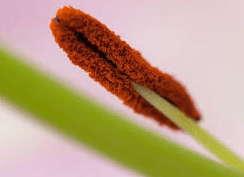
The part of a flower that produces the male reproductive cells.
a)
anther
b)
style
c)
stigma
d)
filament
12.
Brightly colored parts of flowers that attract insects.
a)
petals
b)
pistils
c)
stamen
d)
filaments
13.

The stalk connecting the ovaries and stigmas.
a)
filament
b)
pistil
c)
style
d)
anther
14.
The transfer of pollen, containing the sperm cells, to the female part of the flower.
a)
seed disperal
b)
pollination
c)
germination
d)
fertilization
15.

When a seed sprouts and begins the early growth of a young plant.
a)
germination
b)
pollination
c)
seed dispersal
d)
fertilization
16.
Occurs after the pollen reaches the eggs.
a)
pollination
b)
germination
c)
fertilization
d)
seed dispersal
17.

This is the top part of the pistil of a flower which receives the pollen grains; germination happens here.
a)
petal
b)
sepal
c)
filament
d)
stigma
18.

This is the male part of the flower; it makes pollen.
a)
filament
b)
ovary
c)
sepal
d)
anther
19.

These are found at the bottom of the pistil of a flower; they are tiny egg cells that will become seeds.
a)
ovaries
b)
ovules
c)
anthers
d)
sepals
20.

This is the stalk that holds the anther.
a)
stamen
b)
stigma
c)
filament
d)
pistil
21.
Ovule
a)
The female reproductive cell which will become a seed when fertilized
b)
the female reproductive organ; contains ovules; will develop into a fruit after pollination
c)
a thin stalk that holds the anthe
d)
located at the top of the carpel; receives the pollen during fertilization
22.
Roots
a)
absorbs water and nutrients from the soil, anchors plants in the ground, provides support for the plant
b)
stem the main trunk of a plant; carries water and nutrients; supports leaves, flowers, and fruit; may store food
23.
phloem
a)
part of a plant's vascular system that moves water and minerals from the roots to the shoots
b)
layer between the xylem and phloem that produces new cells for both
c)
tiny openings in the epidermis of a leaf that regulate the amount of water and gasses that enter and leave the plant
d)
part of a plant's vascular system that moves food to all parts of a plant
24.
stem
a)
the female reproductive structure of a flower
b)
the main trunk of a plant; carries water and nutrients; supports leaves, flowers, and fruit; may store food
c)
a tube on top of the ovary; transfers pollen from the stigma to the ovary
25.
Xylem
a)
part of a plant's vascular system that moves water and minerals from the roots to the shoots
b)
contains pollen; the male reproductive cell
26.
Stomata
a)
tiny openings in the epidermis of a leaf that regulate the amount of water and gasses that enter and leave the plant
b)
leaves that make up the outer ring of flower parts; protect and cover the flower while it is still a bud
27.
Stamen
a)
located at the top of the carpel; receives the pollen during fertilization
b)
male reproductive structure of a flower; consists of anthers and filiments
28.
Anther
a)
contains pollen; the male reproductive cell
b)
contains bees; the male reproductive cell
c)
contains flowers; the male reproductive cell
d)
contains seeds; the male reproductive cell
29.
Filament
a)
a thin stalk that holds the anther
b)
a thick stalk that holds the anther
30.
Pistil
a)
the female reproductive structure of a flower
b)
the female reproductive structure of a plant
c)
the female reproductive structure of a seed
31.
The Stamen, Anther, and Filaments are all female parts of a flower.
a)
True
b)
False
32.
Where are seeds made?
a)
Sepal
b)
Pistil
c)
Ovary
d)
Stigma
33.
Pick the female part...
a)
Stigma
b)
Petal
c)
Stamen
d)
Pollen Grains
34.

What is #8 pointing to?
a)
petal
b)
stamen
c)
pistil
d)
ovary
35.
The male part of the flower is known as the _____.
a)
stamen
b)
pistil
c)
ovary
d)
petal
36.
The female part of the flower is known as the ____.
a)
stamen
b)
anther
c)
filament
d)
pistil
37.

What is #2 pointing to?
a)
anther
b)
filament
c)
ovary
d)
style
38.

What is #3 pointing to?
a)
stigma
b)
filament
c)
ovary
d)
anther
39.

What is #5 pointing to?
a)
anther
b)
filament
c)
stigma
d)
style
40.

What is #6 pointing to?
a)
stigma
b)
style
c)
ovary
d)
petal
41.

What is #7 pointing to?
a)
anther
b)
ovary
c)
ovule
d)
petal
42.
Is the Pistil a male or female part of a plant?
a)
Male
b)
Female
43.

Name part C.
a)
anther
b)
style
c)
stigma
d)
ovary
44.
Is made up of the stigma, style and ovary.
a)
stamen
b)
petals
c)
pistil
d)
roots
45.
Is made up of the anther and filament.
a)
stamen
b)
pistil
c)
sepal
d)
petals
46.

What is #2 pointing to?
a)
anther
b)
filament
c)
ovary
d)
style
47.

What is #5 pointing to?
a)
anther
b)
filament
c)
stigma
d)
style
48.
The stigma is part of the ---------
a)
female
b)
male
c)
both
d)
neither
49.
The pistil is a ______________ part
a)
female
b)
male
c)
both
d)
neither
50.
Growth of a plant in response to an external stimulus, such as light
a)
hormone
b)
tropism
c)
phototropism
d)
stimulus
51.
The change in direction of plant growth in response to gravity
a)
phototropism
b)
stimulus
c)
gravitropism
d)
tropism
52.
change in the direction of plant growth in response to light
a)
growth
b)
gravitropism
c)
tropism
d)
phototropism
53.
anything that causes a reaction or change in an organism
a)
hormone
b)
carbon dioxide
c)
stimulus
d)
chlorophyl
54.
process of increasing in size
a)
development
b)
tropism
c)
stimulus
d)
growth
55.
If a plant gets light from only one direction the shoots will.....
a)
grow straight up
b)
grow down
c)
grow toward the light source
d)
grow faster
56.

This picture would represent which type of tropism?
a)
Phototropism
b)
Geotropism
c)
Hydrotropism
d)
Thigmotropism
57.

What type of tropism response to touch?
a)
Geotropism
b)
Phototropism
c)
Thigmotropism
d)
Hydrotropism
58.
The root of a plant growing down.
a)
Positive Gravitropism
b)
Negative Gravitropism
c)
Thigmotropism
d)
Hydrotropism
59.
The shoot of a plant growing up.
a)
Positive Gravitropism
b)
Negative Gravitropism
c)
Thigmotropism
d)
Hydrotropism
60.
When the plant grows toward the stimuli
a)
Positive
b)
Negative
61.
When the plant grows away from the stimuli
a)
Positive
b)
Negative
62.
When the plant responds to water
a)
Phototropism
b)
Gravitropism
c)
Hydrotropism
d)
Thigmotropism
63.
Changes in an organisms environment that cause a response
a)
Tropism
b)
Hormone
c)
Stimuli
d)
Response
64.
What term refers to a plant growing or moving away from a stimulus?
a)
Touch
b)
Tropism
c)
Dormancy
d)
Development
65.

Which of the following responses is a plant growing toward or leaning toward touch?
a)
thigmotropism
b)
hydrotropism
c)
phototropism
d)
gravitropism
66.
Seasonal changes bring about scenes like this one. Plant cells respond to changes in _________________ and as a result, photosynthesis slows and leaves change color.
a)
day length and available oxygen
b)
carbon dioxide and glucose levels
c)
light intensity and temperature change
d)
available oxygen and temperature change
67.
The days are getting shorter and colder. These trees are responding to the change. Their leaves change color and will soon fall off. Losing leaves during the winter is the response to the external environment called
a)
dormancy
b)
hibernation
c)
hydrotropism
d)
phototropism
68.
Mr. Walker plants a new plant next to a tall tree in his yard. It is partly in the sun, but is mostly in the shade. He notices that it is growing with all of its leaves on one side. Why is the plant growing this way?
a)
It's dying
b)
It's trying to get sunlight
c)
It's trying to stay in the shade
d)
It wants to be closer to the tree
69.
What tissue transports water from the roots to the rest of the plant?
a)
the leaves
b)
phloem
c)
xylem
d)
cambium
70.
What part of the plant makes seeds?
a)
roots
b)
leaves
c)
stem
d)
flowers
Reset

