Wayground logo

Free Printable Worksheets

Font size

S
M
L
XL
Worksheets

Unit 2 Biology

Total questions: 103

Worksheet time: 2hrs 1mins

Name
Class
Date
1.
How do Amphibians breath?
a)
Gills
b)
Blow Hole
c)
Gills and Lungs
d)
Lungs
2.
Do fish lay eggs or give birth?
a)
Give Birth
b)
Lay Eggs
3.
What is a vertabrate?
a)
An animal that has a spinal cord or backbone
b)
An animal that has lungs
c)
A human that can play Soccer
d)
An animal that has bones
4.
What is a invertabrate?
a)
An animal lacking a backbone
b)
An animal that has a spinal cord
c)
A person that has a jaw
d)
An animal or person that has lungs
5.
Body covering of a mammal?
a)
Fur
b)
Scales
c)
Fur and skin
d)
Skin and Scales
6.
Where does the energy from an ecosystem come from?
a)
Trees
b)
Sun
c)
Plants
d)
Water
7.
Are Amphibians cold or warm bloddedd
a)
Cold
b)
Warm
8.
What does cold blooded mean?
a)
They are always cold blooded
b)
They switch there blood temperature in different seasons
c)
Is warm blooded
d)
Has no blood
9.
How many types of vertabrates are there?
a)
1738 
b)
6
c)
21
d)
5
10.
Which of these animals have a back bone or spinal cord?
a)
Scorpions
b)
Snakes
c)
Jelly Fish
d)
Krill
11.
Which of these animals don't have a back bone or spinal cord?
a)
Platypus 
b)
Fish
c)
Sea Cucumbers
d)
snake
12.
Which of the following is a physical adaptation for the underlined animal?
a)
A snake unhinges its jaw to eat a rabbit it just caught.
b)
A hognose snake rolls over, slows its breathing, and hangs its tongue out to pretend to be dead.
c)
A herd of buffalo encircle their young to protect them from a pack of wolves.
d)
A dung beetle rolls a piece of dung across the desert.
13.
Which of the following is NOT a behaviour?
a)
Migration
b)
Hibernation
c)
Extinction
14.
True or false: When an animal hibernates, its body temperature drops and its heartbeat and breathing slows down.
a)
True
b)
False
15.
Polar bears have compact ears, a small tail, and thick fur to keep themselves warm. Are these examples of physical (structural) or behavioural adaptations?
a)
Physical
b)
Behavioural
16.
The goal of every species on earth is...
a)
to survive and reproduce 
b)
divide and conquer 
c)
survive and conquer 
d)
reproduce and die 
17.
A trait or behavior that helps organisms survive and reproduce 
a)
multiplication 
b)
revolt
c)
adaptation 
d)
populate 
18.
What is the scientific term for an animal that is eaten by another animal?
a)
predator
b)
dinner
c)
prey
d)
stupid
19.
Lions often hide in the tall grass while stalking their prey.  This is an example of...
a)
camouflage
b)
warning coloration
c)
mimicry
d)
hibernation
20.
Which type of behavior is most likely to occur due to a seasonal change stimulus?
a)
migration
b)
estivation
c)
reproduction
d)
social grooming
21.
An octopus can change its color to match its surroundings. This is an example of which type of behavior?
a)
camouflage
b)
mimicry
c)
cooperative behavior
d)
estivation
22.
Which of these choices is an example of something that is needed for survival?
a)
Adaptation
b)
Food 
c)
Water
d)
All of the above
23.
Jessica’s dog Spike likes to dig holes and chase other dogs. He barks when a stranger approaches. Spike comes to Jessica whenever she calls him.Which is a learned behavior of Spike’s?
a)
barking at strangers
b)
digging holes
c)
chasing other dogs
d)
coming when called
24.
What is the movement of animals from one place to another as a response to seasonal changes?
a)
migration
b)
hibernation
c)
courtship
d)
defense
25.
Which of these is an instinct?
a)
a chimpanzee learning to use sticks to find bugs in the dirt
b)
Teaching a dog to roll over by using treats
c)
a salmon swimming upstream to lay its eggs
d)
a child learning that fire will cause pain
26.
What is the scientific term for an animal that is eaten by another animal?
a)
predator
b)
dinner
c)
prey
d)
stupid
27.
The ears of this fox are an example of...
a)
A behavioral adaptation
b)
Poor breeding
c)
A physical adaptation
d)
Plastic surgery gone horribly wrong
28.
An endangered species is
a)
One whose numbers are so small that it is at risk of extinction
b)
One whose not been spotted after many years.
c)
One whose numbers are abundant.
29.
Which of these describes a species that has become extinct?
a)
fewer members of the species are dying than being born
b)
more members of the species are dying than being born
c)
very few members of a species are alive
d)
all members of a species have died
30.
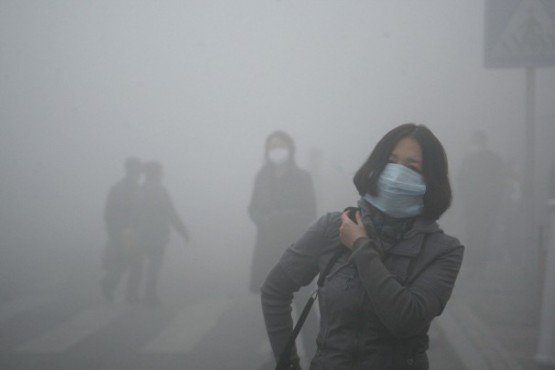
This picture shows people walking through a highly-polluted city in China. From what type of pollution are they protecting themselves based on what they are wearing?

a)
air pollution
b)
water pollution
c)
land pollution
d)
noise pollution
31.
What is a Punnett Square?
a)
A math problem 
b)
A probability tool used in genetics 
c)
A box with letters 
d)
A form of a gene 
32.
What base pairs with Adenine (A)? 
a)
Thymine (T) 
b)
Guanine (G) 
c)
Cytosine (C) 
d)
Uracil (U) 
33.
What are the parts of a nucleotide? 
a)
DNA, RNA, mRNA 
b)
allele, genes
c)
amino acid, protein, ribosome 
d)
sugar, phosphate, base 
34.
What is a genotype? 
a)
The physical appearance of an organism
b)
The genetic code of the trait 
c)
Two different alleles for a specific trait 
d)
Two of the same alleles for a specific trait 
35.
Which of the following is an example of an homozygous gene? 
a)
Tt
b)
Pp
c)
BB
d)
Rr
36.
How is genetic knowledge used? 
a)
Solve crimes, find family members 
b)
Fingerprinting, genetic engineering 
c)
DNA databases. solve crimes 
d)
Ancestry.com, fingerprinting 
37.
What base pairs with Cytosine (C)? 
a)
Thymine (T) 
b)
Guanine (G) 
c)
Adenine (A) 
d)
Uracil (U) 
38.
What does the structure of DNA look like? 
a)
A string/strand 
b)
Double helix 
c)
Single Helix 
d)
A bundle 
39.
Which of these is a subunit of DNA?
a)
RNA
b)
trait
c)
nucleotide
d)
ribosome
40.
What makes up a nucleotide?
a)
Sugar, phosphate & a base
b)
Sugar, phosphate  & a protein
c)
Sugar, ribosome & a protein
d)
Chromosome, phosphate & base
41.
What does DNA look like?
a)
A ball
b)
A straight line
c)
Links in a chain
d)
A twisted ladder
42.
What is a string of nucleotides called?
a)
A gene
b)
A ribosome
c)
Messenger RNA
d)
A chromosome
43.
What does each gene have instructions for making?
a)
A ribosome
b)
Sugar
c)
RNA
d)
A protein
44.
Each set of three bases is a code for ____
a)
a specific chromosome
b)
a specific ribosome
c)
a specific protein
d)
a specific amino acid
45.
Deoxyribonucleic acid
a)
LOL
b)
ATP
c)
RNA
d)
DNA
46.
Changes in DNA that can cause problems
a)
amino acids
b)
nucleotide
c)
transfer RNA
d)
mutation
47.
Complete the sequence GGCTATTG
a)
GGATAAG
b)
CCTAAAC
c)
CCGATAAC
d)
CCATACC
48.
Pairs of bases match up because they are ___ to each other
a)
guanine
b)
replicate
c)
supplementary
d)
complementary
49.
Using DNA to identify who committed a crime is ___
a)
mutagen
b)
Genetic engineering 
c)
DNA fingerprinting
d)
replication
50.
The stage at which a DNA molecule is split down the middle
a)
Chromosomes
b)
Mutagen
c)
Replication
d)
Thymine
51.
the material made of amino acids that causes most of the differences we see in organisms
a)
protein
b)
cytoplasm
c)
tRNA
d)
mRNA
52.
a)

Cell B contains the same genetic information that cells A and C contain

b)

Cell C has DNA that is only 50% identical to Cell B

c)

Cell A has DNA that is only 75% identical to Cell B

d)

Cells A, B, and C contain completely different genetic information

53.

Which of the following is NOT a purpose of mitosis?

a)

growth

b)

repair

c)

making egg and sperm cells

d)

replacing dead/dying cells

54.

What are the “strings” that pull matching chromosomes away from each other called?

a)

cell ropes

b)

DNA

c)

endoplasmic reticulum

d)

spindle fibers

55.

A cell contains 20 chromosomes. How many will there be in each of the 2 cells after mitosis?

a)

10

b)

40

c)

20

d)

80

56.
the sequence of growth and division of a cell
a)
cell cycle
b)
mitosis
c)
anaphase
d)
cancer
57.
The process by which the nuclear material is divided equally between two new cells
a)
mitosis
b)
cancer
c)
spindle
d)
centromere
58.
the uncontrolled division of cells that results in malignant growth 
a)
tissues
b)
cancer
c)
mitosis
d)
anaphase
59.
What is an invasive species?
a)
A native (naturally found) species which are added to an area. 
b)
A non-native (not naturally found) species added to an area. 
c)
A keystone species in an environment
d)
none of the above
60.
An invasive species can be natural (as in a result or imigration due to habitat loss) or can be a result of human activity. True or false?
a)
True
b)
False
61.
Invasive species alter the ecosystem by a___________in number quickly,this leads to _____ food for the native  species. 
a)
increasing  less
b)
decline  decreasing
62.

Which pea pod color is dominant?

a)

green

b)

yellow

63.

True or False: The yellow pea pod color is recessive to green.

a)

True

b)

False

64.

Which of the following colors does "Aa" indicate that the individual's pea pod will be?

a)

Yellow, because it has a little "a"

b)

Green, because it has a big "A"

c)

Green, because it has a little "A"

d)

Yellow, because it has a big "A"

65.

What is the correct code that would fill the bottom right quadrant in place of the question mark?

a)

AA

b)

Aa

c)

aa

66.

How many of the offspring of the 2 parent pea plants have a green pod color?

a)

1 out of 4

b)

2 out of 4

c)

3 out of 4

d)

4 out of 4

67.

What is the probability of these two pea plants producing offspring with yellow pea pods?

a)

4 out of 4 offspring will have yellow pea pods

b)

3 out of 4 offspring will have yellow pea pods

c)

1 out of 4 offspring will have yellow pea pods

68.
A man, who has red-green colorblindness, and his wife, who is a carrier for colorblindness, have a colorblind son. What is the probability that their next son will also be colorblind?
a)
0%
b)
25%
c)
50%
d)
100%
69.
A woman heterozygous for A blood marries a man heterozygous for B blood. What is the probability that they will produce offspring with AB blood?
a)
0%
b)
25%
c)
50%
d)
75%
70.
T - tall and t = short
In the punnett square below, what belongs in the missing square
a)
tt
b)
Tt
c)
Bb
d)
TT
71.
What is the genotypic ratio here
a)
TT = 25% Tt= 50% tt=25%
b)
all tall
c)
TT= 75% tt = 25%
d)
Tt = 100%
72.
G = green, g = yellow
The genotype for a yellow plant is...
a)
GG
b)
Gg
c)
gg
d)
all of the choices result in yellow
73.
What allele combination should go in the missing box?
a)
AA
b)
Aa
c)
aa
d)
none of these
74.
An allele that is hidden when the dominant allele is present.
a)
Dominant Allele
b)
Gene
c)
Recessive Allele
d)
Probability
75.
If B = brown hair and b = blonde hair, what is the probability of brown hair?
a)
25%
b)
50%
c)
0%
d)
75%
76.
Dominant alleles are represented by a:
a)
Male gene
b)
lowercase letter
c)
recessive trait
d)
capital letter
77.
Which of the following is a phenotype?
a)
Aa
b)
red hair
c)
heterozygous
d)
DNA
78.
How many boxes would say BB?
a)
1
b)
2
c)
4
d)
0
79.

Brown is dominant to green. What is the probability of these parents having green offspring?

a)

1/4

b)

2/4

c)

3/4

d)

4/4

80.
The dominant trait is
a)
yellow pea seeds
b)
green pea seeds
c)
there is no dominant seed
d)
Jolly green giant
81.
To express the recessive trait you must be
a)
homozygous dominant
b)
heterozygous
c)
alleleerific
d)
homozygous recessive
82.
To be a yellow seed genotype must be
a)
aa
b)
Aa
c)
AA
d)
AA or Aa
83.
A Punnet Square will 
a)
tell you exactly what your offspring will look like
b)
increase the chance you pass on recessive traits
c)
predict genotypes and phenotypes in offspring
d)
have no purpose but for Taylor to give us extra assignments
84.
Both parents in this Punnet square
a)
are homozygous dominant
b)
are homozygous recessive
c)
are heterozygous
d)
have blue eyes
85.
bb is a _________________ genotype
a)
Dominant
b)
Homozygous
c)
Genotype
d)
Phenotype
86.
Which of the following genotypes is heterozygous?
a)
Bb
b)
BB
c)
bb
d)
B
87.
Which of the following is homozygous recessive?
a)
rr
b)
AA
c)
TT
d)
Ff
88.
This image shows a...
a)
Punnett Square
b)
Phenotype
c)
Genotype
d)
Dominant allele
89.
In some animals, brown eyes (B) are dominant over blue eyes (b). Which of these genotypes will complete the Punnett Square to the right?
a)
B
b)
bb
c)
Bb
d)
BB
90.
Natural selection is:
a)
a significant number of individuals in a population die or are otherwise prevented from breeding.
b)
the process whereby organisms better adapted to their environment tend to survive and produce more offspring.
c)
a branch of geography that studies the past and present distribution of the world's many species.
d)
the total number of genetic characteristics in the genetic makeup of a species.
91.
What is the traditional way of creating designer babies?
a)
IVF
b)
ISH
c)
PGD
d)
CRISPR
92.
Biotech foods look and taste the same as traditional foods and crops. The only difference is that biotech food has:
a)
Fewer calories.
b)
The addition of specific minerals.
c)
One or two genes with traits that improve something about the plant.
d)
A better chance of surviving a frost during the growing season.
93.
What is plant biotechnology?
a)
Adding chemicals to foods to preserve them.
b)
Making synthetic foods using artificial, manmade proteins.
c)
Inserting a gene with a beneficial trait into a plant cell.
d)
Taking immature plants and adding steroids to make them grow bigger and stronger.
94.
One benefit of plant biotechnology is:
a)
Is less expensive than traditional agricultural methods.
b)
Helps preserve the environment.
c)
Increases the income of farmers.
d)
Controls our nation?s obesity problem.
95.
What is Genetic Engineering?
a)
the manipulation of an organism’s genes
b)
a change in an organism's genes
c)
a random and abrupt disruption to DNA
d)
the manipulation of an organism's appearance
96.
Humans have experimented with genetic engineering ________.
a)
a long time
b)
only recently
c)
only in science fiction novels
97.
In this class, we will study what type of genetic engineering?
a)
Genetic Modification
b)
Genetic Duplication
c)
Recessive Breeding
d)
Selective Breeding
98.
What is selective breeding?
a)
A process in which mates pick which partner to have offspring with
b)
It is a process humans use to breed or reinforce desired traits into a particular organism.
c)
A process to get rid of beneficial traits
d)
A process to add harmful traits
99.
What is an example of selective breeding by farmers?
a)
Mating 2 small chickens to create more large chickens
b)
Mating 2 large chickens to create more large chickens
c)
Mating 2 large chickens to create more small chickens
d)
Using a machine to change the DNA of a chick
100.
Scientists and historians generally agree that humans began selective breeding because
a)
To find reliable, predictable sources of food
b)
To become better at science
c)
They were lazy
d)
They were going extinct from predators.
101.
All dogs today are ancestors of
a)
Wolves
b)
German Shepherds
c)
Cocker Spaniels
d)
Dingos
102.
What is one reason why people are against genetic engineering?
a)
There is a high risk of failure
b)
It has a 100% success rate
c)
People do not like dogs
103.
Based on the notes, how can technology help with genetic engineering?
a)
it can be used to add, or modify genes directly into living things.
b)
It can prevent disorders with a 100% success rate
c)
It can cause birth defects
d)
It has no ethical issues