
 Worksheets
7.L. LIFE SCIENCES
Total questions: 64
Worksheet time: 52mins
Name
Class
Date
1.
What systems brings in oxygen for your cells to use?
a)
reproductive system
b)
digestive system
c)
respiratory system
d)
endocrine system
2.
What body system includes the kidneys and bladder?
a)
circulatory system
b)
reproductive system
c)
digestive system
d)
urinary system
3.
The muscular organ that pumps blood through out your body is your _________
a)
diaphragm
b)
heart
c)
larynx
d)
pharynx
4.
Food is broken down to supply energy for your body in the ____________
a)
digestive system
b)
endocrine system
c)
excretory system
d)
reproductive system
5.
Your skin and hair are parts of your ___________
a)
endocrine system
b)
excretory system
c)
immune system
d)
integumentary system
6.
The body system that helps you heal is the _______________
a)
circulatory system
b)
immune system
c)
integumentary system
d)
respiratory system
7.
The body system you use for movement is the ____________
a)
muscular system
b)
nervous system
c)
respiratory system
d)
urinary system
8.
The system that controls your body's growth and responses is the __________
a)
immune system
b)
excretory system
c)
endocrine system
d)
integumentary system
9.
The system that removes waste from your body is the ____________
a)
digestive system
b)
endocrine system
c)
excretory stystem
d)
integumentary system
10.
What system allows motion in the body?
a)
Digestive System
b)
Stomach
c)
Musuclar System
d)
Veins
11.
Which body system transports oxygen and nutrients through out the body?
a)
Muscular System
b)
Nervous System
c)
Digestive System
d)
Circulatory System
12.
What system receives oxygen and gets rid of carbon dioxide?
a)
Heart
b)
Muscular System
c)
Veins
d)
Respiratory System
13.
What system breaks food down into energy for the body?
a)
Stomach
b)
Digestive System
c)
Respiratory system
d)
Lungs
14.
Which of the following is in the correct order from smallest to largest?
a)
tissue-organ-system-cell
b)
cell-organ-tissue-system
c)
System-tissue-cell-organ
d)
cell-tissue-organ-system
15.
How does the cardiovascular system and the respiratory system work together?
a)
The cardiovascular system transports oxygen around the body while the repiratory system gives the body oxygen
b)
The cardiovascular system makes cells while the respiratory system moves them where they are suppose to go.
c)
The cardiovascular system allows the body to have energy while the repiratory system makes cells
d)
The cardiovascular system transports nutrients around the body while the respiratory system brings oxygen into the body
16.
In what organelle is the genetic material found inside?
a)
Endoplasmic Reticulum
b)
Golgi Complex
c)
Nucleolus
d)
Nucleus
17.
What organelle is called the "powerhouse" of a cell?
a)
Endoplasmic Reticulum
b)
Nucleus
c)
Mitochondria
d)
Nucleolus
18.
What is the function of nucleus?
a)
Structure that organizes motion of chromosomes.
b)
Structure that contains DNA and directs the cell
c)
Membrane that surrounds and protects the cell
d)
Stack of membranes that packages chemicals
19.
Where does photosynthesis occur?
a)
mitochondria
b)
stomata
c)
xylem
d)
chloroplast
20.
What can only be found in plant cells?
a)
Cell membrane
b)
Vacuole
c)
Chloroplast
d)
Mitochondrion
21.
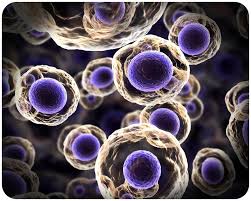
The two kinds of cells are Prokaryotes and Eukaryotes. How are they different?
a)
Prokaryotes have a nucleus.
b)
Eukaryotes have a nucleus.
c)
Prokaryotes are plant cells.
d)
There is no difference.
22.

What cell part is NOT found in all cells?
a)
Cell Wall
b)
Cell Membrane
c)
Cytoplasm
d)
Genetic Material
23.

Which part of the cell is often called "the brain of the cell"?
a)
nuclear membrane
b)
endoplasmic reticulum
c)
nucleus
d)
mitochondria
24.
Gives the cell a rigid, box-like shape; outside of the cell membrane; in plants.
a)
cytoplasm
b)
chromatin
c)
cell wall
d)
cell membrane
25.
Consists of a jellylike substance that contains many organelles.
a)
ribosomes
b)
cytoplasm
c)
chloroplasts
d)
cell wall
26.
Which organelle uses energy from sunlight to make sugar?
a)
mitochondria
b)
nucleus
c)
chloroplasts
d)
vacuoles
27.

Name this protist?
a)
Euglena
b)
Amoeba
c)
Paramecium
d)
Volvox
28.

Name this protist?
a)
Volvox
b)
Euglena
c)
Amoeba
d)
Paramecium
29.

Name this protist?
a)
Paramecium
b)
Amoeba
c)
Volvox
d)
Euglena
30.

Name this protist?
a)
Amoeba
b)
Euglena
c)
Paramecium
d)
Volvox
31.
Reproduction without the use of sex cells is called what?
a)
Sexual Repoduction
b)
Asexual Reporduction
32.

Fission, budding, and regeneration are all examples of what kind of reproduction?
a)
Asexual Reproduction
b)
Sexual Reproduction
33.

How does this protist move?
a)
Flagellum
b)
Cilia
c)
Pseudopods
34.

How does this protist move?
a)
Cilia
b)
Flagellum
c)
It just floats about
d)
Pseudopods
35.

A protist that can not make its own food is called what?
a)
Autotroph
b)
Heterotroph
36.

A protist that can make its own food is called what?
a)
Heterotroph
b)
Autotroph
37.
Which protist has an eyespot?
a)
Amoeba
b)
Volvox
c)
Euglena
d)
Paramecium
38.

Fine hairs that allow protist to move is called what?
a)
Pseudopods
b)
Euglena
c)
Flagella
d)
Cilia
39.

What are the finger like projections called?
a)
Flagella
b)
Cilia
c)
Pseudopods
d)
Veela
40.
Which protists are autotrophic?
a)
Euglena and Volvox
b)
Amoeba and Euglena
c)
Volvox and Amoeba
d)
Paramecium Only
41.
Which protists are heterotrophic?
a)
Amoeba and Volvox
b)
Euglena and Paramecium
c)
Paramecium and Ameoba
d)
Euglena and Volvox
42.

What type of reproduction is shown in this picture?
a)
Sexual
b)
Asexual
43.
Which of the following is true ALL organisms in the protist kingdom?
a)
They are multicellular
b)
They live in moist environments
c)
They move using cilia
d)
They move using flagella
44.
A pseudopod literally means...
a)
small hair
b)
long tail
c)
no nucleus
d)
false foot
45.
Aa, DD, bB, yy are all examples of
a)
genotypes
b)
phenotypes
46.
AA and Aa always show up as
a)
dominant
b)
recessive
47.
Which of the following genotypes is homozygous dominant?
a)
A
b)
Aa
c)
AA
d)
aa
48.
Which of the following genotypes is heterozygous?
a)
Bb
b)
BB
c)
bb
d)
B
49.
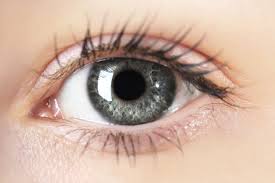
What you see, or the physical appearance.
a)
Genotype
b)
Phenotype
c)
Homozygous
d)
Heterozygous
50.
In a heterozygous genotype, the ___________ allele takes over in the phenotype.
a)
recessive
b)
dominant
c)
lower case letter
d)
both
51.
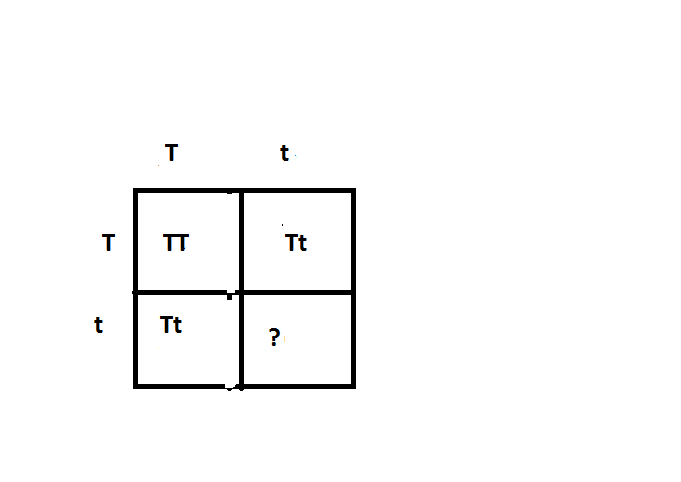
T - tall and t = short
In the punnett square below, what belongs in the missing square
In the punnett square below, what belongs in the missing square
a)
tt
b)
Tt
c)
Bb
d)
TT
52.
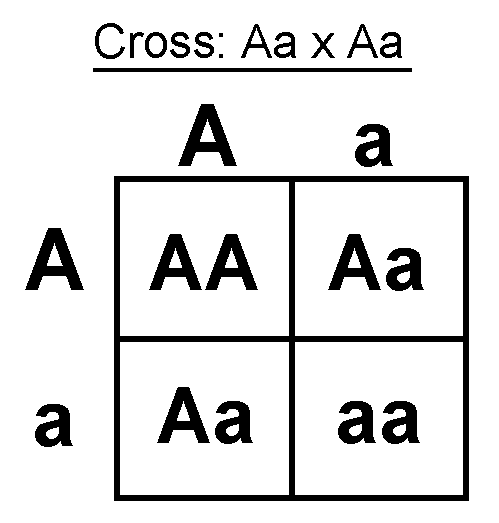
What is the phenotype of the offspring? (A-Brown hair; a-blond hair)
a)
50 % Brown Hair and 50% Blond Hair
b)
25 % Brown Hair and 75% Blond Hair
c)
75 % Brown Hair and 25% Blond Hair
d)
0% Brown Hair and 100% Blond Hair
53.
Two heterozygous red flower (white flowers are recessive) are crossed. What is the phenotype?
a)
75% red and 25% white
b)
25% red and 75% white
c)
100 White
d)
50% red 50% red
54.
What characteristic would a child NOT inherit from parents?
a)
freckles
b)
eye color
c)
hair style
d)
dimples
55.
Mitosis happens everywhere like in my _______. Meiosis only happens in my ________!
a)
toe; oh
b)
oh; toe
c)
eye; fly
d)
beyonce; beyonce
56.

Fruit fly body cells have 8 chromosomes. After mitosis, you would expect a resulting fruit fly daughter cell to have ...
a)
16 chromosomes.
b)
46 chromosomes.
c)
8 chromosomes.
d)
4 chromosomes.
57.

Structure (a) is a ____.
a)
chromosome
b)
chromatid
c)
centromere
58.

Name the phase:
a)
Anaphase
b)
Telophase
c)
Metaphase
d)
Prophase
59.

Name the phase:
a)
Prophase
b)
Metaphase
c)
Anaphase
d)
Telophase
60.

The stages of mitosis in order
a)
Metaphase, Anaphase, Prophase, Telophase
b)
Prophase, Anaphase, Metaphase, Telophase
c)
Prophase, Metaphase, Anaphase, Telophase
d)
Anaphase, Prophase, Telophase, Metaphase
61.
The cells produced via meiosis are called:
a)
sex cells
b)
somatic cells
c)
body cells
d)
skin cells
62.
This produces 2 identical cells.
a)
mitosis
b)
meiosis
63.
A human usually has xx amount of chromosomes.
a)
6
b)
22
c)
4
d)
46
64.
Which of these cells would be produced through meiosis?
a)
skin cells
b)
liver cells
c)
brain cells
d)
sperm cells
100 %

