Wayground logo

Free Printable Worksheets

Font size

S
M
L
XL
Worksheets

Ecosystems

Total questions: 50

Worksheet time: 6hrs 42mins

Name
Class
Date
1.

A system made up of organisms interacting with one another

a)

biology

b)

abiotic

c)

biotic

d)

ecosystem

2.
Organisms that make up the living part of an ecosystem.
a)
abiotic
b)
biotic factors
c)
ecology
d)
ecosystems
3.
Nonliving things found in an ecosystem.
a)
factories
b)
factor trees
c)
biotic factors
d)
abiotic factors
4.
The study of interactions in an ecosystem.
a)
ecology
b)
philosophy
c)
scientology
d)
biology
5.
A group of the same type of organisms living in the same place at the same time.
a)
threatened species
b)
populations
c)
community
d)
limiting factor
6.

All of the populations that live in one area together

a)

limiting factors

b)

populations

c)

community

d)

speed limit

7.
Something that limits the size  of a population.
a)
maxfactor
b)
factor tree
c)
the x factor
d)
limiting factor
8.
Which is a biotic factor?
a)
sunlight
b)
air 
c)
bacteria
d)
all of the above
9.
What is a example of a abiotic factor?
a)
Panda
b)
Turtle
c)
Butterfly
d)
weather
10.
Temperature, light, air, water, and soil are all  _____  parts of the environment
a)
alive
b)
biotic 
c)
abiotic
d)
living
11.
Predators is an example of what kind of factor.
a)
Biotic
b)
Abiotic
c)
living
d)
dead
12.
Which best explains why many kinds of plants and animals can live together in an ecosystem?
a)
The plants and animals are all part of a food chain and depend on each other to live.
b)
Plants and animals are interdependent of one another.
c)
One species may overpopulate, killing all plant life.
d)
Over population of a species results in a biodiversity.
13.
Which organism make their own food through the process of photosynthesis? 
a)
decomposer
b)
consumer
c)
herbivore
d)
producer 
14.
Which describes a decomposer?
a)
an organism that eats only plants
b)
an organism that makes its own food
c)
an organism that breaks down dead matter
d)
an organism that recieves energy from the sun
15.
What are interconnected food chains called?
a)
consumers
b)
predators
c)
food web
16.
If the population of prey increases, the population of predators will ________because of the availability of food.
a)
decrease
b)
stay the same
c)
increase
17.
Examples of how humans negatively affect local ecosystems are
a)
Building dams, deforestation (cutting down trees), adding point sources to nearby streams to allow for run-off, building roads and structures, and salting roads.
b)
Creating laws to prohibit fishing from local streams.
c)
Planting trees and other plants to attract native species.
d)
Removing non-native species from the environment.
18.
All food chains_____________________
a)
have more consumers than producers
b)
produce and use same amount of energy
c)
begin with a producer
d)
are unhealthy 
19.
How does energy enter an ecosystem? 
a)
sunlight
b)
soil 
c)
animals 
d)
invasive species 
20.
A lion, captures and eats other animals. What is he considered? 
a)
prey
b)
predator
c)
producer 
d)
healthy 
21.
Which organism do the owl and the weasel compete for in the food web?
a)
Hawk
b)
Spider
c)
Grasshopper
d)
Shrew
22.
A relationship between two organisms in which one organism benefits and the other is unharmed...
a)
Mutualism 
b)
Competition
c)
Parasitsm 
d)
Commensalism 
23.
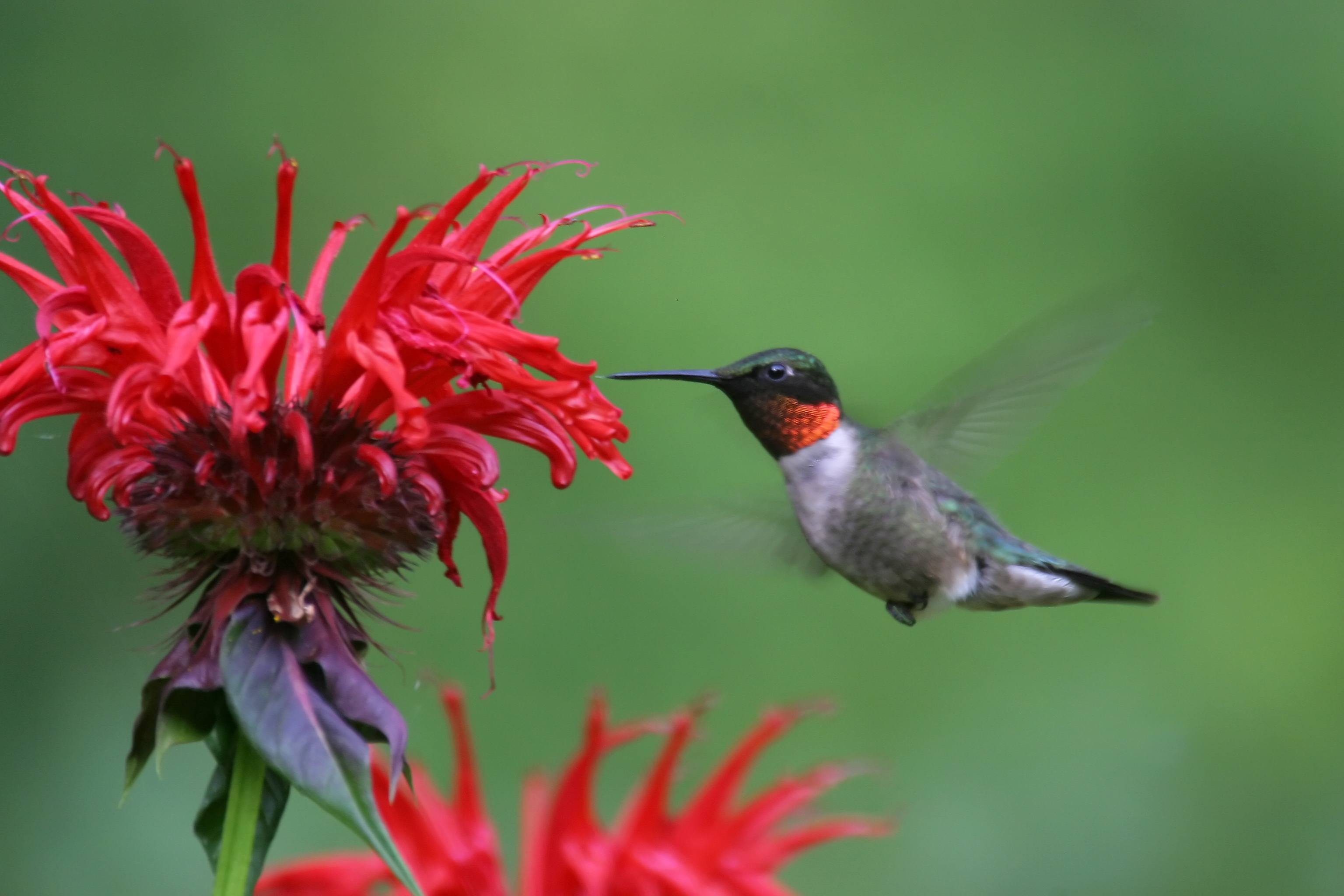
What type of symbiosis?  Hummingbirds feed on nectar from flowers.  The flowers are pollinated by hummingbirds as they move from flower to flower.
a)
commensalism
b)
mutualism
c)
parasitism
d)
predation
24.

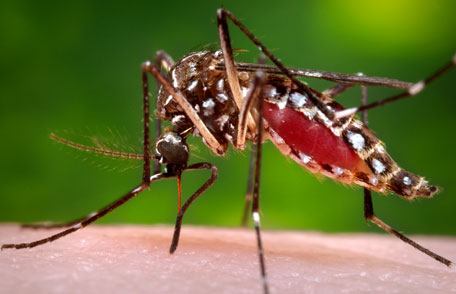
When a mosquito bites you, you are the __________ and the mosquito is the ____________.

a)

host, hostess

b)

ectoparasite, host

c)

host,ectoparasite

d)

prey, ectoparasite

25.
Mistletoe extracts water and nutrients from a spruce tree. The spruce tree is harmed. 
a)
parasitism
b)
commensalism
c)
mutualism
26.
Oxpeckers feed on the ticks found on a rhinoceros. The oxpeckers get a meal and the rhinoceros is helped by the removal of the ticks.
a)
parasitism
b)
commensalism
c)
mutualism
27.
The availability of shelter, food,water and space can change plant and animal survival. These are called
a)
multiplying factors
b)
competitive factors
c)
limiting factors
d)
survival factors
28.
Which organisms are in competition for the same food?
a)
fox and owl 
b)
spider and fly 
c)
rabbit and mouse
d)
deer and owl 
29.
In the desert, a bird builds its nest in a cactus to avoid predators.  This behavior does not hurt or help the cactus, but it helps the bird.  What type of relationship is this?
a)
Competition
b)
Parasitism
c)
Commensalism
d)
Mutualism
30.
An example of a physical adaptation is...
a)
a turtle hiding inside its shell
b)
The spikes on a porcupine fish
c)
a rabbit burrowing underground
d)
a viper biting when threatened
31.
Where does the energy start in this food chain?
a)
Plant
b)
Sun
c)
Deer
d)
Wolf
32.
An organism that gets energy from breaking down dead organisms, non-living material or waste
a)
producer
b)
consumer
c)
decomposer
d)
autotroph
33.
What is the role of decomposers in a food chain?
a)
Use sunlight to make food
b)
Eat other organisms to gain energy
c)
Make the food for the whole food chain
d)
Break down dead organisms and add nutrients to the soil
34.

What is adaptation?

a)

it is a place where things don't survive

b)

adaptation is the process by which living organism learns to survive and reproduce in its environment

c)

i have no idea

d)

it is the process by which we eat burgers and sleep

35.
If a disease destroying barley plants in a field swept through an ecosystem, what would happen to the barley eating bird population in the the field ?
a)
The bird population would stay the same
b)
The bird population would infinitely increase
c)
The bird population would decrease
36.

The number of individuals a habitat can sustain with the resources it has available

a)

Carrying capacity

b)

Limiting factors

c)

Resources

d)

Population

37.
If the carrying capacity of a predator decreases, what will happen to the carrying capacity of the prey?
a)
Will Increase
b)
Will Decrease
c)
Will stay the same
d)
Will fluctuate
38.
The parasitic wasp injects its larvae into caterpillars . Acid rain has destroyed the caterpillar population. What will happen to the wasp population?
a)
Stay the same
b)
Increase
c)
Decrease
39.
Any thing or organism that regulates the size of a population is known as __________.
a)
a limiting measure
b)
a limiting factor
c)
carrying capacity
d)
biodiversity
40.
Which of the following would INCREASE the carrying capacity of an ecosystem?
a)
increase in predators
b)
disease
c)
increase in available food
d)
drought
41.
Which organism would be least affected by removing the osprey?
a)
Large Piscivorous Fish
b)
Small Planktivorous Fish
c)
Herbivorous Ducks
d)
Sea Ducks
42.

How would a sudden increase in the cricket population effect the ecosystem?

a)

There would be a decrease in the small bird population.

b)

There would be a decrease in the grass/flowers population.

c)

There would be a decrease in the mice population.

d)

There would be an increase in the grass/flowers population.

43.

In this Food Web Pyramid Which type of consumer gets only 10% of the energy stored in plants?

a)

Herbivore

b)

Carnivore

c)

Omnivore

d)

Secondary Consumer

44.
If there is 1000 Kcal available in the producers in trophic level 1, how much energy is available in the herbivores in trophic level 2?
a)
10 Kcal
b)
1 Kcal
c)
100 Kcal
d)
1000 Kcal
45.
This biome is located close to the equator.  It is warm all year long and gets a lot of rain.  It contains more species than all other land biomes.
a)
Tropical Rainforest
b)
Deciduous Forest
c)
Grasslands
d)
Taiga
46.
This biome covers much of Canada and Russia.  It is cold and fairly dry.  Most of the trees in this biome have needles.
a)
Tropical Rainforest
b)
Deciduous Forest
c)
Grasslands 
d)
Taiga
47.
This is the coldest of the biomes and it has very little rain and very few if any trees.  It is located in the northern most part of the world.
a)
Tropical Rainforest
b)
Deciduous Forest
c)
Taiga 
d)
Tundra
48.
This biome is defined as having less than 25 cm of rain or snow each year.
a)
Tropical Rainforest
b)
Grasslands
c)
Desert
d)
Tundra
49.
This biome does not have many trees because of the small amount of rain it receives.  Because of the decaying grasses, the soil is very fertile and many farms now reside on this biome.
a)
Tropical Rainforest
b)
Deciduous Forest
c)
Grasslands
d)
Taiga
50.
This biome covers most of the eastern part of the U.S.A.  It contains trees such as the maple, oak, and elms which lose their leaves in the fall and winter.  
a)
Tropical Rainforest
b)
Deciduous Forest
c)
Grasslands
d)
Taiga