
 Worksheets
Digestive, Excretory and Nervous Systems Review
Total questions: 50
Worksheet time: 45mins
Name
Class
Date
1.

The chewing and grinding of food into smaller pieces is an example of...
a)
Mechanical Digestion
b)
Chemical Digestion
2.

What is one secondary (helper) organ of the digestive system?
a)
Small Intestine
b)
Esophagus
c)
Gallbladder
d)
Stomach
3.

Bile is made by which digestive organ?
a)
Gallbladder
b)
Stomach
c)
Rectum
d)
Liver
4.

Which digestive organ makes digestive juices to help the small intestine absorb nutrients?
a)
Liver
b)
Gallbladder
c)
Pancreas
d)
Esophagus
5.

Nutrients from digested food are absorbed in which digestive organ?
a)
Small Intestine
b)
Stomach
c)
Large Intestine
d)
Gallbladder
6.

Number 4 is pointing to the....
a)
Anus
b)
Rectum
c)
Large Intestine
d)
Small intestine
7.
Which of the following is NOT part of the digestive tract? (Hint: Identify the secondary organ.)
a)
Mouth
b)
Esophagus
c)
Small Intestine
d)
Liver
8.

Number 5 is pointing to the...
a)
Liver
b)
Gallbladder
c)
Pancreas
d)
Stomach
9.

Number 3 is pointing to the...
a)
Small intestine
b)
Rectum
c)
Large intestine
d)
Stomach
10.

Number 2 is pointing to the...
a)
Esophagus
b)
Stomach
c)
Small intestine
d)
Anus
11.

Which organ pushes food down to the stomach?
a)
Mouth
b)
Esophagus
c)
Rectum
d)
Large intestine
12.
Which body system gets ride of solid waste?
a)
Excretory (Urinary)
b)
Digestive
c)
Circulatory
d)
Respiratory
13.

As waste moves through the digestive system, the ______ absorbs water before storing waste in the rectum.
a)
Small intestine
b)
Stomach
c)
Esophagus
d)
Large intestine
14.
A short tube at the end of the large intestine that stores solid waste is the...
a)
Anus
b)
Rectum
15.

Bile is stored in which secondary digestive organ?
a)
Stomach
b)
Liver
c)
Gallbladder
d)
Pancreas
16.
Which is NOT a function of the Digestive System?
a)
To rid the body of solid waste
b)
Absorb nutrients for energy & growth
c)
Break down nutrients from food
d)
Pump blood around the body
17.

The opening at the end of the digestive system where solid waste comes out is the...
a)
rectum
b)
anus
c)
mouth
d)
large intestine
18.

Which secondary organ makes digestive juices like insulin to help absorb food in the small intestine?
a)
Large intestine
b)
Pancreas
c)
Liver
d)
Gallbladder
19.
Enzymes (chemicals) in your saliva help break down food while chewing. This is...
a)
Mechanical digestion
b)
Chemical digestion
20.
Most chemical digestion takes place in which organ?
a)
Stomach
b)
Small intestine
c)
Rectum
d)
Esophagus
21.

The part of the digestive system which is highlighted represents:
a)
Esophagus
b)
Small intestine
c)
Stomach
d)
Trachea
22.
Type of digestion in the stomach:
a)
Mechanical
b)
Chemical
c)
Both
23.
Where chemical digestion starts.
a)
Small intestine
b)
Oesophagus
c)
Mouth
d)
Stomach
24.
A physical process in which large pieces of food are torn and ground into smaller pieces
a)
peristalsis
b)
chyme
c)
chemical diagestion
d)
mechanical diagestion
25.
Process by which enzymes break down food into small molecules that the body can use
a)
peristalsis
b)
chyme
c)
chemical diagestion
d)
mechanical diagestion
26.
Involuntary muscle contractions that keep food moving along in one direction through the digestive system.
a)
villi
b)
alveoli
c)
peristalsis
d)
chyme
27.
Fingerlike extensions of the small intestine that increase the surface area for absorption
a)
bronchi
b)
alvioli
c)
villi
d)
chyme
28.
Where is urine stored?
a)
kidneys
b)
urinary bladder
c)
urethra
d)
ureters
29.
How many kidneys do you have?
a)
1
b)
3
c)
5
d)
2
30.

These organs are responsible for what?
a)
storing urine
b)
storing water
c)
filtering blood
d)
they don't have a particular job
31.
Which are the tubes that carry urine from the kidney to the bladder?
a)
Adrenal tubes
b)
Kidneys
c)
Ureters
d)
Urethras
32.

What is organ 1.
a)
Kidney
b)
Ureter
c)
Bladder
d)
Urethra
33.

What is #2?
a)
Kidney
b)
Ureters
c)
Bladder
d)
Urethra
34.

What is #3?
a)
Kidney
b)
Ureters
c)
Bladder
d)
Urethra
35.

What is #4?
a)
Kidney
b)
Ureter
c)
Bladder
d)
Urethra
36.
long tube that absorbs nutrients into the body using villi
a)
small intestine
b)
large intestine
c)
trachea
d)
alveoli
37.
Kidneys create a liquid called:
a)
Urine
b)
Blood
c)
Feces
d)
Carbon Dioxide
38.
A short tube where urine is released from the body is the _______.
a)
Ureter
b)
Kidney
c)
Bladder
d)
Urethra
39.
The ____ is a sac-like muscular organ that stores urine until it is ready to be released from the body
a)
Stomach
b)
Bladder
c)
Urethra
d)
Gallbladder
40.
There are two kidneys, two ureters, one urinary bladder, and one urethra.
a)
True
b)
False
41.
A bundle of nerves that runs along the back of a vertebrate within the spinal column.
a)
Dendrites
b)
Stimulus
c)
Brain Stem
d)
Spinal cord
42.
The part of the brain that controls balance, coordination, and unconscious muscle activities.
a)
Cerebrum
b)
Cerebellum
c)
Brain
d)
Spinal Cord
43.
The system of the body that carries information to all parts of the body.
a)
Nervous system
b)
Spinal Cord
c)
Neuron
d)
Brain
44.
The part of the brain that controls conscious thoughts, senses, language and memories.
a)
Cerebellum
b)
Cerebrum
c)
Dendrites
d)
Brain Stem
45.
Connected to spinal cord, controls heartbeat, breathing, blood pressure, digestion.
a)
Nerves
b)
Brain Stem
c)
Dendrites
d)
Brain
46.
Carry message from body to brain from the brain to body.
a)
Nerves
b)
Neuron
c)
Brain
d)
Spinal Cord
47.

The nervous system is composed of the ___, ___, and ___.
a)
heart, brain, kidneys
b)
lungs, liver, stomach
c)
brain, spinal cord, nerves
d)
eyes, pancreas, veins
48.

What is the part highlighted in red?
a)
Cerebrum
b)
Cerebellum
c)
Brain Stem
d)
Diencephalon
49.

a)
Frontal Lobe
b)
Brain Stem
c)
Cerebellum
d)
Occipital Lobe
50.
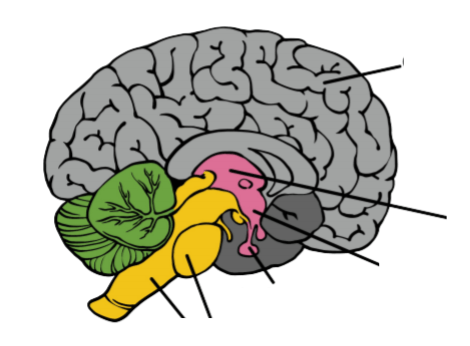
What structure is grey in this picture?
a)
Cerebrum
b)
Cerebellum
c)
Brain Stem
100 %

