
NEW
Font size
S
M
L
XL
 Worksheets
Benchmark Review
Total questions: 53
Worksheet time: 59mins
Name
Class
Date
1.

What number indicates the nucleus?
a)
1
b)
2
c)
3
d)
4
2.

What is the mass number of this element?
a)
5
b)
27
c)
32
d)
59
3.
Which statement best describes an electron?
a)
Smaller mass than a proton and a negative charge
b)
Smaller mass than a proton and a positive charge
c)
Greater mass than a proton and a negative charge
d)
Greater mass than a proton and a positive charge
4.
How many valence electrons does Carbon have?
a)
4
b)
12
c)
6
d)
14
5.

The following element key shows how many protons?
a)
16
b)
15.999
c)
Oxygen
d)
8
6.

Which of the following determines the identity of an element?
a)
Atomic Number
b)
Atomic Mass
c)
Valence Electrons
d)
Number of Neutrons
7.
True or false: Chemical reactivity relates to the number of valence electrons
a)
True
b)
False
8.
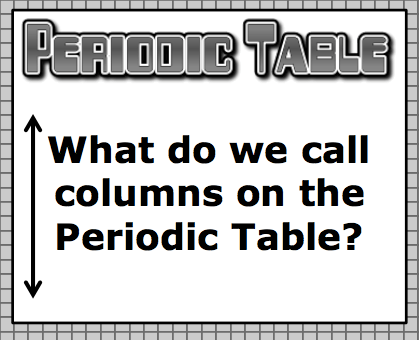
a)
Periods
b)
Groups
9.

a)
energy levels
b)
valence electrons
c)
protons
d)
neutrons
10.
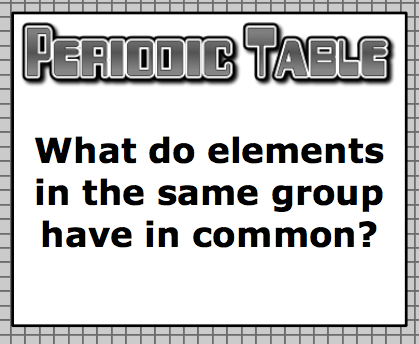
a)
energy levels
b)
valence electrons
c)
protons
d)
neutrons
11.
How many Magnesium atoms are in 10MgCl2?
a)
10
b)
5
c)
20
12.
2H2 + O2 ----> 2H2O What is the product?
a)
------>
b)
2H2O
c)
2H2+ O2
13.
How many Oxygen atoms are in Al₂(SO₄)₃
a)
4
b)
12
c)
7
d)
24
14.

Is this equation balanced?
a)
yes
b)
no
c)
Not enough information
15.
Marie had a beaker with a small amount of baking soda. She added a few drops of pickle juice to the baking soda and observed fizzing and bubbling. Based on her observation, which of these can Marie determine about the new substance formed by mixing the baking soda and pickle juice?
a)
A chemical reaction produced a
solid.
b)
A chemical reaction produced
a gas.
c)
No chemical reaction took place.
d)
Only a physical change happened.
16.
Which of the following characteristics is shared by all chemical reactions?
a)
Produce a precipitate
b)
Show a color change
c)
Release heat energy
d)
Form new substances
17.
What is speed?
a)
how far you go
b)
how much distance is covered over a period of time
c)
how fast you accelerate
d)
the change in the location of a object
18.
What is velocity?
a)
the quickness of an object
b)
the location of an object
c)
acceleration
d)
speed in a specific direction
19.

What is happening at D?
a)
Stationary
b)
Accelerating
c)
Fast steady speed; moving away from the starting position
d)
Slower steady speed; moving away from the starting position
20.

Pushing a child on a swing is easier than pushing an adult on the same swing, because the adult has more mass.
a)
Newton's 1st Law
b)
Newton's 2nd Law
c)
Newton's 3rd Law
21.

This person bought coffee and put it on the seat next to them. If they stopped quickly and the coffee spilled which law would that represent?
a)
Newton's 1st Law
b)
Newton's 2nd Law
c)
Newton's 3rd Law
22.
A Newton is a unit of...
a)
force
b)
inertia
c)
acceleration
d)
velocity
23.

"For every action, there is an equal and opposite reaction."
a)
Newton's 1st Law
b)
Newton's 2nd Law
c)
Newton's 3rd Law
d)
Newton's 4th Law
24.

At which point will the skater have the least potential energy?
a)
Point A
b)
Point B
c)
Point C
d)
Point A and C
25.

Which point has the most kinetic energy?
a)
D
b)
E
c)
C
d)
F
26.

At which point is potential energy greatest?
a)
W
b)
X
c)
Y
d)
Z
27.

What is happening at A?
a)
Stationary
b)
Accelerating
c)
Slower steady speed; moving away from the starting position
d)
Steady speed; returning to start position
28.
Which of these is an example of radiant energy being transformed into chemical energy?
a)
A glow stick lights up when broken.
b)
Water heated by the sun evaporates
c)
A plan makes food in the sunglight
d)
A battery causes a buzzer to vibrate
29.
Which type of energy transformation occurs when a flashlight shines?
a)
Chemical to thermal to electrical
b)
Chemical to electrical to radiant
c)
Thermal to chemical to radiant
d)
Chemical to electrical to sound
30.

A battery converts what type of energy to another?
a)
electrical to chemical
b)
electrical to thermal
c)
mechanical to electrical
d)
chemical to electrical
31.

How can you rearrange the words to match the diagram correctly in terms of size and space?
a)
Solar System in the largest circle, then Nebula, followed by the Galaxies in the smallest circle.
b)
Nebula in the largest circle, then Galaxies, followed by the Solar System in the smallest circle.
c)
Galaxies in the largest circle, then Nebula, followed by the Solar System in the smallest circle.
d)
The diagram is labeled correctly.
32.

Analyze this HR Diagram. Which group of stars is considered to have lower than average luminosity as well as a higher than average temperature?
a)
Giants
b)
Main Sequence
c)
White Dwarfs
d)
Super Giants
33.
Analyze this HR Diagram. Which group of stars is considered to have higher than average luminosity as well as a lower than average temperature?
a)
Giants
b)
Main Sequence
c)
White Dwarfs
d)
Super Giants
34.
Our Sun is located near the edge of a _____ ______ galaxy, named the ____________.
a)
disc shaped, Milky Way
b)
disc shaped, Solar System
c)
elliptical shaped, Milky Way
d)
elliptical shaped, Solar System
35.

The satellite image below shows a portion of the Namib Desert in Africa. This is an ancient, sandy desert with dunes that can be up to 305m tall. The Namib Desert extends inland from the Atlantic Ocean between 80 km and 200km and receives only 5 mm to 76mm of rain each year. A satellite picture of this same area taken weeks before shows that the shape and location of some sand dunes have changed. Which of these most likely caused the changes in the dunes?
a)
Ocean waves
b)
Flowing rivers
c)
Blowing wind
d)
Crustal uplift
36.

What is the elevation at point X?
a)
900km
b)
1000km
c)
1500km
d)
1600km
37.

Which of the following is most likely a cause of hurricanes?
a)
Cooler ocean temperatures
b)
Warmer ocean temperatures
c)
Large ocean waves
d)
Strong ocean currents
38.

A hurricane forms over the Atlantic Ocean. When it hits land and comes ashore, its wind speed decrease significantly. This happens because the hurricane:
a)
gains more water from the flooded land than the ocean
b)
meets a land breeze
c)
meets a stronger hurricane moving from land
d)
no longer gains energy from warm ocean water
39.
The nonliving things in an ecosystem that affect it (such as water quality, soil, sunlight)
a)
biotic factors
b)
abiotic factors
c)
algae
d)
robots
40.
Most water pollution is the result of __________________.
a)
natural processes
b)
animal waste
c)
human activities
d)
acid rain
41.
Tapeworms are organisms that live inside the intestines of animals like pigs. The worms consume partially digested food from the pigs, taking nutrients away from the pigs. In this relationship between pig and tapeworm -
a)
the pig is a consumer, and the tapeworm is a producer.
b)
the pig is a producer, and the tapeworm is a consumer.
c)
the pig is a host, and the tapeworm is a parasite.
d)
the pig is a predator, and the tapeworm is prey.
42.

A food web diagram is provided. Which of the following represents a predator/prey relationship illustrated by the food web diagram?
a)
The deer obtains energy by eating leaves from trees.
b)
The grass obtains energy from the Sun.
c)
The hawk obtains energy by eating the snake
d)
The rabbit obtains energy by eating the grass.
43.

The turtle gets it energy from?
a)
Carp
b)
Sun
c)
Alligator
d)
Bladderwort
44.

The Black-banded Sea Krait is found in the warm waters of the Pacific Ocean. It is well adapted to the environment in which it lives. Which of these resources is most likely limited in the Black-Banded Sea Krait's environment?
a)
Land
b)
Coral dwelling fish
c)
Water
d)
Coral
45.

What does biodiversity mean?
a)
Only one species in an area.
b)
The different amount of species in an area
c)
All abiotic life
d)
Nitrogen fixation
46.
The most sustainable ecosystem would
a)
have low biodiversity.
b)
have high biodiversity.
c)
not experience change.
d)
have no predators.
47.
What is the process of traits best suited to the environment surviving?
a)
natural selection
b)
variation
c)
macro-evolution
d)
embryology
48.
the passing of genetic traits from parent to offspring.
a)
heredity
b)
trait
c)
gene
d)
allele
49.
Magda is a tall, 11 year old drummer. She has a scar on her right cheek. She is good at swimming. Which of her traits did Magda most likely inherit?
a)
height
b)
the scar
c)
ability to swim
d)
ability to play drums
50.
The main purpose of the ____________ system is to break food particles into pieces that can be used.
a)
circulatory
b)
respiratory
c)
digestive
d)
skeletal
51.

What body system consists of the kidneys?
a)
Circulatory
b)
Excretory
c)
Digestive
d)
Muscular
52.

What body system makes your body move?
a)
Circulatory
b)
Respiratory
c)
Skeletal
d)
Muscular
53.
Complex molecule that carries genetic information that defines an organism's traits. It is stored in the nucleus.
a)
DNA
b)
protein
c)
RNA
d)
glucose nucleic acid (GNA)
Reset

