Wayground logo

Free Printable Worksheets

Font size

S
M
L
XL
Worksheets

Human Body Test #1 Review

Total questions: 67

Worksheet time: 49mins

Name
Class
Date
1.
How many types of blood vessels are in our body?
a)
1
b)
2
c)
3
d)
4
2.

Arteries carry oxygen rich blood away from the heart.

a)

True

b)

False

3.

How does the heart work?

a)

It pumps blood first to the lungs, back to the heart and then around the rest of the body.

b)

It pumps blood first to the rest of the body, back to the lungs and then to the heart.

c)

It pumps blood around the rest of the body, back to the heart and then to the lungs,
4.
______________ are the smallest blood vessels.
a)
Arteries
b)
Veins
c)
Capillaries
5.
The circulatory system works with the ___________ system to provide our body with oxygen.
a)
respiratory
b)
digestive
c)
muscular
d)
skeletal
6.
The circulatory system works with the __________ system to obtain energy from nutrients that we eat. 
a)
respiratory 
b)
digestive
c)
skeletal
d)
nervous
7.
What is the main function of the respiratory system?
a)
to provide oxygen and remove carbon dioxide from the body
b)
to bring oxygen to the body
c)
to break down food and absorb nutrients
d)
to remove oxygen from the body and deliver carbon dioxide
8.
What are the main organs of gas exchange in the respiratory system?
a)
diapragm
b)
lungs
c)
trachea
d)
bronchi
9.
What is the function of the bronchi?
a)
Transport air from nose to lungs
b)
Transport air from trachea to lungs
c)
Transport air from lungs to alveoli
d)
Transport air from alveoli to blood
10.
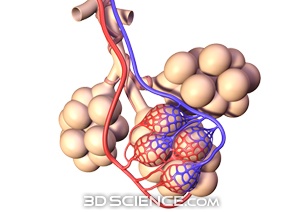
The air sacs that are covered with capillaries where gas exchange takes place
a)
bronchi
b)
lungs
c)
oxygen
d)
alveoli
11.
Within the lungs, the exchange of oxygen and carbon dioxide occurs between the ___ and the capillaries. 
a)
trachea 
b)
bronchi 
c)
alveoli
d)
diaphragm
12.
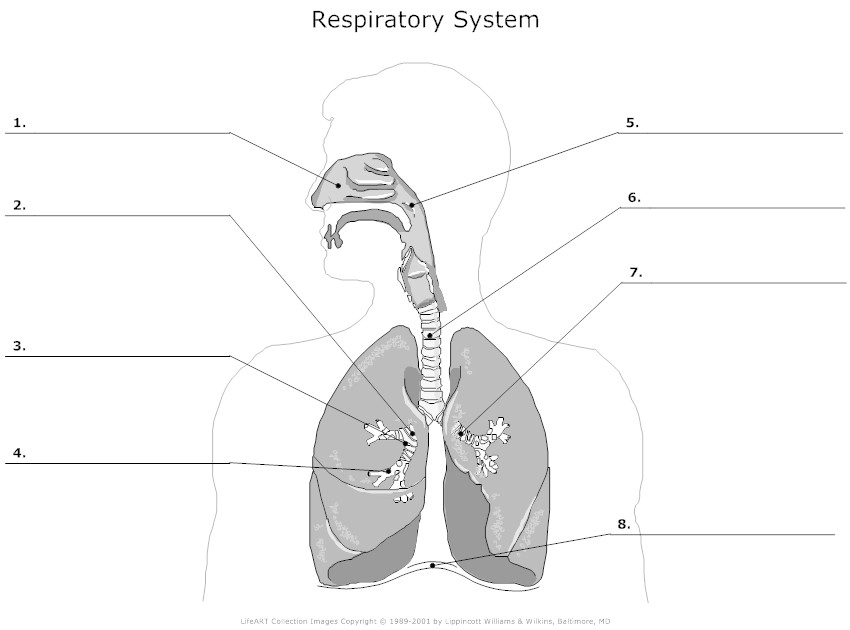
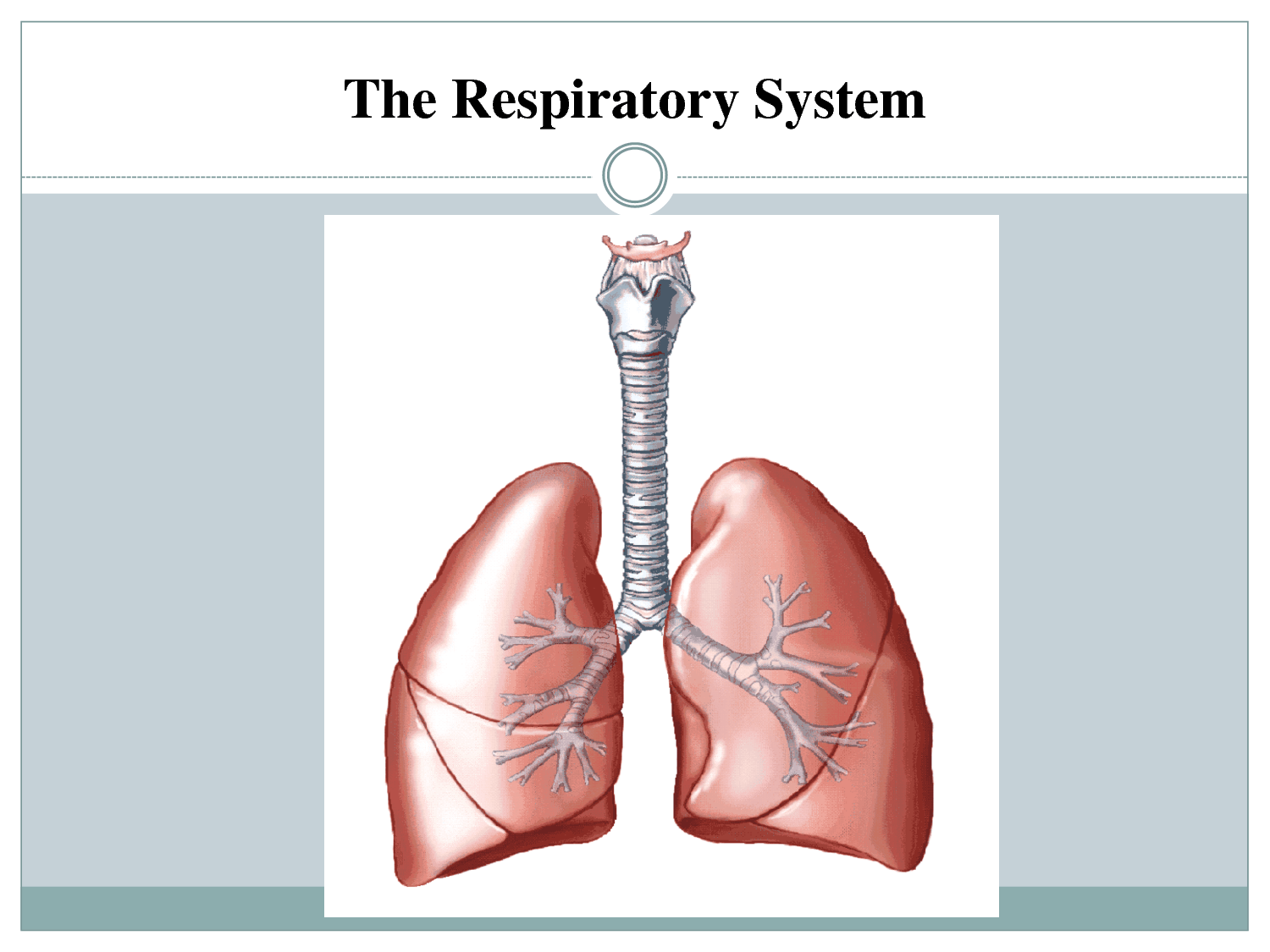
Name the organ label # 6. 
a)
alveoli 
b)
bronchi 
c)
trachea 
d)
lungs 
13.
Name the structure labeled 8 
a)
lungs 
b)
trachea 
c)
diaphragm 
d)
alveoli 
14.
The chewing and grinding of food into smaller pieces is an example of...
a)
Mechanical Digestion
b)
Chemical Digestion
15.
What is one secondary (helper) organ of the digestive system?
a)
Small Intestine
b)
Esophagus
c)
Gallbladder
d)
Stomach
16.
Bile is made by which digestive organ?
a)
Gallbladder
b)
Stomach
c)
Rectum
d)
Liver
17.
Which digestive organ makes digestive juices to help the small intestine absorb nutrients?
a)
Liver
b)
Gallbladder
c)
Pancreas
d)
Esophagus
18.
Nutrients from digested food are absorbed in which digestive organ?
a)
Small Intestine
b)
Stomach
c)
Large Intestine
d)
Gallbladder
19.
Number 4 is pointing to the....
a)
Anus
b)
Rectum
c)
Large Intestine
d)
Small intestine
20.
Number 3 is pointing to the...
a)
Small intestine
b)
Rectum
c)
Large intestine
d)
Stomach
21.
Number 2 is pointing to the...
a)
Esophagus
b)
Stomach
c)
Small intestine
d)
Anus
22.
As waste moves through the digestive system, the ______ absorbs water before storing waste in the rectum.
a)
Small intestine
b)
Stomach
c)
Esophagus
d)
Large intestine
23.
Bile is stored in which secondary digestive organ?
a)
Stomach
b)
Liver
c)
Gallbladder
d)
Pancreas
24.
Which is NOT a function of the Digestive System?
a)
To rid the body of solid waste
b)
Absorb nutrients for energy & growth
c)
Break down nutrients from food
d)
Pump blood around the body
25.
The opening at the end of the digestive system where solid waste comes out is the...
a)
rectum
b)
anus
c)
mouth
d)
large intestine
26.
Gastric juices in the stomach digest food into a thick liquid.  This is...
a)
Mechanical digestion
b)
Chemical digestion
27.
Most chemical digestion takes place in which organ?
a)
Stomach
b)
Small intestine
c)
Rectum
d)
Esophagus
28.
These organs are responsible for what?
a)
storing urine
b)
storing water
c)
filtering blood
d)
they don't have a particular job 
29.
Where is urine stored?
a)
kidneys
b)
urinary bladder
c)
urethra
d)
ureters
30.
How many kidneys do you have?
a)
1
b)
3
c)
5
d)
2
31.
Which are the tubes that carry urine from the kidney to the bladder?
a)
Adrenal tubes
b)
Kidneys
c)
Ureters
d)
Urethras
32.
What is #4?
a)
Kidney
b)
Ureter
c)
Bladder
d)
Urethra
33.
remove urea from (filters) the blood and regulate concentrations of most of the substances in the body fluids
a)
liver
b)
kidney
c)
urinary bladder
d)
ureter
34.
Kidneys create a liquid called:
a)
Urine
b)
Blood
c)
Feces
d)
Carbon Dioxide
35.
Squeezes food down from mouth to the stomach.
a)
esophagus
b)
pharynx
c)
epiglottis
d)
liver
36.
Which sequence correctly shoes the levels of increasing organisation of the human body?
a)
cell-tissue-organ-organ system-organism
b)
organism-organ system-organs-tissues-cells
c)
cells-organs-tissues-organ system-organism
d)
organism-cell-tissue-organs-organ system
37.

What group of tissue has two types; hard and soft, and holds body parts together?

a)

Connective

b)

Muscle

c)

Nervous

d)

Epithelial

38.

What type of tissue is the main tissue in the skin and the lining of body cavities?

a)

Connective

b)

Muscle

c)

Epithelial

d)

Nervous

39.

What are the smallest structural unit of living things called?

a)

Organelles

b)

Cells

c)

Cell Membrance

d)

Gametes

40.

If you look at a piece of muscle tissue under a microscope, what will you see?

a)

An organ system

b)

Chloroplasts

c)

Cells working together

d)

Plant cells

41.

Cartilage is a type of:

a)

Epithelial Tissue

b)

Muscle Tissue

c)

Connective Tissue

d)

Nervous Tissue

42.

How many different tissue types make up the human body?

a)

3

b)

4

c)

5

d)

6

43.
A short tube at the end of the large intestine that stores solid waste is the...
a)
Anus
b)
Rectum
44.
What are tube-like structures that include the arteries, arterioles, capillaries, venules, and veins?
a)
Blood Vessels
b)
Lymph
c)
Glands
d)
Strep
45.
What does blood do?
a)
Carries Water to cells
b)
Carries Oxygen to cells
c)
Carries Food to cells
d)
All of the above 
46.
What part of blood is responsible for clotting blood?
a)
Red Blood Cells
b)
White Blood Cells
c)
Platelets
d)
Plasma
47.
What are the main organs of gas exchange in the respiratory system?
a)
diapragm
b)
lungs
c)
trachea
d)
bronchi
48.
Which organ system breaks down food into molecules the body can use?
a)
digestive
b)
muscular
c)
respiratory
d)
reproductive
49.
The following is an example of which two systems working together:
"The small intestine absorbs nutrients from our food and they are carried through the blood to the cells."
a)
Digestive and Circulatory
b)
Digestive and Respiratory
c)
Digestive and Skeletal
d)
Digestive and Nervous
50.
Choose the best example of how the Muscular System and Digestive System work together:
a)
Our muscles need our digestive system to work correctly.
b)
These systems don't work together.
c)
The muscles in the esophagus push the food down and the stomach muscles churn up the food.
d)
The muscles in the stomach send food to our muscles.
51.
Which system enables the body to move, moves food through the digestive system, and keeps the heart beating?
a)
skeletal
b)
muscular
c)
digestive
d)
nervous
52.
Which two human body systems are most responsible for getting oxygen to cells?
a)
digestive and skeletal
b)
skeletal and circulatory
c)
circulatory and respiratory
d)
respiratory and digestive
53.
Which best compares the respiratory system to the circulatory system?
a)
The respiratory system transports oxygen to cells, while the circulatory system provides oxygen for cells.
b)
The respiratory system provides oxygen for cells, while the circulatory system transports oxygen to cells.
c)
The respiratory system breaks down food for cell energy, while the circulatory system rids the body of waste.
d)
The respiratory system rids the body of waste, while the circulatory system breaks down food for cell energy.
54.
List the levels of organization in the human body in order from least complex to most complex…
a)
Tissues, cells, organ systems, organs, and organism
b)
Cells, tissues, organ systems, organs, and organism
c)
Cells, tissues, organs, organism, and organ systems
d)
Cells, tissues, organs, organ systems, and organism
55.
The circulatory system does which of the following?
a)
Takes in oxygen and releases carbon dioxide
b)
Transports needed materials such as oxygen and nutrients to cells and carries away wastes such as carbon dioxide
c)
Removes wastes from body
d)
Protects organs, stores minerals, allows movement and forms blood cells
56.
The Excretory system does which of the following?
a)
Fights disease by recognizing and attacking antigens such as bacteria and viruses by producing antibodies
b)
Transports needed materials such as oxygen and nutrients to cells and carries away wastes such as carbon dioxide
c)
Removes wastes from body
d)
Protects organs, stores materials, allows movement and forms blood cells
57.
A structure that is made of two or more tissues working together to perform a specific function is…
a)
An organ 
b)
An organ system
c)
A cell
d)
An organism
58.
Blood vessels that connect arteries to veins.
a)
capillaries
b)
lymph nodes
c)
papilla
d)
ducts
59.
What type of blood vessels carry blood TO the heart?
a)
arteries
b)
veins
c)
capillaries
60.
Blood contains
a)
plasma, plates, and red blood cells
b)
plasma, platelets, and white blood cells
c)
plasma, platelets, red and white blood cells
d)
plasma, red blood cells and white blood cells
61.

Before blood is pumped to the whole body, it is first pumped to the _____________ to pick up _______________.

a)

lungs; carbon dioxide

b)

lungs; oxygen

c)

brain; carbon dioxide

d)

brain; oxygen

62.
WHAT IS AFTER THE SMALL INTESTINE?
a)
Large intestine
b)
nothing
c)
liver
d)
pancreas
63.
What does saliva do?
a)
Chemically digests food in the mouth.
b)
Chemically digests food in the stomach
c)
Protects the stomach from digesting iteself
d)
Absorbs nutrients from food so the body has energy.
64.
What organ makes bile?
a)
Gallbladder
b)
Liver
c)
Pancreas
d)
Appendix
65.
What parts of the digestive system help with mechanical digestions?
a)
Esophagus and Small Intestine
b)
Mouth and Stomach
c)
Liver and Gallbladder
d)
Rectum and Anus
66.

What is the correct order of digestion?

a)

Mouth - stomach - esophagus - L.I. - S.I. - anus - rectum

b)

Mouth - esophagus - stomach - gall bladder - S.I. - rectum - anus - L.I.

c)

Mouth - pancreas - stomach - rectum - gall bladder - S.I. - rectum - anus

d)

Mouth - esophagus - stomach - S.I. - L.I. - rectum - anus

67.
The large intestine's major role is to _________________.
a)
absorb water from undigested food
b)
exhale carbon dioxide
c)
break down food