
Font size
S
M
L
XL
 Worksheets
E.En. Science Mid Term Test (Print Version)
Total questions: 100
Worksheet time: 1hrs 2mins
Name
Class
Date
1.
When is it OK to eat or drink in the lab?
a)
Always
b)
Never
2.
When should you tie back long hair or baggy clothing?
a)
When working with chemicals
b)
When working with a Bunsen burner
c)
When doing dissections.
d)
Any time you are working in the lab.
3.

I must follow all instructions, written and verbal, about the laboratory procedures given by the teacher.
a)
True
b)
False
4.

When in the lab...
a)
long sleeves and loose clothing should be rolled up
b)
closed toe shoes should be worn
c)
long hair should be pulled back
d)
all of the above
5.

It's fine to smell chemicals directly from their containers.
a)
True
b)
False
6.
If you get something in your eyes, how long do you need to use the eyewash station?
a)
15 - 20 seconds
b)
5 minutes
c)
15 - 20 minutes
d)
Don't use the eyewash.
7.
Why do scientists use the scientific method?
a)
To make sure they get credit for their discoveries.
b)
To make sure their results are valid and can be performed by other scientists.
c)
So that other scientist don't get mad at them
8.
What step does every scientific experiment begin with?
a)
hypothesis
b)
question/problem
c)
procedures
d)
conclusion
9.

What is a hypothesis?
a)
an educated guess stating what you believe will be the result of your experiement
b)
a random guess
c)
a statement of the outcome of your experiment
d)
step by step directions for your experiment
10.
The independent variable is the ONE thing you _____.
a)
change on purpose
b)
control or keep constant
c)
measure
11.
The variable that is being measured or observed is called the _______________. Hint: this is the variable that is the result or effect
a)
independent variable
b)
dependent variable
c)
control variable
12.

Convert 8 kilometers to meters
a)
800 m
b)
80,000 m
c)
8,000 m
d)
.008 m
13.

Convert 300 meters to centimeters:
a)
3000 cm
b)
0.3 cm
c)
30,000 cm
d)
3 cn
14.

1000 grams = _____ kilograms
a)
0.0001
b)
1,000,000
c)
10
d)
1
15.

0.25cm = ? mm
a)
2
b)
2.5
c)
25
d)
2,500
16.
What is the name of the line at 0 degrees latitude?
a)
Equator
b)
Prime Meridian
c)
International Date Line
d)
Arctic Circle
17.
What is the name of the line at 0 degrees longitude?
a)
Equator
b)
Prime Meridian
c)
International Date Line
d)
Arctic Circle
18.
How many time zones are there?
a)
18
b)
11
c)
20
d)
24
19.
Another name for latitude lines is:
a)
Longitude
b)
Parallels
c)
Meridians
d)
Equator
20.
Another name for longitude lines:
a)
Meridians
b)
Parallels
c)
Equator
d)
Prime Meridian
21.
A scientific ______ is a well-tested explanation for a wide range of observations or experimental results.
a)
inquiry
b)
hypothesis
c)
theory
d)
law
22.
A statement that describes what scientists expect to happen every time under a particular set of conditions is a ______.
a)
scientific inquiry
b)
scientific hypothesis
c)
scientific theory
d)
scientific law
23.
The part of the Earth system that includes Earth’s solid, rocky, outer layer is the ______.
a)
hydrosphere
b)
atmosphere
c)
biosphere
d)
lithosphere
24.
Which branch of Earth science includes the study of the stars?
a)
astronomy
b)
oceanography
c)
meteorology
d)
geology
25.
______ study the effects of human activities on Earth’s land, air, water, and living things.
a)
Astronomers
b)
Environmental scientists
c)
Meteorologists
d)
Oceanographers
26.
Terrestrial planets formed...
a)
from minerals that stayed liquid or solid despite the high temps of the inner solar system
b)
from minerals that stayed gaseous in the high temps of the inner solar system
c)
from gases that collected in the inner solar system
d)
from ice that accreted in the inner solar system.
27.
The moon probably formed when...
a)
A piece of the Earth broke off due to it's fast rotation
b)
A Mars-sized object rammed into the Earth
c)
Earth captured the moon gravitationally as it attempted to pass by.
d)
the molten bubble of the Earth budded.
28.
Stars moving away from an observer appear _____.
a)
red
b)blue
29.
What is the current scientific model of the origin of the Universe called?
a)
The Origin Theory
b)
The Beginning Theory
c)
The Explosion Theory
d)
The Big Bang Theory
30.
Which model of the solar system states that the Earth is at the center of the Universe, and everything revolves around it?
a)
Geocentric Model
b)
Heliocentric Model
31.
Which of the following places the items listed in the correct order from smallest to largest?
a) solar system, moon, planet, galaxy, universe
b)moon , planet, solar system, galaxy, universe
c)moon , planet, solar system, universe, galaxy
d)universe , galaxy, solar system, planet, moon
32.
1. How many degrees is Earth tilted?
a)
None. The Earth is not tilted.
b)
230 degrees.
c)
23.5 degrees
33.
We usually see both sides of the moon, depending on the time of year.
a)
True
b)
False
34.
The wobble in Earth's rotation caused by the gravitational pull of the moon is called
a)
barycenter
b)
precession
c)
nutation
d)
convection
35.

This image shows
a)
barycenter
b)
precession
c)
nutation
d)
elliptical orbits
36.
Fusion is
a)
the splitting of a large atomic nucleus into two or more smaller ones
b)
the joining of two small nuclei to form a larger nucleus
37.
During an ________, the length of nighttime and daytime are about the same because neither hemisphere is tilted toward the sun.
a)
equinox
b)
solstice
c)
earthquake
d)
solar eclipse
38.
Differences in the moon's and sun's pull on different sides of the Earth cause _________.
a)
gravity
b)
lunar phases
c)
tides
d)
dabbing
39.

When the visible (lit) portion of the moon is increasing, the moon is:
a)
waning
b)
full
c)
waxing
d)
new
40.

Name the moon phase
a)
Waxing Gibbous
b)
Waxing Crescent
c)
Waning Crescent
d)
Waning Gibbous
41.
How does the sun creates energy?
a)
fusion of Hydrogen nuclei to Helium in the core of the sun
b)
fission of Hydrogen nuclei to Helium in the core of the sun
c)
Fusion of Helium nuclei to Hydrogen in the core of the sun
42.
What is the sun made of?
a)
lava
b)
liquid nitrogen
c)
fusonium
d)
plasma
43.
In which area of the sun does gas rise as it heats up, then fall back down as it cools?
a)
the core
b)
the radiation zone
c)
the convection zone
d)
the corona
44.
When we look at the sun, what layer are we viewing?
a)
photosphere
b)
chromosphere
c)
corona
d)
convection zone
45.
What layer of the sun's atmosphere gives the sun its "white halo" during a solar eclipse?
a)
chromosphere
b)
photosphere
c)
corona
d)
atmosphere
46.
The speed of a planet orbiting the sun constantly changes due to a change in distance.
a)
Kepler's 1st Law
b)
Newton's 1st Law
c)
Kepler's 2nd Law
d)
Newton's 1st Law
47.
Planets farther away from the sun have a longer path and travel slower because gravity is weaker.
a)
Kepler's 2nd Law
b)
Newton's 3rd Law
c)
Kepler's 3rd Law
d)
Newton's 3rd Law
48.
Acceleration is produced when a force acts on a mass. The greater the mass (of the object being accelerated) the greater the amount of force needed (to accelerate the object).
a)
Kepler's 1st Law
b)
Kepler's 2nd Law
c)
Newton's 3rd Law
d)
Kepler's 3rd Law
49.
Metamorphic rocks are formed by ___.
a)
existing rocks are baked and squeezed by pressure
b)
small pieces of rock are compacted and cemented together
c)
magma or lava cools and hardens
d)
igneous rocks are broken into pieces
50.
Igneous rocks are formed by ___.
a)
existing rocks are baked and squeezed by pressure
b)
small pieces of rock are compacted and cemented together
c)
magma or lava cools and hardens
d)
igneous rocks are broken into pieces
51.
Marble is formed from what sedimentary rock?
a)
Limestone
b)
Granite
c)
Shale
d)
Conglomerate
52.
Extrusive rocks that form quickly above the Earths surface have
a)
small crystals
b)
large crystals
c)
small and large crystals
d)
no crystals
53.
How do Intrusive Igneous rocks cool?
a)
quickly
b)
slowly
c)
really fast
54.
_________ is the breaking/cracking/wearing down of rock into sediment.
a)
Erosion
b)
Weathering
55.
____________ is the movement of sediment.
a)
Erosion
b)
Weathering
56.
Weathering or Erosion?
Wind carries sand from the beach.
Wind carries sand from the beach.
a)
Weathering
b)
Erosion
57.
Weathering or Erosion?
Water freezes in concrete and cracks it.
Water freezes in concrete and cracks it.
a)
Weathering
b)
Erosion
58.
Physically breaking down rocks and materials is called__________weathering.
a)
Chemical
b)
Mechanical
c)
Biological
d)
Permeable
59.
The layer of soil which the topsoil is found.
a)
Horizon A
b)
Horizon B
c)
Horizon C
d)
Horizon D or R
60.
Decayed organic material in soil is called______.
a)
Litter
b)
Silt
c)
Humus
d)
Clay
61.
Step like ridges are built and arranged sideways on a hill. Slows down water erosion.
a)
Shelter belt
b)
Strip cropping
c)
Terracing
d)
Contour plowing
62.
Cultivated rows run sideways, rather than up and down. Slows down water erosion.
a)
Shelter belt
b)
Strip cropping
c)
Terracing
d)
Contour plowing
63.
Growing different crops in succession in the same field. This helps replenish soil nutrients.
a)
clear cutting
b)crop rotation
c)
monoculture
d)
tillage
64.

When a glacier retreats and large, partially buried, ice chunks are left behind to melt, these are formed:
a)
Moraine
b)
Prairie pothole
c)
Kettle Lake
d)
Fjord
65.

Poorly graded (unsorted) rock material deposited directly by a glacier.
a)
glacial drift
b)
stratified drift
c)
till
d)
glacier
66.
Rock & soil slides quickly down steep slope in a ______________________.
a)
slump
b)
windstorm
c)
landslide
d)
mudlfow
67.
The slowest type of mass movement is called a _____________________.
a)
slump
b)
creep
c)
landslide
d)
mudflow
68.
What is the correct order (starting from the surface) of Earth's layers?
a)
crust, outer core, inner core, mantle
b)
mantle, outer core, inner core, crust
c)
crust, mantle, outer core, inner core
d)
outer core, inner core, crust, mantle
69.
Earth's inner core is...
a)
a dense ball of solid iron and nickel.
b)
a layer of molten iron and nickel.
c)
a layer of hot rock.
d)
a layer of rock that forms Earth's outer skin.
70.
Geologists' main evidence about the structure of Earth's interior comes from
a)
temperature measurements in deep mines
b)
observations of other planets
c)
exploration of caves
d)
rock samples and seismic waves
71.
The asthenosphere is part of which layer of Earth?
a)
crust
b)
mantle
c)
outer core
d)
inner core
72.
Continental crust is made of
a)
granite
b)
basalt
c)
water
d)
sandstone
73.
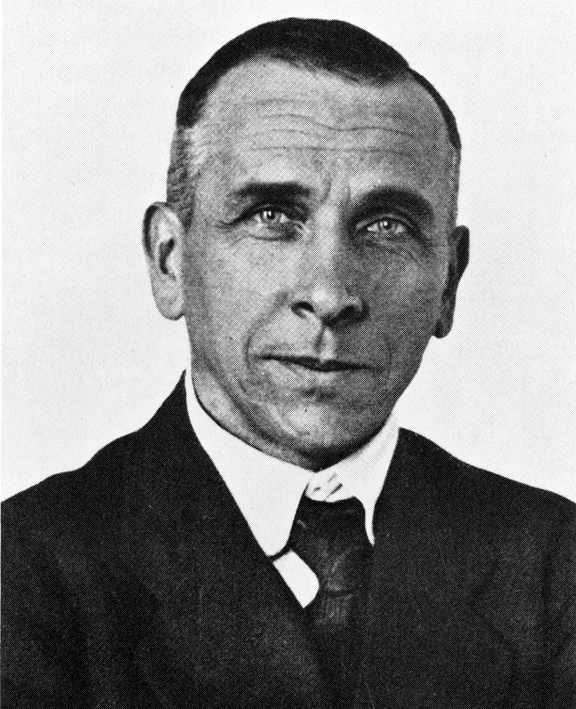
Who is the person credited with developing the theory of continental drift?
a)
Harry Hess
b)
Galileo
c)
Alfred Wegener
d)
Newton
74.
What evidence did Wegener use in his theory?
a)
Continents and fossils fitting together/matching-up like puzzle pieces
b)
glacier scars and evidence from temperature
c)
mountain ranges and coal deposits line up across continents
d)
all of the above
75.
Which type of plate boundary would cause folded mountains to form?
a)
transform
b)
convergent
c)
divergent
d)
subduction
76.
The Great Rift Valley in Africa and the Mid-Atlantic Ridge were both created by this type of plate boundary.
a)
divergent
b)
convergent
c)
transform
d)
subduction
77.
What are the two types of crust?
a)
continental and oceanic
b)
ocean and basin
c)
lower and upper
d)
thick and thin
78.
The process by which the ocean floor sinks beneath a deep ocean trench and back into the mantle is known as
a)
convection
b)
continental drift
c)
subduction
d)
conduction
79.
A place where two plates slide past each other, moving in opposite directions, is known as a
a)
transform boundary
b)
divergent boundary
c)
convergent boundary
d)
rift valley
80.
A collision between two pieces of continental crust at a converging boundary produces a
a)
mid-ocean ridge
b)
deep ocean trench
c)
volcanic mountain range
d)
folded mountain range
81.
The block of rock that lies below a fault is called
a)
hanging wall
b)
foot wall
82.
The stress force that pushes the crust where two plates are moving apart
a)
tension
b)
compression
c)
shearing
83.
The stress force that pushes the crust where two plates are moving together
a)
tension
b)
compression
c)
shear
84.
The stress force that pulls plates past one another sideways is called
a)
shear
b)
compression
c)
tension
85.
A fault caused by rocks moving together
a)
normal fault
b)
reverse fault
c)
slip strike fault
86.
a fault caused by rocks moving away from each other
a)
strike slip fault
b)
reverse fault
c)
normal fault
87.
Tsunamis can be created by...
a)
thunderstorms.
b)
earthquakes and landslides.
c)
rainbows.
d)
people.
88.
The epicenter of an earthquake is
a)
The point below the surface where rock begins to break and the first motion occurs
b)
The seismic station closest to the earthquake
c)
The place where the greatest damage occurs
d)
The point on the surface directly above the focus
89.
The Richter scale measures:
a)
the amount of radon gas released
b)
the damage caused
c)
the strength of an earthquake
d)
the weight of tectonic plates
90.
An instrument that detects and measures earthquakes is a
a)
seismogram
b)
focus seismic map
c)
focus
d)
seismograph
91.
Which kind of wave arrives at seismic stations second?
a)
P (primary)
b)
S (secondary)
c)
L (love)
d)
R (rayleigh)
92.
Which kind of waves usually do the most damage in an earthquake?
a)
P waves
b)
S waves
c)
L waves
d)
Radio waves
93.
Which kind of waves can NOT travel through a liquid?
a)
P waves
b)
S waves
c)
Radio Waves
d)
X rays
94.
What type of volcano is built almost entirely from ejected lava fragments?
a)
cinder cone
b)
composite cone
c)
shield volcano
d)
pahoehoe volcano
95.
The particles produced in volcanic eruptions are called ____.
a)
laccoliths
b)
pyroclastic material
c)
calderas
d)
volcanic stocks
96.
A line of volcanic activity that surrounds the Pacific Ocean basin is the
a)
Ring of Fire
b)
Aleutian Islands
c)
Hawaiian Islands
d)
Caribbean Islands
97.
Natural resources are any useful materials that come from the Earth.
a)
False
b)
True
98.
All of the following are examples of renewable resources except . . .
a)
Timber
b)
Oil / Petroleum
c)
Water
d)
Pork
99.
A resource that is used faster than our Earth can replace it is known as a . . .
a)
renewable resource
b)
nonrenewable resource
c)
natural resource
d)
income resource
100.
Cities become known as _____________ because they heat up and cool down faster than their surrounding areas.
a)
hot spots
b)
heated lands
c)
heat islands
d)
hot islands
Reset

