
 Worksheets
Chemical Bonding
Total questions: 68
Worksheet time: 59mins
Name
Class
Date
1.
Bonds between two nonmetal atoms are
a)
covalent.
b)
ionic.
c)
incomplete.
d)
complete.
2.
In Cl2, the 2 is known as
a)
the subscript.
b)
the coefficient.
c)
the molecular mass.
d)
the number of protons.
3.
N2, Cl2, and O2 are all
a)
diatomic molecules.
b)
ionic bonds.
c)
of equal mass.
d)
solids.
4.
Chlorine, bromine, fluorine, and iodine are all
a)
nonmetals and good conductors.
b)
nonmetals and halogen gases.
c)
metals and bad conductors.
d)
metals and malleable.
5.
How do covalent bonds form?
a)
Donating & receiving valence e- between atoms.
b)
Opposite slight charges attract each other between compounds.
c)
Scientists are still not sure how they form.
d)
Sharing valence e- between atoms.
6.

What two types of atoms make a covalent bond?
a)
2 Nonmetals
b)
1 Nonmetal and 1 Metal
c)
2 Metals
d)
2 Noble Gases
7.
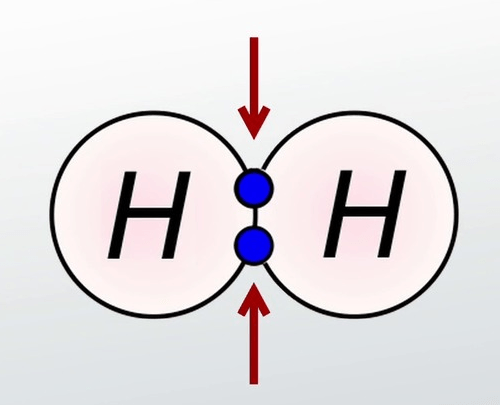
Diatomic elements are defined as IDENTICAL elements that bond with each other (i.e. Oxygen with Oxygen). What do we call it when this forms?
a)
Compound
b)
Molecule
c)
Atom
d)
None of the above
8.
What are the three types of chemical bonds we have learned about?
a)
Iconic, Convalescent, and Mental
b)
Ionic, Covalent
c)
Ionian, Cloven, and Meticulous
d)
Diatomic, Malleable, and Ductile
9.
What do we call the outermost electrons in an atom?
a)
Neutrons
b)
Ions
c)
Electrons-at-large
d)
Valence electrons
10.
Which particles in the atom are positively charged?
a)
Croutons
b)
Neutrons
c)
Electrons
d)
Protons
11.
Which particles in the atom are negatively charged?
a)
Protons
b)
Electrons
c)
Neutrons
d)
Frowntrons
12.
What do we call an atom that has given up or gained electrons?
a)
An ion
b)
An iron
c)
A different atom
d)
A metalloid
13.
If an ion has lost an electron and has more protons than electrons, what is its charge?
a)
Negative
b)
Positive
c)
Neutral
d)
This is impossible
14.
Which groups of the periodic table are most likely to become positively charged ions?
a)
All of them
b)
18
c)
1 and 2
d)
Nonmetals
15.
Is sodium (Na) more likely to lose an electron or gain an electron?
a)
Lose
b)
Gain
16.
Atoms form bonds that give them...
a)
Lasting friendships
b)
A positive charge
c)
A negative charge
d)
A full set of valence electrons
17.

Based on this diagram, how many electrons is Calcium likely to lose?
a)
0
b)
1
c)
2
d)
3
18.
If Calcium loses 2 electrons, what will its charge be?
a)
0
b)
2+
c)
2-
d)
1
19.
Which type of bonds is stronger?
a)
Ionic
b)
Covalent
20.
In covalent bonds, atoms...
a)
share some of their valence electrons
b)
share some of their protons
c)
form malleable substances
d)
give up or gain some electrons
21.
True or false: an atom can share electrons with more than one electron at a time.
a)
True. They often form complex arrangements of atoms called molecules.
b)
False. That doesn't even make sense.
22.
A molecule with two atoms joined together by chemical bonds is called a
a)
Two-column molecule
b)
Duotomic molecule
c)
Diatomic molecule
d)
Duetomic molecule
23.
Which type of atoms tend to form covalent bonds with each other?
a)
Metals
b)
Metalloids
c)
Nonmetals
d)
Noble Gases
24.
Covalent bond forms between....
a)
Nonmetals
b)
Metals
c)
Nonmetal and a Metal
d)
Metal and a Nonmetal
25.

calcium oxide
a)
Ca2O2
b)
Ca2O
c)
CaO
d)
CaO2
26.

barium phosphide
a)
Ba3(PO4)2
b)
BaP
c)
Ba3P2
d)
Ba2P3
27.
How many elements are in C6H12O6?
a)
1
b)
2
c)
3
d)
4
28.
Element or compound?
H2O
H2O
a)
element
b)
compound
29.
How many elements are in H2O?
a)
1
b)
2
c)
3
d)
4
30.
What are ionic bonds?
a)
valence electrons transferred between atoms
b)
Inner most electrons transferred between atoms
31.
Why do ionic bonds form?
a)
so the number of protons equals the number of electrons
b)
to fill the outermost energy level
c)
so an atom can become unstable
32.
An electron has what kind of charge?
a)
no charge
b)
positive
c)
negative
d)
it depends
33.
a proton has what charge?
a)
positive
b)
negative
c)
no charge
d)
it depends
34.
When the number of electrons equals the number of protons the atom has what charge?
a)
sponge bob
b)
positive charge
c)
negative charge
d)
neutral charge
35.
An atom or group of atoms that has a charge (positive or negative) is a(n)
a)
isotope
b)
ion
c)
element
d)
solution
36.
Atoms gain or lose electrons to have a stable electron structure like a noble gas – generally 8 outermost electrons – follows the _____.
a)
Pauli Exclusion Principle
b)
HONC 1234 Rule
c)
Hund's Rule
d)
OCTET Rule
37.
A neutral group of atoms joined together by covalent bonds is a _____.
a)
atom
b)
cation
c)
molecule
d)
anion
38.
Electrons in the highest occupied energy level of an atom are _____.
a)
valence electrons
b)
excited electrons
c)
covalent electrons
d)
ground electrons
39.
The ability of an atom to attract electrons is called _____.
a)
ionization
b)
attractability
c)
electronegativity
d)
bonding
40.
A horizontal row of elements on the periodic table is a _____.
a)
group
b)
period
c)
element
d)
family
41.
How many Aluminum are in Al2O3?
a)
3
b)
2
c)
5
d)
1
42.
If an aluminum atom has 13 protons (+) and 10 electrons (-), what is it's charge?
a)
Al3+
b)
Al13+
c)
Al10+
d)
Al10-
43.
If an oxygen atom has 8 protons (+) and 10 electrons (-), what is it's charge?
a)
O10-
b)
O8+
c)
O2-
d)
O10+
44.
What are ionic bonds?
a)
valence electrons transferred between atoms
b)
Inner most electrons transferred between atoms
45.
The ______ rule explains that atoms combine in such a way that each atom typically has eight electrons in its valence shell.
a)
octet
b)
bonding
c)
triplet
d)
covalent
46.

The element silicon has _____ valence electrons and needs to add _____ electrons to complete its octet.
a)
4, 8
b)
8, 4
c)
4, 4
d)
2, 6
47.

The element phosphorus has _____ valence electrons and needs to add _____ electrons to complete its octet.
a)
10, 2
b)
2, 10
c)
3, 5
d)
5, 3
48.
Covalent bonds make atoms ______.
a)
stable
b)
unstable
c)
more energetic
d)
larger
49.
Atoms that share two pairs of electrons form a ______ covalent bond.
a)
single
b)
double
c)
triple
50.
Atoms that share three pairs of electrons form a ______ covalent bond.
a)
single
b)
double
c)
triple
51.

How many electrons does Si contain? (click to see image)
a)
14
b)
28
c)
2
d)
4
52.
How many electrons should Hydrogen have around its Lewis dot model?
a)
1
b)
2
c)
7
d)
8
53.
How many valence electrons does Oxygen have?
a)
2
b)
4
c)
6
d)
8
54.
How many electrons should Flourine have around its Lewis dot model?
a)
5
b)
6
c)
7
d)
8
55.

How many electrons does potassium K contain? (click to see image)
a)
19
b)
39
c)
20
d)
40
56.
How many electrons should Sodium have around its Lewis dot model?
a)
1
b)
2
c)
3
d)
4
57.
How many electrons should Lithium have around its Lewis dot model?
a)
1
b)
2
c)
3
d)
4
58.
How many electrons should Boron have around its Lewis dot model?
a)
1
b)
3
c)
5
d)
7
59.
How many electrons should Carbon have around its Lewis dot model?
a)
1
b)
3
c)
4
d)
5
60.
How many electrons should Nitrogen have around its Lewis dot model?
a)
1
b)
3
c)
4
d)
5
61.
How many electrons should Flourine have around its Lewis dot model?
a)
5
b)
6
c)
7
d)
8
62.
How many electrons should Neon have around its Lewis dot model?
a)
5
b)
6
c)
7
d)
8
63.
How many electrons should Sodium have around its Lewis dot model?
a)
1
b)
2
c)
3
d)
4
64.
How many electrons should Magnesium have around its Lewis dot model?
a)
1
b)
2
c)
3
d)
4
65.

The period for Bromine is ___________.
a)
3
b)
2
c)
4
66.
How many valence electrons are in Phosphorus?
a)
15
b)
4
c)
5
d)
31
67.

This is a correct dot diagram for fluorine (F)
a)
true
b)
false
68.
Which of these elements has 8 valence electrons?
a)
P
b)
Be
c)
O
d)
Ar
100 %

