wayground logo

Free Printable Worksheets

Font size

S
M
L
XL
Worksheets

Covalent Bond

Total questions: 70

Worksheet time: 13hrs 44mins

Name
Class
Date
1.

Name the type of bonding in which the electrons are shared.

a)

Ionic bonding

b)

Covalent bonding

c)

Metallic bonding

2.

The covalent bond forms between

a)

a metal and nonmetal

b)

a nonmetal and nonmetal

c)

a metal and metal

3.

The number of electron pairs shared in double bond.

a)

One

b)

Two

c)

Three

4.
How do covalent bonds form?
a)
Donating & receiving valence e- between atoms.
b)
Opposite slight charges attract each other between compounds.
c)
Scientists are still not sure how they form.
d)
Sharing valence e- between atoms.
5.
Which of the following is NOT formed by a covalent bond?
a)
K2S
b)
H2O
c)
I2
d)
CO2
6.
Is hydrogen considered a metal or a non-metal?
a)
A metal
b)
Nonmetal
c)
Metalloid
7.
Ionic or covalent?
H2O
a)
Ionic
b)
Covalent
8.
 A lone pair is defined as
a)
A pair of bonding electrons
b)
One non-bonding electron
c)
A pair of non-bonding electrons
d)
A pair of electrons on the central atom
9.
In an electron dot diagram, two pairs of shared electrons represents a ...
a)
single bond
b)
double bond
c)
triple bond
d)
quadruple bond
10.
Covalent bonds usually form when a nonmetal combines with a(an) METAL.
a)
True
b)
False
11.
Which of the following is the correct Lewis dot structure for the molecule fluorine (F2)?
a)
A
b)
B
c)
C
d)
D
12.
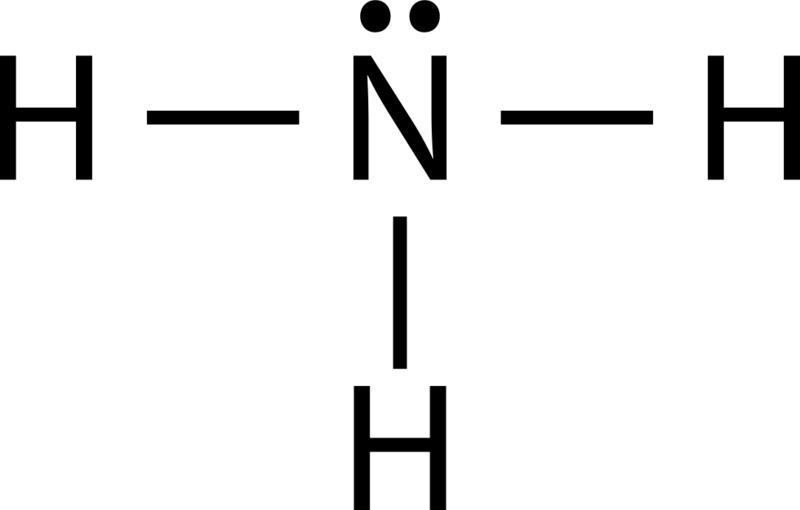
What is the correct formula for this molecule?
a)
NH
b)
N3H
c)
NH3
d)
NH4
13.
In a covalent bond, one or more electrons are? 
a)
shared 
b)
lost 
c)
gained 
d)
transferred 
14.
This picture shows a...
a)
Ionic Bond
b)
Covalent Bond
c)
Both bonds
d)
Neither bond
15.
What molecule is this?
a)
CO
b)
CO2
c)
C2O
d)
C2O2
16.
What is the name of N2O3
a)
Nitrogen trioxide
b)
Dinitrogen oxide
c)
Dinitrogen trioxide
d)
Nitrogen oxide
17.
What is the chemical formula for Tetrasulfur pentoxide?
a)
SO
b)
S4O
c)
S4O5
d)
S5O4
18.
What is the name of C3Cl?
a)
Carbon octachloride
b)
Tricarbon octachloride
c)
Carbon trichloride
d)
Octacarbon trichloride
19.
What is the chemical formula for Nitrogen triiodide?
a)
NI
b)
N3I
c)
NI3
d)
None of these
20.
What is the name of Br6F10 ?
a)
Bromium fluoride
b)
Hexabromine fluoride
c)
Bromium decafluoride
d)
none of the above
21.
What is the name of CO
a)
Carbon oxide
b)
Carbon dioxide
c)
Carbon monoxide
d)
Carbon II oxide
22.
What is the chemical formula for CP ?
a)
Carbon phosphide
b)
Monocarbon phosphide
c)
Carbon monophosphide
d)
none of the above
23.
phosphorus trichloride
a)
KCl3
b)
PCl3
c)
K3Cl
d)
P3Cl
24.
The chemical formula of sulfur hexabromide is
a)
SBr₆
b)
S₆Br
c)
S(VI)Br
d)
S6Br
25.
The chemical formula of dinitrogen textroxide is
a)
Ni₂O₄
b)
NiO
c)
N₂O₄
d)
NiO₂
26.
The chemical formula of tetraphosphorus heptaoxide is
a)
F₄O₁₀
b)
P₄O7
c)
PO
d)
P₁₀O₄
27.
What's the formula for chlorine dioxide
a)
ClO2
b)
CLO
c)
ClO3
d)
HClO2
28.
What is the formula for Hexaboron Monosilicide
a)
B6Si
b)
BSi
c)
BSi6
d)
B6Si6
29.
What is the OFFICIAL name for H2O
a)
Hydrogen Oxide
b)
Oxygen Dinitride
c)
Agua
d)
Dihydrogen Monoxide
30.
BrO3
a)
bromine oxide
b)
monobromine trioxide
c)
bromine trioxide
d)
bromine (III) oxide
31.
What is the formula for Tricarbon Octahydride?
a)
Ca3O
b)
C2H8
c)
C3H8
d)
Ca3H8
32.
A binary covalent bond exists between
a)
2 metals
b)
1 metal and 1 nonmetal
c)
2 nonmetals
d)
Any 2 elements
33.
Which following is a molecular compound?
a)
SO2
b)
K2O
c)
CaO
d)
BeO
34.
Name the acid: HC2H3O2
a)
Acetic Acid
b)
Acetous Acid
c)
Hydrogen Acetate
d)
Hydrogen Dicarbon Trihydrogen Dioxygen
35.
What is the formula for Hydrosulfuric Acid?
a)
H2(SO3)
b)
H2S
c)
H2(SO2)
d)
H2(SO4)
36.
Name the acid: H3PO3
a)
hydrophosphoric acid
b)
phosphorous acid
c)
phosphoric acid
d)
phosphoric hydroxide
37.
What is the formula for hydrochloric acid?
a)
HCl
b)
HClO
c)
H3ClO3
d)
HClO3
38.
What is the formula for nitric acid?
a)
HNO2
b)
HNO3
c)
HNO4
d)
H2NO3
39.
HNO2
a)
hydronitrogen
b)
hydrogen nitrogen oxygen
c)
nitrous acid
d)
nitric acid
40.
carbonic acid
a)
H2CO3
b)
H2CrO4
c)
H2C2O4
d)
HCO3
41.
chlorous acid
a)
HClO3
b)
HClO2
c)
HClO
d)
HCl
42.

When naming oxyacids, change "-ite" to:

a)

-ate

b)

-ic

c)

-ous

d)

-ite

43.

When naming oxyacids, change "-ate" to:

a)

-ate

b)

-ic

c)

-ous

d)

-ite

44.
Name HF
a)
hydrofluoric acid
b)
Hypofluoric acid
c)
hydrogen fluorine acid
d)
fluoric acid
45.
What is the formula for perchloric acid?
a)
H3ClO3
b)
H3ClO4
c)
HClO3
d)
HClO4
46.
Hydroiodic acid
a)
H2I2
b)
H1I1
c)
HI
47.

The correct name for this acid H2SO3 is

a)

Hydrosulfiric acid

b)

Sulfurous acid

c)

Sulfiric acid

d)

Sulfate acid

48.

Binary acids start with "____________"

a)

acid

b)

nitric

c)

hydraulic

d)

hydro

49.

When naming binary acids, the ending always changes to:

a)

-ate

b)

-ite

c)

-ic

d)

-ous

50.

Always add the word "________" to the end when naming acids

a)

base

b)

hydro

c)

acid

d)

Baumstark

51.

Choose the correct shape for this molecule:

a)

Trigonal planar

b)

Trigonal pyramid

c)

Tetrahedral

d)

Linear

52.

Choose the correct shape for this molecule:

a)

Trigonal planar

b)

Trigonal pyramid

c)

Bent

d)

Tetrahedral

53.

Choose the correct shape for this molecule:

a)

linear

b)

Trigonal pyramid

c)

Bent

d)

Trigonal planar

54.
Choose the correct shape for this molecule:
a)
Tetrahedral
b)
Trigonal pyramidal
c)
Bent
d)
Trigonal planar
55.

Determine the molecular geometry of the given structure.

a)

Trigonal Pyramidal

b)

Trigonal Bipyramidal

c)

Trigonal Planar

d)

Tetrahedral

56.

The geometry of a molecule with 4 bonded pairs of electrons and 0 lone pairs of electrons, AB4

a)

Tetrahedral

b)

Trigonal Planar

c)

Bent

d)

Trigonal Pyramidal

e)

Linear

57.

The geometry of a molecule with 2 bonded pairs of electrons and 2 lone pairs of electrons, AB2E2

a)

Tetrahedral

b)

Trigonal Planar

c)

Bent

d)

Trigonal Pyramidal

e)

Linear

58.

The geometry of a molecule with 3 bonded pairs of electrons and 0 lone pairs of electrons, AB3

a)

Tetrahedral

b)

Trigonal Planar

c)

Bent

d)

Trigonal Pyramidal

e)

Linear

59.
SiClhas what shape?
a)
square planar
b)
square pyramidal
c)
tetrahedral
d)
octahedral
60.
What is the shape of H2O?
a)
linear
b)
tetrahedral
c)
bent
d)
trigonal pyramidal
61.
According to the octet rule most elements need _______ valence electrons.
a)
2
b)
8
c)
6
d)
18
62.
 A lone pair is defined as
a)
A pair of bonding electrons
b)
One non-bonding electron
c)
A pair of non-bonding electrons
d)
A pair of electrons on the central atom
63.
What is the VSEPR theory used to predict?
a)
Bond Strength
b)
Polarity
c)
Molecular Shape
d)
Electronegativity
64.
What are all the bond angles in the linear arrangement as predicted by VSEPR theory? 
a)
90°
b)
180°
c)
120°
d)
109.5°
65.
Which of the following shapes has unshared pairs of electrons on the central atom? 
a)
Bipyramidal
b)
Bent
c)
Trigonal Planar
d)
Tetrahedral
66.
VSEPR stands for ________ theory.
a)
Valence Structure of Electron Pyramids and Regression
b)
Varied Structures of Electrons Paired and Replaced
c)
Varied Shell Energy of Protons and Radiation
d)
Valence Shell Electron Pair Repulsion
67.
How many electrons are shared in a triple bond?
a)
6
b)
3
c)
6 pairs
d)
5
68.
Choose the correct shape for this molecule:
a)
linear
b)
Trigonal pyramidal
c)
Bent
d)
Tetrahedral
69.
Choose the correct shape for this molecule:
a)
Bent
b)
Trigonal pyramidal
c)
Trigonal planar
d)
Linear
70.
*
a)
trigonal pyramid
b)
linear
c)
bent
d)
angular