
 Worksheets
STAAR 8th Science: RC1
Total questions: 65
Worksheet time: 59mins
Name
Class
Date
1.
all matter is made of what
a)
energy
b)
atoms
c)
electrons
d)
compounds
2.
The positive particles of an atom are
a)
electrons
b)
positrons
c)
neutrons
d)
protons
3.
the central region of an atom where its neutrons and protons are is its
a)
nucleus
b)
electron cloud
c)
core
d)
center
4.
an atom with atomic number 6 would have how many protons
a)
6
b)
12
c)
3
d)
cannot be determined
5.
Particles in an atom that are neutral and have no charge are
a)
negatrons
b)
electrons
c)
neutrons
d)
protons
6.
True or False? Neutrons have a negative charge
a)
True
b)
False
7.
What is the atomic number for an element with three protons?
a)
2
b)
1
c)
3
d)
6
8.
A particle that moves around the nucleus is a(n)...
a)
Proton
b)
Neutron
c)
Electron
d)
Quark
9.
In the modern periodic table elements are arranged by:
a)
atomic mass
b)
atomic number
c)
valence electrons
d)
number of isotopes
10.

What does the 1.00794 stand for?
a)
Hydrogen
b)
atomic number
c)
atomic mass
d)
atomic explosion
11.
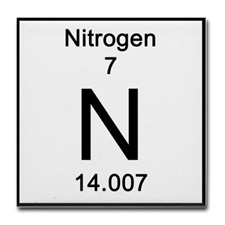
What is the number of protons that the element in this image contain?
a)
14
b)
7
c)
15
d)
18
12.
The first energy level can hold up to how many electrons?
a)
8
b)
4
c)
2
d)
5
13.

What is the atomic mass of "F"
a)
9
b)
18
c)
17
d)
19
14.
The particles that are found in the nucleus of an atom are
a)
neutrons and electrons
b)
electrons only
c)
protons and neutrons
d)
protons and electrons
15.
Which of the following is a positively charged subatomic particle found in the nucleus of an atom?
a)
Electron
b)
Proton
c)
Neutron
d)
Quark
16.
Which of the following is a subatomic particle with no charge that is found in the nucleus of an atom?
a)
Electron
b)
Proton
c)
Neutron
d)
Quark
17.
Where are electrons of an atom found?
a)
Nucleus
b)
Electron Cloud
c)
Some are in the nucleus and some in the electron cloud.
d)
They are moving everywhere.
18.
electrons have this type of charge?
a)
negative
b)
positive
c)
neutral
19.
"C" is the element symbol for which element?
a)
calcium
b)
carbon
c)
chlorine
d)
cadmium
20.
What is the atomic symbol for sodium?
a)
Na
b)
So
c)
NaCl
d)
S
21.
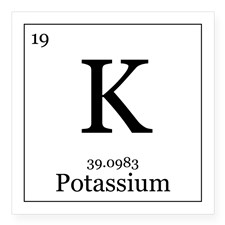
How many neutron are in the atom "K"?
a)
7
b)
2
c)
39
d)
20
22.

What is the number of protons that the element in this image contain?
a)
14
b)
7
c)
15
d)
18
23.
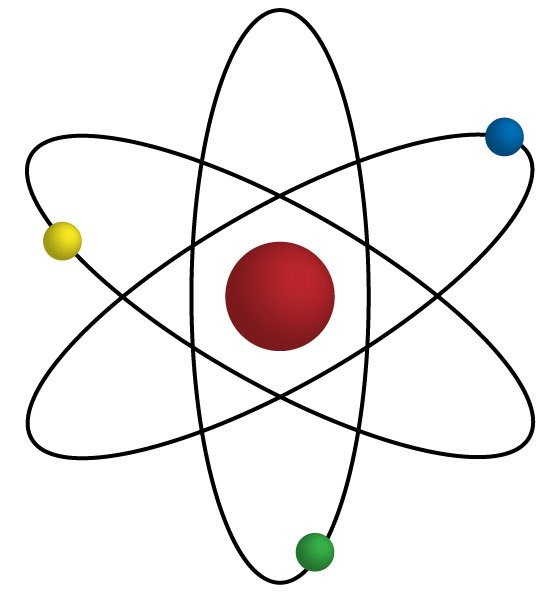
What are the 3 particles that make-up the atom?
a)
protons, neutrons, and isotopes
b)
neutrons, isotopes, and electrons
c)
positives, negatives, and electrons
d)
protons, neutrons, and electrons
24.
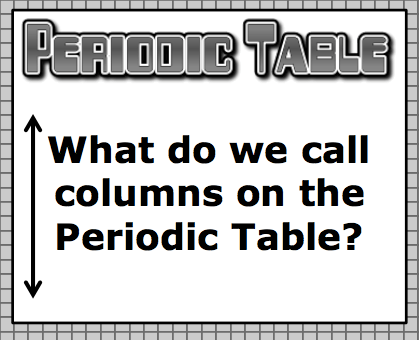
a)
Periods
b)
Groups
25.
a)
Periods
b)
Groups
26.

a)
energy levels
b)
valence electrons
c)
protons
d)
neutrons
27.
a)
energy levels
b)
valence electrons
c)
protons
d)
neutrons
28.
a)
Same group
b)
Same period
29.
a)
Group 1
b)
Group 17
c)
Group 2
d)
Group 18
30.
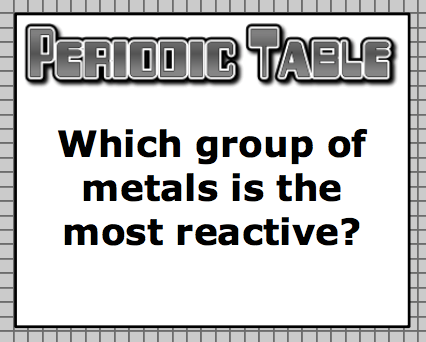
a)
Group 1
b)
Group 17
c)
Group 18
d)
Group 2
31.
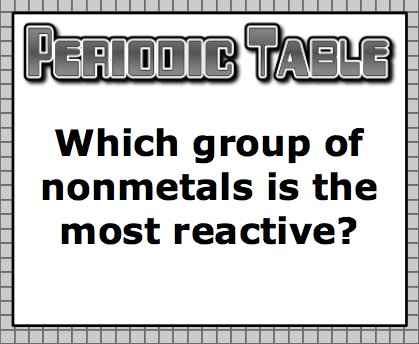
a)
Group 1
b)
Group 17
c)
Group 18
d)
Group 2
32.
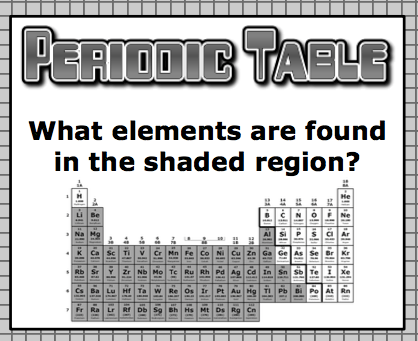
a)
Metals
b)
Nonmetals
c)
Metalloids
33.
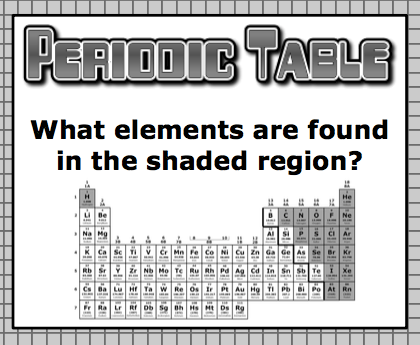
a)
Metals
b)
Nonmetals
c)
Metalloids
34.
a)
Metals
b)
Nonmetals
c)
Metalloids
35.
a)
Metals
b)
Nonmetals
c)
Metalloids
36.
a)
Metals
b)
Nonmetals
c)
Metalloids
37.
a)
Metals
b)
Nonmetals
c)
Metalloids
38.
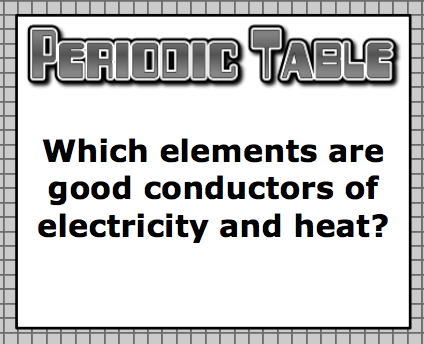
a)
Metals
b)
Nonmetals
c)
Metalloids
39.
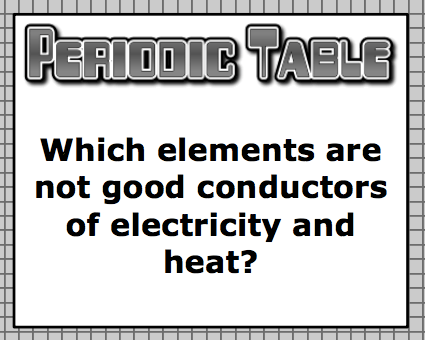
a)
Metals
b)
Nonmetals
c)
Metalloids
40.
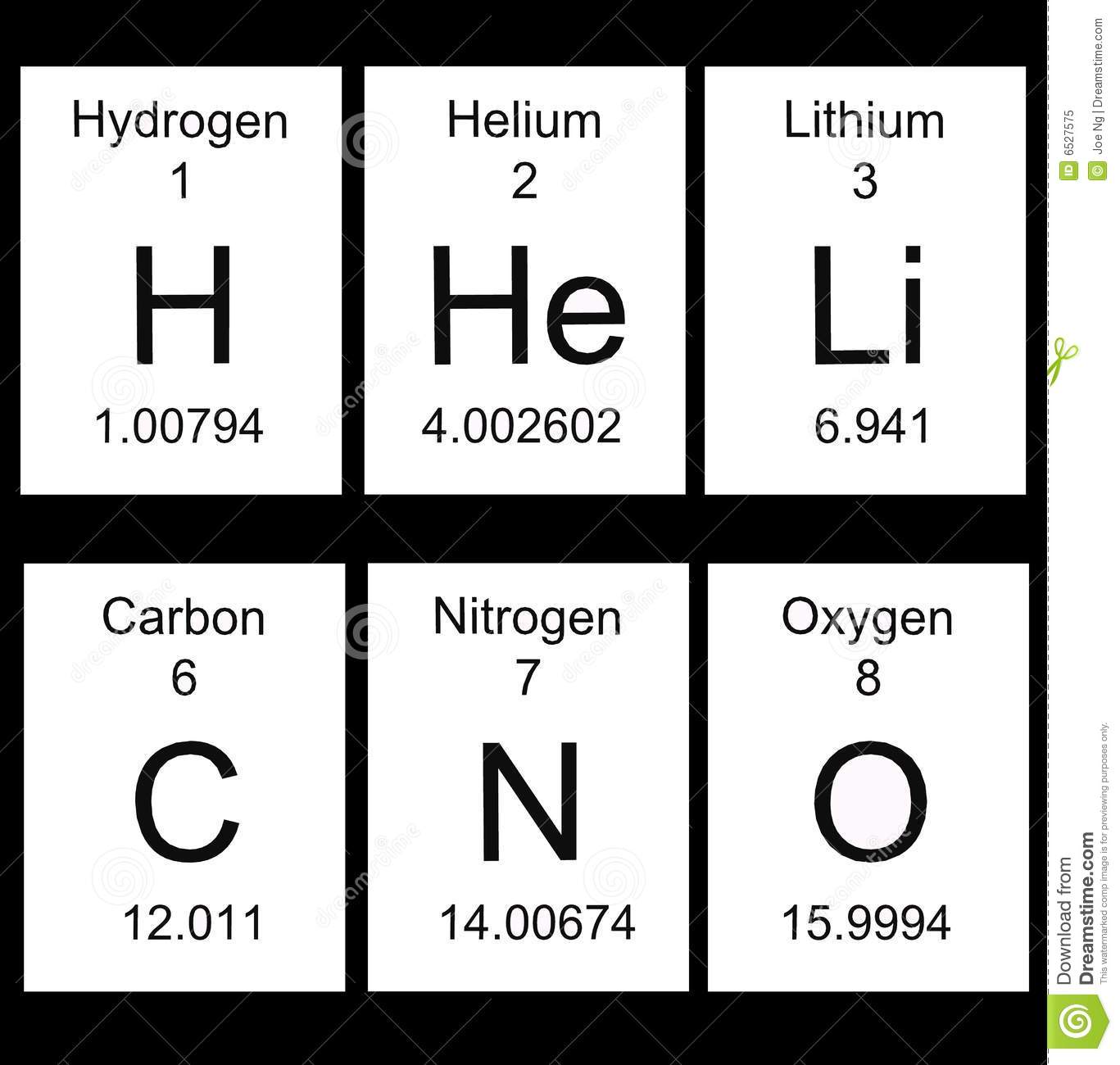
The number at the bottom of each square on the periodic table is the ...
a)
atomic number
b)
atomic mass
c)
chemical symbol
d)
element name
41.
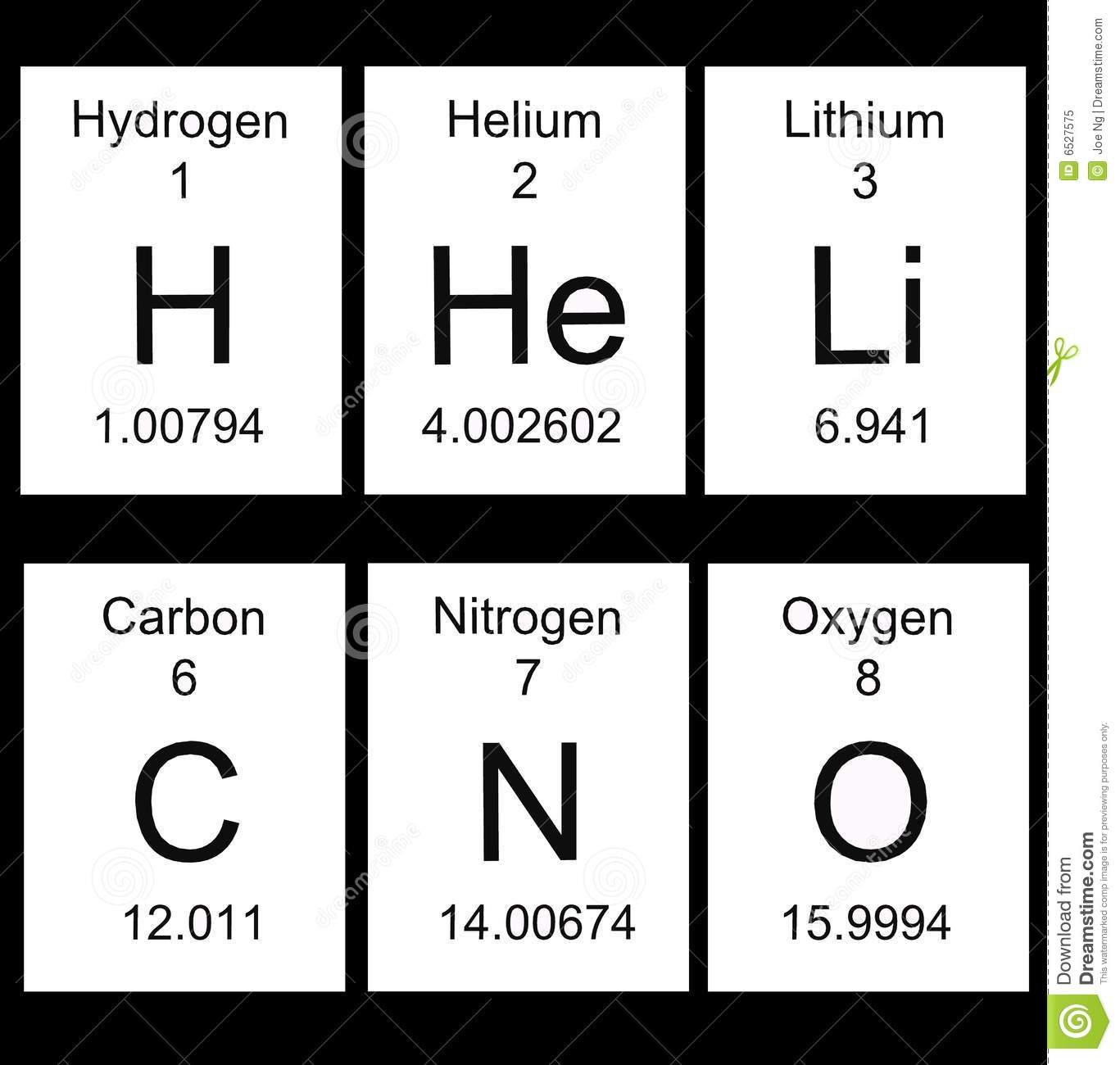
The number at the top of each square on the periodic table is the ...
a)
atomic number
b)
atomic mass
c)
Chemical Symbol
d)
Element Name
42.
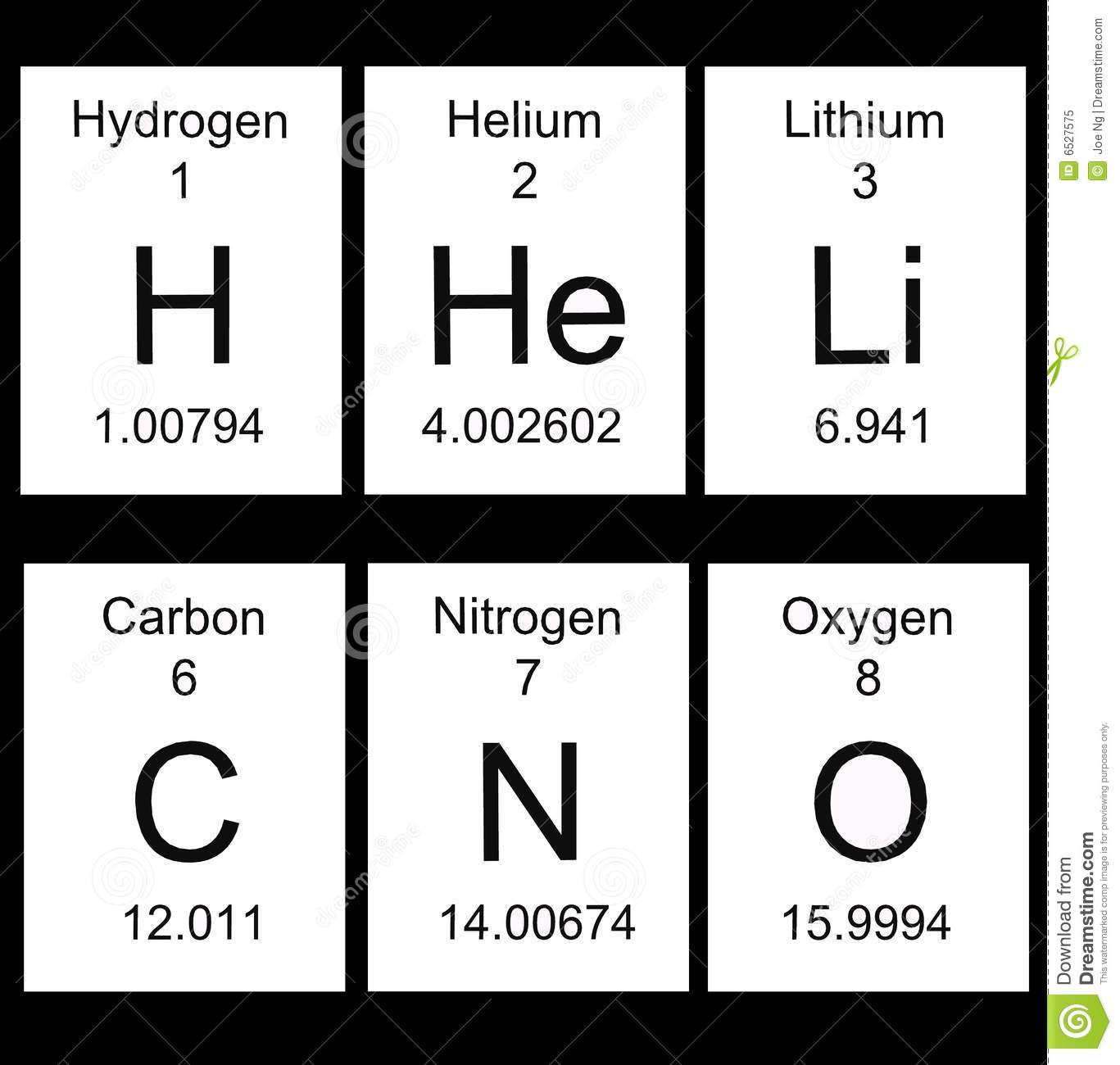
What is the chemical symbol for Lithium?
a)
H
b)
He
c)
Li
d)
N
43.
What is the Law of Conservation of mass?
a)
Mass is created in a chemical reaction
b)
Mass is created in a physical change
c)
New chemicals formed from a chemical reaction have a larger overall mass than the original reactants
d)
Mass is never created or destroyed
44.
Matter can not be created nor destroyed: it can only be
a)
Destroyed a little bit
b)
Invisible
c)
Transformed, changed
d)
None of the above
45.
A chemical reaction is balanced when
a)
both sides have the same elements
b)
Both sides have the same number of atoms
c)
Same subscripts
d)
Same coefficients
46.
The number in front of a compound or element is a
a)
Subscript
b)
Coefficient
c)
Superscript
d)
Charge
47.
The number to the lower side of an element is a
a)
Subscript
b)
Superscript
c)
Coefficient
d)
Charge
48.
How many nitrogen atoms does NH3 have?
a)
1
b)
2
c)
3
d)
4
49.

How many oxygen atoms are in this chemical formula?
a)
6 oxygen atoms
b)
2 oxygen atoms
c)
3 oxygen atoms
d)
4 oxygen atoms
50.
Mg + ___ HCl → MgCl2 + H2
a)
1
b)
2
c)
3
d)
4
51.
What will weigh more when a chemical change is complete? The reactants before the chemical reaction, or the product after the reaction is complete?
a)
They both will weigh the same
b)
The product always weighs more than the reactant
c)
The reactant will weigh more than the product
d)
They both will loose mass after the reaction
52.
In a reaction A + B ----> C, reactant A has 5g and product C has 9g. How many grams does reactant B should have?
a)
4g
b)
5g
c)
9g
d)
14g
53.
Which is Chemical Equation is Balanced?
a)
CH₄+O₂------CO₂+2H₂O
b)
H₂+O₂-----2H₂O₄
c)
4Al+3O₂-----2Al₂O₃
54.
Is this equation balanced or unbalanced?
2Fe2O3 + 3C --> 4Fe + 3 CO2
2Fe2O3 + 3C --> 4Fe + 3 CO2
a)
balanced
b)
unbalanced
55.
24 g of magnesium reacts with 38 g of fluorine to produce _____ g magnesium fluoride
a)
62
b)
38
c)
24
d)
14
56.
What is the law of conservation of mass?
a)
The amount of matter changes when reacted or changed.
b)
The mass of all reactants are changed during a physical or chemical change
c)
The mass of the reactants equals the mass of the products
d)
The mass of the products is different than the mass of the reactants.
57.
The formula below represents the most common carbohydrate known as glucose. Which information can be determined from the chemical formula?
C6H12O6
C6H12O6
a)
The structural arrangement of the atoms in a glucose molecule
b)
The color of a glucose molecule
c)
The size of a glucose molecule
d)
The number of atoms of each element in a glucose molecule
58.
The reactants are on the left side of the chemical equation.
a)
True
b)
False
59.

How many atoms in all are in a molecule of serotonin?
C10H12N2O
a)
22
b)
24
c)
25
d)
4
60.
Coal contains carbon and other elements. Carbon dioxide forms when coal burns in the presence of oxygen. Which of these is the best evidence that a chemical reaction occurs when coal burns?
a)
The shape of the coal changes
b)
Oxygen is present
c)
A new substance is produced
d)
Coal is made up of more than one element
61.
In a ___________change, a substance changes into a different substance.
a)
Physical
b)
Chemical
62.
Which of these is NOT a sign that a chemical change has occurred?
a)
A loss of transparency
b)
An unexpected color change
c)
A temperature change
d)
The formation of a precipitate
63.
___________________ are the elements or compounds that leave (are formed in) a chemical reaction.
a)
Polymers
b)
Bonds
c)
Reactants
d)
Products
64.

Is burning wood a chemical or physical change?
a)
chemical
b)
physical
65.

Photosynthesis is an example of a
a)
physical change
b)
chemical change
100 %

