wayground logo

Free Printable Worksheets

Font size

S
M
L
XL
Worksheets

Thermo Test Review

Total questions: 70

Worksheet time: 3hrs 8mins

Name
Class
Date
1.
What is the symbol for heat?
a)
q
b)
H
c)
J
d)
∘C
2.
Chemical reactions that absorb energy are called
a)
endothermic
b)
fast
c)
slow
d)
exothermic
3.

Which of the following is used to calculate amount of heat absorbed/released?

a)

q = mcΔT

b)

H = ΔH x moles

c)

H = ΔH x grams

d)

products - reactants

4.
In an endothermic reaction the system is releasing energy.
a)
True
b)
False
5.
The variable C stands for what
a)
heat 
b)
mass
c)
specific heat
d)
change in temperature
6.
The heat required to raise the temperature of a SUBSTANCE by 1∘C
a)
calorie
b)
joule
c)
specific heat
d)
4.184 J
7.
For the formula:
 Q= m c ∆T
The  units for specific heat are:
a)
g /J C
b)
°C/g J
c)
kJ/g
d)
J/g°C
8.
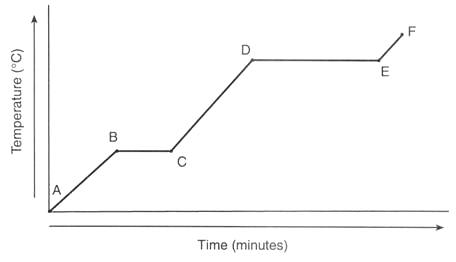
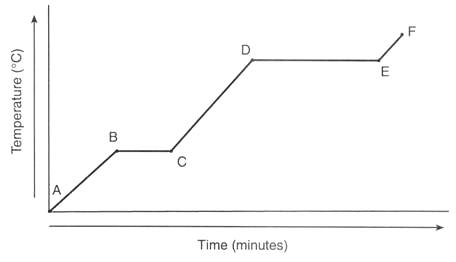
What letter represents boiling?
a)
B
b)
C
c)
D
d)
E
9.
What letter represents a liquid being heated?
a)
A
b)
B
c)
C
d)
D
10.
Which of the following is an endothermic process?
a)
solid to gas
b)
liquid to solid
c)
solid to liquid
d)
gas to liquid
11.
How much heat does an aluminum block absorb if 10.00 grams ae heated from 25.0oC to 50.0oC? the specific heat of aluminum is .900J/goC
a)
450
b)
-450
c)
225
d)
-225
12.

which term is defined as "heat required to change 1g of liquid to gas"

a)

heat of fusion

b)

heat of vaporization

c)

melting energy

d)

freezing energy

13.

What is the specific heat of a substance if 5684 J are needed to heat 123.4 grams by 12.4 C ?

a)

3.71 J/g C

b)

371 J/g C

c)

4.8 J/g C

d)

5.67 J/ g C

14.

25 grams of water cooled from 85 C to 40 C. What is the value for q?

a)

-4405.75

b)

4405.75

c)

4707.5 calories

d)

-4707.5 calories

15.

.


How does an exothermic reaction compare with an endothermic reaction?

a)

Both changes absorb energy as reactants become products.

b)

Both changes release energy as reactants become products.

c)

An exothermic reaction absorbs energy, and an endothermic reaction releases energy.

d)

An endothermic reaction absorbs energy, and an exothermic reaction releases energy.

16.
Heat flows from _______ to ______ objects
a)
cooler to warmer
b)
warmer to warmer
c)
warmer to cooler
d)
cooler to cooler
17.
Heat is measured in 
a)
joules
b)
grams
c)
degrees celcius
18.
q stands for which variable
a)
heat
b)
mass
c)
specific heat
d)
change in temperature
19.
Using the heat equation, what would the formula look like if we were solving for change in temperature?
a)
Q m=∆T c
b)
Q/mc= ∆T
c)
Qm/c=∆T
d)
mcQ=∆T
20.
If 238 J of heat is absorbed by a sample of metal with a mass of 40.7 g, and it raises the temperature from 20.0°C to 32.4°C, what is the specific heat capacity of the metal? (show your work)
a)
2.34 J/g°C
b)
0.472 J/g°C
c)
6.13 J/g°C
d)
0.163 J/g°C
21.
Is Freezing endothermic or exothermic?
a)
endothermic
b)
exothermic
22.
Temperature is a measure of the average kinetic energy of the particles in a sample of matter
a)
True
b)
False
23.
is the amount of energy that is required to raise the temperature of one gram of pure water by one degree Celsius (1°C). 
a)
Heat
b)
Specific Heat
c)
Mass
d)
Temperature
24.
If you rearrange the equation Q=mcT.  What does C equal?
a)
QmT
b)
Q/mT
c)
Qm/T
d)
Q X mT
25.
Do reactants in an endothermic reaction have a higher or lower energy than the products? 
a)
Higher
b)
Lower
26.
Do the reactants in an exothermic reaction have a higher or lower energy than the products?
a)
Higher
b)
Lower
27.
What type of reaction is pictured behind?
a)
endothermic
b)
exothermic
28.
For which of these processes is the value of ΔH expected to be positive?
1.  The temperature increases when calcium chloride dissolves in water.
2.  Steam condenses to liquid water
3.  Water boils
4.  Dry ice sublimates
a)
4 only
b)
1 only
c)
3 and 4 only
d)
2 and 3 only
29.
Which of the letters (A-D) represents activation energy?
a)
A
b)
B
c)
C
d)
D
30.
What kind of graph is this?
a)
endothermic
b)
exothermic
31.
Which of the letters (A-D) represents the potential energy of the reactants?
a)
A
b)
B
c)
C
d)
D
32.
Which of the letters (A-D) represents the potential energy of the products?
a)
A
b)
B
c)
C
d)
D
33.
Compared to the potential energy of the products, the potential energy of the reactants above is?
a)
greater than
b)
less than
c)
the same
d)
impossible to determine
34.
What kind of reaction has a positive heat of reaction (ΔHr)?
a)
endothermic
b)
exothermic
35.
What kind of reaction has a negative heat of reaction (ΔHr)?
a)
endothermic
b)
exothermic
36.
What kind of reaction is this?
a)

endothermic

b)
exothermic
37.
At 10 atm, dry ice is heated from -100 °C to 30 °C.  What changes occur?
a)
freezing, then condensation
b)
melting only
c)
sublimation only
d)
melting, then boiling
38.
What state of matter is Y?
a)
solid 
b)
liquid
c)
gas
d)
supercritical fluid
39.
What state of matter is Z?
a)
solid 
b)
liquid
c)
gas
d)
supercritical fluid
40.
What change occurs from F to E?
a)
sublimation
b)
deposition
c)
melting
d)
condensation
41.
What change occurs from E to C?
a)
sublimation
b)
freezing
c)
melting
d)
boiling
42.
What change occurs from C to D?
a)
condensation
b)
vaporization
c)
melting
d)
sublimation
43.
What is point A?
a)
triple point
b)
critical point
c)
equilibrium point
d)
normal melting point
44.
What is point B?
a)
triple point
b)
critical point
c)
equilibrium point
d)
normal melting point
45.
Below the temperature of point B, this substance can exist as a ____________.
a)
solid only
b)
liquid only
c)
gas only
d)
either a solid, liquid or gas
46.
At 0.10 atm, what phase(s) can exist?
a)
solid, liquid or gas
b)
liquid or gas
c)
solid only
d)
gas only
47.
Which statement is true for carbon dioxide at -60 °C?
a)
All three phases are possible.
b)
It can exist as a solid or a gas, depending on pressure.
c)
It is a solid.
d)
With enough pressure it can be melted.
48.
What line segment represents only the solid state?
a)
A-B
b)
B-C
c)
C-D
d)
D-E
49.
What state(s) of matter are present at D-E?
a)
Solid-liquid
b)
Liquid
c)
Liquid-gas
d)
Gas-Solid
50.
Between which points is the temperature of the substance remaining constant?
a)
A-B only. 
b)
A-B, C-D, E-F
c)
B-C only. 
d)
B-C, D-E
51.
Between which points is the temperature of the substance increasing?
a)
A-B only. 
b)
A-B, C-D, E-F
c)
B-C only. 
d)
B-C, D-E
52.
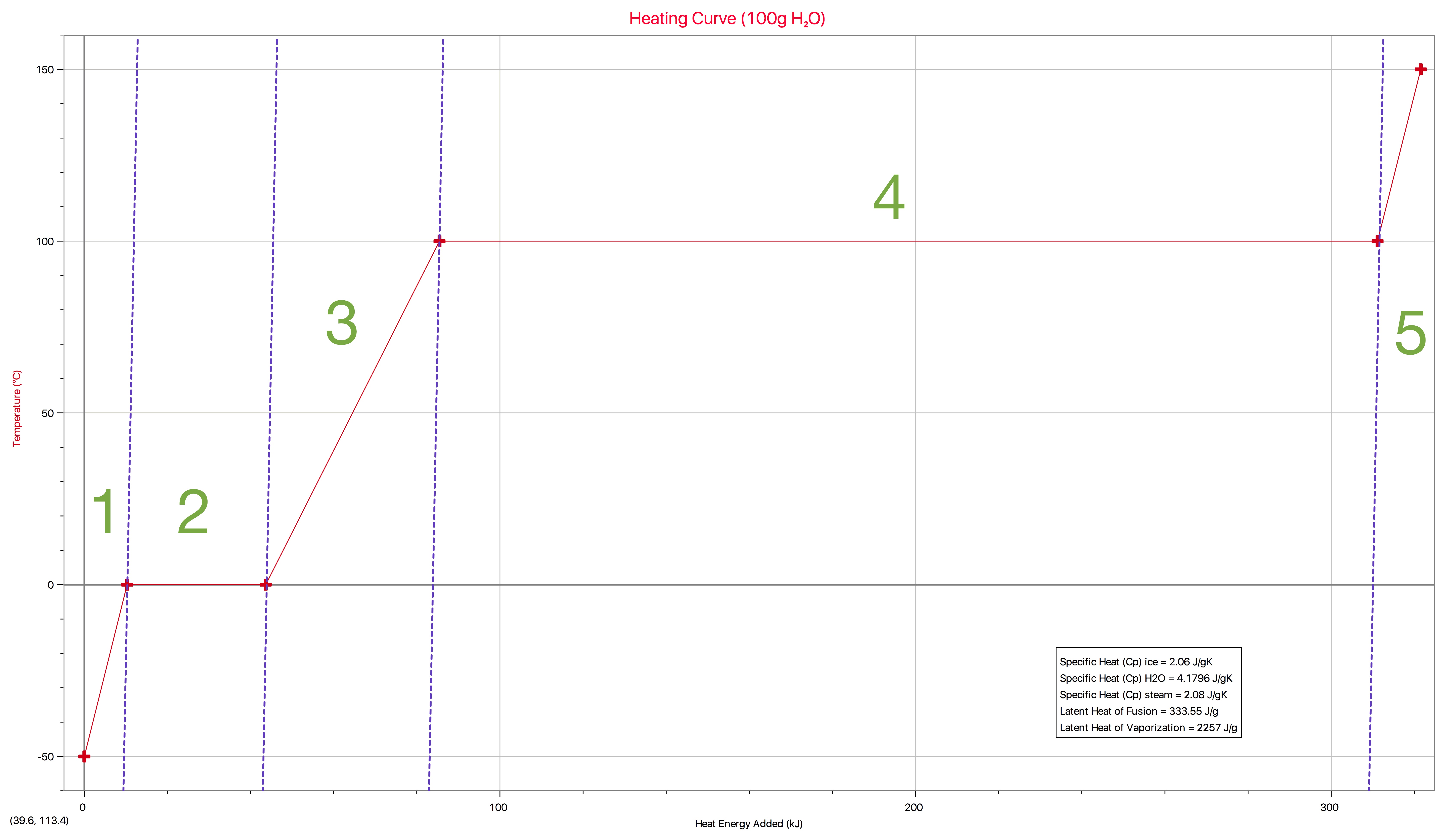
What state of matter is segment 5?
a)
Solid
b)
Liquid
c)
Gas
d)
Plasma
53.
Between which points is the substance changing state?
a)
A-B only. 
b)
A-B, C-D, E-F
c)
B-C only. 
d)
B-C, D-E
54.
True or false: melting and freezing occur at the same temperature!
a)
True
b)
False
c)
I don't know
55.
A substance's heating curve is shown in the graph.  What is its boiling point?
a)
100 C
b)
60 C
c)
80 C
d)
20 C
56.
In which region(s) of the graph would the substance be a liquid and a gas?
a)
Region 2
b)
Region 3
c)
Region 4
d)
Region 5
57.
Which of the following terms identifies the change from a liquid to gas?
a)
Vaporization
b)
Condensation
c)
Deposition
d)
Sublimation
58.
When the temperature of matter increases the particles...
a)
speed up and move closer
b)
speed up and move farther apart
c)
slow down and move closer together
d)
slow down and move farther apart
59.
No definite shape, but has a definite volume
a)
Gas
b)
Liquid
c)
Solid
60.
Definite shape and a definite volume.
a)
Gas
b)
Liquid
c)
Solid
61.
No Definite Shape and No Definite Volume
a)
Gas
b)
Liquid
c)
Solid
62.
Phase change from a solid to a gas.
a)
sublimation
b)
deposition
c)
condensation
d)
evaporation
63.
Phase change from a gas to a liquid.
a)
condensation
b)
evaporation
c)
melting
d)
deposition
64.
What happens to the energy of particles in a substance as it changes from gas, to liquid, to solid?
a)
KE decreases
b)
KE increases
c)
KE stays the same
d)
KE goes up and then goes down
65.
When heat is transferred through conduction, which way does it travel?
a)
from colder temperature to warmer temperature
b)
from warmer temperature to cooler temperature
c)
first class
d)
coach
66.
Heat transfer always goes from-
a)
Cold to Hot
b)
Hot to Cold
c)
Heat doesn't transfer
d)
Freezing to Cold
67.
What is heat?
a)
How fast something warms up.
b)

The measure of the average kinetic energy of all the particles in an object.
c)

The transfer of energy from one object to another because of a temperature difference.

d)
The amount of kinetic energy in a substances
68.
Which example below is an example of conduction?
a)
Boiling macaroni
b)
The attic is warmer than the basement
c)
The Sun heating the Earth
d)
Touching hot sand with your feet
69.
Which example below is an example of convection?
a)
Standing on a hot metal bridge
b)
The attic is warmer than the basement
c)
The Sun heating the Earth
d)
Touching hot sand with your feet
70.
Which example below is an example of radiation?
a)
Standing on a hot metal bridge
b)
The attic is warmer than the basement
c)
The Sun heating the Earth
d)
Touching hot sand with your feet