
 Worksheets
Geologic Time
Total questions: 40
Worksheet time: 21mins
atrace
Which is an trace fossil?
bone
a cast
petrified wood
an animal track
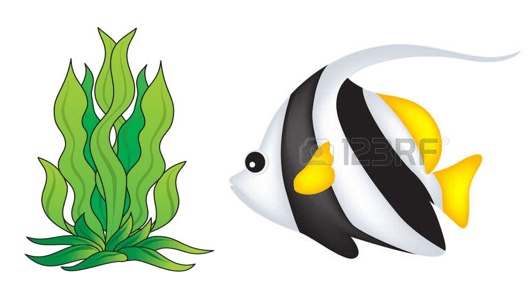
Which statement is NOT true regarding Earth’s past climate?
Earth was very warm 100 million years ago.
A shallow ocean covered much of North America 450 million years ago.
Tropical forests and swamps covered much of Earth’s surface many years ago.
Earth’s climate has stayed the same throughout the past.

Which statement belongs in the box?
preserved in amber
pressure that removes all gases and liquids from organism’s tissues
replacing organism with minerals
tracks left behind in soft sediment
Using carbon-14 is one way to measure the age of the remains of organisms. Which correctly describes the one limitation in using this particular type of dating?
An organism continues to take in carbon-14 long after it has died. First scientists must determine the life-span of the organism before making an accurate prediction.
The half-life of carbon-14 is only 5,730 years making it difficult to measure very old organisms.
The ratio of carbon-14 and carbon-12 is not equal in the atmosphere. In order to find an accurate measurement, carbon-12 must also be measured.
Organisms use nitrogen to build and repair tissues. Measuring the amount of nitrogen combined with carbon is the only way to get an accurate time frame.
All of the following conditions help preserve organisms as fossils EXCEPT ____.
quick burial by sediments
hard parts
protection from scavengers
activities of microorganisms
Rock layers are correlated if they both contain the same ____.
elements
shapes
fossils
type of rock
With ____ dating, a rock's exact age can be determined, whereas with ____ dating, a rock's age is compared to the ages of other rocks.
absolute, relative
relative, absolute
true, absolute
relative, approximate
The oldest rock layer in an undisturbed rock sequence occurs ____.
at the bottom of the sequence
below the sedimentary rock layer
below the unconformity
at the top of the sequence
The amount of time it takes for one-half of the original amount of an isotope to decay is known as its ____.
correlation
half-life
period
radioactivity
Which of the following is used to determine the absolute age of a rock?
relative-age dating
correlation
radiometric dating
permineralization
Molds, casts, trace, and petrified wood are all example of ____.
fossils
unconformities
radioactive isotopes d
disconformities
An example of a trace fossil includes a ____.
foot print
nest
bite mark
all of the above

The principle of superposition can be used to determine .
the actual age of these rock layers
the relative age of these rock layers
the actual temperatures of these rock layers
the relative densities of these rock layers
What characteristic of radioactive decay makes it useful for determining the absolute age of samples?
occurs at a constant rate
slows down in very dense samples
speeds up under high pressure
changes based on temperature

Using the graph, determine the half-life of thorium-232.
7 billion years
35 billion years
14 billion years
28 billion years
What is one reason the presence of iridium leads scientists to hypothesize that a meteorite impact caused the mass extinction of dinosaurs?
There are no fossils of dinosaurs in rocks below the iridium layer.
There are no fossils of dinosaurs in rocks above the iridium layer.
All dinosaur fossils contain iridium.
Iridium is only common on Earth and is never found in meteorites.
How was Pangaea formed?
Tectonic plates moved in such a fashion that the continents all came together into a supercontinent.
Earth’s climate cooled.
A meteorite impacted Earth leaving behind an iridium layer.
A large landmass split into several smaller continents.

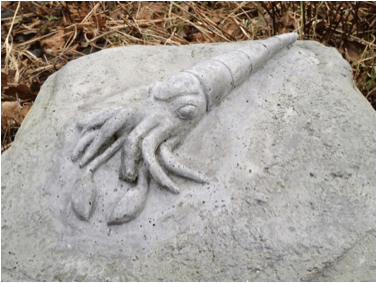

this type of fossil is created when an organism's tissue is replaced by minerals
cast
mold
amber
mineral replacement

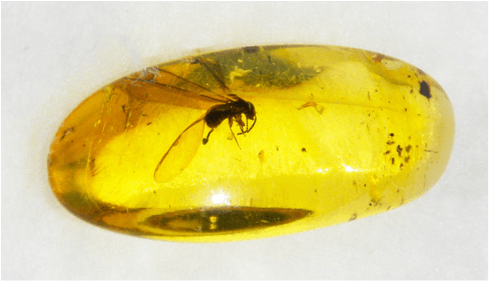


The _______fossil is when water seeps into the ground and minerals fill in the hollow spaced and harden.
Impression
Mineral Replacement
Preserved
Fossils teach us about the past
True
False

