wayground logo

Free Printable Worksheets

NEW

Font size

S
M
L
XL
Worksheets

Unit 3 Review- Hydrosphere

Total questions: 55

Worksheet time: 35mins
Name
Class
Date
1.
What is the energy source for the water cycle?
a)
the sun
b)
the earth
c)
water
d)
the moon
2.
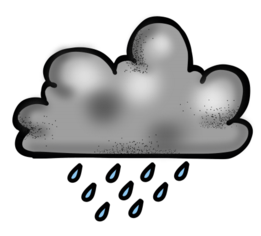
What part of the water cycle does this picture show?
a)
condensation
b)
precipitation
c)
evaporation
3.
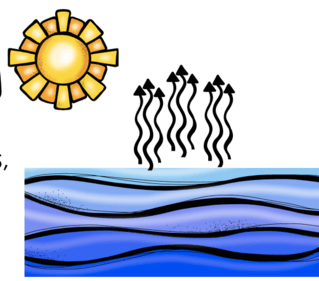
What part of the water cycle does this picture show?
a)
condensation
b)
precipitation
c)
evaporation
4.
When water condenses, the liquid water forms ______________.
a)
water vapor
b)
steam
c)
air
d)
clouds
5.
Which of these is not an example of precipitation?
a)
rain
b)
clouds
c)
sleet
d)
snow
6.
Does evaporation happen before or after condensation?
a)
before
b)
after
c)
during
7.
What is surface runoff?
a)
Water from precipitation that flows over the land surface
b)
The surface running off
c)
Snow
d)
A runny surface
8.
What do we call the land area that supplies water to a river system?
a)
runoff
b)
recharge
c)
watershed
d)
valley
9.

What conditions determine whether water will become runoff?

a)

Vegetation

b)

Rate of Precipitation

c)

Soil Composition

d)

Slope

e)

All of the above

10.

How does vegetation affect the absorption of water?

a)

Less vegetation = more absorption

b)

More vegetation = less absorption

c)

More vegetation = more absorption

d)

No vegetation = max absorption

11.
Brackish water is:
a)
Salty
b)
Fresh
c)
Found only in extremely cold water
d)
A mix of salty and fresh
12.
What is an area of higher elevation that separates watersheds?
a)
Estuary
b)
Divide
c)
Wetland
d)
Transition zones
13.
The build up of nutrients in a lake is a process called ________________.
a)
eutrophication
b)
volcanic eruption
c)
algae buildup
d)
pond death
14.
Pollutants from a highway enter a stream or creek and travel to a river. River water tested with the pollutant found is called  
a)
point source pollution
Available space for crops
b)
nonpoint source pollution.
c)
eutrophic pollution
d)
riparian pollution
15.
What is a partially enclosed body of water that has a mixture of salt water from the ocean and fresh water from rivers and streams?
a)
Estuary
b)
Watershed
c)
Tributary
d)
Bay
16.
What is Point Source Pollution (PSP) ?
a)
When you cannot trace the direct source of pollution
b)
When you can trace the point of the source - "pipe to source"
17.
What process is evaporation from plants and trees?
a)
Evaporation
b)
Condensation
c)
Precipitation
d)
Transpiration
18.
Wetlands are like sponges because:
a)
They are there
b)
They soak up excess water and filter pollutants
c)
None of these
19.
How many river basins are in North Carolina?
a)
17
b)
19
c)
11
d)
21
20.

What river basins are associated with Stokes County?

a)

Roanoke / Yadkin-Pee Dee

b)

Roanoke / Cape Fear

c)

Cape Fear / Yadkin-Pee Dee

d)

Roanoke / Neuse

21.
As the velocity of a stream decreases, what happens to the size particles that it is able to carry?
a)
It's only able to carry larger particles
b)
It's only able to carry smaller particles
c)
It can carry any size particles
22.

Which of the following is NOT a way a stream carries its load?

a)

Solution

b)

Suspension

c)

Deposition

d)

Bed load

23.

How does strean suspension vary?

a)

Volume and density

b)

Velocity and deposition

c)

Volume and velocity

d)

Velocity and texture

24.

How does the speed of water affect the bed load?

a)

The slower the water moves the larger the particles it can carry

b)

The faster the water moves the larger the particles it can carry

c)

The speed of water does not affect the bed load

d)

None of the above

25.

What does stream carrying capacity depend on?

a)

Only velocity

b)

Only amount of water

c)

Velocity and amount of water

d)

Gravity

26.

What is the region where water first accumulates called?

a)

Tributary

b)

Estuary

c)

Watershed

d)

Headwaters

27.
What is a simple definition of a wetland?
a)
low lying lands with spongy soil that are wet all the  time every year
b)
low lying lands with spongy soil that are wet for a certain time every year
c)
high lands with spongy soil that are wet for a certain time every year
d)
low lying lands with moist soil that are wet all the  time every year
28.

Which of these is a type of standing fresh water?

a)

reservoir

b)

ocean

c)

river

d)

stream

29.

How does salt affect density?

a)

More salt = less dense

b)

More salt = more dense

c)

Less salt = more dense

d)

None of the above

30.
Surface currents are a result of
a)
Global Wind Patterns
b)
Earth's Rotation
c)
Density
d)
All of the above
31.
Deep Ocean currents are a result of
a)
Global Wind Patterns
b)
Earth's Rotation
c)
Density
d)
All of the above
32.
As you go deeper in the ocean, the water is colder and less salty.
a)
True
b)
False
33.

Warm ocean currents generally come from

a)

The North Pole

b)

The South Pole

c)

The Equator

d)

Both North and South pole

34.

Cold ocean currents generally come from

a)

The North Pole

b)

The South Pole

c)

The Equator

d)

Both North and South Pole

35.
The California Current (west coast) carries _________ water from canada
a)
Cold 
b)
Warm
c)
Freezing
d)
Fresh
36.
Ocean currents have an affect on which two things
a)
climate and weather
b)
temperature and density
c)
land and sea
d)
equator and poles
37.
The large, circular surface-current pattern found in each ocean.
a)
California Current
b)
Surface Current
c)
Gyre
d)
Global Conveyor Belt
38.
Why are surface currents at the surface of the ocean?
a)
colder temperature
b)
colder temperature & more salinty
c)
warmer temperature & less salinty
d)
less salinty
39.
What causes surface waves?
a)
underwater volcanoes
b)
earthquakes
c)
wind
d)
landslides
40.
I am an island made of sand that protects the mainland from waves.
What am I?
a)
beaches
b)
inlets
c)
estuaries
d)
barrier islands
41.
A dangerous current that flows away from the beach carrying sand and water.
a)
undertow
b)
rip current
42.
Groins, breakwaters, seawalls, and beach nourishment are designed to speed up shoreline erosion.
a)
True
b)
False
43.
Shoreline stabilization methods offer permanent solutions to shoreline problems.
a)
True
b)
False
44.
The natural process of eutrophication is accelerated when you add
a)
phosphorus and nitrogen
b)
nitrate and oxygen
c)
plant nutrients and dish detergent
45.
Which causes a decrease in the amount of dissolved oxygen in a lake?
a)
lower temperatures
b)
fertilizer runoff
c)
overfishing
46.
In 1972 an important piece of environmental legislation was passed.  It was the ______________.
a)
Clean Water Act
b)
Water Pollution Control Act
c)
EPA
d)
Superfund Act
47.
Water stored behind the dam is known as …………..
a)
Dam
b)
Penstock
c)
Water reservoir
d)
Spillway
48.
The ability of a material to transmit water through interconnected pores is called
a)
capacity
b)
competence
c)
permeability
d)
porosity
49.
An area of land that drains into a body of water.
a)
mouth
b)
point-source pollution
c)
watershed
d)
headwaters
50.
Which of the following is not a permeable surface?
a)
soil
b)
sand
c)
pavement
d)
moss
51.
Which human activity can speed up the process of eutrophication?
a)
Building cities
b)
Nuclear power plants
c)
Deforestation
d)
Farming
52.
Aquifers store ____ water.
a)
ground
b)
lake 
c)
ocean
d)
glacier
53.
How does the warm waters of the Gulf Stream affect the climate in North Carolina? 
a)
It makes it colder and drier
b)
It makes it warmer and wetter
c)
It makes it colder and wetter
d)
It makes it warmer and drier
54.

Why do some fish die in sediment filled water?

a)

blocked gills

b)

blinded

c)

cannot find family

d)

water gets cooler

55.

What characteristic of water causes sediments to travel?

a)

Life forms in the ocean

b)

Currents (movement of water)

c)

Weather

d)

Sediment does not travel