
 Worksheets
History of Earth and Evidence of Evolution
Total questions: 17
Worksheet time: 19mins
Name
Class
Date
1.
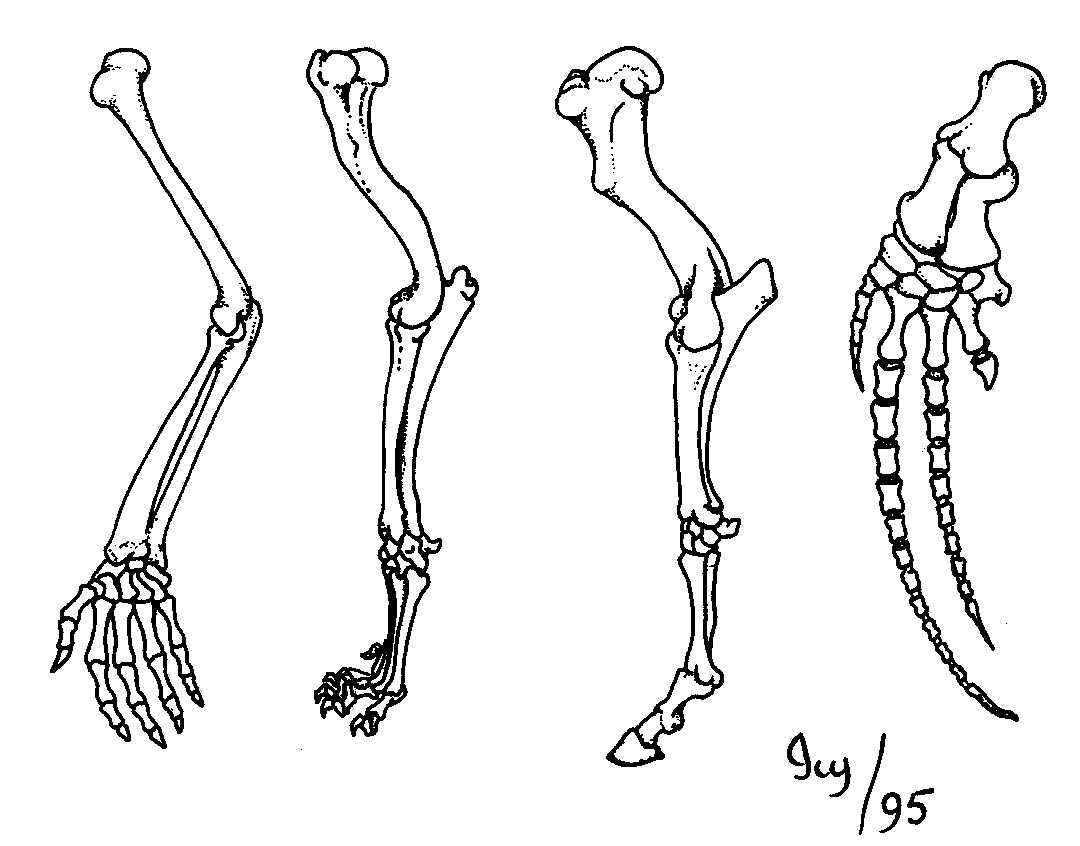
Structures with the same parts have different functions; suggests that organisms share a common ancestry
a)
vestigial structures
b)
homologous structures
c)
adaptive radiation
d)
fossil
2.
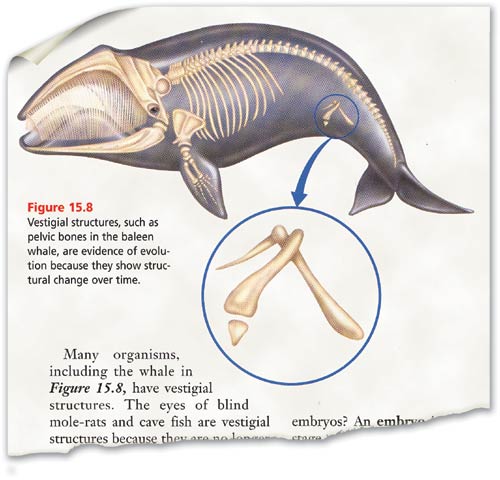
Which of the following is an example of a vestigial structure?
a)
the wings of a red-tailed hawk
b)
the hind limbs of a house cat
c)
the fins of sharks
d)
the tailbone of a human
3.
Structures that no longer serve a purpose.
a)
Homologous structures
b)
gene pool
c)
population
d)
Vestigial structures
4.
Which of the following pieces of evolution evidence deals with structures common in an organisms development during gestation that form differently or for different purposes in adult form?
a)
fossil record
b)
comparing embryology
c)
comparing biochemistry
d)
comparing anatomy
5.

Which layer is the oldest
a)
B
b)
A
c)
E
d)
C
6.
If two organisms have similar traits of DNA they are probably
a)
share a common ancestor
b)
share a common environment
c)
share a common population
d)
speciation
7.

Which two animals are most closely related?
a)
Fish and Amphibian
b)
Reptile and Amphibian
c)
Reptile and Bird
d)
Mammal and Bird
8.
Which statement best describes conditions on early Earth?
a)
hot with volcanic activity and electrical storms
b)
dry land covered with volcanic dust
c)
cold oceans
d)
dark and dusty with abundant water
9.

What gas were we missing in Earth's early atmosphere?
a)
carbon dioxide
b)
oxygen
c)
water vapor
d)
sulfur oxides
10.
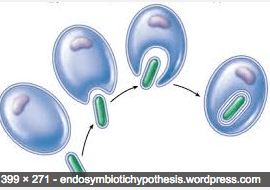
What process is shown within this diagram?
a)
Natural selection
b)
Endosymbiosis
c)
Chemical evolution
d)
Abiogenesis
11.
All of the following are evidence of endosymbiosis EXCEPT
a)
mitochondria and chloroplast ribosomes are similar to bacterial ribosomes
b)
mitochondria and chloroplast are similar in size to bacteria
c)
mitochondria and chloroplast have double membranes
d)
mitochondria and chloroplast have a nucleus
12.
Based upon the conditions of the early Earth, which forms of live most likely appeared first?
a)
Prokaryotic and aerobic
b)
Prokaryotic and anaerobic
c)
Eukaryotic and aerobic
d)
Eukaryotic and anaerobic
13.

A unicellular organism that does not have a nucleus
a)
fungus
b)
bacteria
c)
biome
d)
virus
14.

Antibiotic resistant bacteria are a problem because:
a)
we can't help people with those infections
b)
bacteria smell pretty bad
c)
something about viruses
d)
they are not a problem, I love being sick
15.

Which question were the scientists trying to answer with this experiment?
a)
Where do cells come from?
b)
What came first the chicken or the egg?
c)
How are biomolecules formed?
d)
What gave rise to the Eukaryotic cell?
16.
The apparatus in the experiment was used to mimic what?
a)
Proteins
b)
Present Earth conditions
c)
Early Earth conditions
d)
Nucleic acids (DNA/RNA)
17.
Why did Miller and Urey decide to leave PURE Oxygen out of their experiment?
a)
Pure Oxygen was not present in the atmosphere of primitive Earth.
b)
Pure Oxygen was not available when setting up the experiment.
c)
Miller and Urey decided to leave Pure Oxygen out of the experiment because there were not living things in the experiment that needed the oxygen.
d)
Miller and Urey just forgot to use Pure Oxygen.
100 %

