wayground logo

Free Printable Worksheets

NEW

Font size

S
M
L
XL
Worksheets

Africa Quizizz

Total questions: 63

Worksheet time: 2hrs 32mins

Name
Class
Date
1.
What physical feature is highlighted?
a)
Zambezi River
b)
Congo Basin
c)
Sahara Desert
d)
Nile River
2.
What physical feature is highlighted?
a)
Kalahari Desert
b)
Sahara Desert
c)
Niger River
d)
Lake Victoria
3.
What physical feature is highlighted?
a)
the Atlas Mountains
b)
the Great Rift Valley
c)
the Congo Rainforest
d)
the Horn of Africa
4.
Which part of Africa are you most likely to find the Sahara desert?
a)
East
b)
South
c)
Central
d)
North
5.
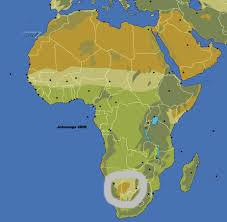
What is the name of the desert represented by the red oval?
a)
Sahara Desert
b)
Namib Desert
c)
Kalahari Desert
d)
Mohave Desert
6.
What is the name of the country that is colored orange?
a)
Namibia
b)
Zambia
c)
Botswana
d)
South Africa
7.
What country is highlighted?
a)
Sudan
b)
Nigeria
c)
Democratic Republic of Congo
d)
Gabon
8.
What are the two deserts in Africa
a)
Nafud and Arabian
b)
Death Valley and Sahara
c)
Sahara and Kalahari
d)
Kalahari and Death Valley
9.
What country is highlighted?
a)
Sudan
b)
South Sudan
c)
Egypt
d)
South Africa
10.

Which of the following BEST describe the Sahara desert?

a)

Hot and dry, little to no animals

b)

Hot and mostly dry, some animals

c)

Dry and Wet season, lots of animals

d)

Lots of rain, lots of animals

11.

Feature #6

a)

Cape of Good Hope

b)

Horn of Africa

c)

Mt. Kilimanjaro

d)

Madagascar

12.
Country #6
a)
Ethiopia
b)
Somalia
c)
Kenya
d)
Madagascar
13.
Country #9
a)
Ethiopia
b)
Somalia
c)
Kenya
d)
Madagascar
14.
Country #4
a)
Ethiopia
b)
Somalia
c)
Kenya
d)
Madagascar
15.
Country #1
a)
Nigeria
b)
Sudan
c)
South Sudan
d)
Zimbabwe
16.
Who was the first black president of South Africa?
a)
F.W. de Klerk
b)
Nelson Mandela
c)
Jomo Kenyatta
d)
Kwame Nkrumah
17.
What was the significance of Nelson Mandela's election to office in South Africa? 
a)
he became the first black president
b)
he released political prisoners
c)
he united the Zulu and Ashanti people to win the election
d)
he won the election with the support of the British
18.
What was Nelson Mandela's attitude towards the people who supported apartheid laws in South Africa? 
a)
he believed they should be punished for their actions
b)
he wanted to unite all races in South Africa
c)
he wanted to turn over those leaders to the nsUnited Natio
d)
he forced those leaders out of the country
19.
What are the dates of Apartheid ?
a)
At the end of the XIXs and during the XXs
b)
From 1948 to 1994
c)
From 1847 to 1988
d)
1994 to 2018
20.
Which of the following was NOT an effect of apartheid laws? 
a)
separate homelands
b)
black South Africans and white South Africans worked together
c)
black South Africans being forced to carry pass books
d)
use of separate services and buildings
21.
What was apartheid? 
a)
equality for all
b)
western-style democracy
c)
constitutional monarcy
d)
segregation of races
22.

In 1976, the Baban Rafi Forest was the most significant piece of woodland in the Maradi Department of Niger. Located on the southern edge of the Sahara Desert in Africa, Baban Rafi had a thick, lush forest. In 2007, NASA sent a satellite into space to look at this forest and noticed a large difference as the forest areas had been greatly reduced as the population of the area quadrupled. This is an example of...

a)

Drought

b)

Deforestation

c)

Desertification

d)

Apartheid

23.

Legend has it that a man-eating monster called Aigamuxa exists in Africa. These creatures are particularly nasty because if they catch you, they will eat you alive, but they can't see you during a chase because their eyes are in the soles of their feet. They have to stop and lie on their backs with their feet in the air. This legend would have been told to children. This is an example of a(n)...

a)

Malnutrition

b)

Economy

c)

Secondary Sources

d)

Oral Tradition

24.

The kingdom of Han was once a thriving metropolis in the ancient days. This dry land used to have a large lake and lots of vegetation and wildlife. Over the years, the lake dried up, the vegetation and animals died off, and people were forced to leave. This event is a result of...

a)

Drought

b)

Desertification

c)

Deforestation

d)

Apartheid

25.

Lesotho is completely surrounded by South Africa. Lesotho is an example of a(n)...

a)

Landlocked

b)

Apartheid

c)

Secondary Source

d)

Enclave

26.

The original Constitution of the Republic of South Africa is an example of a(n)...

a)

Primary Source

b)

Secondary Source

c)

Oral Tradition

d)

Economy

27.

A textbook, an article, or a biography of Nelson Mandela are examples of ______________.

a)

Primary Source

b)

Secondary Source

c)

Oral Tradition

d)

Economy

28.

The country of Niger is surrounded by the countries of Algeria, Libya, Chad, Nigeria, Benin, Burkina, and Mali on all sides. This country is considered...

a)

An enclave

b)

Apartheid

c)

Lanlocked

d)

genocide

29.
Destruction of trees and other vegetation 
a)
deforestation 
b)
Sahel
c)
desertification 
d)
drought
30.
Group of people who share cultural ideas and beliefs that have been a part of their community for generations. (Food, stories, beliefs, celebrations)
a)
Religious Group
b)
Family Unit
c)
Ethnic Food
d)
Ethnic Group
31.
____ or the ability to read and write, has a big effect on the standard of living of a country.
a)
Education
b)
Degrees
c)
Literacy
d)
GDP
32.

Which countries had colonies in Africa?

a)

Great Britain, France, Spain, Germany, Belgium, Portugal, and Italy

b)

Great Britain, France, United States, Ukraine, Greece, Holland

c)

Great Britain, France, United States, Russia, Spain, Italy

d)

Great Britain, France, Russia, Mexico, Switzerland, India

33.

What two countries remained independent?

a)

Algeria and Eritrea

b)

Somalia and Ethiopia

c)

Kenya and Sudan

d)

Ethiopia and Liberia

34.

What were effects of European colonization on the African natives?

a)

The Europeans forced their culture on the people already living there

b)

The Europeans made friend with The African people

c)

Spain and Great Britain fought over Kenya

d)

The Europeans helped African nations form new governments.

35.

What was an effect of the civil war in Sudan?

a)

Somalia took over Sudan

b)

Great Britain colonized Sudan

c)

Everyone converted to Islam

d)

Sudan split into 2 countries: Sudan and South Sudan

36.
A government in which everyone, including all of those in position of authority must obey laws is called a(n)
a)
unlimited government
b)
limited government
37.
 A government in which the leaders do not have laws or boundaries is called a
a)
limited government
b)
unlimited government
38.
Democracy is an example of
a)
unlimited government
b)
limited government
39.
A government in which the king or queen has to follow a set of laws and has specific limits to their power is called
a)
limited government
b)
unlimited government
40.
 A government in which the king or queen has complete and total power is called
a)
limited government
b)
unlimited government
41.
A type of government in which the leader of the country takes control of the country by force,typically using the military to overthrow the former leader, is called
a)
unlimited government
b)
limited government
42.
A type of government in which the government controls everything in the country is called
a)
unlimited government
b)
limited government
43.
A(n) ______________ is controlled only by the will of the leader
a)
unlimited government
b)
limited government
44.
A ____________  is controlled by a plan and laws for government
a)
unlimited government
b)
limited government
45.
Citizens or their elected representatives can remove elected officials from office. 
a)
Limited 
b)
Unlimited 
46.
The media, newspaper, magazines and television can freely report news from around the world.
a)
Limited 
b)
Unlimited 
47.
The military shuts down newspapers and decides who can run in an election.
a)
Limited 
b)
Unlimited 
48.
Citizens have few individual rights. 
a)
Limited 
b)
Unlimited 
49.
What is literacy?
a)
the ability to read and write
b)
the ability to read
c)
the ability to hear
d)
the ability to write
50.
What is standard of living?
a)
the ability to read and write.
b)
the percentage of people in a country that can read and write.
c)
It measures how well off people in a country are. 
d)
the average number of years a person in a country is expected to live. 
51.
What is literacy rate?
a)
the ability to read and write.
b)
the percentage of people in a country that can read and write.
c)
It measures how well off people in a country are. 
d)
the average number of years a person in a country is expected to live. 
52.
If the literacy rate of a country is high, is the standard of living generally high or low?
a)
Low
b)
High
53.
Being able to read allows people to 
a)
often get lower paying jobs, afford clothing, and afford healthcare. 
b)
get better jobs and earn more, afford housing, food, clothing, and health care for their families.
c)
think.
d)
earn less money. 
54.
What is life expectancy?
a)
It measures how well off people in the country are. 
b)
The percentage of adults who can read and write
c)
the average number of years a person in a country is expected to live
d)
none of these
55.

What is infant mortality?

a)

how many years a person is expected to live,

b)

the percentage of people that can read and write

c)

the number of babies out of 1000 that do not live past 1 year

d)

how much money a country makes in a year

56.
Which type of economy has private property, consumer sovereignty, individual choice, profit, and no government involvement?
a)
traditional economy
b)
command economy
c)
free market economy
d)
mixed economy
57.
Name two characteristics of a command economy.
a)
centrally-planned, profit
b)
central ownership of property, lack of choice
c)
competition, central ownership of resources
d)
centrally-planned, consumer sovereignty
58.
An economic system in which decisions on production and consumption are based upon customs, beliefs, rituals and habits:
a)
Market
b)
Traditional
c)
Command
d)
Mixed
59.
An economic system in which decisions on production and consumption are made by individuals acting as buyers or sellers:
a)
Market
b)
Command
c)
Mixed
d)
Traditional
60.
An economic system in which decisions on productions and consumption are made by a central government:
a)
Command
b)
Market
c)
Traditional
d)
Mixed
61.

What is an import?

a)

bring goods or services into a country

b)

send goods or services to another country

62.

What is an export?

a)

bring goods or services into a country

b)

send goods or services to another country

63.
Language, religion, government, and entertainment are
a)
examples of the elements of culture
b)
characteristics of globalization
c)
what makes up an ethnic group
d)
the three things that make a society level