
 Worksheets
Genetics, DNA, Bacteria, Viruses, Mitosis & Meiosis
Total questions: 109
Worksheet time: 1hrs 16mins
Name
Class
Date
1.
What are the nucleotides made of?
a)
Sugar, Phosphate, nitrogen base
b)
Phosphate, Adenine, nitrogen base
c)
Thymine, Adenine, Cytomine
d)
Phosphate, Nitrogen, Adenine
2.
Adenine bonds with ______________.
a)
Guanine
b)
Thymine
c)
Cytosine
d)
Adenine
3.
Guanine bonds with ______________.
a)
Adenine
b)
Guanine
c)
Cytosine
d)
Thymine
4.
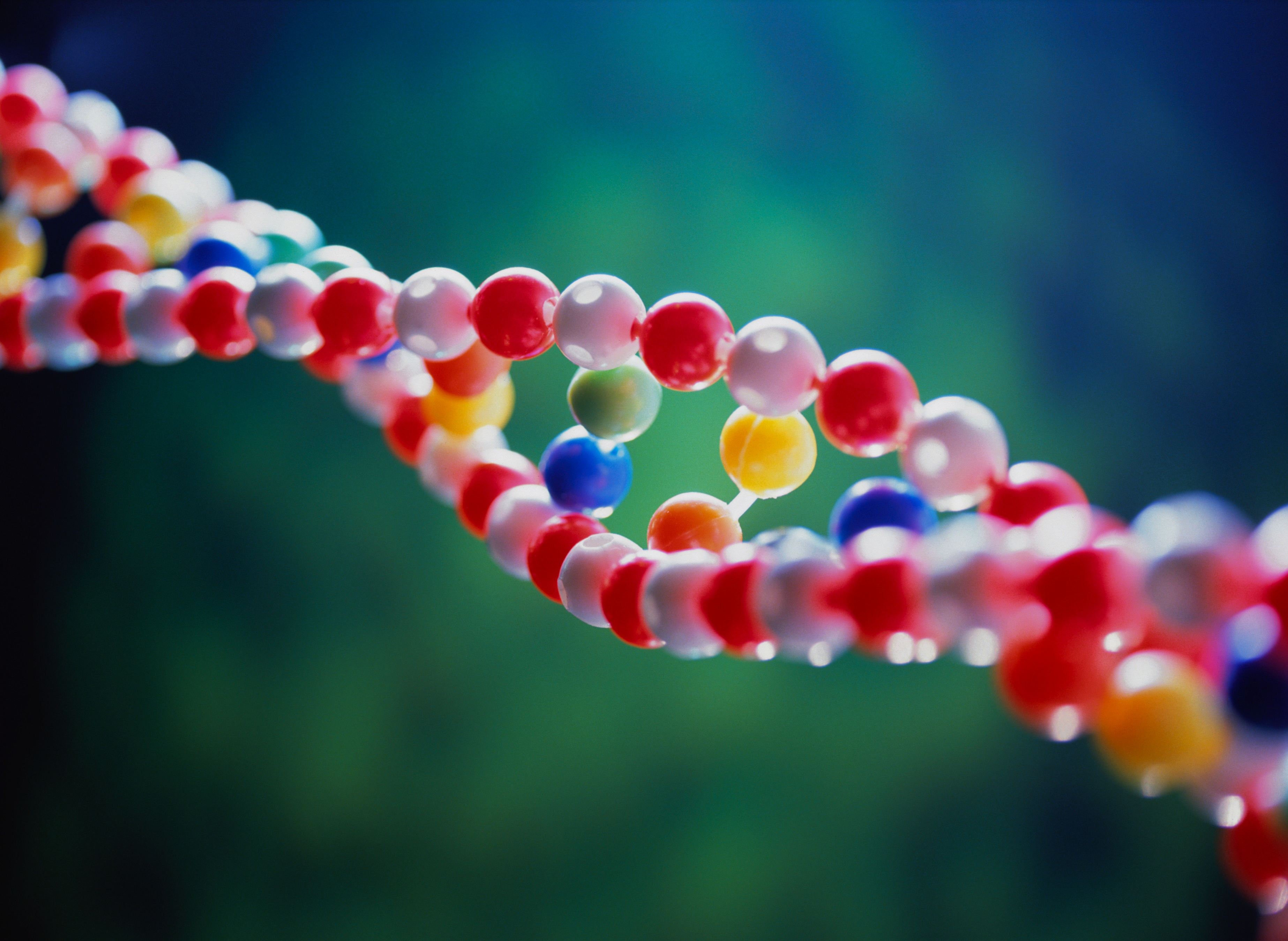
Why is DNA important?
a)
it is very small and very complicated
b)
it's in everything
c)
it serves as the blueprint for traits of all living things
d)
because we eat it every day for energy
5.
What are the 4 nitrogen bases?
a)
adenine, thymine, cytoplasm, and guanine
b)
adenine, thymine cytosine, and guanine
c)
adenine, thymine, cytosine, and gylcerol
d)
adenine, thymine, cytosine, and glucose
6.
Which 2 molecules forms the sides (backbone) of the DNA ladder?
a)
deoxyribose and adenine
b)
deoxyribose and a hydrogen bond
c)
sugar and the nucleus
d)
deoxyribose (sugar) and phosphate
7.
Which organelle is DNA usually found in?
a)
cell membrane
b)
vacuole
c)
chloroplast
d)
nucleus
8.
Which sequence of DNA bases would pair with this partial strand
ATG TGA CAG
ATG TGA CAG
a)
ATG TGA CAG
b)
TAC ACT GTC
c)
GTA AGT GAC
d)
CAT TCA CTG
9.

In a molecule of double-stranded DNA, the amount of Adenine present is always equal to the amount of
a)
cytosine
b)
guanine
c)
thymine
d)
uracil
10.
The shape of the DNA molecule is a double __________________?
a)
"S"
b)
helix
c)
rope
d)
curve
11.
What does DNA stand for?
a)
Deoxyribonucleic acid
b)
Denitrogenous acid
c)
Deribonucleic acid
d)
Diribonucleic acid
12.
What kind of cells are made in MEIOSIS?
a)
Haploid Gametes
b)
Diploid Somatic Cells
c)
Skin Cells
d)
Liver Cells
13.

A human body (somatic) cell usually has how many chromosomes?
a)
6
b)
22
c)
4
d)
46
14.
If the Diploid number of Carrots is 18, the haploid number is
a)
18
b)
9
c)
27
d)
36
15.
Why do we need meiosis?
a)
To double the number of chromosomes going into sex cells
b)
To cut the number of chromosomes in gametes in half
c)
To triple the number of chromosomes going into sex cells
d)
To not change the number of chromosomes going into sex cells
16.
If a somatic (body) cell in a butterfly contains 24 chromosomes, a butterfly egg would contain
a)
3
b)
6
c)
12
d)
24
17.
The cells produced via meiosis are called:
a)
sex cells
b)
somatic cells
c)
body cells
d)
skin cells
18.
The result of meiosis is:
a)
two diploid cells
b)
two haploid cells
c)
four diploid cells
d)
four haploid cells
19.
How many daughter cells are produced at the end of meiosis?
a)
1
b)
2
c)
3
d)
4
20.

Meiosis makes sperm and egg cells. In humans, sperm and egg cells each have _____ chromosomes. Therefore a fertilized human egg cell (sperm and egg cell combined) would create a cell with _____ chromosomes.
a)
23, 46
b)
46, 23
c)
2, 4
d)
50, 100
21.
Which process is necessary for the inherited traits of an organism to be passed along by sexual reproduction?
a)
mitosis
b)
meiosis
c)
mutation
d)
fission
22.
What is the purpose of mitosis?
a)
to grow, replace, and repair cells
b)
to create sex cells
c)
to create 2 different cells
d)
to create haploids
23.
When a cell divides, what do we call the 2 new cells?
a)
mother cells
b)
father cells
c)
daughter cells
d)
son cells
24.
What type of cells may never undergo mitosis and make new cells?
a)
blood cells
b)
skin cells
c)
nerve cells
d)
stomach cells
25.
In which type of cells will mitosis occur?
a)
egg cells
b)
sperm cells
c)
jail cells
d)
Body cells except the sperm and egg cells
26.
What is the diploid number of cells found in a human body cell?
a)
23
b)
46
c)
92
d)
47
27.
In meiosis, the haploid number of chromosomes in a human sex cell is:
a)
46
b)
92
c)
22
d)
23
28.
When you start with 1 cell, at the end of mitosis, how many identical cells will you have?
a)
1
b)
2
c)
3
d)
4
29.
Another name for a sex cell is a:
a)
gamete
b)
embryo
c)
bone cell
d)
muscle cell
30.
After meiosis is complete, the new cells:
a)
are all identical
b)
are all different
c)
are half identical and half different
d)
are all stretched out
31.
Why is sexual reproduction better than asexual reproduction?
a)
It gives an advantage to organisms to be different than the rest, if the environment changes.
b)
It is better for all organisms to be the same.
c)
It happens faster.
d)
It helps skin cells divide faster to heal wounds.
32.

A is:
B is:
C is:
B is:
C is:
a)
A: chromatid
B: centromere
C: chromosome
B: centromere
C: chromosome
b)
A: chromosome
B: chromatid
C: centromere
B: chromatid
C: centromere
c)
A: chromosome
B: centromere
C: chromatid
B: centromere
C: chromatid
d)
A: centromere
B: chromosome
C: chromatid
B: chromosome
C: chromatid
33.

The process on the left is:
The process on the right is:
The process on the right is:
a)
Left: meiosis
Right: meiosis
Right: meiosis
b)
Left: meiosis
Right: cloning
Right: cloning
c)
Left: mitosis
Right: meiosis
Right: meiosis
d)
Left: mitosis
Right: mitosis
Right: mitosis
34.
Most of the cells in the human body are produced by
a)
mitosis
b)
meiosis
35.
What is it called when cell division goes out of control?
a)
tumor
b)
metastasis
c)
cancer
d)
malignant
36.
What is a mass of cells produced by uncontrolled cell division called?
a)
cancer
b)
metastasis
c)
cytokinesis
d)
tumor
37.
Cells produced during meiosis are genetically
a)
different
b)
identical
38.
Cells produced during mitosis are genetically
a)
different
b)
identical
39.
This produces cells for growth and repair.
a)
mitosis
b)
meiosis
40.
Which process creates diploid cells?
a)
Mitosis
b)
Meiosis
c)
Both mitosis and meiosis
41.
Which process produces new cells?
a)
Mitosis
b)
Meiosis
c)
Both mitosis and meiosis
42.

A sea star will regenerate an arm if needed. What cellular process is directly responsible for this regeneration?
a)
meiosis
b)
transpiration
c)
mitosis
d)
respiration
43.
One piece of evidence that bacteria are living things is...
a)
They split in two to reproduce
b)
They breathe oxygen
c)
Maybe
d)
They move
44.
One piece of evidence that bacteria are living things is...
a)
They breathe oxygen
b)
They get rid of waste, like lactobacillus waste products make yogurt
c)
They can communicate by intricate dances with spins and twirls
d)
They move
45.
One piece of evidence that bacteria are living things is...
a)
They breathe oxygen
b)
They grow bigger. Scientists have seen this under a microscope
c)
They are large enough to see with your eyes
d)
They move
46.
One piece of evidence that bacteria are living things is...
a)
They breathe oxygen
b)
They get energy from our bodies- which makes us sick
c)
They have learned how to hunt and gather
d)
They move
47.
One piece of evidence that bacteria are living things is...
a)
They breathe oxygen
b)
They respond to changes by growing differently in different conditions
c)
They build primitive shelters out of platelets
d)
They move
48.
Bacteria can be helpful by:
a)
Attacking Zombies
b)
Decomposing dead things
c)
Destroying Robots
d)
Keeping you company
49.
Bacteria can be helpful by:
a)
Attacking Zombies
b)
Digesting food in your intestines
c)
Destroying Robots
d)
Keeping you company
50.
Bacteria can be harmful by:
a)
Selling secrets to the CIA
b)
Keeping things cold
c)
Causing diseases
d)
Scaring away good bacteria
51.
Bacteria can be harmful by:
a)
Selling secrets to the CIA
b)
Keeping things cold
c)
Spoiling Food
d)
Scaring away good bacteria
52.
We can protect ourselves from bacteria by...
a)
Licking doorknobs
b)
Touching our eyes
c)
Washing our hands
d)
Using lotions and potions
53.
We can protect ourselves from bacteria by...
a)
Licking doorknobs
b)
Getting antibiotics when we get sick
c)
Crushing up dinosaur bones and drinking it as tea
d)
Leaving food on the counter
54.
We can protect ourselves from bacteria by...
a)
Licking doorknobs
b)
Adding parsley to food
c)
Leaving food on the counter
d)
Using disinfectants like lysol and hydrogen peroxide
55.
We can protect ourselves from viruses by...
a)
Taking antibiotics
b)
Leaving food on the counter
c)
Using disinfectants like lysol and bleach
d)
Karate
56.
We can protect ourselves from viruses by...
a)
Taking antibiotics
b)
Adding cinnamon
c)
Getting a vaccine before getting sick
d)
Karate
57.
When should you get a vaccine?
a)
Before you get sick
b)
After you get sick
c)
Only when you are a baby
d)
Only when you are old
58.
What do antibiotics do in your body?
a)
Kill viruses
b)
Kill bacteria
c)
Kill bacteria and viruses
d)
Karate
59.
Are bacteria made of cells?
a)
Yes, many cells
b)
Yes, they are single celled
c)
No
60.
In a doctor's office, why do they put thermometers in rubbing alcohol after each person uses them?
a)
To make them clean
b)
Alcohol is a disinfectant that kills bacteria and destroys viruses
c)
To keep them safe
61.
A rabbit was killed on a country road. How is bacteria helpful in this situation?
a)
The bacteria would disinfect the road
b)
The bacteria would make the nitrogen usable for plants
c)
The bacteria would decompose the rabbit and break it down to be recycled into the earth
d)
The virus would spread
62.
You are sick with pneumonia caused by a virus. What would a doctor prescribe for you to get better?
a)
The doctor would give you a vaccine so you won't get sick again
b)
The doctor would give you more bacteria to fight the virus
c)
The doctor would tell you to get plenty of rest and clean your house with disinfectants because you can't kill a virus
d)
The doctor would shink themselves and drive a tiny submarine into your body to fight the virus
63.
Suppose you took a strong antibiotic to treat lyme disease. Now you have problems with your digestive system. What is happening?
a)
It is a zombie virus spread by lyme disease
b)
The antibiotic kills all bacteria and so it also killed the helpful bacteria that helps you digest your food
c)
The antibiotic mixed with your stomach acid to create a super strong acid
64.
A nonliving particle that can reproduce in a living cell is a ______________.
a)
toxin
b)
virus
c)
plasmid
d)
protist
65.
How do human diseases caused by bacteria and diseases caused by viruses react to antibiotics?
a)
neither responds to antibiotics
b)
both respond to antibiotics
c)
bacteria respond to antibiotics; viral diseases do not
d)
viruses respond to antibiotics; bacteria do not
66.
A poisonous substance produced by some bacteria is called a ___________.
a)
scavenger
b)
virus
c)
toxin
d)
parasite
67.
Which of the following require a host cell because they are NOT able to make proteins own their own?
a)
viruses
b)
protazoans
c)
bacteria
d)
blue-green algae
68.
Bacterial infections are best treated by_______.
a)
vaccines
b)
gene therapy
c)
antibiotics
d)
surgery
69.

This bacteria is
a)
Baccilus
b)
Cocci
c)
Staphylococcus
d)
Spirilla
70.

The bacteria pictured here is
a)
Spirilla
b)
Staphylococcus
c)
Streptococcus
d)
Baccilli
71.

The bacteria pictured here are
a)
Streptococcus
b)
Staphylococcus
c)
Spirilla
d)
Bacilli
72.
The bacteria cell has DNA.
a)
True
b)
False
73.
The bacteria cell has a nucleus.
a)
True
b)
False
74.

Name this bacteria shape
a)
coccus
b)
bacillus
c)
spirillum
75.

Name this bacteria shape
a)
bacillus
b)
coccus
c)
spirillum
76.

Name this bacteria shape
a)
coccus
b)
spirillum
c)
bacillus
77.
Bacteria that help break down dead material in the environment are called
a)
vaccines
b)
decomposers
c)
endospores
d)
fixers
78.
Bacteria are
a)
viruses
b)
eukaryotes
c)
prokaryotes
79.

Which of the following are true about viruses?
a)
viruses are cellular
b)
viruses reproduce only in living cells.
c)
Viruses have a nucleus and organelles.
d)
Viruses are surrounded by a polysaccaride coat.
80.

Bacteria cells have
a)
only a cell wall
b)
only a cell membrane
c)
both a cell wall and a cell membrane
d)
a cell wall INSIDE of their cell membrane
81.

What is pictured?
a)
Bacteriophage
b)
Prion
c)
Tobacco Mosaic Virus
d)
Prophage
82.
How would you kill a viral infection?
a)
antibiotics
b)
bioremediation
c)
antiviral drugs
d)
vaccination
83.

What shape is this bacteria?
a)
bacilli
b)
sprillia
c)
spherical
d)
cocci
84.
What is the name of the cycle where viruses are inactive or dormant?
a)
Lytic cycle
b)
Relaxed cycle
c)
Lysogenic cycle
d)
Binary cycle
85.
A few viruses can live without a host cell.
a)
True
b)
False
86.
Which of the following diseases are caused by a virus?
a)
Strep throat
b)
AIDS
c)
Chicken pox
d)
Both AIDS and chicken pox
87.
All Bacteria are harmful.
a)
True
b)
False
88.

What cell shape is this?
a)
cocci
b)
bacilli
c)
monzilli
d)
sprillia
89.

What bacterial shape is this?
a)
crystal
b)
cocci
c)
bacilli
d)
spirilla
90.
Bacteria that do NOT need oxygen to live?
a)
Heterotroph
b)
Autotroph
c)
Aerobic
d)
Anaerobic
91.
The passing of traits from parent to offspring
a)
Heredity
b)
Genetics
c)
Hybrid
d)
Probability
92.
Who was the father of genetics
a)
Sagan
b)
Issac Newton
c)
Gregor Mendel
d)
C.jenkins
93.
A homozygous dominant dog with brown fur is crossed with a heterozygous dog with brown fur. What are the percentages of the possible genotypes?
a)
100% BB
b)
75% BB and 25%Bb
c)
50 % BB and 50% Bb
d)
50% Bb and 50% bb
94.

Genotype refers to the ...
a)
physical expression of the genes
b)
the possible combination of alleles in a gene
c)
whether an allele is dominant or recessive
d)
how an organism will appear
95.

Squidward has light blue skin, and his genotype for this trait is Bb. Would Squidward be considered a purebred or hybrid for light blue skin?
a)
Purebred
b)
Hybrid
96.

An offspring will receive how many alleles from each parent to determine a specific trait?
a)
one
b)
two
c)
three
d)
five
97.
Which of the following is a phenotype?
a)
BB
b)
Bb
c)
bb
d)
Blue eyes
98.
What is a phenotype
a)
The genetic make up (code)
b)
The physical trait
99.
having two of the same genes for the trait (sometimes called purebred).
a)
homozygous
b)
hetrozygous
c)
protein
d)
chromosome
100.
having two different genes for a trait (sometimes called hybrid).
a)
protein
b)
homozygous
c)
heterozygous
d)
genotype
101.
Magda is a tall, 11 year old drummer. She has a scar on her right cheek. She is good at swimming. Which of her traits did Magda most likely inherit?
a)
height
b)
the scar
c)
ability to swim
d)
ability to play drums
102.
Two brown eyed parents (Bb) have a baby. What is the chance the baby is blue eyed?
a)
0 %
b)
25%
c)
50%
d)
75%
103.
An allele whose trait only shows up when no dominant allele is present.
a)
hidden allele
b)
dominant allele
c)
recessive allele
d)
present allele
104.
Two heterozygous (Tt) tall pea plants are crossed. Which describes their offspring?
a)
50% tall and 50% short
b)
75%tall and 25% short
c)
100%short
105.
What does heterozygous mean?
a)
An organism that has the same genes for a trait (TT or tt)
b)
An organism that has different genes for a trait (Tt)
c)
When neither gene is fully dominant; offspring is a mixture of both
d)
the different forms of a trait (hair color--> brown, blonde, red
106.

The sex of an offspring is determined by ______________________.
a)
the mother
b)
the father
c)
the mother and the father
d)
by the environment
107.
An organism's appearance is known as its
a)
heredity
b)
phenotype
c)
genotype
d)
pedigree
108.
The inherited combination of alleles is known as the offspring's
a)
heredity
b)
phenotype
c)
genotype
d)
redigree
109.
One form of a gene is called_______________
a)
a DNA
b)
a Phenotype
c)
a trait
d)
an allele
100 %

