
 Worksheets
Scientific Revolution and exploratoin
Total questions: 68
Worksheet time: 41mins
Name
Class
Date
1.
use of reason to understand the world
a)
rationalism
b)
anatomy
c)
dissection
d)
harmony
2.
things combining well with each other to form the universe or a whole
a)
anatomy
b)
dissection
c)
rationalism
d)
harmony
3.
belief that the earth is the center of the universe
a)
geocentric universe
b)
heliocentric universe
4.
the belief that the sun is the center of the universe
a)
geocentric
b)
heliocentric
5.
The earth is at the center of the universe
a)
Anatomy
b)
Geocentric Theory
c)
Harmony
d)
Dissection
6.
This guy supported Aristotle's theory and even said the planets have their own orbits
a)
al-Khwarizmi
b)
Ptolemy
c)
Galen
d)
al-Razi
7.
This guy took all the medical information all the way back from Aristotle's time and published Canon of Medicine
a)
Thomas Aquinas
b)
Pythagoras
c)
Aristotle
d)
Ibn Sina
8.
People used logic and reason to understand the world around them
a)
Dissection
b)
al-Razi
c)
Rationalism
d)
Renaissance
9.
The sun is at the center of our solar system
a)
Geocentric Theory
b)
Harmony
c)
Anatomy
d)
Heliocentric Theory
10.
A period in time when European scholars questioned classical scientific ideas and Christian beliefs
a)
Scientific Revolution
b)
Renaissance
c)
Heliocentric Theory
d)
Geocentric Theory
11.
Investing through careful observation, forming and testing hypothesis, and drawing conclusion that supports or modifies hypothesis
a)
Heliocentric Theory
b)
Scientific Method
c)
Scientific Revolution
d)
Geocentric Theory
12.
This theory states that all gravity acts on all objects throughout the universe
a)
Geocentric Theory
b)
Heliocentric Theory
c)
Universal Gravity
d)
Pythagoran Theory
13.
All objects in the universe are affected by this force
a)
Scientific Method
b)
Rationalism
c)
Gravity
d)
Geocentric Theory
14.
This guy said the earth and the planets go around the sun
a)
Isaac Newton
b)
Galileo
c)
Descartes
d)
Copernicus
15.
This guy modified the telescope and was the first to point it to the stars
a)
Copernicus
b)
Galileo
c)
Descartes
d)
Isaac Newton
16.
A step-by-step process of discovering scientific facts is called:
a)
scientific method
b)
gravity
c)
heliocentric
d)
hypothesis
17.
What is the force that keeps planets in their orbits around the sun called?
a)
gravity
b)
heliocentric
c)
hypothesis
d)
calculus
18.
Which of these was a contribution Newton made to science?
a)
Invention of the microscope
b)
description of how muscles and blood vessels work
c)
explanation of the movement of planets
d)
analysis of the composition of matter
19.
According to Copernicus, the sun
a)
Revolved around the earth
b)
Was the center of the Universe
c)
Was the biggest star
d)
Had many moons
20.
The Scientific Revolution challenged many medieval ideas about science. All of the following were astronomers during the Scientific Revolution except __.
a)
Nicolaus Copernicus
b)
Ptolemy
c)
Galileo Galilei
d)
Johannes Kepler
21.
What did Galileo Improve?
a)
The astrolabe
b)
the stars
c)
The Telescope
d)
cat food.
22.
What did Kepler add to Copernicus’ heliocentric theory?
a)
That Jupiter had four moons
b)
That the planets revolved around the earth
c)
That the sun was the biggest star
d)
That the planets move in eliptical (oval shaped) orbits around the sun
23.
The English philosopher who proposed the Scientific Method.
a)
Sir Francis Bacon
b)
Voltaire
c)
Thomas Hobbes
d)
hypothesis
24.
Scientist began using _____________ and _______________ instead of placing their beliefs in faith.
a)
History and faith
b)
Math and Science
c)
Math and History
d)
reason and logic
25.
What type of math was Newton known for developing?
a)
Geometry
b)
Trigonomety
c)
Calculus
d)
Addition
26.
What was the result of the Scientific Revolution?
a)
advancements in the theories and teachings of the Roman Catholic Church
b)
Advancedments made in science and math
c)
Supports previous thought processes and studies
d)
Expanded on beliefs in faith
27.
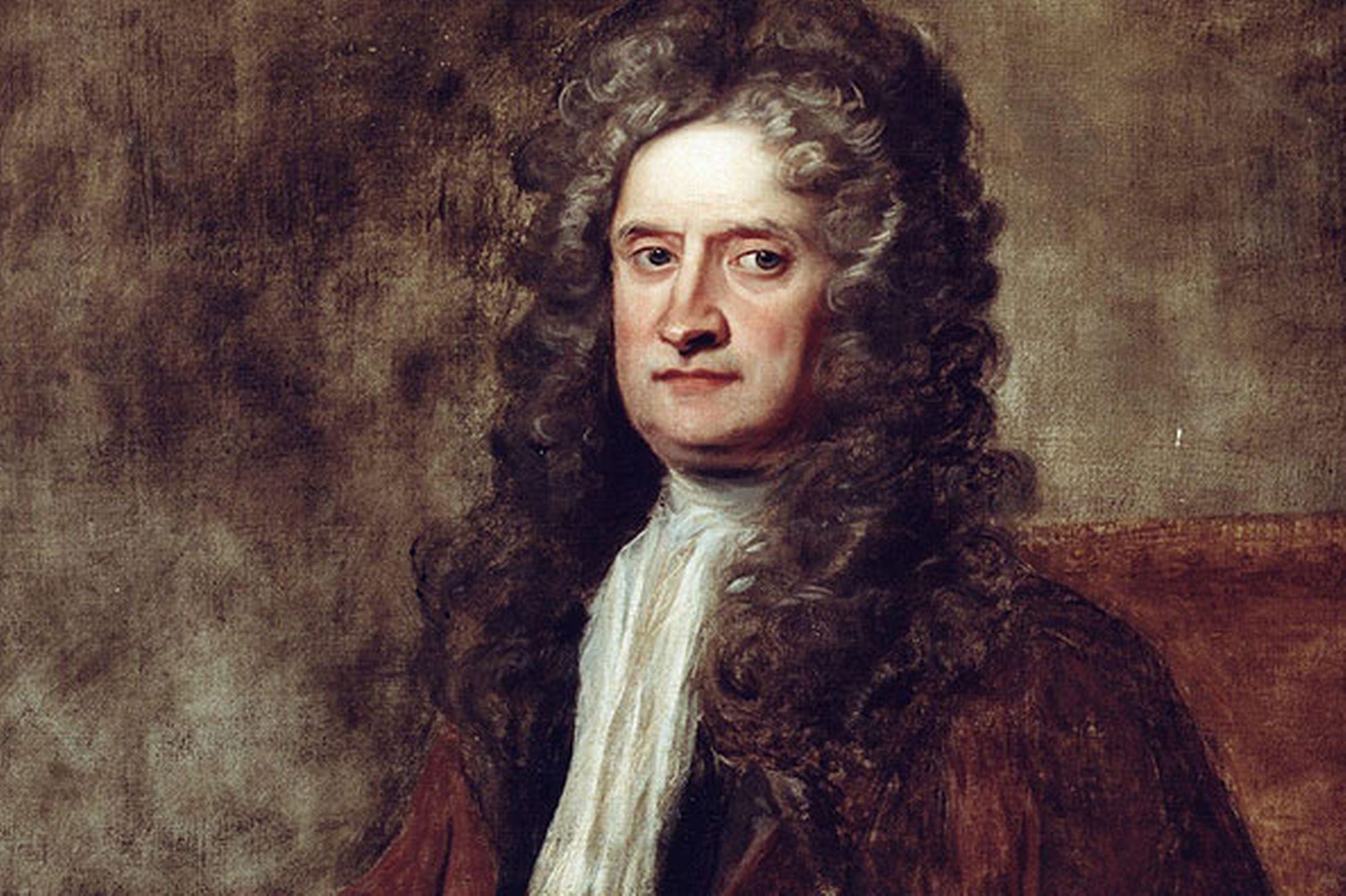
Which of the following was developed by Isaac Newton?
a)
the heliocentric theory
b)
the scientific method
c)
the theory of scientifc rationalism
d)
the theory of universal gravitation
28.
What do these steps describe?
1. Ask a question
2. Form a hypothesis
3. Experiment to test hypothesis
4. Analyze data
5. Draw a conclusion
1. Ask a question
2. Form a hypothesis
3. Experiment to test hypothesis
4. Analyze data
5. Draw a conclusion
a)
Order of Operations
b)
Steps of CPR
c)
Scientific Method
d)
Essay writing
29.
The period when European scholars began to question classical scientific ideas and Christian beliefs.
a)
Johannes Kepler
b)
Scientific Revolution
c)
rationalism
d)
gravity
30.
What did Kepler add to Copernicus’ heliocentric theory?
a)
That Jupiter had four moons
b)
That the planets revolved around the earth
c)
That the sun was the biggest star
d)
That the planets move in an ellipses around the sun
31.
I took control of the Inca empire and claimed it for Spain.
a)
Cortes
b)
de Leon
c)
de Soto
d)
Pizarro
32.
I started a school for navigators and people who wanted to go out exploring.
a)
Columbus
b)
Prince Henry
c)
Polo
d)
Magellan
33.
I was the person who named the Pacific Ocean. My men were among the first to travel around the world, but unfortunately I died in battle in the Philippine Islands.
a)
Balboa
b)
Vespucci
c)
Columbus
d)
Magellan
34.
I (actually others) wrote a book about the riches that I found in China.
a)
Prince Henry
b)
Polo
c)
Magellan
d)
Columbus
35.
I believed I could read Asia by traveling west across the Atlantic Ocean in 1492. I asked the king and queen of Spain to pay for my journey.
a)
Cabot
b)
de Leon
c)
Columbus
d)
Cortes
36.
I am a conquistador that conquered the Aztec empire and built Mexico City.
a)
Pizarro
b)
de Soto
c)
Cortes
d)
Coronado
37.
I was searching for the Fountain of Youth, and though I never found it, I was the first to step foot on what is today U.S.A. soil.
a)
de Soto
b)
Erikson
c)
Columbus
d)
de Leon
38.
He sailed around the bottom of Africa and opened up the trade routes to India by being the first explorer to reach Asia
a)
B. Diaz
b)
Vasco de Gama
c)
Columbus
d)
Polo
39.
First sailor to sail around the tip of Africa, The cape of good hope
a)
de Gama
b)
Polo
c)
Columbus
d)
Dias
40.
He was from Italy but sailed for Spain in the year 1492
a)
Magellan
b)
Diaz
c)
Columbus
d)
Cabral
41.
Though he had landed in India, so he called the people he found, "Indians."
a)
Columbus
b)
King Ferdinand
c)
de Gama
d)
Vespucci
42.
First explorer to circumnavigate the world, or shall we say, his crew was first
a)
Magellan
b)
John Glen
c)
Amelia Earhart
d)
Cortez
43.
Although his crew sailed the entire way around the world and he died 3/4 of the way, this explorer was given credit for sailing around the world
a)
Ferdinand Magellan
b)
Dr. Scholls
c)
Ponce de Leon
d)
Coranado Magellan
44.
This explorer conquered the Aztecs after many of the Aztec soldiers had contracted diseases from the Europeans.
a)
Hernan Cortez
b)
Moctezuma
c)
Pizzaro
d)
Ponce de Leon
45.
The Explorer joined forces with many Indian nations outside of the Aztec empire to help defeat the Aztecs
a)
Balboa
b)
Matteo Avacado
c)
Hernan Cortez
d)
Chris Columbus
46.
This Explorer searched much of Florida looking for the Fountain of Youth
a)
Juan Ponce de Leon
b)
Juan de Soto
c)
Walt Disney
d)
Ron Ambrosia
47.
This empire was located in Central America near present day Mexico City
a)
Inca Empire
b)
Aztec Empire
c)
The Empire ran by Darth Vader
d)
Mongolian Empire
48.
The Aztec Empire was located in present day
a)
Ebenezer
b)
The West INdies
c)
Florida
d)
Mexico
49.
Which of the following was NOT a reason the early explorers began to make voyages?
a)
To serarch for gold and riches
b)
To omake friends with the Native Americans
c)
To spread their religion
d)
The explorerers want to become famous.
50.
_________________ claimed the eastern shores of Canada for England.
a)
John Cabot
b)
Juan Ponce de Leon
c)
Vasco Nunez Balboa
d)
Jacques Cartier
51.
Which European country sponsored Christopher Columbus' voyages?
a)
England
b)
Mexico
c)
France
d)
Spain
52.
What was the purpose of Columbus' expeditions?
a)
To find a shorter route to Asia by sailing west
b)
To claim land in Canada
c)
To explore the Hudson Bay
d)
None of the above
53.
Which of the folowing is an obstacle faced by the early explorers?
a)
bad weather
b)
no maps
c)
ran out of supplies
d)
all of the above
54.

Many explorers searched for the ___ Passage in order to find an easier way to reach Asia.
a)
Northwest
b)
Southwest
c)
Southeast
d)
Northeast
55.
The Columbian exchange.....
a)
were the trade goods columbus brought with him to the new world
b)
is the movement of living things between Hemispheres
c)
is the trade developed between columbia and Spain
d)
rate of monetary exchange between the aztecs and Eupopeans
56.
What are two reasons Spain attempted to invade England with the Spanish armada?
a)
Piracy in the Carribean
b)
Englands invasion of the Spanish Maldives
c)
English Support for Protestant Rebels in the Neatherlands
d)
England chopped off the head of the Pope
57.
Which of these means "the exchange of plants & animals between the Americas & Europe"?
a)
Colony
b)
Plantation
c)
Middle Passage
d)
Columbian Exchange
58.
What leg of the triangular trade was the middle passage?
a)
second
b)
first
c)
third
59.
Which situation was an unintended consequence of Spain's colonization of the Americas?
a)
establishment of a favorable balance of trade
b)
introduction of the encomienda system
c)
transmission of communicable diseases
d)
exploitation of resources in new lands
60.
". . . (It) brought the potato, the pineapple, the turkey, dahlias, sunflowers, magnolias, maize, chillies and chocolate across the Atlantic. On the other hand, tens of millions died in the pandemics of the 16th century, victims of smallpox, measles and the other diseases brought by Europeans (and don't forget that the African slave trade was begun by the Europeans, to replace the work force they had decimated).". . . — Michael Wood, BBC History (adapted)
Which historical development is being described in this quotation?
Which historical development is being described in this quotation?
a)
establishment of the line of Demarcation
b)
creation of the Hanseatic League
c)
Columbian exchange
d)
Glorious Revolution
61.
The part of the slave’s journey aboard the ship between Africa and the American colonies was known as the _________________ _________________
a)
Triangular Trade Route
b)
Middle Passage
c)
Northwest Passage
d)
Bermuda Triangle
62.
Cortes was a _________ ?
a)
Chef
b)
Conquistador
c)
Teacher
d)
King
63.
What is the term that refers to the trading voyages between Europe, Africa, and the Americas in which slaves were traded for raw goods or money?
a)
Big box retail
b)
Triangular Trade
c)
Market economics
d)
Feudalism
64.
The majority of slaves were brought to the Americas to…
a)
work on plantations
b)
work on railroads
c)
work on building houses
d)
work building ships
65.
What did Cortes accomplish?
a)
He sailed around the world
b)
He conquered the Aztecs, stole their gold and silver, and claimed their land for Spain.
c)
He reached the Cape of Good Hope
d)
He enslaved Narnia so it was always winter and never Christmas.
66.
How did cash crops like sugar can lead to the slave trade?
a)
Africans were the only one that knew how to grow sugar cane.
b)
Slaves were needed to work on the big haciendas (plantations) in Latin America.
c)
The slave ships were made from sugar cane.
d)
Sugar cane was the currency used to buy slaves.
67.
What term refers to the exchange of people, animals, plants and disease between the Eastern and Western hemisphere?
a)
Triangle Trade
b)
Colombian Exchange
c)
Transatlantic Slave trade
d)
NAFTA
68.
What year did Coumbus discover America
a)
1400
b)
1392
c)
1492
d)
1596
100 %

