wayground logo

Free Printable Worksheets

Font size

S
M
L
XL
Worksheets

7th Grade Science Review

Total questions: 150

Worksheet time: 2hrs 10mins

Name
Class
Date
1.
Which two organ systems work together to control the rate of a person’s breathing?
a)
Digestive & Respiratory
b)
Circulatory & Skeletal
c)
Nervous & Respiratory
2.

What is biodiversity?

a)

Maintaining something at a stable level

b)

All of the living and non-living things in an environment

c)

All of the members of the same species in an area

d)

All of the different types of living things

3.

What is an ecosystem?

a)

Maintaining something at a stable level

b)

All of the living and non-living things in an environment

c)

All of the members of the same species in an area

d)

All of the different types of living things

4.

What is sustainability?

a)

Maintaining something at a stable level

b)

All of the living and non-living things in an environment

c)

All of the members of the same species in an area

d)

All of the different types of living things

5.

What is a population?

a)

Maintaining something at a stable level

b)

All of the living and non-living things in an environment

c)

All of the members of the same species in an area

d)

All of the different types of living things

6.

Biodiversity makes an ecosystem ______ stable

a)

More

b)

Less

c)

Equally

d)

Not

7.

Very dry, very cold, soil remains permanently frozen, low biodiversity

a)

Tundra

b)

Desert

c)

Grassland

8.

Moderate rainfall, covered in mostly grass, medium biodiversity

a)

Tundra

b)

Desert

c)

Grassland

9.

Very dry, can be very hot or very cold, low biodiversity

a)

Tundra

b)

Desert

c)

Grassland

10.

Moderate rainfall, forested with cone-bearing trees that have needles instead of leaves, medium biodiversity

a)

Tropical Rain Forest

b)

Temperate Forest

c)

Taiga

11.

Rains every day, covered in lush plant life, highest biodiversity of all land biomes

a)

Tropical Rain Forest

b)

Temperate Forest

c)

Taiga

12.

Moderate rainfall, trees have broad & flat leaves that change color and drop in the winter, high biodiversity

a)

Tropical Rain Forest

b)

Temperate Forest

c)

Taiga

13.

How does biodiversity impact ecosystem stability?

a)

Variations in the ecosystem provides more habitats, which makes the ecosystem more resilient to change

b)

Variations within a species means that certain individuals will have superior genes that allow the species to survive

c)

Variations of species in an ecosystem increases chance of survival for all species in the ecosystem

d)

All of the above are true

14.

What is always the result of ecological succession?

a)

Pioneer Species

b)

Climax Community

c)

Catastrophic Event

15.

What are lichens, the first plants to grow on bare rock?

a)

Pioneer Species

b)

Climax Community

c)

Catastrophic Event

16.

What is an intense & violent occurrence that can destroy an ecosystem?

a)

Pioneer Species

b)

Climax Community

c)

Catastrophic Event

17.

All of the following are catastrophic events, except...

a)

Tornado

b)

Hurricane

c)

Wildfire

d)

Thunderstorm

e)

Earthquake

18.

Which type of ecological succession occurs in places that have never had an ecosystem before?

a)

Primary succession

b)

Secondary succession

19.

Which type of ecological succession occurs in places that had an ecosystem that was destroyed by a catastrophic event?

a)

Primary succession

b)

Secondary succession

20.

Which type of ecological succession takes longer to occur?

a)

Primary succession

b)

Secondary succession

21.

What is the correct order of the stages of ecological succession?

a)

Shrubs, Lichens, Grasses/Flowers, Trees

b)

Lichens, Grasses/Flowers, Shrubs, Trees

c)

Trees, Shrubs, Grasses/Flowers, Lichens

d)

Lichens, Grasses/Flowers, Trees, Shrubs

22.

How can a climax community be described?

a)

No organisms live here

b)

A few organisms live here

c)

Many different organisms live here

23.

What is an adaptation that would help an organism to survive in the tundra?

a)

Thick fur to conserve heat

b)

Scales to prevent water loss

c)

Sharp claws to aid in climbing

d)

Golden-tan fur to blend in

24.

What is an adaptation that would help an organism to survive in a grassland?

a)

Thick fur to conserve heat

b)

Scales to prevent water loss

c)

Sharp claws to aid in climbing

d)

Golden-tan fur to blend in

25.

What is an adaptation that would help an organism to survive in a desert?

a)

Thick fur to conserve heat

b)

Scales to prevent water loss

c)

Sharp claws to aid in climbing

d)

Golden-tan fur to blend in

26.

What is an adaptation that would help an organism to survive in a tropical rain forest?

a)

Thick fur to conserve heat

b)

Scales to prevent water loss

c)

Sharp claws to aid in climbing

d)

Golden-tan fur to blend in

27.
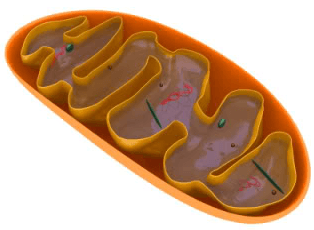
This organelle takes food and turns it into ENERGY for plant and animal cells.
a)
Chloroplast
b)
Mitochondria
c)
Lysosome
d)
Ribosome
28.
The ___________ is the basic unit of life
a)
organ
b)
cell
c)
atom
d)
tissue
29.
This is a example of........ 
a)
organ system
b)
cells
c)
organ
d)
tissue
30.
Directs all cell activities through the DNA located there.
a)
Lysosomes
b)
Nucleus
c)
ribosomes
d)
Mitochondria
31.
Which organelle is only found in a plant cell? 
a)
nucleus
b)
chloroplast
c)
mitochondria
d)
cell membrane
32.
Which part of the cell is often called "the brain of the cell"?
a)
nuclear membrane
b)
endoplasmic reticulum
c)
nucleus
d)
mitochondria
33.
What is found in both plant and animal cells but is much larger in plant cells?
a)
Nucleus
b)
Mitochondria
c)
Chloroplast
d)
Vacuole
34.
I am the outer most layer of an animal cell. What am I?
a)
cell wall
b)
nucleus
c)
cell membrane 
d)
cell skin
35.
What are tiny organelles that convert glucose into ATP?
a)
Ribosomes
b)
Vesicles
c)
Cytoskeleton
d)
Mitochondria
36.
A rigid layer that lies outside the cell's  membrane is...
a)
Cytoskeleton
b)
Cilia
c)
Cell Wall
d)
Flagella
37.
What organelle is called the "powerhouse" of a cell?

a)
Endoplasmic Reticulum
b)
Nucleus
c)
Mitochondria
d)
Nucleolus
38.
What is the gel-like substance inside of cells called?

a)
photoplasm
b)
photosynthesis
c)
cytoskeleton
d)
cytoplasm
39.
The Cell Theory states...
a)
atoms create all matter
b)
living things evolve
c)
the cell is the backbone of all matter
d)
cells are the basic unit of structure and organization of organisms
40.
Where does photosynthesis occur?
a)
mitochondria
b)
stomata
c)
xylem
d)
chloroplast
41.
What absorbs energy from visible light?
a)
Chlorophyll
b)
Chloroplast
c)
Stroma
d)
Carbon Dioxide
42.
Which of the following carry out photosynthesis?
a)
bees
b)
red algae
c)
humans
d)
mushrooms
43.
What molecule absorbs sunlight for photosynthesis?
a)
chloroplast
b)
thylakoid
c)
grana
d)
chlorophyll
44.
Organic compounds are always based on what element?
a)
hydrogen
b)
water
c)
carbon
d)
arsenic
45.
Water is what type of compound?
a)
organic
b)
inorganic
c)
toxic
46.
Genotype refers to the ...
a)
physical expression of the genes
b)
the possible combination of alleles in a gene
c)
whether an allele is dominant or recessive
d)
how an organism will appear
47.
Squidward has light blue skin, and his genotype for this trait is Bb. Would Squidward be considered a purebred or hybrid for light blue skin?
a)
Purebred
b)
Hybrid
48.
Which of the following is a phenotype?
a)
BB
b)
Bb
c)
bb
d)
Blue eyes
49.
What is a phenotype
a)
The genetic make up (code)
b)
The physical trait
50.
the passing of genetic traits from parent to offspring.
a)
heredity
b)
trait
c)
gene
d)
allele
51.
having two of the same genes for the trait (sometimes called purebred).
a)
homozygous
b)
hetrozygous
c)
protein
d)
chromosome
52.
having two different genes for a trait (sometimes called hybrid).
a)
protein
b)
homozygous
c)
heterozygous
d)
genotype
53.
An allele whose trait only shows up when no dominant allele is present.
a)
hidden allele
b)
dominant allele
c)
recessive allele
d)
present allele
54.
What is one advantage of sexual reproduction?
a)
offspring are identical to parents
b)
offspring are resistant to viruses
c)
offspring are born live, rather thna from eggs
d)
offspring inherit a wider variety of genetic information
55.
The sex of an offspring is determined by ______________________.
a)
the mother
b)
the father
c)
the mother and the father
d)
by the environment
56.
One form of a gene is called_______________
a)
a DNA
b)
a Phenotype
c)
a trait
d)
an allele
57.
the condensed form of DNA is called________________
a)
an allele
b)
a gene
c)
a chromosome
d)
a phenotype
58.
What does a Punnett Square help you do?
a)
Determine the ratio of phenotypes
b)
Determine the ratio of genotypes
c)
Predict possible traits the offspring will have
d)
All of the above
59.
Natural Selection is -
a)
a process in which certain traits are selected by humans and bred
b)
a process in which organisms who are genetically varied, live longer, compete better and reproduce more
c)
the process in which an animal's binomial nomenclature is selected to be the mascot for a certain national park
d)
the naming process for animals
60.
Which of the following is NOT part of cell theory?
a)
Cells are the basic unit of life.
b)
Everything is made up of 1 or more cells.
c)
All cells come from pre-existing cells.
d)
Every living thing is made up of 1 or more cells.
61.
Which Texas ecoregion has the most rain?
a)
Trans Pecos
b)
Hill Country/ Edwards Plateau
c)
Gulf Coast Prairies and Marshes
d)
Piney Woods
62.
______is a coastal area where freshwater mixes with salt water.
a)
Estuary
b)
Coastal Ocean 
c)
Wetland
d)
Coral Reef
63.
What are the levels of organism from smallest to largest?
a)
cell, tissue, organ, organism, organ system
b)
organism, organ system, organ, tissue, cell
c)
organism, organ system, organ, cell, tissue
d)
cell, tissue, organ, organ system, organism
64.
Which of the following cell organelles are specific ONLY TO PLANTS?
a)
Cell Wall, Chloroplast (chlorophyll), Water Vacuole
b)
Lysosomes, Endoplasmic Reticulum
c)
Chloroplast (chlorophyll), Water Vacuole
d)
DNA, Nucleus, Golgi
65.
Which of the following are organic compounds?
I. CO2
II. CH4
III. CaSO4
IV. H2O
V.Cr2O3
a)
I and II
b)
I, II, IV
c)
All of the Above
d)
None of the Above
66.
A stimulus is____.
a)
a reaction to an object
b)
something that causes a reaction in an organism
c)
an automatic response from an organism
d)
a reaction to a loud sound
67.
Which of the following correctly matches the term to the definition?
a)
weathering-breaking down
erosion-placing down
deposition-transporting
b)
weathering-different types of rain
erosion- transporting
deposition- breaking down
c)
weathering-placing down
erosion- breaking down
deposition-transporting
d)
weathering-breaking down
erosion-transporting
deposition- placing down
68.
Earthquakes are caused by ___.
a)
hot and cold winds shearing, and twisting
b)
tectonic plates sliding
c)
molten rock spewing out of a mountain due to extreme pressure
d)
tectonic plates snapping in half
69.
The following match the correct tropism with the stimulus.
I. Phototropism-light
II. Geotropsim-minerals
III. Heliotropism-helium
IV. Thigmotropism-touch
a)
I, III, IV
b)
I, IV
c)
All of the above
d)
None of the Above
70.
The main purpose of the DNA is _____.
a)
storing your phenotype
b)
looking cool
c)
reproduction
d)
i don't know
71.
TRUE OR FALSE: Heredity is the passing of genetic information from parent to offspring
a)
true 
b)
false
72.
Which of the following shows the correct levels of organization, from smallest to largest?
a)
DNA, chromosome, gene, nucleus, cell
b)
DNA, gene, chromosome, nucleus, cell
c)
DNA, gene, nucleus, chromosome, cell
d)
Cell, nucleus, chromosome, gene, DNA
73.
Which biome covers 33% of the Earth, is cold at night, and low biodiversity?
a)
grassland
b)
tundra
c)
taiga
d)
desert
74.
What is the only ecoregion in Texas, that has the wine industry as one of the two top industries?
a)
Edward's Plateau (Hill Country)
b)
Trans-Pecos (Chihuahuan Desert)
c)
Piney Woods
d)
Gulf Coast Prairies and Marshes 
75.
TRUE OR FALSE: The circulatory and the excretory systems are in charge of getting glucose to the cells. 
If not, which systems.
a)
true
b)
false; circulatory and integumentary
c)
false; circulatory and digestive
d)
false; excretory and digestive
76.
Xylem is _____.
Pholem is _____.
They are both _____.
a)
tissue in plants that brings water from the roots to the leaves; tissue in plants that brings products of photosynthesis from the leaves to the parts that need it; behavioral adaptation
b)
tissue in plants that brings products of photosynthesis from the leaves to the parts that need it; vascular tissue in plants that brings water from the roots to the leaves; behavioral adaptation
c)
vascular tissue in plants that brings water from the roots to the leaves; vascular tissue in plants that brings products of photosynthesis from the leaves to the parts that need it; structural adaptation
d)
vascular tissue in plants that brings products of photosynthesis from the leaves to the parts that need it;vascular tissue in plants that brings water from the roots to the leaves; structural adaptation
77.
____ is known for earthquakes, volcanoes, tsunamis; 75% of the Earth’s volcanoes; area around the Pacific Ocean
a)
Ring of Volcanoes
b)
Ring of Fire
c)
Fire Ring
d)
Volcanic Ring
78.
Which of the following correctly shows the order of scientific method?
a)
observation, question, research, hypothesis, experiment, data, conclusion
b)
question, research, observation, data, hypothesis, experiment
c)
observation, question, research, hypothesis, experiment, conclusion, data
d)
question, hypothesis, data, observation, experiment, 
79.
Organisms that have one parent will:
I. be uniform
II. be diverse
a)
                          I
b)
                          II
c)
                 Both
d)
None
80.
Which factor is the variable in this experiment?
a)
the type of bee
b)
the time of day
c)
the type of plant
d)
the color of the flowers
81.
Which of the following hypotheses could be tested by this experiment?
a)
Honeybees prefer to visit rose plants
b)
Honeybees prefer to visit red flowers.
c)
Honeybees prefer to visit flowers in the morning
d)
Honeybees prefer to visit Portland rose flowers between 9 and 10
82.
Which of the following statements describes how temperature changes in the mesosphere?
a)
Temperature increases as altitude increases.
b)
Temperature decreases as altitude increases.
c)
Temperature decreases as pressure increases.
d)
Temperature does not change as pressure increases.
83.
In which layers does temperature decrease as pressure decreases?
a)
the troposphere and the mesosphere
b)
the troposphere and the stratosphere
c)
the ozone layer and the troposphere
d)
the ozone layer and the thermosphere
84.
During an experiment, the setup shown in the diagram is maintained for 72 hours.  Which of the following is the most likely outcome?
a)
Beaker A will hold less water than beaker B will.
b)
The amount of water in beaker A and beaker B will stay the same.
c)
The amount of water in beaker A and beaker B will change by about the same amount.
d)
Beaker B will hold less water than beaker A will.
85.
On which day was hair length 23 cm?
a)
day 60
b)
day 90
c)
day 120
d)
day 150
86.
How much faster is the heart beating during minute 5 than during minute 2?
a)
10 beats per minute more
b)
12 beats per minute more
c)
15 beats per minute more
d)
17 beats per minute more
87.
The container is divided by a membrane.  What can you conclude from the diagram?
a)
Water molecules can pass through the membrane.
b)
Food-coloring molecules can pass through the membrane.
c)
Both water molecules and food-coloring molecules can pass through the membrane.
d)
Neither water molecules nor food-coloring molecules can pass through the membrane. 
88.
A fever is a spike in temperature.  On which day does this person have a fever?
a)
Sunday
b)
Monday
c)
Wednesday
d)
Saturday
89.
When gas, oil, and coal are burned, _________ is released into the atmosphere.
a)
hydrogen
b)
carbon dioxide
c)
chlorofuorcarbon
90.
Very few species can adapt to _______________.
a)
warm weather conditions
b)
extreme cold, as found in the polar regions
c)
summer
91.
One cause of ________ may be deforestation. 
a)
thunderstorms
b)
global warming
c)
clouds
92.
An animal that hibernates
a)
reduces its activinty in hot summer
b)
reduces its activity in cold weather and winter
c)
has thin fur
93.
All of the following are examples of behavioral  adaptations EXCEPT for 
a)
people freezing
b)
deforestation 
c)
hibernation
94.
Many scientists think corals are dying due to _____________. 
a)
Changes in the Earth's orbit
b)
global warming
c)
volcanic eruptions
95.
carbon dioxide can be reduced in the atmosphere by  ___________.
a)
planting trees
b)
burning fossils
c)
oceans
96.
The greenhouse effect causes 
a)
pollution
b)
formation of glaciers
c)
Earth to be warm enough to support life
97.
Many birds migrate long distances when the seasons change. Which of the following is an environmental stimulus that would signal to the birds the changing seasons?
a)
changes in the length of daylight
b)
increase in population of edible plants
c)
decreased number of offspring per hatching event
d)
increase in annual precipitation levels
98.
 Pain is a stimulus in animals that leads to responses which help the animal to -
a)
find food in the habitat
b)
recuperate after exercise
c)
avoid harmful situations
d)
fight serious infections
99.
Stunted growth of an animal can be a response to -
a)
overexposure to sunlight
b)
lack of nutrients in diet
c)
eating a plant-based diet
d)
living in a hot climate
100.
As a seedling is sprouting through the soil, the force it exerts to move up must be greater than which of the following forces that are pulling downward
a)
nuclear bonding
b)
gravity
c)
friction
d)
inertia
101.
When an animal is infected with a virus, the body responds by creating conditions that are not favorable for the virus. It does this by –
a)
creating a sensation of hunger
b)
raising the core body temperature
c)
inhibiting the sense of balance
102.
While sitting in a room, a person notices that the temperature has become uncomfortably warm. The body will respond by -
a)
sweating
b)
shivering
c)
twitching
d)
vomiting
103.
The passion flower, also called maypop, is a long vine that grows along fences and woods, producing ornate white and purple flowers in late spring and summer. These plants have tendrils — slender, coiling, modified stem structures — that serve the plant by —
a)
wrapping around a nearby object for support
b)
producing reproductive structures later in the growing season
c)
attracting insects which serve as pollinators
d)
encouraging water and mineral transport to other parts of the plant
104.
Which one of the following plant cells most likely has the greatest amount of turgor pressure acting upon it?
a)
A
b)
B
c)
C
d)
D
105.
The plant shown was knocked over and left to grow on its side. What is responsible for the roots growing downward?
a)
type of soil
b)
force of gravity
c)
source of light
d)
water movement
106.
Which of the following conclusions is best supported by the data in the table?
a)
The plant cells for plants W and Y are demonstrating equal amounts of turgor pressure.
b)
Plants X, Y, and Z can all survive the longest without water
c)
Plant Y does not need water because it has enough turgor pressure in its cells
d)
Plant Z is in the greatest need of water to increase the turgor pressure in its cells
107.
When the class is learning about cells, Mrs. Smith asks her students to compare the different areas of the school to the different parts of a cell.  How is the principal’s office most like a cell’s nucleus?
a)
It holds all of the students
b)
It produces energy at lunch
c)
It controls the school's activities
d)
It gets rid of waste
108.
An amoeba is a one-celled organism. Which of the following statements about  amoebas is supported by cell theory?
a)
Has a globular, undefined size and shape
b)
Moves slowly using a pseudopod
c)
Contains organelles called chloroplasts
d)
Must obtain energy and releases waste
109.
Each new plant shown in the diagrams has —
a)
a mixture of traits from its parent
b)
identical traits to the parent
c)
variations of plant traits
d)
different genes from its parents
110.
What kind of TROPISM is shown in the picture?
a)
geotropism
b)
hydrotropism
c)
thigmotropism
d)
phototropism
111.
What kind of TROPISM is shown in the picture?
a)
geotropism
b)
hydrotropism
c)
thigmotropism
d)
phototropism
112.
What kind of TROPISM is shown in the picture?
a)
geotropism
b)
hydrotropism
c)
thigmotropism
d)
phototropism
113.
What kind of TROPISM is shown in the picture?
a)
geotropism
b)
hydrotropism
c)
thigmotropism
d)
phototropism
114.
If an astronaut tried to grow a plant in SPACE where there is NO GRAVITY, what would happen?
a)
the plant would die because there is no gravity
b)
the roots would grow toward the source of water
c)
the roots would grow toward the astronaut
115.
Pumps blood carrying oxygen and nutrients & removes waste
a)
Respiratory System
b)
Circulatory System
c)
Muscular System
d)
Skeletal System
116.
Inhales oxygen and exhales carbon dioxide
a)
Respiratory System
b)
Circulatory System
c)
Muscular System
d)
Skeletal System
117.
Allows for Movement
a)
Respiratory System
b)
Nervous System
c)
Muscular System
d)
Skeletal System
118.
Provides structure & protection
a)
Respiratory System
b)
Circulatory System
c)
Muscular System
d)
Skeletal System
119.
Control Center -- Processes Information & Sends Signals Throughout The Body
a)
Nervous System
b)
Circulatory System
c)
Muscular System
d)
Skeletal System
120.
Heart
a)
Respiratory System
b)
Circulatory System
c)
Muscular System
d)
Skeletal System
121.
Blood
a)
Respiratory System
b)
Circulatory System
c)
Muscular System
d)
Skeletal System
122.
Blood Vessels (Arteries, Veins, & Capillaries)
a)
Respiratory System
b)
Circulatory System
c)
Muscular System
d)
Skeletal System
123.
Trachea
a)
Respiratory System
b)
Circulatory System
c)
Muscular System
d)
Skeletal System
124.
Lungs
a)
Respiratory System
b)
Circulatory System
c)
Muscular System
d)
Skeletal System
125.
Diaphragm
a)
Respiratory System
b)
Circulatory System
c)
Muscular System
d)
Skeletal System
126.
Smooth, Skeletal, & Cardiac
a)
Respiratory System
b)
Circulatory System
c)
Muscular System
d)
Skeletal System
127.
Bones
a)
Respiratory System
b)
Circulatory System
c)
Muscular System
d)
Skeletal System
128.
Brain
a)
Nervous System
b)
Circulatory System
c)
Muscular System
d)
Skeletal System
129.
Spinal Cord
a)
Nervous System
b)
Circulatory System
c)
Muscular System
d)
Skeletal System
130.
Nerves
a)
Nervous System
b)
Circulatory System
c)
Muscular System
d)
Skeletal System
131.
Body System that transports oxygen and nutrients to the cells and removes waste products from cells
a)
Nervous System
b)
Circulatory System
c)
Muscular System
d)
Skeletal System
132.
Body system that provides the body with oxygen and removes carbon dioxide from the body. 
a)
Nervous System
b)
Respiratory System
c)
Muscular System
d)
Skeletal System
133.
Consists of 206 bones that provide your body structure and protect your internal organs. 
a)
Nervous System
b)
Respiratory System
c)
Muscular System
d)
Skeletal System
134.
A trait that helps an organism survive and reproduce in its environment is a______.
a)
Trait
b)
Mutation
c)
Adaptation
d)
Organism
135.
Trees want their seeds (offspring) to be________.
a)
spread apart or taken to other places
b)
close to them
c)
destroyed
d)
without sunlight
136.
Which of the following is an adaptation for a flower?
a)
Being ugly
b)
Being dull and plain
c)
smelling good to insects
d)
Having small roots
137.
The _______ the biodiversity in an ecosystem, the ____ sustainable it will be.
a)
higher, less
b)
lower, less
c)
lower, more
d)
higher, more
138.
A _________ is one of the world's major communities classified by climate and adaptation of organisms.
a)
sustainability
b)
biodiversity
c)
climax community
d)
biome
139.
_______ is a slowed state of an organism to survive long periods of cold and reduced food supplies.
a)
migration
b)
adaptation
c)
hibernation
d)
succession
140.
Characteristics or features that increase an organism's ability to survive within a changing environment is called an ______.
a)
migration
b)
adaptation
c)
hibernation
d)
succession
141.
All of the following are considered adaptations except
a)
hollow bones in birds
b)
legs on a horse
c)
gills in fish
d)
xylem in plants
142.
Which abiotic factors help shape a local environment?
a)
the weather
b)
the plants in a pond
c)
the organisms that live there
d)
plants who eat by photosynthesis
143.
A population of daisies lives in an area. They are part of what larger ecological grouping?
a)
A field
b)
A floodplain
c)
A community
d)
A state
144.
A fox species living in an area eats mostly mice. What would you predict would happen if the mouse population died from a quick-spreading virus?
a)
Foxes would turn to eating grass species to survive
b)
Some foxes would roam outside of their usual home range to find more mice
c)
Some foxes may starve
d)
Roaming outside of their home range OR starvation
145.
What is one difference between a square yard in the school courtyard and a square yard in the Florida everglades?
a)
Types of species present
b)
One area is larger than the other
c)
One area gets more sunlight than the other
d)
None of the choices
146.
The richness and variety of plants and animals in an ecosystem is called
a)
sustainability
b)
biodiversity
c)
climax community
d)
biome
147.
An ecosystem is least dependent on the amount of available -
a)
energy in a food web
b)
foods and water
c)
rocks and minerals
d)
nutrients
148.
Birds in a jungle environment eat the soft parts of plants.  During a drought scientists notice that birds with a large beak are able to eat seeds while the birds without them die because the soft plant parts have dried up.  In the next generation more birds have large beaks.  How did inherited traits help them survive?
a)
all surviving birds migrated
b)
inherited traits helped camoflauge birds
c)
inherited traits helped birds change foods
d)
inherited traits helped birds change their environment
149.
Some organisms have a colorful appearance to help warn predators that they don't taste good.  If another organism mimics (looks like) the bad tasting organism what would happen? 
a)
Predators would avoid the mimic
b)
Predators would not be fooled and would eat only the mimic
c)
predators are colorblind so this adaptation wouldn't help
d)
The mimic will not survive the only way to avoid predators is camouflage not mimicry 
150.
Ecologists observe that Arctic Foxes have greyish brown fur in the summer and white fur in the winter.  They found that the population stayed about the same in both winter and summer. According to these investigations how does this color adaptation affect the organism?
a)
It helps them find communities to live in
b)
It helps them stand out from their environment to be more noticeable
c)
It helps them to be camouflaged from prey allowing them to get food
d)
It helps them find mates