
 Worksheets
STAAR Science 8 - Cat 2 Review
Total questions: 50
Worksheet time: 29mins
What is the unit to MEASURE force?
Kilogram
Meter
Pascal
Newton

A ____________ is a push or a pull on an object.
friction
force
magnet
gravity

What is the net force in this image?
10 N
0
25 N
1 N

The force acting on this car will make it ...
stay where it is.
move to the left.
move to the right.
maintain a constant velocity.
The tendency of an object at rest to stay at rest unless it is acted upon by a force is called ___________________
inertia
motion
gravity
lubricant

What is the net force given the data in this image?
400 N Up
400 N Down
- 400 N Down
800 N Down
According to Newton’s first law of motion, a moving object that is not acted on by an unbalanced force will
remain in motion at a constant velocity.
eventually come to a stop.
change its momentum.
accelerate.
45 m/s2 is an example of...
mass.
force .
acceleration.
velocity.
speed.
(7.7A) It takes 20 N of force to move a box a distance of 10 m. How much work is done on the box in Joules?
200 J
2 J
100 J
10 J
88 m/s is an example of ...
speed.
velocity.
acceleration.
mass.
force.
88 m/s north is an example of ---
speed.
velocity.
acceleration.
force.
mass.

(6.9C) In this image, electrical energy is being converted to _?_ Energy.
thermal
solar
electrical
kinetic
sound

(6.9C) A battery converts what type of energy to another?
sound to kinetic
light to heat
mechanical to electrical
chemical to electrical
electrical to chemical
(6.9C) Which type of energy is a form of electromagnetic energy?
Chemical
Light
Nuclear
Sound
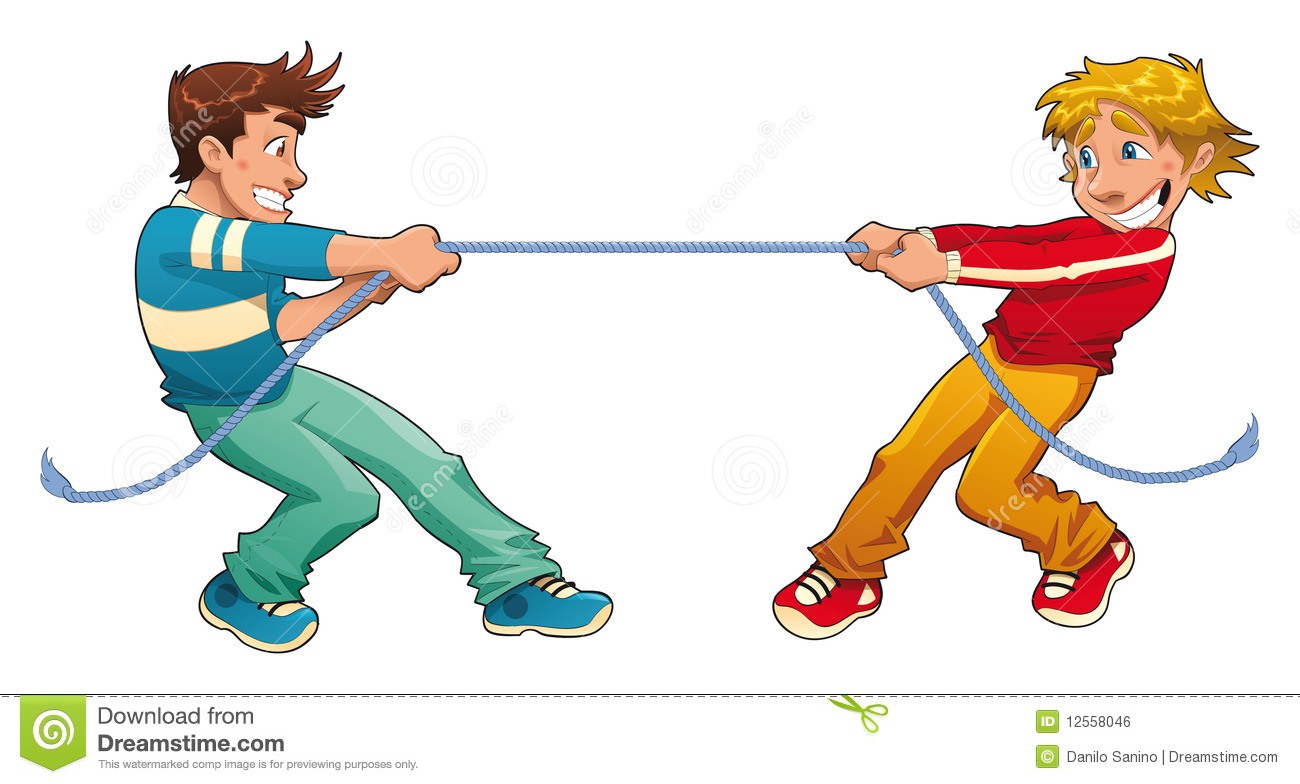
These boys are pulling with the same amount of force. What will happen?
The boy in blue will win.
They will not move at all.
The boy in red will win.
Both will fall down.
_?_ is how fast an object changes distance over time.
Speed
Velocity
Momentum
Acceleration
Force

(6.8D) What is this graph showing?
constant speed
acceleration
negative acceleration
constant velocity
no motion

"For every action force, there is an equal and opposite reaction force." This is ...
Newton's 1st Law.
Newton's 2nd Law.
Newton's 3rd Law.
Newton's 4th Law.
The Law of Opposites.

(6.8A) At which point is the potential energy greatest?
G
A
C
E
D

(6.8D) On this graph, what can be said about the object's motion?
It is maintaining a constant speed.
It is accelerating.
It is motionless.
It is maintaining a constant velocity.
It is turning a corner.
If you increase the mass on an object, its acceleration ...
decreases.
stays the same.
also increases.
stops.

Wearing a seatbelt protects you from effects that are best explained by which of Newton’s laws?
The Law of Action-Reaction
The Law of Inertia
The Law of Force
The Law of Gravitation

(6.8D) During which interval shown on this graph is the object speeding up? (check all that apply)
A to B
B to C
C to D
D to E
E to F
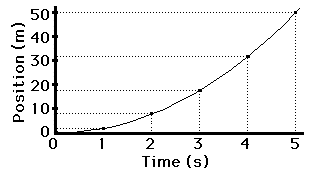
(6.8D) The picture of the position vs. time graph shows an object that is...
accelerating/speeding up.
moving at a constant speed.
not moving.
accelerating/slowing down.
changing directions.

(7.7A) If you pull the cord, what direction will the box move?
Up
Down
Left
Right
It will not move.

(6.8D) Which runner won the 10 m race?
A
B
C
It was a tie

(6.8D) According to the graph, how far does the person travel in the first 5 seconds?
2 m
10 m
0 m
5 m

(6.8D) According to the graph, what is the person doing between 5 and 10 seconds?
Walking
Running
Standing Still
Walking Fast
returning io the starting point

(6.8D) DeAndrea was walking at a constant pace to warm up for a run, but then stopped to tie her shoe. After tying her shoe she began running at a constant pace.
What distance/ time graph best represents DeAndrea's motion.
A
B
C
D

(6.8C) Jerry ran a 10 m race in 5 s. What was his speed?
2 m/s
0.5 m/s
50 m/s
10 m/s

(6.8C) A train that travels 100 kilometers in 4 hours is traveling at what average speed?
50 km/h
100 km/h
400 km/h
25 km/h

A fan is turned off in the living room. The fan slows down and comes to a rest as the forces become _______
Frictional
Balanced
Unbalanced
Restricted

How much force is needed to accelerate a 5 kg marble at a rate of 5 m/s2?
25 N
10 N
1 N
0 N

(7.7A) If William pushes a 50 N sofa up a ramp that is 5 meters long, what is the amount of work that William does?
10 Newtons
10 Joules
250 Newtons
250 Joules
45 Joules

Thomas is at rest standing on his skateboard and he throws a football. Since Thomas and the skateboard have a greater mass then the football, Thomas and the skateboard will-----
have the same forward force as the football.
travel the same distance as the football.
move backward at a faster speed than the speed that the football moves forward.
move backward at a slower speed than the speed that the football moves forward.

This is a rocket. The rocket engine pushes the exhaust gases down. What is the other force in this interaction pair?
The fuel pulls the rocket up.
The exhaust gases pushes the rocket up.
The rocket pulls the Earth up.
The Earth pulls the rocket down.
The exhaust gases push on the ground.

What causes a falling skydiver to slow down after the parachute opens?
air resistance
gravity
inertia
reference motion
momentum
When a car goes around a corner at 20 mph, why do we say it accelerates?
The car is accelerating because the velocity is constant.
The car accelerates because it's going 20 mph.
Cars always accelerate when they are in motion.
The car is accelerating because it's changing direction.

(6.8A) As a pendulum swings from its highest to lowest position, what happens to its kinetic and potential energy?
Both the potential energy and kinetic energy decrease.
The potential energy decreases while the kinetic energy increases.
The kinetic energy decreases while the potential energy increases.
Both the potential energy and kinetic energy increase.
Matt had a toy truck weighing 15 g and a toy car weighing 6 g. Using the same amount of force on each toy, he pushed them both across his desk. The car reached the other side of the desk in 1.5 seconds, but it took the truck 3.5 seconds to reach the other side of the desk. Why did the car travel the same distance in a shorter amount of time?
The car had more mass and traveled at a faster speed than the truck.
The truck had more mass and traveled at a faster speed than the car.
The car had less mass and traveled at a faster speed than the truck.
Friction slowed the toy truck down.
Friction slowed the car down.

(6.9C) Which statement describes the transformation of energy taking place in order for a lawn mower to work because of gasoline?
Electrical potential energy is transformed into kinetic energy.
Chemical potential energy is transformed into kinetic energy.
Electrical kinetic energy is transformed into potential energy.
Chemical kinetic energy is transformed into potential energy.
(7.7A) A man pushes against a beach ball with 20 Newtons of force. The ball does not move. How much work is he doing?
0 Joules
20 Joules
0 Newtons
20 Newtons
(7.7A) Which of the following results in the least amount of work being done?
A dog carries a toy 2 m with a force of 1 N.
A child moves a ball 3 m with a force of 4 N.
A student pushes a book with a force of 5 N for 1 m.
A coyote drags its prey with a force of 20 N for a distance of 5 m.
They all have the same amount of work.
A car is moving at a constant speed of 3 m/s when a force of 25 N is acting on it. What will happen if the force is changed to 35 N?
The car will move at a constant speed of 13 m/s
The speed of the car will not change.
The speed of the car will increase.
The speed of the car will decrease to 1 m/s
If the forces acting on a moving object are balanced, what will the object do?
The object will remain motionless.
The object will travel in the direction of the greater force.
The object will travel in the same direction at the same velocity.
The object will travel in the opposite direction at the same velocity.
The object will slow down to a stop.

(6.8A) As the roller-coaster moves from point Y to point X, the potential energy _________ as the kinetic energy __________.
Increases; increases
Decreases; decreases
Increases; decreases
Decreases; increases

(6.8A) The pendulum in the diagram is released from Position 1. At which two positions will the pendulum’s potential energy equal its kinetic energy?
1 and 2
2 and 4
3 and 4
4 and 5
1 and 5

The force that opposes motion between two surfaces in contact with each other is ...
inertia.
friction.
momentum.
gravity.
Newtons.

Which of the following statements would explain the event shown in this picture?
The flag will move to the right because the force are balanced.
The flag will move to the right because the forces are unbalanced.
The flag will move to the left because the force are balanced.
The flag will not move because the forces are balanced.
The flag will move to the left because the forces are unbalanced.
(6.11B) The force that keeps planets and moons in their orbits is ...
rotation.
revolution.
solar.
gravity.
kinetic energy.

