wayground logo

Free Printable Worksheets

Font size

S
M
L
XL
Worksheets

Mario Kart 6th Grade Review!!

Total questions: 93

Worksheet time: 4hrs 54mins

Name
Class
Date
1.
If there are two forces going in the same direction how would you find the net force?
a)
Subtract
b)
Add
c)
Neither
d)
Multiply
2.
Find the net force:
15 N to the right, and another 15 newtons to the right.
a)
0 N Right
b)
0 N Left
c)
30 N Left
d)
30 N Right
3.
Forces that have a net force of zero (the object does not change its motion) are called:
a)
Balanced forces
b)
Unbalanced forces
4.
The force that pulls things toward earth.
a)
Speed
b)
Gravity
5.
If the net force is 0 Newtons the object is... 
a)
unbalanced
b)
balanced
6.
Is this and example of a balanced or unbalanced force?
a)
balanced
b)
KITTIES!
c)
unbalanced
d)
pshhh
7.
What is the net force?
a)
17N Right
b)
3N Right
c)
3N Left
d)
17N Left
8.
What is the Net Force in this picture?
a)
40N, left
b)
40N, right
c)
20N, balanced
d)
0N, balanced
9.
What is the net force?
a)
10 N
b)
0 N
c)
25 N
d)
1 N
10.
I have cell walls
I am an autotroph
I am multicellular
What am I?
a)
Plant
b)
Animal
c)
Eubacteria
d)
Unicorn
11.
Kingdom Animalia is
a)
Eukayotic
b)
Prokaryotic
c)
Pick me!
d)
No, Pick me!!
12.
I am unicellular
I am prokaryotic
I am found in extreme ecosystems
What kingdom do I belong to?
a)
The Candy Kingdom
b)
Kingdom Plantae
c)
Kingdom Animalia
d)
Kingdom Archaebacteria
13.
Members of  Kingdom Animalia are...
a)
heterotrophs.
b)
autotrophs
14.
I sometimes get confused by others to be a plant. I'm heterotrophic and digest decaying material. What kingdom to I belong to?
a)
Archaebacteria
b)
Animalia
c)
Fungi
d)
Protista
15.

A cell that does not have a nucleus is a

a)

Multicelular

b)

Prokaryotic

c)

Eukaryotic

d)

Unicellular

16.
Which Kingdom is referring to "old" bacteria?
a)
Eubacteria
b)
Archeabacteria
c)
Fungi
d)
Plantae
17.
What is the difference between unicellular and multicellular?
a)
They are the same
b)
One has a nucleus and one doesn't
c)
Unicellular has one cell and multicellular has many 
d)
One is bacteria and the is archaebacteria
18.
In what kingdom would you find trees and flowers?
a)
Plantae
b)
Fungi
c)
Eubacteria
d)
Animalia
19.
Which kingdom is prokaryotic?
a)
Animalia
b)
Archaebacteria
c)
Planta
d)
Fungi
20.
In my kingdom, we have strange and amazing members that don't seem to fit well in any of the other kingdoms.
Who am I?
a)
Plantae
b)
Animalia
c)
Oz
d)
Protista
21.
Do prokaryotes have a nucleus? 
a)
yes
b)
no
22.
My Kingdom includes mushrooms and yeast!
a)
Animalia
b)
Plantae
c)
Eubacteria
d)
Fungi
23.
All living things are divided into three groups called 'domains'. They include, Domain Bacteria, Domain Archaea, and ____________.
a)
Domain Ikea
b)
Domain Eukarya
c)
Domain Romain (Lettuce-based organisms)
d)
Domain of Spain Rains only on the Plane!
24.
Kingdom Archaebacteria is...
a)
unicellular
b)
multicellular
c)
bigger than life!
d)
really pretty, just so pretty.
25.

Biology

a)

the study of life

b)

an organism that makes its own energy (self-nourishment)

c)

anything that is NOT living and never was living

d)

the "brain" in the center of eukaryotic cells

26.

cell

a)

organisms with a TRUE nucleus!

b)

an organism that makes its own energy (self-nourishment)

c)

the smallest unit of living things

d)

any organism that is living or was once living

27.

biotic

a)

any organism that is living or was once living

b)

anything that is NOT living and never was living

c)

organisms with a TRUE nucleus!

d)

organisms that do not have a nucleus. they came BEFORE eukaryotic cells

28.

autotroph

a)

an organism that makes its own energy (self-nourishment)

b)

an organism made of only ONE cell (bacteria for example)

c)

an organism that has to get its energy/nourishment from eating DIFFERENT organisms

d)

organisms that do not have a nucleus. they came BEFORE eukaryotic cells

29.

heterotroph

a)

an organism that has to get its energy/nourishment from eating DIFFERENT organisms

b)

the smallest unit of living things

c)

an organism that makes its own energy (self-nourishment)

d)

an organism made of only ONE cell (bacteria for example)

30.

abiotic

a)

any organism that is living or was once living

b)

anything that is NOT living and never was living

c)

organisms with a TRUE nucleus!

d)

an organism made of MANY cells (animals for example)

31.

nucleus

a)

an organism that has to get its energy/nourishment from eating DIFFERENT organisms

b)

an organism that makes its own energy (self-nourishment)

c)

an organism made of only ONE cell (bacteria for example)

d)

the "brain" in the center of eukaryotic cells

32.

eukaryotic

a)

the "brain" in the center of eukaryotic cells

b)

organisms with a TRUE nucleus!

c)

an organism that makes its own energy (self-nourishment)

d)

an organism made of only ONE cell (bacteria for example)

33.

unicellular

a)

an organism that has to get its energy/nourishment from eating DIFFERENT organisms

b)

organisms that do not have a nucleus. they came BEFORE eukaryotic cells

c)

an organism made of MANY cells (animals for example)

d)

an organism made of only ONE cell (bacteria for example)

34.

multicellular

a)

organisms that do not have a nucleus. they came BEFORE eukaryotic cells

b)

the smallest unit of living things

c)

an organism made of MANY cells (animals for example)

d)

organisms with a TRUE nucleus!

35.

prokaryotic

a)

an organism that makes its own energy (self-nourishment)

b)

organisms with a TRUE nucleus!

c)

organisms that do not have a nucleus. they came BEFORE eukaryotic cells

d)

anything that is NOT living and never was living

36.
Which type of cell?
a)
Prokaryote
b)
Eukaryote
37.
Which type of cell?
a)
Prokaryote
b)
Eukaryote
38.
Where is the DNA found in a eukaryotic cell? 
a)
floating around in the cytoplasm 
b)
in the nucleus 
39.
Plants and animal cells are examples of ___ cells 
a)
prokaryotic cells 
b)
eukaryotic cells 
40.

What are the 3 major types of rocks?

a)

Igneous, Metamorphic, Sedimentary

b)

Metamorphic, Igneous, Cementation

c)

Brown, Red, Gray

d)

Streak, Hardness, Breakage

41.

Sedimentary rocks form deep within the Earth.

a)

TRUE

b)

False

42.

Extreme Heat and Pressure creates a _________ rock.

a)

Igneous

b)

Metamorphic

c)

Sedimentary

d)

Mineral

43.

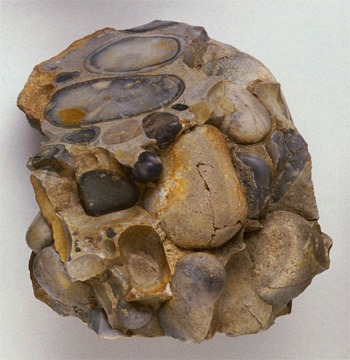
This rock was formed by smaller pieces of rock that settled at the bottom of a lake millions of years ago. What type of rock is this?

a)

Sedimentary

b)

Igneous

c)

Metamorphic

44.

The remains of living things that died long ago and their fossils are often found in what type of rock?

a)

igneous rocks

b)

sedimentary rock

c)

metamorphic rock

d)

all rocks

45.

Sedimentary rocks are formed by

a)

Cooling of lava or magma

b)

Heat and pressure

c)

Compacting and cementing

46.

What is the breaking down of rocks?

a)

Weathering

b)

Clastic

c)

Vesicular

47.

Sedimentary rock is formed when grains of sediment undergo

a)

metamorphism

b)

compaction and cementation

c)

melting

d)

solidification

48.

Volcanic activity on Earth’s surface most likely results in the formation of which of the following types of rock?

a)

Mineral

b)

Igneous

c)

Sedimentary

d)

Rocks don't form like this

49.

Ricardo has an igneous rock in his rock collection. Where did this rock most likely form?

a)

in a volcano

b)

on a forest floor

c)

on a coral reef

d)

at the bottom of a river

50.

When tremendous heat and pressure is applied to sandstone deep within the Earth's crust, marble forms. It is a _____ rock

a)

sedimentary

b)

igneous

c)

mineral

d)

metamorphic

51.

This rock was another type of rock that was heated and compressed over time. What type of rock is this?

a)

Sedimentary

b)

Igneous

c)

Metamorphic

52.

In order for a metamorphic rock to form, _______ is/are needed.

a)

Pressure

b)

Heat

c)

Heat and Pressure

d)

Weathering

53.

This rock started as molten magma. What type of rock is this?

a)

Sedimentary

b)

Igneous

c)

Metamorphic

54.

Rock that forms when pressure and temperature change existing rock.

a)

Igneous Rock

b)

Sedimentary Rock

c)

Metamorphic Rock

d)

Mineral Rocks

55.

Name this boundary

a)

Convergent

b)

Divergent

c)

Transform

d)

Sergent

56.

Name the boundary

a)

divergent

b)

convergent

c)

transform

d)

sergent

57.

Name the boundary

a)

convergent

b)

transform

c)

divergent

d)

sergent

58.

Which type of zone happens where one tectonic plate goes underneath another plate?

a)

submarine zone

b)

divergence zone

c)

subduction zone

d)

lower zone

59.

Which of the following are associated with transform boundary?

a)

volcanoes

b)

mountains

c)

trenches

d)

earthquakes and fault line

60.

Which of the following are associated with a divergent boundary under water?

a)

mid-ocean ridge

b)

deep ocean trench

c)

Pacific hot spot

d)

rift valley

61.

Mountains form at a

a)

convergent boundary

b)

divergent boundary

c)

transform boundary

d)

a subduction zone

62.

What CAUSES the plates to MOVE?

a)

Convection currents in the asthenosphere

b)

Convection currents in the lithosphere

c)

Convection currents in the atmosphere

63.
The movement of plates at a divergent boundary
a)
move towards each other
b)
slide past each other
c)
move up and down
d)
move away from each other
64.
Sand Andreas Fault formed at this type of boundary-
a)
Transform Boundary
b)
Convergent Boundary
c)
Divergent Boundary
d)
Hot Spot
65.

WHY does oceanic crust go beneath the continental crust in a subduction zone?

a)

the oceanic crust is more dense

b)

the oceanic crust is less dense

c)

the oceanic crust is hotter

d)

the oceanic crust is cooler

66.

The Ring of Fire is made up of thousands of volcanoes! What type of boundary forms volcanoes?

a)

divergent

b)

convergent

c)

transform

67.

What type of boundary can form new land (hint: under water)?

a)

divergent

b)

convergent

c)

transform

68.

Which of these are a result of the movement of the tectonic plates?

a)

earthquakes

b)

tides

c)

air currents

d)

tides

69.
Identify the Major Plate labeled B
a)
African Plate
b)
Antarctic Plate
c)
Pacific Plate
d)
Eurasian Plate 
70.
Identify the Major Plate labeled I
a)
African Plate
b)
Antarctic Plate
c)
Pacific Plate
d)
Eurasian Plate 
71.
Identify the Major Plate labeled N
a)
African Plate
b)
Antarctic Plate
c)
Pacific Plate
d)
Eurasian Plate 
72.
Identify the Major Plate labeled J
a)
African Plate
b)
Antarctic Plate
c)
Pacific Plate
d)
Eurasian Plate 
73.
Identify the Major Plate labeled D
a)
Indo-Australian Plate
b)
North American Plate
c)
South Americana Plate
d)
Eurasian Plate 
74.
Identify the Major Plate labeled L
a)
Indo-Australian Plate
b)
North American Plate
c)
South Americana Plate
d)
Eurasian Plate 
75.
Identify the Major Plate labeled G
a)
Indo-Australian Plate
b)
North American Plate
c)
South Americana Plate
d)
Eurasian Plate 
76.
What is the core made of?
a)
steel
b)
iron 
c)
aluminum
d)
iron and nickel
77.
What is the correct order (starting from the SURFACE) of Earth's layers?
a)
lithosphere, asthenosphere, mesosphere, outer core, inner core
b)
mesosphere, lithosphere, outer core, inner core, asthenosphere
c)
asthenosphere, inner core, outer core, lithosphere, mesosphere
d)
lithosphere, outer core, inner core, mesosphere, asthenosphere
78.
Which is the layer that we live on?
a)
lithosphere
b)
mesosphere
c)
outer core
d)
asthenosphere
79.
Which layer is made up of Earth's crust?
a)
lithosphere
b)
asthenosphere
c)
mesosphere
d)
inner core
80.
Which layer has CONVECTION CURRENTS?
a)
lithosphere
b)
asthenosphere
c)
mesosphere
d)
outer core
81.
Which layer's name means ROCK?
a)
lithosphere
b)
asthenosphere
c)
outer core
d)
inner core
82.
Which layer is like Oobleck? (a solid and a liquid!)
a)
lithosphere
b)
asthenosphere
c)
mesosphere
d)
outer core
83.
How do we remember the order of the layers of the Earth?
a)
LAMOI
b)
CRUST
c)
CRCIO
d)
MANTLE
84.
Which layer is made of LIQUID metals?
a)
lithosphere
b)
asthenosphere
c)
outer core
d)
inner core
85.
A layer of Iron and Nickel that is SOLID:
a)
outer core
b)
inner core
86.
Which layer is at the bottom? (In the very center of the Earth)
a)
asthenosphere
b)
lithosphere
c)
outer core
d)
inner core
87.
What is the middle layer (of the 5 layers, which one is the middle)?
a)
lithosphere
b)
athenosphere
c)
mesosphere
d)
outer core
88.
What is the formula to calculate speed?
a)
S = t/d
b)
S = d/t
c)
S = d x t
d)
S = t x d
89.
What is happening at A?
a)
Constant Speed
b)
Standing Still
c)
Slower steady speed; moving away from the starting position
d)
Accelerating
90.
What is happening at D?
a)
Standing Still
b)
Accelerating
c)
Constant speed; moving away from the starting position
d)
Slower steady speed; moving away from the starting position
91.
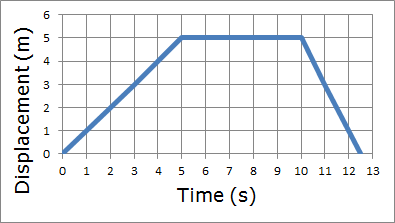
What is the person doing from 5 seconds to 10 seconds?
a)
Walking at a constant speed
b)
Running at a constant speed
c)
Standing Still 
d)
Walking Fast
92.
What is the person doing from 0 to 5 seconds?
a)
Walking forward at a constant speed
b)
Walking back home at a constant speed
c)
Standing Still 
93.
At what TIME did the boy turn and start WALKING HOME?
a)
0 s
b)
6 s
c)
10 s
d)
8 s