wayground logo

Free Printable Worksheets

NEW

Font size

S
M
L
XL
Worksheets

Matter Cycling - Changes to Earth's Surface Unit test

Total questions: 78

Worksheet time: 2hrs 13mins

Name
Class
Date
1.

Which type of plate boundary would cause mountains to form?

a)

Transform

b)

Convergent

c)

Divergent

d)

Reform

2.
The Great Rift Valley in Africa and the Mid-Ocean Ridge were all created by this boundary
a)
Divergent
b)
Convergent
c)
Reform
d)
Transform
3.
This layer of Earth is the thickest part
a)
crust
b)
outer core
c)
mantle
d)
inner core
4.
Which layer has convection currents?
a)
Inner Core
b)
Outer Core
c)
Mantle
d)
Crust
5.
subduction zones in the ocean can create which features?
a)
islands
b)
volcanoes
c)
earthquakes
d)
all of the above
6.
Earthquakes and volcanoes are most likely found in which locations?
a)
At plate boundaries
b)
in oceans
c)
in the middle of continents
d)
in the middle of plates
7.
The Himalayas in Asia are an example of what type of plate boundary?
a)
divergent
b)
continent-to-continent convergent
c)
ocean-to-continent convergent
d)
transform
8.
Transform boundaries are most likely to produce what phenomenon?
a)
volcanoes
b)
deep sea trenches
c)
underwater mountain ranges
d)
earthquakes
9.
When an oceanic plate and a continental plate collide, which one will subduct?
a)
oceanic
b)
continental
c)
neither
10.
The part of the earth that includes the crust and the upper mantle and is split into tectonic plates is the
a)
lithosphere
b)
 crust
c)
asthenosphere
d)
mantle
11.
The presence of the same ________ on several continents supports the idea of continental drift.
a)
rocks
b)
fossils
c)
both fossils and rocks
d)
neither fossils nor rocks
12.
A lack of evidence for continental drift prevented many scientists from believing a single supercontinent called _________ existed.
a)
Glossopteris
b)
Pangaea
c)
Gondwanaland
d)
Mesosaurus
13.
Many scientists think hot plastic-like rock in the mantle is forced upward toward the surface, cools, and sinks.  This process is called a(n) _________.
a)
earthquake
b)
convergent boundary
c)
volcano
d)
convection current
14.
The _________ is the thinnest layer of Earth.
a)
outer core
b)
inner core
c)
mantle
d)
crust
15.
The theory of continental drift was first proposed by __________.
a)
Thomas Edison
b)
Alfred Wegener
c)
Benjamin Franklin
d)
Harry Hess
16.
What part of the illustration shows Evaporation? 
a)
1
b)
2
c)
3
d)
4
17.
What does this symbol on a weather map indicate? 
a)
High pressure system
b)
Low pressure system
c)
Cold front
d)
Warm front
18.
The boundary  between two air masses is known as:
a)
front
b)
storm
c)
climate
d)
flood
19.
What does this symbol on a weather map indicate? 
a)
High pressure system
b)
Low pressure system
c)
Cold front
d)
Warm front
20.
A severe storm which involves a funnel cloud forming over land is:
a)
hurricane
b)
tornado
c)
thunderstorm
d)
blizzard
21.
Air pressure is greatest:
a)
closer to Earth
b)
farther from Earth
22.
In _______ pressure systems, air rises
a)
high
b)
low
c)
medium
d)
none
23.

To change from a gas to a liquid (water vapor to water droplets)

a)

precipitation

b)

atmosphere

c)

rain gauge

d)

condensation

24.

Layer of air around the earth is called _______

a)

atmosphere

b)

condensation

c)

precipitation

d)

climate

25.

A place that is far from the equator and ocean likely has what type of climate?

a)

cold and wet

b)

cold and dry

c)

hot and dry

d)

hot and wet

26.
What causes winds to form on Earth?
a)
solar energy
b)
ocean currents
c)
elevation differences
d)
uneven heating of the Earth by the sun
27.
What are the surface features of an area called?
a)
latitude
b)
longitude
c)
topography
d)
elevation
28.
Which BEST describes why latitudes closest to the equator have warmer climates?
a)
they are at lower elevations
b)
they receive more solar energy
c)
they are nearer to ocean currents
d)
they get more winds that carry energy in the form of heat
29.
What is the measure of distance in degrees north and south from the equator?
a)
latitude
b)
longitude
c)
elevation
d)
topography
30.
What is the height of an area above sea level?
a)
elevation
b)
topography
c)
latitude
d)
longitude
31.
Which sentence best describes how latitude and temperature are related?
a)
LOWER latitude = COLDER air temperature
b)
HIGHER latitude = COLDER air temperature
c)
HIGHER latitude = WARMER temperatures
32.
What is the weather conditions in an area over a long period of time?
a)
climate
b)
temperature
c)
elevation
d)
precipitation
33.

Which best describes a characteristic of the jet stream?

a)

It forms a boundary between a cold air mass and a warm air mass.

b)

It creates the high winds around the eye of a hurricane.

c)

It forces the hot air along the equator to rise to areas in North

America.

d)

It causes high pressure air masses to rotate clockwise.

34.
What is the jet stream?
a)
Precipitation in North Carolina
b)
Weather over a long period of time
c)
Strong winds above the Earth's surface
d)
Football flying over the Earth
35.
Winds are caused by 
a)
equal heating 
b)
unequal heating
36.
When air is heated, it will MOST likely
a)
expand and fall
b)
expand and rise
c)
condense and fall
d)
condense and rise
37.
What is the shaking of the Earth’s crust caused by a release of energy?
a)
Earthquake
b)
Epicenter
c)
Fault
d)
Plate
38.
What is a break in the lithosphere along which movement in an earthquake has first occurred?
a)
Earthquake
b)
Epicenter
c)
Fault
d)
Focus
39.
Which type of wave is the first to arrive after an earthquake occurs?
a)
P Wave
b)
Rayleigh Wave
c)
S Wave
d)
Shear Wave
40.
What is the measure of the amount of energy released in an earthquake?
a)
Earthquake
b)
Epicenter
c)
Magnitude
d)
Seismogram
41.
What is a large ocean wave that results from an underwater earthquake, landslide, or volcanic eruption?
a)
Aftershock
b)
Liquefaction
c)
Seismic Gap
d)
Tsunami
42.
The huge pieces of the earth's crust are called ____________________________. 
a)
crust
b)
plates
c)
directions
d)
seismos
43.
This famous transform fault is located in the western United States creates significant earthquake activity for California
a)
New Madrid
b)
Denali Fault
c)
Ramapo Seismic Zone
d)
San Andreas
44.

What is an earthquake?

a)

A huge ocean

b)

A location

c)

The rupture and sudden movement of rocks along a fault

d)

Huge waves in the ocean or sea

45.
Energy from the sun.
a)
wind
b)
hydroelectric
c)
solar
d)
biofuel
46.
Takes millions of years to form.
a)
hydroelectric
b)
renewable
c)
solar
d)
fossil fuels
47.
Source of energy for fossil fuels.
a)
swamp
b)
plants
c)
sun
d)
water
48.
A resource that can be easily replaced.
a)
renewable
b)
alternative
c)
nonrenewable
49.
Plastic water bottles.
a)
nonrenewable
b)
alternative
c)
renewable
50.
Timber, pork and corn.
a)
nonrenewable
b)
alternative
c)
renewable
51.
Heat produced from magma within the earth.
a)
solar
b)
biofuel
c)
hydroelectric
d)
geothermal
52.
Best energy resource in a sunny location.
a)
wind
b)
hydroelectric
c)
solar
d)
geothermal
53.
Electricity produced by moving water.
a)
geothermal
b)
hydroelectric
c)
wind
d)
solar
54.
Energy generated by the movement of air.
a)
fossil fuel
b)
wind
c)
biofuel
d)
hydroelectric
55.
Type of fossil fuel formed from ancient organisms that lived in swamps.
a)
oil
b)
fuel
c)
coal
d)
biofuel
56.
How do fossil fuels affect the environment?
a)
Expensive
b)
Leaves fossils at earth's surface
c)
Causes air pollution when burned
d)
Bonds sediment.
57.
Diamonds and other minerals.
a)
alternative
b)
renewable
c)
nonrenewable
58.
Cotton dresses and pants.
a)
renewable
b)
nonrenewable
c)
alternative
59.
We can _____ natural resources by not using them up or damaging them.
a)
conserve
b)
destroy
60.
The natural chemical or physical processes that breaks down rock on Earth's surface.
a)
weathering
b)
erosion
c)
deposition
d)
jackhammering
61.
The process by which water, ice, wind or gravity moves weathered rock and soil from one place to another.
a)
weathering
b)
erosion
c)
deposition
d)
dumptruck
62.
This type of weathering occurs when rock is physically broken down into smaller pieces of rock.
a)
mechanical weathering
b)
chemical weathering
c)
erosion weathering
d)
deposition
63.
This type of weathering occurs when rocks weaken then break down due to chemical changes in the composition of the rock.
a)
mechanical weathering
b)
chemical weathering
c)
erosion weathering
d)
deposition
64.
These rocks were broken apart from the continuous freeze/thaw of water in the cracks of the rocks. This is an example of:
a)
ice wedging
b)
acid rain
c)
permeability
d)
abrasion
65.
How might a weathered mountain appear different than an unweathered mountain?
a)
Weathered mountain would be taller.
b)
Weathered mountain would be rounder and less jagged.
c)
Weathered mountain would be more jagged and less rounded.
d)
Weathered mountain would have no trees.
66.
What is the movement of soil from one place to another?
a)
weathering
b)
deposition
c)
discharge
d)
erosion
67.
What is sediment?
a)
the process of rocks being broken down and carried away
b)
bits of rock, sand, and silt caused by the weathering of rocks
c)
the top layer of the soil
d)
decaying plant or animal material 
68.
What happens when weathering and erosion work together?
a)
New Mountains are created
b)
The climate changes overnight
c)
Metal objects become rusty
d)
They change the Earth's surface
69.
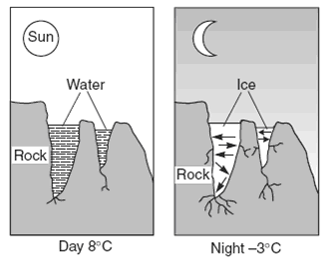
The diagrams  shows a natural process that weathers rock.
 Which statement best explains why this process results in weathering?
a)
frozen water acts as a solute
b)
water expands when it freezes
c)
the mass of water increases when it freezes
d)
frozen water dissolves most types of rock
70.
SOIL LAYERS ARE CALLED.......
a)
MATERIALS
b)
ORGANIC
c)
HUMUS
d)
HORIZONS
71.
MIXTURE OF ROCK, MINERAL PARTICLES, AND ORGANIC MATTER...... 
a)
HORIZONS
b)
HUMUS
c)
SOIL
d)
CLAY
72.
Soil formation begins with the weathering of_______.
a)
Humas
b)
Subsoil
c)
Litter
d)
Rock
73.
Which type of rock forms from extreme heat and pressure?
a)
Igneous
b)
Sedimentary
c)
Organic
d)
Metamorphic
74.
A metamorphic rock changes into an igneous rock by what two processes?
a)
Melting and cooling
b)
Extreme heat and pressure
c)
Compaction and cementation
d)
Weathering and erosion
75.
True/False: Igneous rocks can only turn into metamorphic rocks.
a)
True
b)
False
76.
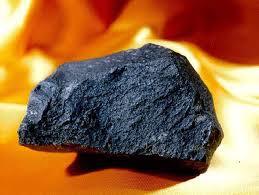
This rock was found near the mouth of a volcano. What type of rock is this?
a)
Sedimentary
b)
Igneous
c)
Metamorphic
77.
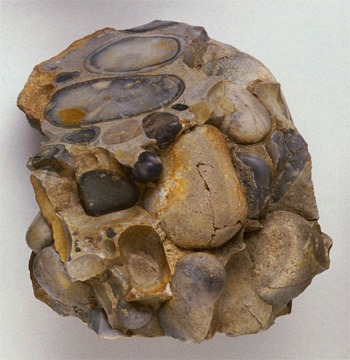
This rock was formed by smaller pieces of rock that settled at the bottom of a lake millions of years ago. What type of rock is this?
a)
Sedimentary
b)
Igneous
c)
Metamorphic
78.
Each rock type can follow only one pathway of the rock cycle.
a)
True
b)
False