
Font size
S
M
L
XL
 Worksheets
Wind and Severe Weather
Total questions: 81
Worksheet time: 3hrs 55mins
Name
Class
Date
1.
What type of winds blow constantly, predictably, and over long distances?
a)
land breezes
b)
mountain breezes
c)
global winds
d)
land breezes
2.
What is the name of the steady winds that flow from west to east between latitudes 30*N and 60*N and 30*S and 60*S?
a)
trade winds
b)
land breeze
c)
westerlies
d)
jet stream
3.
Steady winds that flow from east to west between 30*N latitude and 30*S latitude?
a)
jet stream
b)
breeze
c)
westerlies
d)
trade winds
4.

The curving of air to the right in the Northern hemisphere is caused by ___________ and is called the _________ effect.
a)
Earth's rotation...Coriolis
b)
Earth's revolution...Coriolis
c)
Earth's rotation...Doppler
d)
Earth's revolution...Doppler
5.
Steady winds that flow from east to west between 30*N latitude and 30*S latitude?
a)
jet stream
b)
breeze
c)
westerlies
d)
trade winds
6.
The curving of air to the right in the Northern hemisphere is caused by ___________ and is called the _________ effect.
a)
Earth's rotation...Coriolis
b)
Earth's revolution...Coriolis
c)
Earth's rotation...Doppler
d)
Earth's revolution...Doppler
7.
What is located at 0 degrees on Earth?
a)
Pole
b)
Doldrums
c)
Horse Latitude
d)
Polar Easterlies
8.
What global wind is located from 0 to 30 degrees North and South of the Equator?
a)
Trade Winds
b)
Prevailing Westerlies
c)
Polar Easterlies
d)
Doldrum
9.
What type of global wind flows toward the poles from west to east carrying moist air over the United States?
a)
Prevailing Westerlies
b)
Prevailing Easterlies
c)
Polar Easterlies
d)
Doldrums
10.
The Coriolis effect deflects wind direction. How does this process impact ocean surface currents?
a)
The wind deflects the currents to the right in the Northern Hemisphere and to the left in the Southern Hemisphere.
b)
The wind deflects the currents to the left in the Northern Hemisphere and to the right in the Southern Hemisphere.
c)
The wind deflects the currents to the left in both hemispheres.
d)
The wind deflects the currents to the right in both hemispheres.
11.
When air is heated, it will MOST likely
a)
expand and fall
b)
expand and rise
c)
condense and fall
d)
condense and rise
12.
A sea breeze blows from the ocean toward the shore. Why does this occur?
a)
High pressure over the land causes a downdraft to occur.
b)
The tide carries the wind to the shore as it moves back and forth.
c)
Conduction of heat from the warm water produces wind from the ocean.
d)
Air over land heats faster than air over water, which causes convection.
13.
Which of the following are narrow belts of strong winds found in the upper troposphere?
a)
doldrums
b)
westerlies
c)
trade winds
d)
jet streams
14.
Which of these MOST likely causes winds to blow on Earth?
a)
Earth spins quickly, causing air to blow around.
b)
The gravity of Earth and the Moon push and pull the air.
c)
Warm air rises and cool air falls toward Earth's surface.
d)
Ocean waves push air onto the shore and across Earth's surface.
15.
Which factor causes the motion of surface ocean currents?
a)
the sun
b)
the wind
c)
the moon
d)
hurricanes
16.
Hurricanes are large, powerful storms that form as they travel over warm ocean waters. What do oceans add to make hurricanes so strong?
a)
salt and water
b)
wind and tides
c)
heat and moisture
d)
waves and flooding
17.
Which is responsible for creating wind?
a)
wave action
b)
solar energy
c)
trees blowing
d)
gravitational force
18.
Uneven heating of Earth's surface by the sun causes which of these?
a)
wind patterns
b)
cloud formation
c)
volcanic activity
d)
nutrient cycling
19.
Where does the initial source of energy come from that creates winds?
a)
the moon
b)
the sun
c)
the Earth's surface
d)
the rotation of the Earth
20.
Land and water absorb and release the sun’s heat in different ways. One result of this is a sea breeze. Which statement is true of sea breezes?
a)
They originate in the day and blow toward the land.
b)
They originate in the day and blow toward the water.
c)
They originate in the evening and blow toward the land.
d)
They originate in the evening and blow toward the water.
21.
Which term is best described as the movement of air from land to sea?
a)
global winds
b)
sea breeze
c)
land breeze
d)
local winds
22.
The Coriolis effect causes ___________.
a)
the Earth to rotate on its axis
b)
continental deflection
c)
global winds and surface currents to move in a curved path instead of a straight line
d)
global winds and deep ocean currents to move in a curved path instead of a straight line.
23.
Which statement correctly describes the properties of cold air?
a)
less dense and less pressure than warm air
b)
more dense and more pressure than warm air
c)
more dense and less pressure than warm air
d)
less dense and more pressure than warm air
24.

Why does warm air rise?
a)
Warm air is more dense than cooler air.
b)
Warm air has more pressure than cooler air.
c)
Warm air is less dense than cooler air.
d)
Warm air has a higher dew point than cooler air.
25.
Which global winds have the greatest impact on the weather in the US?
a)
trade winds
b)
prevailing westerlies
c)
doldrums
d)
polar easterlies
26.

All wind are caused by differences in ____________.
a)
weather
b)
precipitation
c)
air pressure
d)
climate
27.
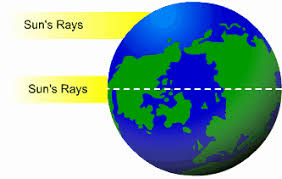
Most differences in air pressure are caused by _______________ heating of the atmosphere.
a)
some
b)
equal
c)
unequal
d)
great
28.

Cool air has __________ pressure.
a)
low
b)
high
c)
medium
d)
unknown
29.
Two belts of winds that blow almost constantly from easterly directions and are located on the equator toward sides of the subtropical highs.
a)
Doldrums
b)
Trade winds
c)
Polar jet stream
d)
Westerlies
30.
The equatorial belt of calms or light variable winds lying between the two trade wind belts.
a)
Doldrums
b)
Trade winds
c)
Polar easterlies
d)
Westerlies
31.
The _____ of earth on its axis causes the Coriolis effect.
a)
revolution
b)
rotation
c)
travel
d)
path
32.

In which direction do the trade winds blow?
a)
West to East
b)
North to South
c)
East to West
d)
South to North
33.

What type of pressure is associated with cold air masses?
a)
Low
b)
Middle
c)
High
34.
Describe the type of precipitation that occurs when falling through an atmosphere that is warm/hot.
a)
Rain
b)
Snow
c)
Sleet
d)
Freezing Rain
35.
what is the most common precipitation
a)
sleet
b)
freezing rain
c)
snow
d)
rain
36.
Define Precipitation
a)
solids falling from the sky
b)
precipitation
c)
any form of water that falls from clouds and reaches earth's surface
d)
liquids falling from the sky
37.
How is precipitation possible
a)
water laughs
b)
the water cycle
c)
the kind hearts of others
38.
What is precipitation?
a)
rain, snow,or sleet
b)
fog
c)
love
d)
the bogs
39.
Lvl 2: Precipitation that falls to the planet as balls of ice. They can be small and large.
a)
Rain
b)
Sleet
c)
Hail
d)
Snow
40.
Lvl 2: Precipitation that falls to the planet as ice crystals.
a)
Rain
b)
Sleet
c)
Hail
d)
Snow
41.
Lvl 2: What are the properties of the atmosphere at a given time and location?
a)
Weather
b)
The Water Cycle
c)
Wind Speed
d)
Observation
42.

Lvl 3: This diagram shows how a certain type of precipitation is formed. Water drops are caught in up-drafts and down-drafts, over and over, before they fall to Earth as
a)
dew.
b)
hail.
c)
rain.
d)
snow.
43.
Lvl 3: 1) temperatures below freezing in the atmosphere
2) temperature between -2 and 2oC at ground level
3) polar and arctic air masses
4) moisture in the atmosphere
The weather conditions listed here would most likely result in
2) temperature between -2 and 2oC at ground level
3) polar and arctic air masses
4) moisture in the atmosphere
The weather conditions listed here would most likely result in
a)
a hurricane.
b)
hail.
c)
snow.
d)
rain.
44.
What type of precipitation forms when raindrops fall through cold layer of air and freeze before they hit the ground?
a)
Sleet
b)
Snow
c)
Rain
d)
Hail
45.
If a thunderstorm cloud and the rain collides with ice, what forms?
a)
Rain
b)
Hail
c)
Snow
d)
Sleet
46.
This form of precipitation is in the form of flakes of crystallized water that falls from clouds?
a)
rain
b)
snow
c)
hail
d)
sleet
47.
What can damage crops, homes, and cars?
a)
freezing rain
b)
sleet
c)
hail
d)
snow
48.
True or False. Most snowflakes look the same.
a)
True
b)
False
49.
A _________ is a round pellet of ice larger than 5 millimeters in diameter.
a)
snowflake
b)
hailstone
c)
sleet
50.
The temperature of air high in the clouds is much _____ than the temperature by the ground.
a)
redder
b)
bluer
c)
higher
d)
lower
51.
Define Precipitation
a)
solids falling from the sky
b)
precipitation
c)
any form of water that falls from clouds and reaches earth's surface
d)
liquids falling from the sky
52.
How do the conditions for a tornado differ from the conditions for a hurricane?
a)
Tornadoes never form when there is rain, while hurricanes always form with rain.
b)
Tornadoes form under low pressure, while hurricanes form under high pressure
c)
Tornadoes form in a stable atmosphere, while hurricanes form in an unstable atmosphere
d)
Tornadoes form over land, while hurricanes form over bodies of water
53.

What storm is a funnel shaped cloud?
a)
tornado
b)
hurricane
c)
thunderstorm
54.

Which storm forms over water?
a)
tornado
b)
hurricane
c)
thunderstorm
55.
During a _________ you should lay low in a ditch if you can't seek shelter inside.
a)
tornado
b)
hurricane
c)
thunderstorm
56.

Which of these would you NOT expect from a thunderstorm?
a)
lightning
b)
strong wind
c)
storm surge
d)
heavy rain
57.
What are thunderstorms?
a)
a storm with thunder and lighting and typically also heavy rain or hail
b)
a storm that can be the same as thunderstorms, but even more dangerous
c)
a mobile, destructive vortex of violently rotating winds having the appearance of a funnel shaped cloud and advancing beneath a large storm system.
d)
a huge storm with strong winds and storm surges
58.
What do hurricanes feed on?
a)
warm tropical water
b)
hot water
c)
cold artic water
d)
rain
59.
Hurricanes develop in ________ regions.
a)
Arctic
b)
Tropical
c)
Arid
d)
None of the above
60.
This person studies the Earth's atmosphere and monitors and forecasts the weather
a)
Seismologist
b)
Meteorologist
c)
Volcanologist
d)
Geologist
61.
During _____________ stay inside if possible, stay out of the water, and do not stand under trees.
a)
rain Storm
b)
hurricane
c)
tornado
d)
thunderstorm
62.
If you are outside during a lightning storm what should you stay away from?
a)
tall trees
b)
cars
63.
Which of the following is not produced by thunderstorms?
a)
Snow
b)
Lightning
c)
Rain
d)
Strong winds
64.

Which storm can bring hail?
a)
thunderstorm
b)
tornado
c)
hurricane
65.
What is produced when small bits of ice bump into each other in a thundercloud and create an electric charge?
a)
Lightning
b)
Rain
c)
Wind
d)
Thunder
66.
True or False:
We see lightning before we hear thunder because light travels faster than sound.
We see lightning before we hear thunder because light travels faster than sound.
a)
True
b)
False
67.
What is storm that contains storm surges and has wind speeds of 74 mph - 200 mph?
a)
thunderstorms
b)
severe thunderstorms
c)
tornadoes
d)
hurricanes
68.

Most of the damage done by a hurricane is the result of _____
a)
water
b)
wind
c)
tornadoes
d)
lightning
69.
What should you do if a hurricane is heading your way?
a)
pack up and prepare to leave if you live on the coast
b)
go to a room with windows
c)
lay low in a ditch if you are stuck outside
70.

What type of clouds do you see when there is severe weather coming?
a)
cumulus
b)
stratus
c)
cumulonimbus
d)
cirrus
71.

This is the symbol for a...
a)
Cold Front
b)
Warm Front
c)
Stationary Front
d)
Occluded Front
72.

This is the symbol for a...
a)
Occluded Front
b)
Stationary Front
c)
Warm Front
d)
Cold Front
73.
This weather tool measures wind speed and direction
a)
thermometer
b)
barometer
c)
anemometer
d)
psychrometer
74.
Cold air (RISES/ FALLS) _________.
a)
RISES
b)
FALLS
75.
Hot air (RISES / FALLS) __________.
a)
RISES
b)
FALLS
76.
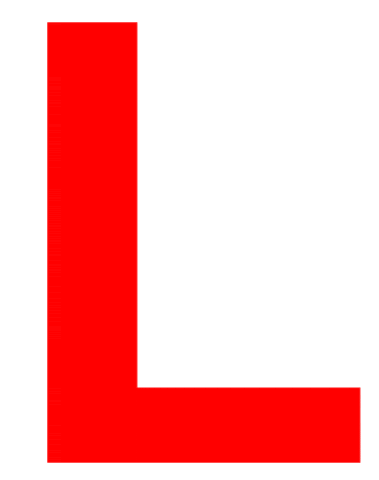
What does this symbol on a weather map indicate?
a)
High pressure system
b)
Low pressure system
c)
Cold front
d)
Warm front
77.

A _____ is a large, swirling, low-pressure system that forms over the Atlantic Ocean.
a)
blizzard
b)
cold front
c)
tornado
d)
hurricane
78.
Rain, snow, sleet, and hail are all forms of _____.
a)
precipitation
b)
condensation
c)
evaporation
d)
climate
79.
A description of the pattern of weather over many years is a region's
a)
weather system
b)
weather forecast
c)
climate
d)
air mass
80.
An air mass that would bring cold, moist weather is
a)
continental tropical
b)
continental polar
c)
maritime tropical
d)
maritime polar
81.
Which process causes water to move from the ocean to the atmosphere during the formation of a hurricane?
a)
condensation
b)
evaporation
c)
precipitation
d)
runoff
Reset

