
 Worksheets
Weathering and soil Review
Total questions: 77
Worksheet time: 1hrs 23mins
Name
Class
Date
1.
The natural chemical or physical processes that breaks down rock on Earth's surface.
a)
weathering
b)
erosion
c)
deposition
d)
jackhammering
2.
The process by which water, ice, wind or gravity moves weathered rock and soil from one place to another.
a)
weathering
b)
erosion
c)
deposition
d)
dumptruck
3.
This type of weathering occurs when rock is physically broken down into smaller pieces of rock.
a)
mechanical weathering
b)
chemical weathering
c)
erosion weathering
d)
deposition
4.
This type of weathering occurs when rocks weaken then break down due to chemical changes in the composition of the rock.
a)
mechanical weathering
b)
chemical weathering
c)
erosion weathering
d)
deposition
5.
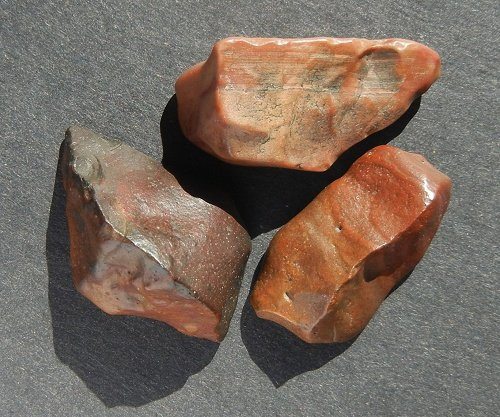
These rocks were made smooth by wind blowing smaller rock particles across their surface. This is an example of:
a)
ice wedging
b)
chemical weathering
c)
acid rain
d)
abrasion
6.

These rocks were broken apart from the continuous freeze/thaw of water in the cracks of the rocks. This is an example of:
a)
ice wedging
b)
acid rain
c)
permeability
d)
abrasion
7.
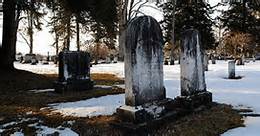
These gravestones have slowly broken down and turned a blackish color due to the action of:
a)
ice wedging
b)
abrasion
c)
acid rain
d)
mechanical weathering
8.
How might a weathered mountain appear different than an unweathered mountain?
a)
Weathered mountain would be taller.
b)
Weathered mountain would be rounder and less jagged.
c)
Weathered mountain would be more jagged and less rounded.
d)
Weathered mountain would have no trees.
9.
How is mechanical weathering different from chemical weathering?
a)
Chemical weathering happens over much shorter time frame than mechanical weathering.
b)
Chemical weathering changes the chemical composition of rocks; mechanical weathering does not.
c)
Chemical weathering occurs only in tropical climates; mechanical weathering occurs only in cool climates.
d)
Chemical weathering occurs only in the mountains; mechanical weathering occurs only on flat land.
10.
Weeds growing into the cracks in a sidewalk and the sidewalk begins to crumble is an example of:
a)
mechanical weathering
b)
chemical weathering
11.
Potholes forming in the road after a cold winter is an example of:
a)
mechanical weathering
b)
chemical weathering
12.
A metal statue slowly turning green after years of being outside is an example of:
a)
mechanical weathering
b)
chemical weathering
13.
Rocks along a riverbed that are smoothed from continuously moving water and sediment rubbing against them is an example of:
a)
mechanical weathering
b)
chemical weathering
14.
A piece of sandstone changing color (from brown to rusty red) from exposure to water and air is an example of:
a)
mechanical weathering
b)
chemical weathering
15.
The formation of stalactites and stalagmites in a cave as water mixed with carbon dioxide creates carbonic acid, which dissolves away the limestone, is an example of:
a)
mechanical weathering
b)
chemical weathering
16.
The formation of large cracks in the face of a mountain from ice wedging is an example of:
a)
mechanical weathering
b)
chemical weathering
17.
Acid rain wearing away the face of a marble gravestone or statue is an example of?
a)
mechanical weathering
b)
chemical weathering
18.
Exposure to rain and oxygen causes the metal minerals in rocks to rust and fall apart. This is an example of:
a)
mechanical weathering
b)
chemical weathering
19.
Lichens (small green plants) growing on a large boulder release enzymes and other acids that slowly break the rock apart. This is an example of:
a)
mechanical weathering
b)
chemical weathering
20.
How does freezing water cause the weathering of rocks? The freezing water—
a)
keeps the rocks in place
b)
makes the rocks last longer
c)
expands cracks and breaks rocks
d)
causes rocks to fall in landslides
21.
Which type of climate will have faster chemical weathering?
a)
Hot and Wet
b)
Cold and Dry
c)
Hot and Cold
d)
Cold and Wet
22.

What are the two factors that affect the rate at which weathering occurs?
a)
climate and mass of rock
b)
climate and size of rock
c)
type of rock and size of rock
d)
type of rock and climate
23.
Select the answer that shows the order of events a rock goes through.
a)
erosion, weathering, deposition
b)
weathering, erosion, deposition
c)
deposition, weathering erosion
d)
erosion, deposition, weathering
24.
What is the process that picks up and moves weathered rocks?
a)
deposition
b)
landslide
c)
weathering
d)
erosion
25.
Weathering causes rocks and minerals to break into smaller pieces. Which event is the best example of weathering?
a)
a raindrop splashing in a lake
b)
a snowball rolling down a mountain
c)
a tree root growing into the crack of a rock
26.

Carbon dioxide (CO2) combines with water as raindrops fall through the atmosphere. This makes a weak acid, called carbonic acid. Carbonic acid is a very common in nature, where it works to dissolve rock. Pollutants, such as sulfur and nitrogen from fossil fuel burning, create sulfuric and nitric acid. Sulfuric and nitric acids are the two main components of acid rain, which speeds up chemical weathering.
This statue was probably destroyed by _____.
This statue was probably destroyed by _____.
a)
Wind
b)
Humans
c)
Acid Rain
d)
Animals
27.

Chemical weathering is the other important type of weathering. Chemical weathering may change the size of pieces of rock materials, but definitely changes the composition. So one type of mineral changes into a different mineral. Chemical weathering works through chemical reactions that cause changes in the minerals.
True or false: chemical weathering causes rocks to change into new types of rocks.
True or false: chemical weathering causes rocks to change into new types of rocks.
a)
True
b)
False
28.

Which of the following probably did not cause this statue to wear down?
a)
Rain
b)
Wind
c)
Snow
d)
Animals
29.

The statue of liberty is made of copper. It was originally brown but has since turned green. This is probably due to _______.
a)
Oxygen
b)
Acid Rain
c)
Carbon Dioxide
d)
Humans
30.
These rocks were made smooth by wind blowing smaller rock particles across their surface. This is an example of:
a)
ice wedging
b)
chemical weathering
c)
acid rain
d)
abrasion
31.
What is likely to cause cracks on the sidewalk?
a)
Repeated freezing and thawing of water
b)
Tree roots or plant roots growing bigger
c)
Both and A and B
d)
Neither A or B
32.
What human activities can increase the rate of weathering?
a)
Increasing the amount of acid rain
b)
Paving over large portions of land
c)
All of the other answers.
d)
Strip mining and agriculture
33.

Which diagram represents mechanical weathering?
a)
G
b)
F
c)
H
d)
J
34.
A student hiking in a rock area on a mountain notices that wide, deep cracks have formed in some of the large rocks. Some of the cracks are so large that the rocks have broken apart. Which process most likely caused these rocks to crack and creak?
a)
Erosion by wind
b)
Water freezing and thawing
c)
Erosion by fast-moving
d)
Sediments being deposited.
35.

When Joe saw the Rocky Mountains for the first time, he exclaimed, "These mountains are much younger than ours back East!" Which feature supports his conclusion that the Rockies were relatively young mountains?
a)
Their sedimentary layers are still exposed
b)
They have rounded tops
c)
They have sharp peaks
d)
Weathering has not yet hardened the rock
36.

Which of the following is the most important agent of chemical weathering to form this cave?
a)
Water - It can carry acid and dissolve rock
b)
Erosion - Moves the rocks from one place to another
c)
Wind - It displaces rocks
d)
Exfoliation - New cracks give chemical reactions the chance to operate
37.
Changes in pressure underground cause rocks to shift upwards and the top layer to fall off in a process called what?
a)
Oxidation
b)
Exfoliation
c)
Abraision
d)
Mountaining
38.
All of the following are causes of physical weathering except...
a)
plant growth
b)
wind
c)
acid rain
d)
running water
39.
You notice that rocks are bumping into other rocks in a river. When they do this, they break into smaller pieces called sediment. What process is being represented?
a)
Ice wedging
b)
Oxidation
c)
Lichen
d)
Abrasion
40.
The rate of weathering is determined by what 2 factors?
a)
Temperature and humidity
b)
Weather and plate tectonics
c)
Type of rock and humidity
d)
Temperature and deposition
41.

Which rock was the most resistant to weathering?
a)
Granite
b)
Marble
c)
Schist
d)
Sandstone
42.
If the same type of rock were put in the desert, rainforest, arctic, and forest in Tennessee, which area would the rock weather the fastest?
a)
desert
b)
rainforest
c)
arctic
d)
forest in Tennessee
43.
What does freezing a bottle of water show us about rocks?
a)
That rocks are fragile
b)
That rocks can freeze
c)
That water that freezes in a crack of a rock can cause weathering
d)
That rocks are meant to be in warm climates
44.
What is sediment?
a)
the process of rocks being broken down and carried away
b)
bits of rock, sand, and silt caused by the weathering of rocks
c)
the top layer of the soil
d)
decaying plant or animal material
45.
Which of these is an example of erosion
a)
Light Shinning onto a mountain
b)
Rain breaking down rock
c)
Wind blowing away sediment
d)
All of the above
46.
What happens when weathering and erosion work together?
a)
New Mountains are created
b)
The climate changes overnight
c)
Metal objects become rusty
d)
They change the Earth's surface
47.

Mechanical weathering increases the rate of chemical weathering. As rock breaks into smaller pieces, the surface area of the pieces increases Figure below. With more surfaces exposed, there are more surfaces on which chemical weathering can occur.
After hit with acid rain, tiny cracks form. Does this make it more likely or less likely to break apart?
After hit with acid rain, tiny cracks form. Does this make it more likely or less likely to break apart?
a)
More Likely
b)
Less Likely
48.
The rate of chemical weathering is less in Antarctica than in the rain forests of Brazil because of
a)
high amount of air moisture
b)
low temperatures
c)
heavy winds
d)
amount of organic materials on the ground
49.
Limestone chips dissolve after they are placed in a beaker of dilute acid. Which geologic process is this most similar to?
a)
faulting
b)
folding
c)
weathering
d)
subduction
50.
You are designing an experiment to test the resistance to weathering of various types of materials. What weathering process could be modeled using sandpaper?
a)
Freezing and thawing
b)
Abrasion
c)
Oxidation
d)
Acid Rain
51.
How does mechanical weathering affect the amount of surface area available for chemical weathering?
a)
It increases the amount of surface area as rocks are broken into smaller pieces.
b)
It decreases the amount of surface area as rocks are broken into smaller pieces.
c)
The surface area stays the same because mechanical and chemical weathering are separate processes.
d)
It would not have any effect because they occur at different times.
52.
Which combination of materials could be soil?
a)
Pebbles, sand, and silt
b)
Sand, silt, and clay
c)
Gravel, humus, and sand
d)
Silt, cobbles, and clay
53.
If basalt is placed in an acid and then the liquid is poured into an evaporation dish, what would you see after the liquid evaporated.
a)
No crystals in the evaporation dish.
b)
Square-shaped crystals with little X's on top.
c)
A white powdery substance.
d)
White needlelike crystals.
54.
Caves are most likely to form from the chemical weathering of which kind of rock?
a)
Granite
b)
Limestone
c)
Basalt
d)
Sandstone
55.
As you were climbing a mountain, you noticed that rocks were crumbling below your feet and moving down the mountain. What 2 processes did you observe?
a)
Weathering and erosion
b)
Erosion and deposition
c)
Abrasion and chemical weathering
d)
Abrasion and ice wedging
56.
When plants, animals, and other organisms die, they break down and become part of the soil. What is this part of the soil called?
a)
sand
b)
silt
c)
clay
d)
humus
57.

What is the layer of soil that contains humus, leaf litter, and other organic matter?
a)
O - Organic
b)
A - Topsoil
c)
B - Subsoil
d)
R - Bedrock
58.

Which layer is the bottom of the soil profile?
a)
C - Partially Weathered Parent Material
b)
D - Separated rock
c)
R - Bedrock
d)
A - Topsoil
59.
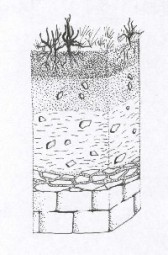
Layers of soil are also known as:
a)
Soil Profiles
b)
Soil Horizons
c)
Soil sheets
d)
Soil cores
60.
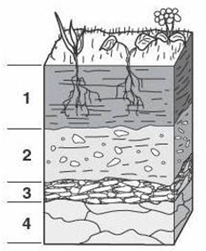
In which layer of the soil profile contains the MOST humus?
a)
Layer 1 (A)
b)
Layer 2 (B)
c)
Layer 3 (C)
d)
Layer 4 (R)
61.

In which layer of the soil profile contains a solid layer of rock?
a)
Layer 1 (A)
b)
Layer 2 (B)
c)
Layer 3 (C)
d)
Layer 4 (R)
62.

Soil is made of
a)
weathered rocks and minerals
b)
dead plants and animals
c)
air and water
d)
all of the above
63.
A tree leaf becomes part of humus when it:
a)
dies and falls on the ground
b)
is eaten by birds and animals
c)
is carried away by a river
d)
begins to grow in spring
64.
The first layer of soil, called the A horizon is also known as?
a)
Bedrock
b)
Parent Material
c)
Topsoil
d)
Subsoil
65.
The texture of soil depends mainly on
a)
the types of plants that grow in the soil.
b)
the size of the particles in the soil.
c)
the color of the soil.
d)
the number of worms in the soil.
66.
Which climate will soil develop the fastest?
a)
tropical soils
b)
desert soils
c)
temperate soils
d)
arctic soils
67.
Which is following contributes to acid precipitation?
a)
burning of fossil fuels
b)
oxidation
c)
abrasion
d)
all the above
68.
A rock will have a lower rate of weathering when the rock
a)
is in a humid climate
b)
is a very hard rock, such as granite
c)
is at a high elevation
d)
has more surface area exposed to weathering
69.

Which rock layer appears to be the most resistant to weathering?
a)
Limestone
b)
Sandstone
c)
Shale
70.

As a particle of sediment in a stream breaks into several smaller pieces, the rate of weathering of
the sediment will:
the sediment will:
a)
increase due to a decrease in surface area
b)
decrease due to an increase in surface area
c)
increase due to an increase in surface area
d)
decrease due to a decrease in surface area
71.
Rates of weathering are determined by what?
a)
composition of rock; higher hardness minerals weather slower than soft materials
b)
differential weathering - softer rocks weather and wear away leaving hard rocks
c)
greater surface area, faster the weathering
d)
all of the above
72.
Which of the following minerals is the most resistant to chemical weathering?
a)
calcite
b)
feldspar
c)
hematite
d)
quartz
73.
A type of mechanical weathering is ____ and a type of chemical weathering is ____.
a)
frost action; oxidation
b)
thermal expansion and contraction; salt crystal growth
c)
exfoliation; frost action
d)
hydrolysis; abrasion
74.
When a rock is broken into smaller pieces, its ____.
a)
volume increases but its surface area remains the same
b)
surface area increases but its volume remains the same
c)
rate of weathering dramatically decreases
d)
surface area decreases and volume increases
75.
Rock formations hanging from a roof are called ________.
a)
stalacites
b)
stalagmites
c)
troglodytes
d)
minerals
76.
What mineral makes up limestone?
a)
Carbonic Acid
b)
Calcite
c)
Bedrock
77.
What is the chemical formula of calcium carbonate
a)
Ca2CO3
b)
Ca(CO)3
c)
CaCO3
d)
CaCO
100 %

